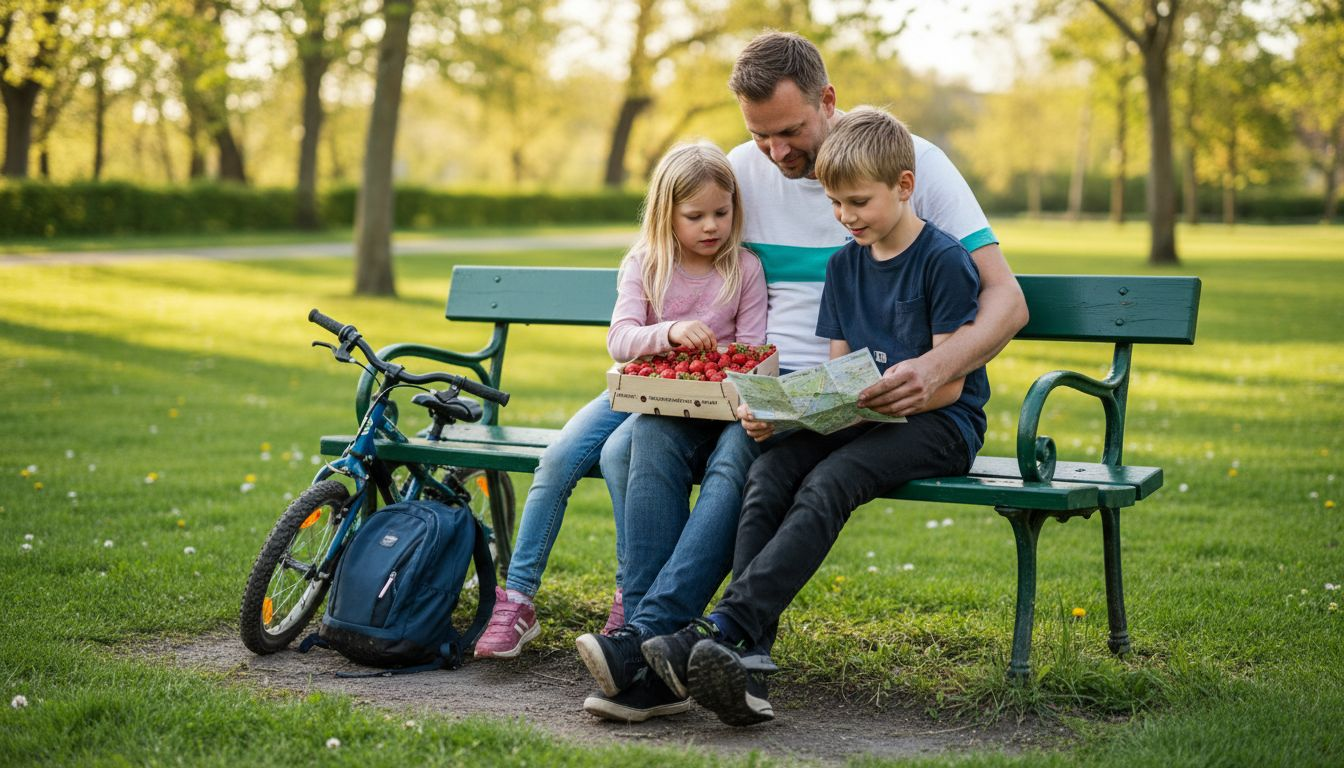
Over 80 percent of families with children aged 4-12 want more quality time on vacation, but it can be difficult to find experiences that truly engage children. For many Central European parents, a successful holiday is not only about relaxing but also about giving children the opportunity to play, learn, and explore together. The Danish approach to family experiences combines creativity, safety, and fun, so that your next trip to Denmark can strengthen both children and adults with memorable moments.
What does children's Denmark mean?
Children's Denmark is about creating unforgettable family travel experiences where children are not just passive participants but active co-creators of the travel memory. It concerns destinations and activities specifically designed to engage and excite children between 4 and 12 years old – a critical age group where curiosity is at its peak.
This approach to family travel is about more than just entertainment. It's about choosing experiences that stimulate children's curiosity, learning, and creativity through interactive museums, historical sites, natural areas, and attractions that invite active participation. Family-friendly destinations in Denmark offers exactly such opportunities where children can explore, play, and learn at the same time.
Denmark has a unique ability to create child-friendly environments where safety, learning, and enjoyment go hand in hand. From the interactive science centers to the historic Viking villages and the scenic national parks, the country offers a wide range of experiences that directly appeal to children's interests and developmental stages. The children are not just passive spectators, but active participants in the travel experience.
Pro-tip: Choose destinations where children can touch, experiment, and explore instead of just looking, to ensure the most memorable family trips.
Important types of family experiences
Family experiences are about much more than just entertainment. It is about creating deeper connections, stimulating children's learning, and developing strong social bonds through shared activities. Benefits of family experiences Show how different types of experiences can contribute to the overall well-being and cohesion of families.
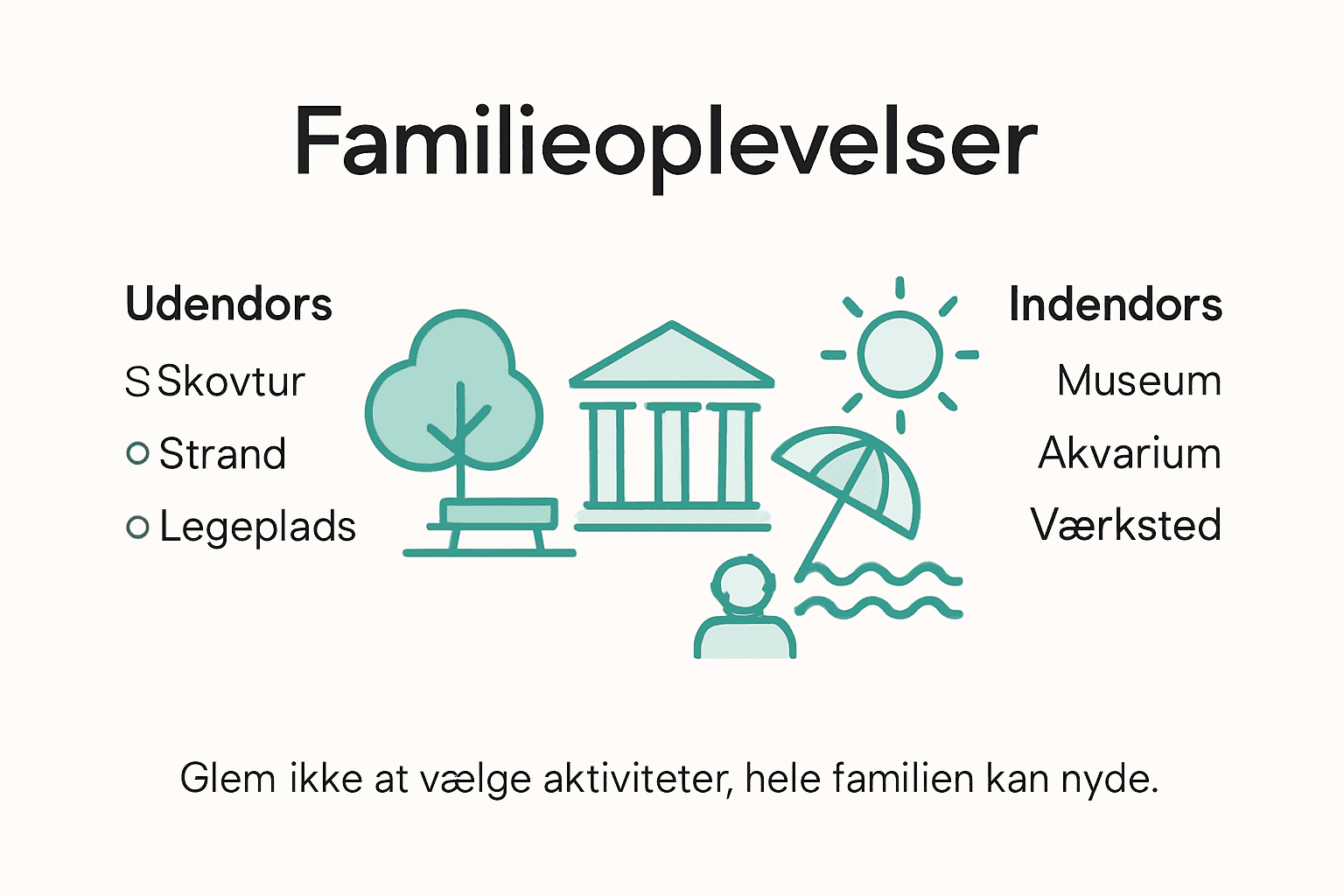
The most important family experience types include a wide range of activities that cater to different interests and age groups. Physical activities such as climbing parks, nature playgrounds, and outdoor adventures give children the opportunity to explore and challenge themselves. Creative workshops where families can draw, build, or experiment together create space for shared learning and creative expression. Educational experiences such as museum visits, historical attractions, and science centers offer children the opportunity to discover new worlds and stimulate their curiosity.
Interactive and sensory experiences are particularly important. It can range from guided zoos where children learn about wildlife to music and dance workshops where the whole family can move and express themselves together. Such activities not only support children's physical and social development but also create unforgettable memories that strengthen the family's internal relationships and sense of community.
Here is an overview of popular experience types for families and their primary benefits:
| Experience type | Learning and Development | Social benefit |
|---|---|---|
| Natural playground | Motor skills | Collaboration through play |
| Creative workshop | Creative expression | Gathering about a joint project |
| Science Center | Curiosity and experimentation | Curiosity is shared within the group |
| Historical attraction | Knowledge of the past | Shared discovery experience |
Pro-tip: Choose family experiences that challenge and engage all family members so that no one feels excluded or passive.
Law, learning, and Danish nature
Danish nature is a fantastic learning laboratory where children can explore, experiment, and develop through direct contact with the environment. Nature experiences in Denmark showing how the country's diverse landscapes can transform into living classrooms where learning occurs through discovery and play.
Natural playgrounds constitute a particularly important element in children's learning and movement. These specially designed areas combine natural materials, open green spaces, and play opportunities that stimulate children's motor skills, imagination, and social competencies. Here children can climb on logs, build dens, explore insects, and experience the changing landscapes of the seasons through sensory and practical activities.
The Danish natural areas offer countless opportunities for educational family activities. From beaches and forests to national parks, families can participate together in small experiments, creative sensory activities, and discovery walks. Children learn about ecosystems, plant and animal life, while simultaneously developing respect for nature through concrete, hands-on experiences.
Pro-tip: Bring a small discovery kit with a magnifying glass, notebook, and camera so children can actively document and reflect on their nature exploration.
Practical advantages for families with children
The Danish family environment is characterized by an unusually high level of flexibility and support for families with children. Why a family holiday in Denmark illustrates the many practical advantages that make the country an ideal destination for families with children. The social structures are specifically designed to support families' needs and ensure a comfortable travel and everyday experience.
Economic and infrastructural advantages play a central role in the Danish family landscape. Family households benefit from a well-developed public transportation system, affordable prices for family activities, access to child-friendly facilities, and a consistent safety culture. The country offers a wide range of free and low-cost family activities, meaning that experience-rich holidays do not have to be associated with high costs.
The social infrastructure in Denmark is particularly notable for families with children. There is an extensive network of child-friendly environments, including museums with interactive children's sections, nature playgrounds, family-oriented museums, and attractions designed with children's learning and entertainment in mind. These facilities are not only accessible but also inclusive and supportive of children's natural curiosity and desire to learn.
Pro-tip: Check local tourism centers and municipal websites for free or inexpensive family activities that can save you money without compromising the quality of the experience.
Typical mistakes and how to avoid them
When families plan trips, they often make the same recurring mistakes that can diminish the quality of the experience. How to find free experiences in Denmark supports the importance of thorough preparation to avoid typical planning pitfalls.
The most common mistakes include inadequate age-appropriate planning, where activities are either too boring or too demanding for the children. It is crucial to choose experiences that match the children's interests and energy levels, which requires thorough research and flexibility. Family members should avoid overly tight schedules that do not allow for spontaneity or breaks, as well as overloading the daily program with too many activities.
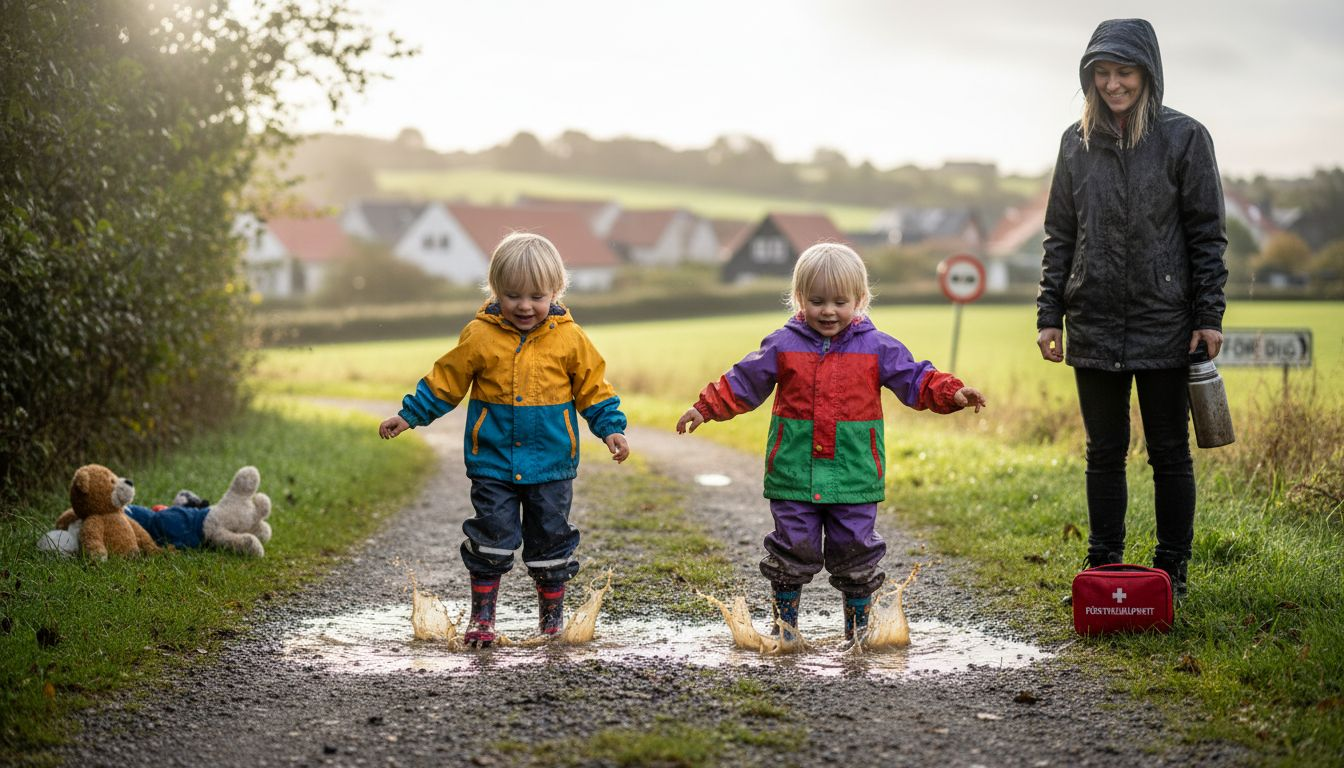
Additional common mistakes include neglecting practical details such as weather conditions, children's fatigue levels, and necessary supplies. Preparation is not just about choosing activities, but also about bringing relevant remedies such as extra clothes, snacks, first aid supplies, and entertainment for the children. Flexibility and understanding of children's needs are the key to successful family trips.
Below is a comparison of typical planning mistakes and effective solutions:
| Planning error | Consequence for the family | Access that enhances the experience |
|---|---|---|
| For a packed schedule | Udmattede børn og stress | Include few activities and breaks |
| Activities regardless of age | Boredom or frustration | Choose activities according to children's level |
| Forget practical preparations | Disappointment in bad weather | Bring extra clothes and necessities |
Pro-tip: Create a flexible daily plan with 2-3 main activities and reserve the rest of the day for relaxation and spontaneous discoveries.
Create unforgettable family trips with Children's Denmark
Planning trips for family children can often be challenging when it comes to finding activities that both engage the children and strengthen family bonds. The article emphasizes the importance of choosing family experiences that inspire play, learning, and togetherness without overloading the family with too many activities or experiences that do not suit the children's age and needs.
Hos Travel in Denmark We have gathered a wide selection of family-friendly experiences and destinations to help you turn these good tips into reality. Use our user-friendly search function to find activities suitable for your children's age and interests, and discover everything from nature playgrounds to creative workshops and historical attractions. Start your adventure with our guide to nature experiences in Denmark and get inspired to gather the family in nature where learning and play go hand in hand.
Take the first step towards the memorable family vacation where children are allowed to be active co-creators. Visit Travel in Denmark now and find the perfect experiences that make children's Denmark lively and accessible for the whole family.
Frequently Asked Questions
What is Children's Denmark?
Children's Denmark is about creating unforgettable travel experiences for families, where children actively engage in activities designed for their interests and development.
What types of family activities are available in Denmark?
There are many types of family activities, including physical activities such as climbing parks, creative workshops, science centers, and historical attractions that offer interactive and educational experiences.
How can Danish nature contribute to children's learning?
Danish nature functions as an interactive learning laboratory where children can explore and learn through direct contact with the environment, participate in sensory activities and small experiments.
What are some common mistakes when planning family experiences?
Typical mistakes include a too tight schedule, activities that do not match children's ages, and lack of practical preparations such as extra clothes and snacks.
Recommendation
- Benefits of Family Experiences – Strengthen Togetherness and Learning – Travel in Denmark
- Why a family holiday in Denmark is the best solution – Travel in Denmark
- Family outings – Create togetherness and lasting memories – Travel in Denmark
- 7 family-friendly destinations list for holidays in Denmark – Travel in Denmark
- Role of Local Guides – Why Their Expertise Matters – Walking Tours of Oxford