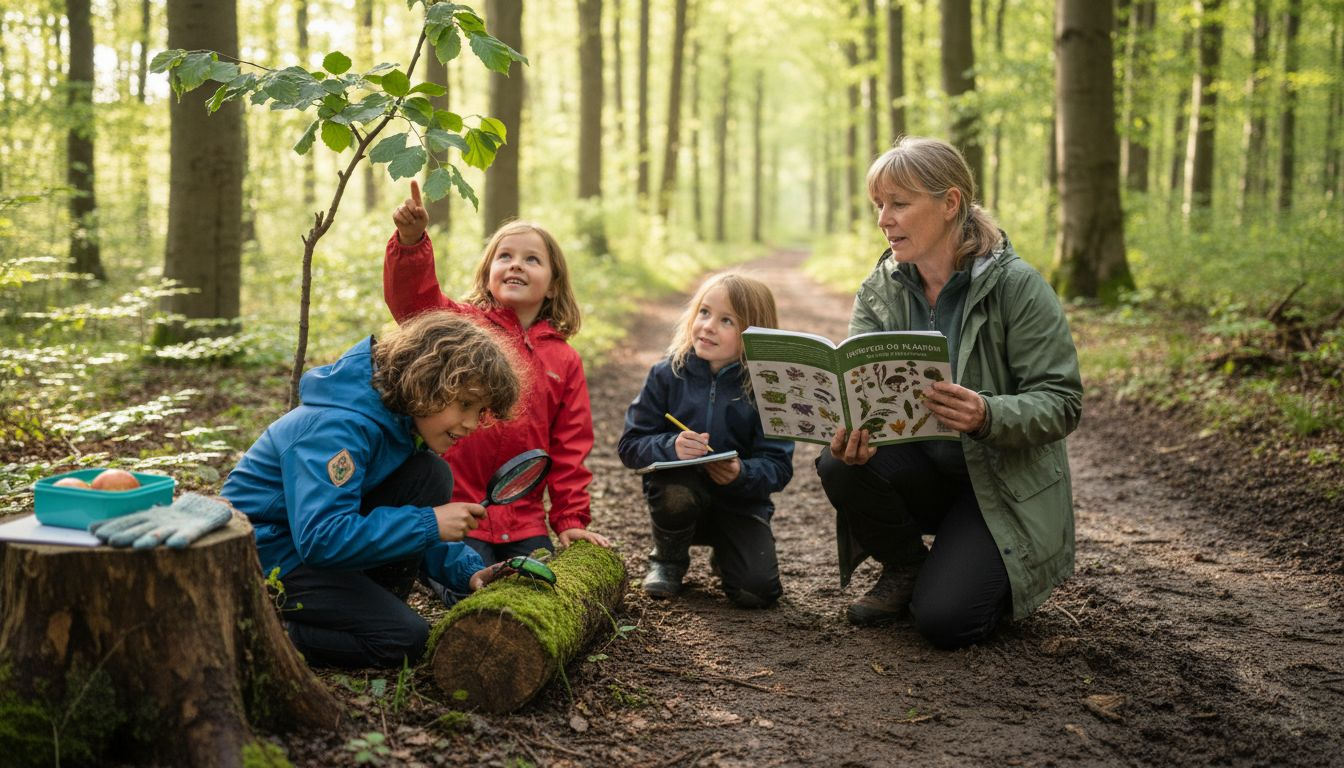
It can be a challenge to give children exciting experiences in nature where they really learn something and have fun at the same time. You often lack concrete ideas for activities that both spark curiosity, strengthen social skills, and make nature come alive for children.
This list shows you how you can use nature trails, play, and creative projects to create learning and meaningful outdoor experiences. You receive concrete suggestions that make it easy to engage children in school, leisure, and family activities.
Look forward to discovering practical methods where nature becomes a playground, a learning space, and a place for community. She is waiting for inspiring ideas that make it easy to go from everyday life to adventure together with the children.
Discover wildlife on child-friendly nature trails
Child-friendly nature trails open up entirely new worlds for children. They combine outdoor activities with learning about animals, insects, and plants in a way that keeps children engaged and curious.
Nature trail designed for children focuses on creating interest through observation or discoveryInstead of just walking around, the children are given specific tasks and questions that motivate them to look for signs of wildlife around them.
Child-friendly nature trails offers structured experiences where children learn to identify animal tracks, hear different bird songs, and understand how animals use nature. The small hunts for signs of presence make learning completely natural.
Why do nature trails work so well for children?
- Children receive active tasks that focus on exploration
- They learn through practice instead of just listening.
- Discoveries feel like their own little adventures
- Stones can be used both in school classes and leisure activities
Practically, you guide the paths by first printing the material and taking it outside. Let the children work in small groups so that everyone has a chance to discover. Do not answer their questions immediately, but instead ask new questions that motivate them to explore further.
Good nature trails often include a focus on habitats for animalsChildren not only learn which animals exist, but also where they hide, why they choose those places, and what they eat. This deeper knowledge makes nature much more interesting.
Nature trail transforms a regular walk into an exciting adventure, where children learn to read the signs of nature.
The good thing about this approach is that it works for all age groups from around 5 to 12 years old. You can customize the questions and tasks according to the age, and the children find their own pace.
Professional recommendation: Take notes along the trail so you can remember which animals you saw, and let the children draw or write a diary about their findings at home, so the experience lasts longer than just the walk itself.
2. Make fun natural things together in the forest
Nature play in the forest combines joy, movement, and learning in ways that few other activities can. When children play together outside, they also learn about nature without it feeling like homework.
Shared play in the forest develops both social skills og motor skillsChildren communicate, negotiate rules, and work together towards a common goal. At the same time, they strengthen their balance, coordination, and strength through natural movements.
You can create fun nature games that stimulate children's senses and observation skills. Give them small adventures as tasks, where they have to search for specific plants, animals, or natural materials. Animal-based activities can make the discovery of the forest's inhabitants an exciting hunt.
Here are some ideas that work well at different age levels:
- Insect hunting with a net and magnifying glass, where children find and observe small creatures
- Nature artist, where children collect leaves, branches, and stones to create artworks
- Hunting game where they follow tracks of deer, rabbits, or birds
- Quietly, where children close their eyes and guess the sounds of the forest
- Wildlife hunting, where they find natural objects in specific colors
The important thing is that the play should be adapted to the children's skill levels. Some children can run faster or jump higher than others, so vary the activities so that everyone can participate at their own level.
When children play together in nature, they learn much more than facts, and they also learn to work as a team and respect the environment around them.
Nature also creates safe framework for learning Children are less nervous and more open to new experiences when they play. They also remember better what they discover during play because it is linked to fun and feelings.
Start with simple tasks and gradually build up to more complex ones. Let the children lead some of the games themselves, and they will also develop creativity and self-confidence.
Professional recommendation: Take a few natural materials home after play, so the children can continue creating art indoors and talk about the forest's riches in the days that follow.
3. Learn about plants by collecting and pressing leaves
Collecting and pressing leaves is a classic activity that encourages children to explore the diversity of the plant kingdom. This simple method quickly becomes an exciting scientific project.
When children collect leaves, they learn to observe Characteristics of plantersThey notice shapes, colors, textures, and sizes. Each leaf becomes a little detective task where children have to identify which plant the leaf comes from.
Press plates are an excellent way to Document findings on. When the leaves are pressed between newspaper and pencil for a few weeks, they are preserved almost perfectly. Children can then identify them by the plant's name, where they found it, and when.
Practical learning about plants Through leaf collection, it combines observation with simple fieldwork methods that make science tangible for children.
Here is what you need to do:
- Go on a flower tour and collect leaves from different plants
- Place the leaves between newspaper in a book or under weights
- Vent 2-3 uger, til de er helt tørre
- Write the plant's name on the paper and draw a line.
- Make a collection of all the leaves I found
This project is fantastic for children because it doesn't require special equipment. You can use materials from your home, and the process takes time, so it becomes a long-term activity.
Children also learn about The influence of the seasonsThe blade looks different in spring, summer, autumn, and winter. A collection made throughout the year shows this change in a visual way.
When children press leaves and build their own plant collections, they become experts on their local flora without realizing that they are learning science.
You can expand the project by having the children draw the shapes of the leaves, count their veins, or compare sizes. Some blades have serrated edges, others are smooth. Some are as big as a palm, others small as a little finger.
This activity also develops patience and attentionChildren learn what it takes to press leaves correctly, and they become proud when the result turns out beautiful.
Professional recommendation: Create a decorated collage album with different categories so children can organize their finds by plant type, color, or size, which develops their systematic thinking.
4. Explore the beach's treasures with the children
The beach is a treasure chest of nature, full of exciting discoveries and learning opportunities. When children explore the coast, they become both detectives and naturalists at the same time.
The seabed finds tell stories about the life of the sea. Shells, starfish, snail shells, and algae show the children the biodiversity of the oceanEach object is a window into an entire underwater ecosystem.
When children observe live animals at the beach, they learn about The harmony of natureSee how crabs hide under stones, how sea anemones catch their food, and how mussel shells protect their inhabitants. This direct encounter with nature creates a deeper understanding than any textbook.
Observation of marine organisms By the beach and coastal zone is a strong learning experience that shows children how animals adapt to their environment.
Here is what you can look for:
- Different types of shells and snail shells
- Starfish, sea urchins, and crabs under stones
- Algae and seaweed in different colors
- Feathers and springs
- Sandstone and minerals on the beach
Coastal research develops critical thinking at children They ask natural questions. Why are some shells spiral-shaped and others flat? Why are some animals red and others gray? These questions lead to genuine scientific curiosity.
You can turn it into an organized hunt by giving the children a list of things they need to find. Or let them gather freely and then tell what they discovered and why they thought it was interesting.
Beach finds become children's first encounter with oceanography, and it often sparks a lifelong fascination with the secrets of the sea.
Please note that some beach treasures are from living animals. Be careful with algae and animals, let them stay where they are after observation. Beach cleaning can also become an important part of the experience, where children learn about nature conservation.
Professional recommendation: Gather a few finds from home, make a "beach collection," and write down where each item was found and what it tells about marine life, so the memory lasts longer than just the trip.
5. Embark on an adventurous shelter trip in the outdoors
A shelter is much more than just sleeping outside the house. It is an in-depth nature experience that enhances children's self-confidence, social skills, and connection to nature.
Shelter gives children the opportunity to become self-employedThey learn to build shelters, light fires (under supervision), cook outdoors, and solve practical problems. These skills develop their confidence in their own abilities.
In nature, children's perspectives change. They experience the silence, the darkness, and the sounds of nature in completely new ways. This meeting with the different faces of nature teaches them to be comfortable in all weather conditions.
The social element is extremely important. Children work together to build a shelter, fetch firewood, and cook. It becomes one group with shared responsibility. Shelterture focused on social skills Promotes children's well-being through shared experiences and responsibility within the framework of nature.
Here is what a shelter trip can include:
- Building a natural shelter from branches and bark
- Indoor heating and outdoor cooking
- Natural bathing and exploration after dark
- Shared meals without mobile phones
- Sleep under the open sky or simple tents
Start with short shelter trips overnight, before you try longer adventures. Choose safe natural environments where children do not feel exposed to dangers. Denmark has many designated natural environments and facilities that are ideal for family experiences.
Children also learn about the cycle of nature In a completely different way. See how the light disappears, how the animals become active at night, and how the morning breaks through. This creates an understanding of the rhythms of nature.
A walk in nature without electronics and artificial light gives children an experience they remember for a lifetime and fosters a deeper respect for the environment.
Safety is important, but it is equally important to let children take small risks. Falling from a tree or getting the wettest clothes on teaches them resilience and problem-solving.
Professional recommendation: Let the children help plan the shelter trip in advance so they feel a sense of ownership over the experience and look forward to the adventure more.
Create artworks from natural materials
Natural materials are the best artistic resources children can ever get their hands on. Blade, grass, stone, and bark offer endless possibilities for creative expression.
When children create art with natural materials, they learn to respect the environmentThey become aware of what nature offers and how resources can be used sustainably. This builds a fundamental connection to nature conservation.
Developing creative projects with natural materials fine motor skills og artistic thinkingChildren should plan, experiment, and adjust their ideas. They solve problems such as how to fasten materials or how to balance different shapes.
Art projects with natural materials Connects experience with learning, where children gain hands-on experience in transforming nature into creative expression. The process stimulates both imagination and environmental awareness.
Here are some inspirations for projects:
- Mandalas made with leaves, stones, and flowers in circular patterns
- Natural cultures through stabilizing stones and branches in creative ways
- Leaf printing where children use leaves as stamps with paint
- Compositions of natural materials on wood or paper
- Mobile hanging from branches with various findings
The important thing is that the process is more important than the result. Children should feel free to experiment without fear of making mistakes. A failed pile of stones teaches them persistence.
Natural art can be made both outdoors and taken home. Some artworks last a long time, others are destroyed by the weather. This fragility teaches children that nature is in constant change.
When children create art from natural materials, they become not only artists but also naturalists and environmental protectors at the same time.
Give the children few or no instructions. Let them explore and find their own style. Some children create structured patterns, others create abstract compositions. Both are art.
Professional recommendation: Tag photos of the children's nature artworks before the weather destroys them, so they can share or remember their creation, and it becomes a digital documentation of their creativity.
Below is a comprehensive table summarizing the primary strategies and topics related to activities in nature with children, as described in the article.
| Activity type | Description | Advantages |
|---|---|---|
| Child-friendly nature trails | Bull with tasks and questions that engage children in observing and discovering wildlife and plants. | Increases children's curiosity and learning through practice. |
| Naturalness in the forest | Play and activities that develop social skills and motor skills, e.g. Insect hunting and nature art. | Sharing joy and learning through teamwork and sensory training. |
| Leaf collection and pressing | Collect and press leaves to create a personal plant collection. | Foster observation, systematic learning, and patience. |
| Beach research | Find shells, snail shells, and observe animals along the coast. | Strengthens children's understanding of the ocean's ecosystem. |
| Shelterture | Camping in nature with activities such as cooking and building shelters. | Develops independence and social skills. |
| Natural artworks | Create art with natural materials such as leaves, branches, and stones. | Stimulates creativity and respect for nature. |
Experience Denmark's Nature with Children and Create Memories for Life
Engaging children in nature through activities such as nature trails, shelter trips, and beach exploration provides deep learning and joy but can be difficult to plan without the right suggestions and inspiration. The most important thing is to create safe and fun environments where children can discover and learn at their own pace while developing social and scientific skills.
Hos Travel in Denmark Find plenty of ideas for family trips and nature experiences suitable for children of all ages. We gather the best experiences across the country with details about nature trails, shelters, and child-friendly beaches so you can easily plan a trip that enhances both children's curiosity and togetherness. Visit our page to access inspiring guides and practical tips on how to best combine fun and learning outdoors.
Are you ready to create unique nature experiences that give children lasting joy and knowledge about nature? Start your planning today with our wide selection of experiences and make your next adventure in Denmark an unforgettable journey. See all the options at Travel in Denmark and find activities that match your wishes and seasons.
Frequently Asked Questions
How can I find child-friendly nature trails?
Child-friendly nature trails are often found in local parks and natural areas. Visit websites that focus on outdoor group activities to find trails suitable for children's learning and exploration.
What nature activities can I organize for children?
There are many fun nature games, such as insect hunting and color hunting. Plan a game where children have to find specific elements in nature to promote their curiosity and social skills.
How can I teach children about plants through leaf collection?
By collecting and pressing leaves, children can learn about the different characteristics of plants. Take the children on a flower tour, collect leaves, and show them how to press and document their findings.
What are the benefits of a shelter trip for children?
A shelter provides children with the opportunity to develop self-confidence and social skills while learning practical survival skills. Plan a short trip in safe surroundings so that children can experience nature on their own.
How can art with natural materials contribute to children's learning?
Art projects with natural materials improve children's fine motor skills and creativity. Give children the freedom to experiment with different materials and techniques to create unique artworks from local resources.
What activities promote critical thinking in children in nature?
Activities such as beach exploration or wildlife observation help children ask questions and think critically about their environment. Offer lists of things they need to find, and let them discuss their discoveries to deepen their learning.
Recommendation
- 7 family-friendly activities guide with learning and fun – Travel in Denmark
- 7 inspiring examples of nature experiences in Denmark – Travel in Denmark
- 7 inspiring examples of outdoor activities for families – Travel in Denmark
- 7 inspiring examples of family activities for all ages – Travel in Denmark
- Secret Costa Blanca | Curated Activities & Experiences in Spain
- 6 Days Uganda Safari & Lake Relax Experience | PawMac Safaris