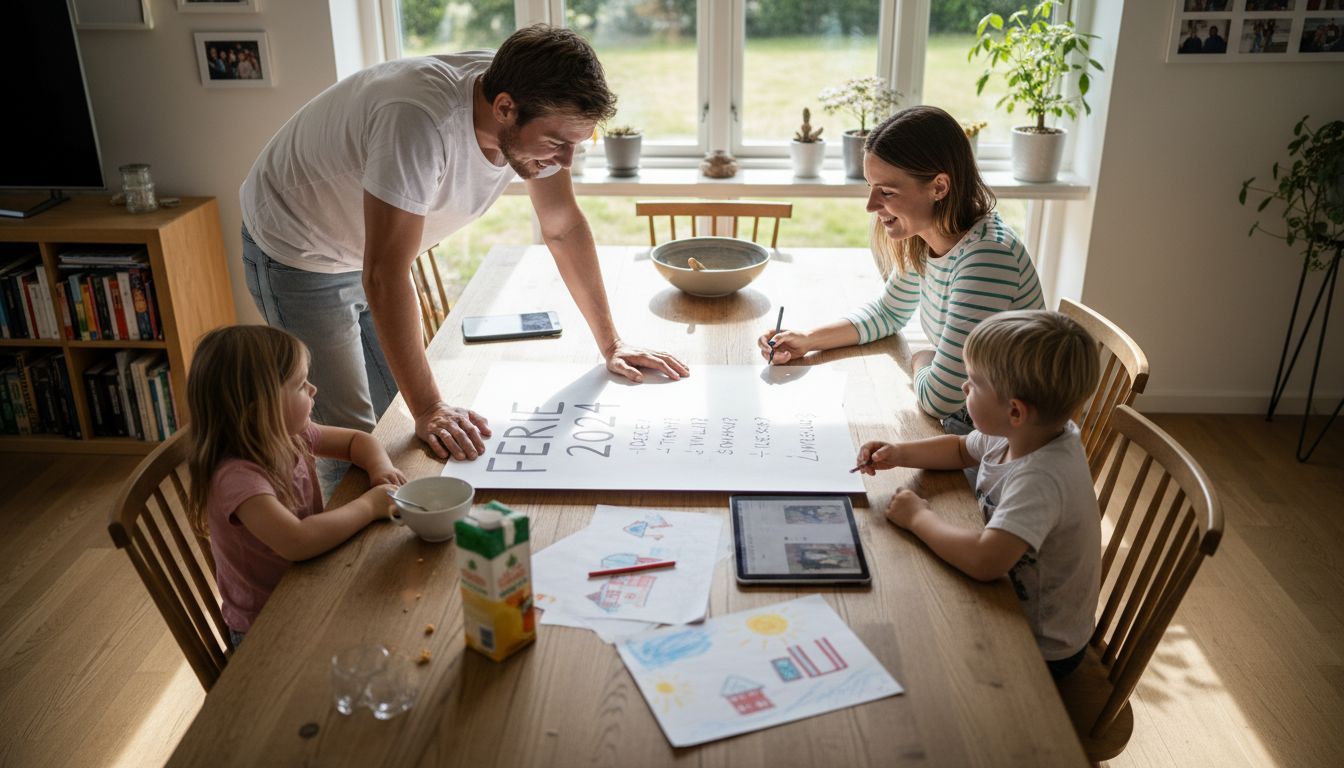
Many parents know the feeling of having to plan holidays and activities long before the work-free days are finally decided. Effective vacation planning therefore becomes an important part of everyday life, so that both children and adults have a holiday filled with local experiences and shared joyHere you get inspiration on how to tailor a family vacation that balances children's curiosity, adults' wishes, and everyday practicalities.
Step 1: Identify the family's wishes and needs
Family vacation wishes are unique and require a thorough and individually tailored planning process. Identifying these needs is about creating a shared understanding among all family members and ensuring that the holiday meets everyone's expectations.
The first step is to gather the whole family and hold an open dialogue about what each person wants from the holiday. Dialogue about the family's holiday wishes It is crucial for successful planning. Here you should focus on:
- Children's interests and age-appropriate activities
- Parents' wishes for relaxation or adventure
- Financial framework for the holiday
- Favorite destinations and types of travel
- Possible dates for the holiday
When mapping out the wishes, it is important to listen actively and be open to compromises. Some families prefer Danish holiday destinations with local experiences, while others seek new challenges and experiences.
Remember to involve all family members in the decision-making process. Children can come up with fantastic ideas, and by giving them a say, you ensure engagement and joy even before the holiday itself.
Pro-tip: Create a family wish list with all ideas and then vote on the most important activities to foster ownership and enthusiasm.
Step 2: Investigate relevant activities and attractions
Once you have identified the family's wishes, the next step is to research and find the perfect activities that match your interests. Destinations in Central Europe offer numerous opportunities familiar with different preferences and age groups.
Before you choose activities, you should consider the following criteria:
- Children's age and interest level
- Physical activity level
- Economic framework
- Geographical location
- Availability and any age restrictions
It is important to create a varied activity list with experiences that cater to the needs of the whole family. Activities may include city walks, museum visits, and nature trips., which ensures a wide range of experiences.

Use the internet, local tourist offices, and travel guides to research the options. Many attractions offer children's discounts or special events that can make the holiday both more fun and more affordable.
Here is an overview of important factors to consider when choosing family activities:
| Factor | Importance for the family | Example of consideration |
|---|---|---|
| Activity variation | Ensures happiness for everyone | Combine culture and play |
| Time consumption | Prevents stress | Short and long experiences |
| Availability | Accessible for children and adults | Accessible wheelchair-friendly places |
| Price | Keep the budget in place | Free events |
Pro-tip: Make a prioritized list of activities and be prepared to adjust the plans if the children show particular interest in certain experiences.
Step 3: Plan route and timeframe for excursions
A successful family vacation requires careful route planning, taking into account the needs and energy levels of all family members. Effective route planning is about balancing activities and transportation time. to ensure a comfortable and rewarding travel experience.
When planning your route, you should consider the following elements:
- Distances between attractions
- Children's endurance and need for breaks
- Transportation options
- Flexibility in the schedule
- Daily activity levels
Use digital tools such as short over transport network to visualize your route and estimate travel times between different destinations. It can help you create a more realistic and comfortable travel plan.
Remember that Plan with margin and include extra time for unforeseen stops, children's interests, or rest. A flexible timeframe prevents stress and ensures that all family members can enjoy the holiday at their own pace.
Pro-tip: Create a daily schedule with about 70% planned activities and 30% free time for spontaneous experiences and relaxation.
Step 4: Assess costs and budget
A successful family budget is the foundation of any good holiday planning. Clear financial goals are essential for successful budgeting and can help you avoid unnecessary financial surprises during the holiday.
When you prepare your holiday budget, you should include the following expense areas:
- Transportation costs
- Accommodation
- Daily meals
- Activities and entrance tickets
- Insurances
- Extra costs and buffer
Budgeting requires precise planning with room for unforeseen expensesIt is recommended to allocate 10-15% extra In relation to your expected total budget as a safety margin.
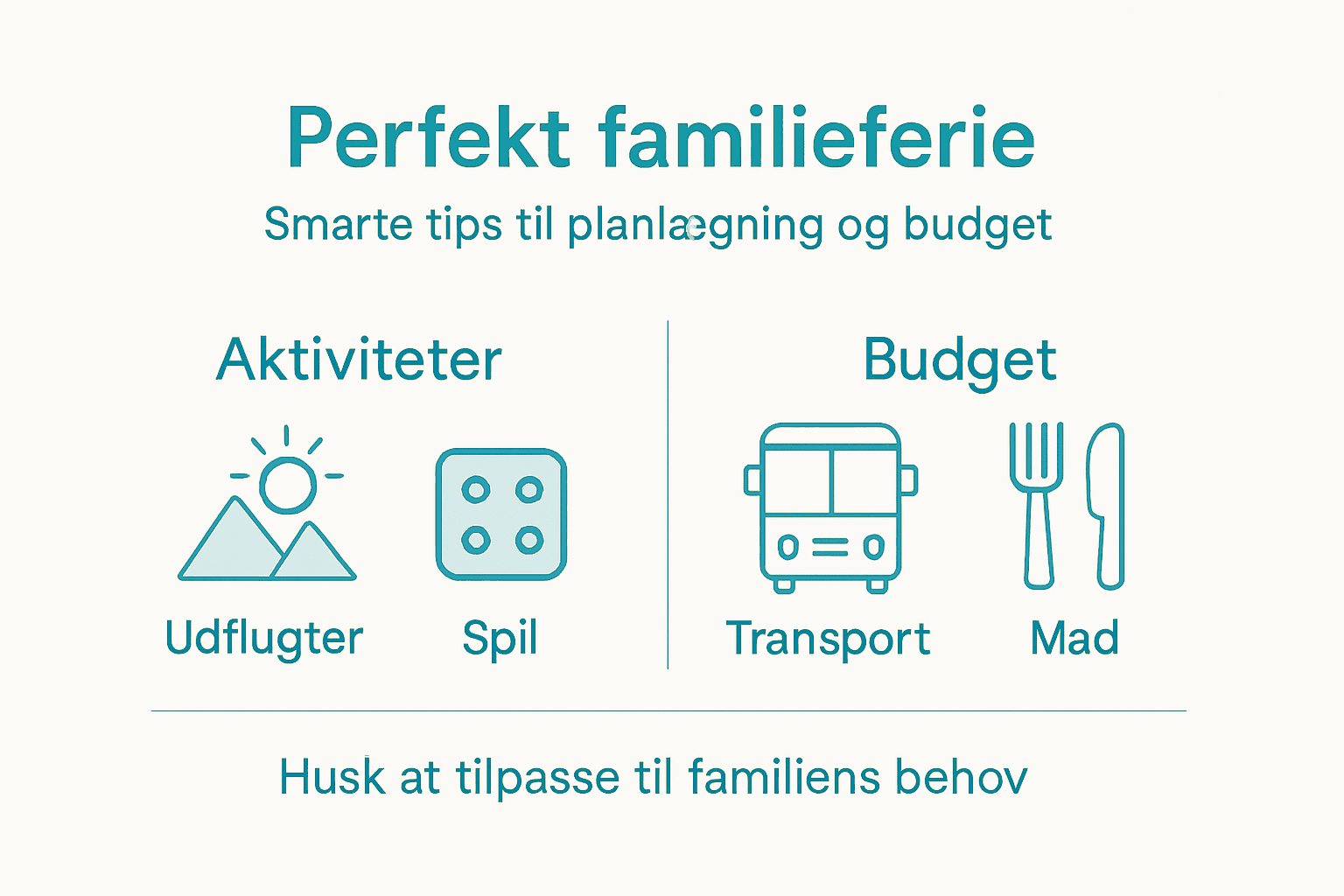
Continuously review your budget and be prepared to adjust. Some activities may be more expensive or cheaper than expected, so flexibility is key to a relaxed holiday budget.
Here is a comparison chart of different budget items for the family vacation:
| Cost type | Typical share of the budget | Special expenses |
|---|---|---|
| Transport | 20-30% | Fuel, tickets, parking |
| Accommodation | 30-40% | Hotel, holiday home, camping |
| Meals | 15-25% | Restaurant, shopping |
| Activities | 15-20% | Tickets, guided tours |
| Buffer | 10-15% | Unexpected expenses |
Pro-tip: Use budget calculation apps or spreadsheets to keep track of expenses in real time and avoid unpleasant financial surprises.
Step 5: Ensure quality and well-being during activities
A successful family holiday is not just about activities, but about creating meaningful experiences that strengthen family bonds and ensure everyone's well-being. Community and inclusion are essential for children's positive holiday experiences..
When planning activities, you should focus on:
- Choose activities where everyone can participate
- Balance challenging and relaxing experiences
- Secure breaks and downtime
- Listen to the children's interests and needs
- Avoid too many structured activities
The holiday should reduce stress and improve the family's mental well-beingThat means you have to Create space for relaxation or spontaneity, so the holiday doesn't feel like yet another pressured schedule.
Be aware of each family member's energy level and mood. Some days require more calm, others more activity. Flexibility is the key to a pleasant holiday experience.
Pro-tip: Agree on a short daily family check-in where you touch base with each other and adjust plans as needed.
Get control of family trips and old dreams with help from Rejs i Danmark
Planning the perfect vacation can seem overwhelming when desires, budget, and children's needs must come together in harmony. The article emphasizes the importance of involving the whole family in the wish list and creating a flexible plan with room for both relaxation and exciting activities. Lacking inspiration for Danish experiences suitable for all ages and interests can Slider Archive – Travel in Denmark be your shortcut to manageable options.
With a wide variety of attractions and user-friendly search tools, helps Travel in Denmark Trust in making timely decisions so you achieve the optimal balance between adventure and tranquility. Whether you want to save time on research or keep your holiday budget in check, you can find everything you need to create an unforgettable family vacation. Start your planning now and see how a well-thought-out route and carefully selected activities can turn dreams into reality on Uncategorized Archive – Travel in Denmark.
Frequently Asked Questions
How do we identify the family's wishes for the holiday?
To identify the family's wishes, you should maintain an open dialogue where all members can share their expectations. Gather the family and make a list of wishes and ideas to ensure that everyone's voice is heard.
What activities can we include in the holiday for the whole family?
Include activities that cater to different age groups and interests. Create a varied activity list that can include museum visits, outdoor adventures, and cultural experiences.
How do we plan a suitable route for the holiday?
Plan a route that takes into account the distances between attractions and includes time for breaks. Use short tools to visualize the travel plan so you can estimate travel times effectively.
How do we create a realistic holiday budget?
Create a holiday budget that includes transportation, accommodation, and daily meals. Allocate an additional 10-15% in the budget for unforeseen expenses to avoid financial surprises.
How do we ensure well-being during the holiday activities?
Focus on choosing activities that include all family members and allow for breaks. Listen to the children's needs and be flexible with the plans to create a stress-free holiday experience.
What is a good way to organize our holiday activities?
Create a prioritized list of wishes and activities, and establish a balance between structured plans and free spaces. It is a good idea to plan with 70% fixed activities and 30% time for spontaneous ideas.
Recommendation
- Enjoy Easter holiday by the North Sea: Step-by-step family guide – Travel in Denmark
- Checklist for active holidays: Plan perfect family experiences – Travel in Denmark
- Family-friendly holiday Denmark step by step: Plan successfully – Travel in Denmark
- Step by step for a family trip in Denmark: Plan easily – Travel in Denmark
- چرا خانوادهها جاذبهها را برای خاطرات ماندگار انتخاب میکنند | پرواز آلوها