TL;DR:
- Danish city walks are ideal for experiencing the country's history and charm on foot. With good preparation, both tourists and locals can create unforgettable experiences that combine culture, nature, and spontaneity.
You start optimistic, the hiking shoe fits loosely, and the map is only half understood. Two hours later, you have wet feet, an empty water bottle, and no idea where the famous street actually is. Many people know about it. A walk in Denmark doesn't have to end like this. With the right preparation and a bit of local knowledge, you can turn a chaotic day into one of the best experiences of your trip, whether you're a tourist or a Dane exploring your own backyard.
Main Points
| Point | Details |
|---|---|
| Plan with checklist | A checklist for clothing, snacks, and route choice increases both comfort and experience. |
| Choose routes with local highlights | Historic city centers and modern urban routes like Amarminoen offer authentic experiences. |
| Avoid typical mistakes | Good footwear and regular weather checks are the key to a good city walk. |
| Use digital tools | Apps can help you navigate and customize the route according to your daily condition. |
| Be flexible with the planning | A walking tour is best when you are open to unexpected experiences and can adapt along the way. |
What makes city walks special in Denmark?
Denmark is a country that is almost made for exploring on foot. The cities are compact, the infrastructure is good, and the history is literally embedded in the walls. It is not a coincidence that city walks have become one of the most popular ways to experience the country.
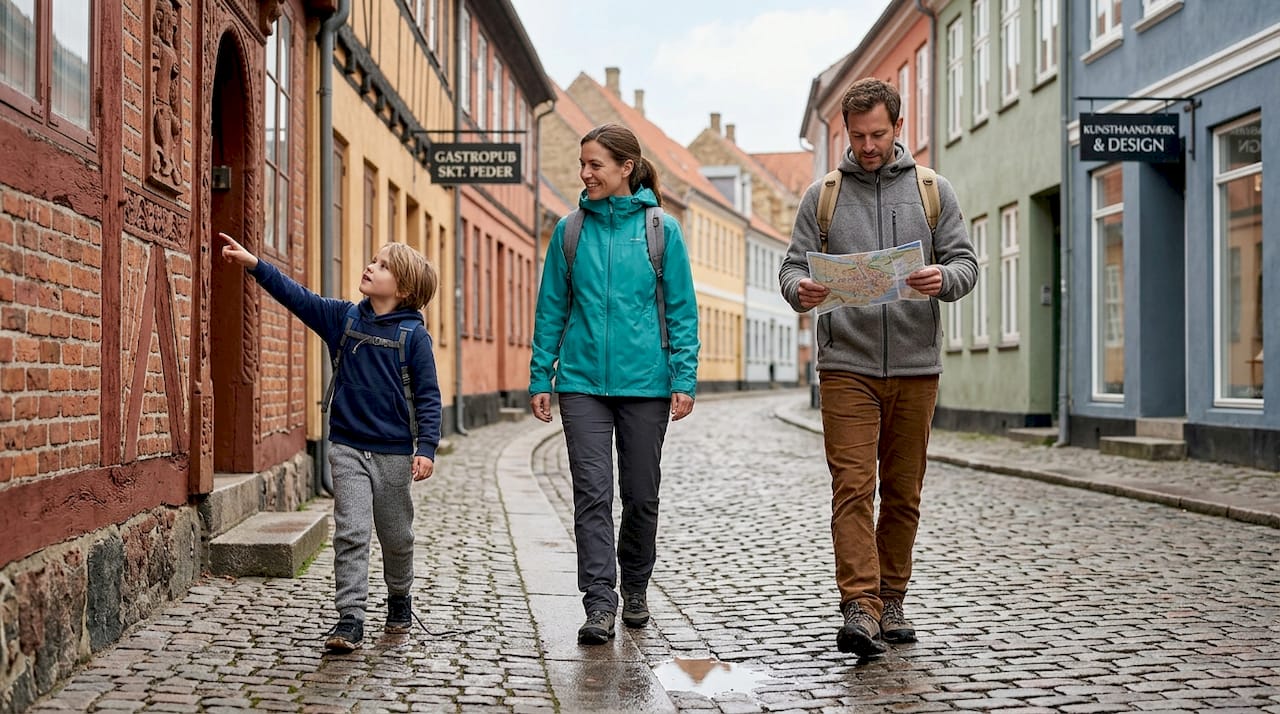
From 15 Danish historic city centers Designated as national cultural environments, they are ideal for independent city walks, including Dragør with its cobbled streets and Ebeltoft with its half-timbered houses. There are cities that tell stories without you needing a guide to translate them.
What distinguishes a city walk from a guided tour? Freedom. You set the pace, you stop when something catches your attention, and you discover places that no guidebook mentions. A guided tour provides context and historical depth, but an independent city walk allows you to experience it on your own terms.
Here are the most important elements that make Danish city walks special:
- Historical charm of world-class level Cobblestone streets, half-timbered houses, and medieval churches are not reconstructions. They are genuine.
- Short distances: Even large cities like Aarhus and Odense are walkable.
- Public transport as backup: You can always hop on a bus or metro if your legs give out.
- Seasonal variations Summer light until midnight, autumn colors in the parks, and Christmas spirit in December give each season its own character.
The best way to understand a Danish city is to walk through it. The architecture, the smell of freshly baked bread from a bakery, and the sound of the harbor tell you more than any tourist brochure.
| City tour | Guided tour |
|---|---|
| Free route and own pace | Fast program and schedule |
| Free or cheap | Typically costs 150-400 kr. |
| Requires independent navigation | The guide takes care of everything |
| Flexible and spontaneous | Structured and information-rich |
| Ideal for experienced travelers | God for the first time in a city |
Would you like to combine the city tour with cultural experiences? See our overview of cultural activities in Danish cities for inspiration on what you can include along the way.
How to plan your perfect city walk
Planning is not the same as removing spontaneity. It's about creating a foundation so you can be spontaneous without ending up in trouble. Once you have chosen your destination, the next step is to plan your day so you get the most out of the experience.
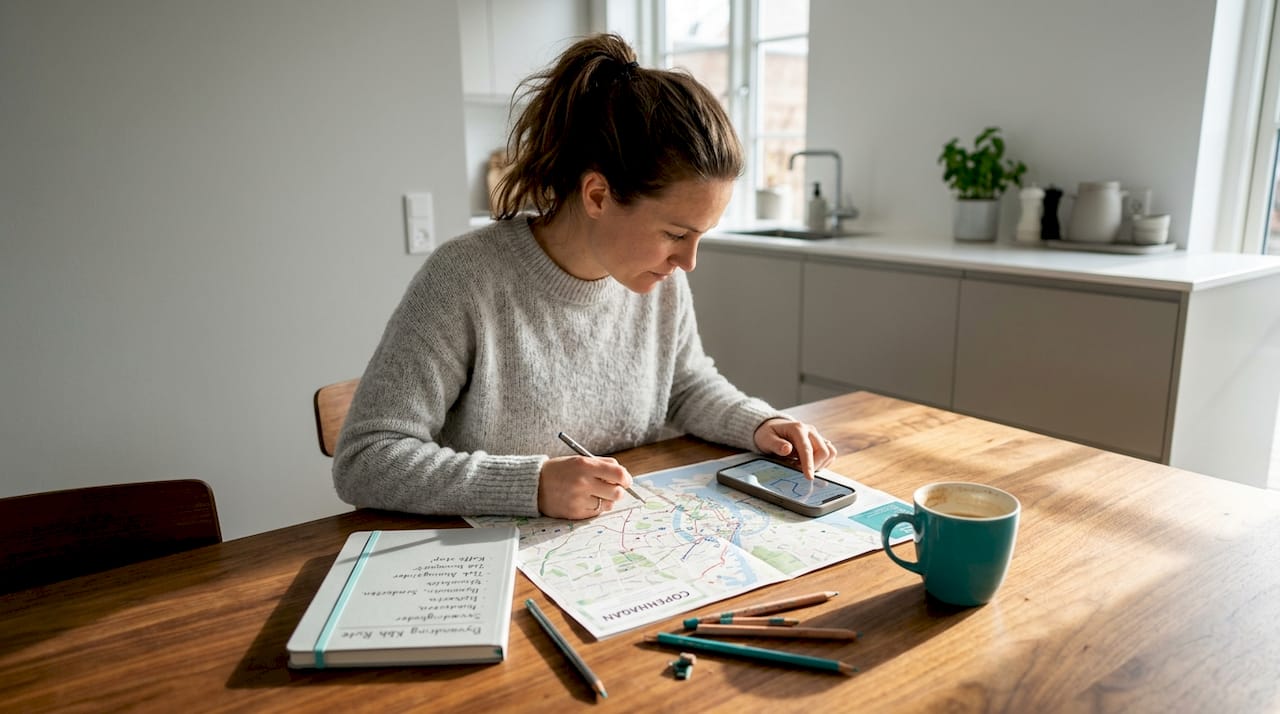
The most important Tips for beginners Includes good footwear, layered clothing, water and snacks, starting small with 3-5 km, using apps like Komoot, and being flexible with the weather. It sounds simple, but those are exactly the things most people forget.
Follow these steps to plan your city walk:
- Choose a destination based on interest and transportation. Do you prefer coastal towns, historic city centers, or modern urban neighborhoods? Check if the destination is accessible by public transport.
- Make a checklist the evening before. Supportive footwear, layered clothing, water bottle, snacks, and a fully charged phone.
- Download an offline map app. Komoot or Maps.me It works without mobile data, which is worth gold in areas with poor signal.
- Start with a short route. Have you never gone on city walks before, so start with 3-5 km. You can always extend, but you cannot shorten when the legs are tired.
- Check the weather forecast. Danish weather is unpredictable. A light rain jacket weighs almost nothing and saves the whole day.
- Plan breaks. Find a café or a park along the way where you can sit down and recharge.
Professional tip: Plan your route so that you start at the most demanding point and end close to public transportation. Then you are ready for the best and have an easy way home when you're tired.
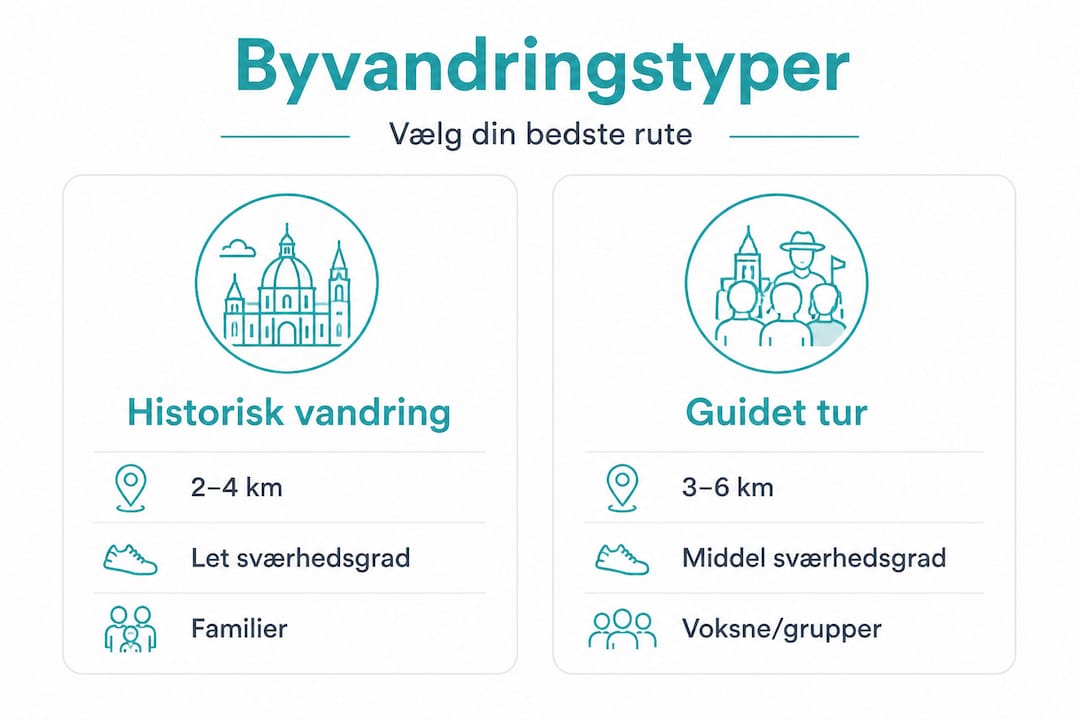
| Rutetype | Recommended distance | Difficulty level | Suitable for |
|---|---|---|---|
| Historical city center walk | 2-4 km | Let | All age groups |
| Coastal town walking | 5-10 km | Moderate | Adults and youth |
| Close-to-nature walk | 10-27 km | Demanding | Experienced hikers |
Our Checklist for a day trip gives you a complete overview of everything you need to remember before you leave. And if you have children, there are plenty of good tips in our guide to outdoor activities for families.
Routes, inspiration, and experiences on the city walk
Once the planning is in place, it's time to choose a route and explore the city on foot. Denmark has an impressive selection of routes suitable for all levels and interests.
Amarminoen It is a clear example. The route is 27 km nearby hiking On Amager, accessible by metro and bus, with practical recommendations such as 1.5L of water per. person, windbreaker, and maintaining a 50-meter distance from birds. It is a route that combines nature, the city, and easy access to public transportation, making it ideal for both beginners and experienced hikers.
Other routes worth considering:
- Ebeltoft Walk through the narrow streets with half-timbered houses and find the old town hall, which is one of the smallest in Denmark.
- Dragør: A pearl south of Copenhagen with cobbled streets and an active fishing harbor. Perfect for a half-day trip.
- Aarhus Latin Quarter Closely packed with cafes, shops, and historic buildings. Combine with a visit to ARoS Aarhus Art Museum.
- Ribe: Denmark's oldest city with a cathedral from the 12th century and medieval streets that are almost untouched.
The season plays a big role in your experience. In summer, the days are long and the cities full of life. In autumn, the colors are beautiful and the tourist crowds are thinner. In winter, many cities offer Christmas market walks with warm apple slices and mulled wine along the way.
Professional tip: Use Komoot to find user reviews of specific routes. Other hikers often note whether there are public toilets, good cafes, or special sights along the way.
Are you planning a Hiking with childrenChoose routes with clear landmarks along the way, such as a playground, an ice cream stop, or an exciting sculpture. It keeps the motivation up among the youngest. You can also find inspiration for activities for all agesthat suits an active day in the city.
Mistakes you should avoid and good shortcuts for a smooth city walk
Even with good planning, small problems often arise. Here are the most common mistakes and the smartest shortcuts to avoid them.
The three most common mistakes:
- Incorrect footwear. Sandals and flat sneakers without support cause sore feet after 2 km. Wear shoes with good support and preferably insoles if you walk long distances.
- For an ambitious route from the start. Many plan 15 km on their first city walk and give up halfway. Start with 3-5 km and build up from there.
- No backup plan for bad weather. Danish weather can change in half an hour. If you don't have a rain jacket and no plan B, you're risking a miserable experience.
Smart shortcuts:
- Always choose a starting point close to public transportation. This way, you can shorten the trip if the weather turns or the energy runs out.
- Always keep an extra snack in your bag. Low blood sugar ruins the mood faster than bad weather.
- Use Google Maps offline feature to download map sections before you go.
- Tell someone where you are going. It is good practice, especially on longer routes outside the city center.
Professional tip: Set an alarm on your phone halfway through the route. It reminds you to turn around in good time so you don't end up running towards the bus in the dark.
What do you do if the weather suddenly becomes too bad? We have gathered the best ones. rainy weather activities for the whole family, so the day is not wasted. And if you need a broader overview of what is possible with children, you will find plenty of ideas in our guide to family-friendly activities.
Here are the most important things to remember in a quick overview:
- Good, broken-in footwear with support
- Layered clothing adapted to the weather
- At least one liter of water per person
- Snacks for energy along the way
- Offline card and fully charged phone
- Backup plan for bad weather
Our experience: What city walks in Denmark actually teach you
Here is something most guides don't tell you: the best moments on a city tour are rarely the ones you've planned.
It's the small bakery yard in Ribe that you only find because you took a wrong turn. It is the conversation with a local fisherman in Dragør that tells you about the harbor's history in ten minutes. It's the view over Aarhus from the top of a random hill that wasn't on any list.
Walking tours in Denmark are not just about seeing sights. It's about sensing slowly. When you walk, you notice details you would never see from a train or a tourist bus. The smell of the sea in Helsingør. The sound of cobblestone streets under your shoes in Møgeltønder. The light that falls diagonally over the yellow half-timbered houses one September afternoon.
We have experienced that city walks function as a kind of mental reset. The body moves, the thoughts settle, and you begin to notice the world around you in a way that is difficult to achieve in other ways. It is exercise and meditation at the same time.
The most important lesson is this: Be open to the unexpected. Make a plan, but keep it loose. If a street looks interesting, then walk down it. If a sign points to something you don't know, follow it. The best experiences are not hidden in tourist brochures.
We also recommend including at least one spontaneous break on any city tour. Find a bench, sit down, and watch the people passing by. It sounds trivial, but it's exactly those kinds of moments that stick in the memory. See our collection of family activities for inspiration on how to combine the city walk with other experiences.
Find more guides and plan your next experience
Now you have the foundation for a successful city tour in Denmark. The next step is to find the route that fits you and your journey exactly. On a trip in Denmark, you will find a Guide for first-time visitors, who helps you navigate the country from day one. Our checklist for day trips ensures that you never forget anything important, and the practical travel tips Gives you everything you need to know about transportation, opening hours, and local customs. Use them as your starting point, and let the experiences shape the rest.
Frequently Asked Questions about City Tours
How long should a city tour typically be?
For beginners, 3-5 km is recommended so you have a good experience without getting too tired. You can always extend as you become more experienced.
Which apps can help with planning and navigation?
Komoot and Google Maps are ideal digital tools for planning and navigation during city walks. Remember to download offline maps before you leave.
What should you bring on a long city walk?
Good footwear, layered clothing, water, and snacks are essential, and for routes like Amarminoen, each person should carry at least 1.5L of water. A rain jacket and a fully charged phone are also must-haves.
Are there special routes for families and children?
Yes, routes like Amarminoen and the historic town centers in Dragør and Ebeltoft are suitable for families, especially if you plan breaks and choose shorter distances. Remember to include fun stops along the way to keep the children's motivation up.
Recommendation
- Practical checklist for a day trip in Denmark: Plan for success – Travel in Denmark
- Make the most of Danish history: Your step-by-step guide – Travel in Denmark
- The role of guides in travel planning – The key to unique experiences – Travel in Denmark
- Make the most of your trip with experience economy – Travel in Denmark
- Budget-friendly travel: A step-by-step planning guide
- استكشف مكسيكو سيتي كأنك محلي: دليلك الداخلي