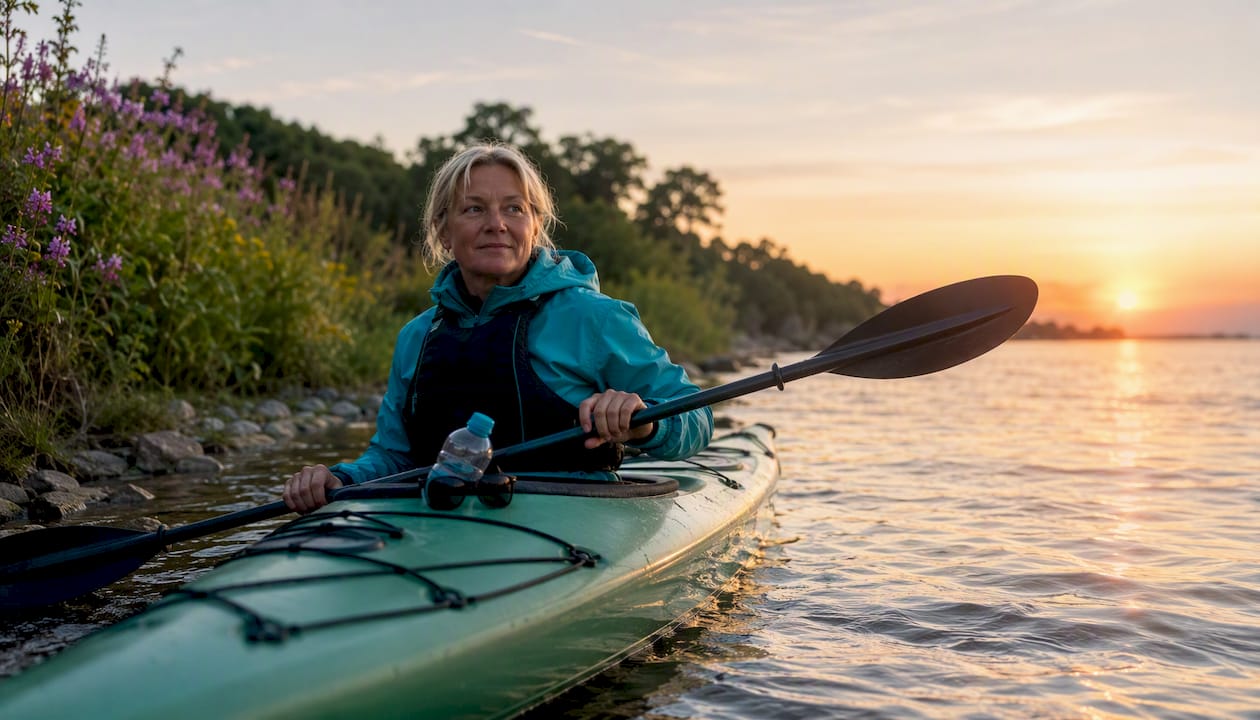
In short:
- Roskilde Fjord is a shallow, historic, and bird-rich area ideal for kayaking, cycling, and birdwatching. There are several ports with facilities, and the rules for access are protected by breeding season regulations and speed limits. The activities range from shorter kayak trips to multi-day cycling with good opportunities for cultural and nature experiences.
Roskilde Fjord is a shallow, historic, and bird-rich outdoor area north of Roskilde, ideal for kayaking, cycling, swimming, and birdwatching. The fjord is part of Skjoldungernes Land National Park and includes about ten harbors that serve as natural starting points.
The most obvious activities:
- Kayak and canoe from ports such as Roskilde, Jyllinge, Gershøj, and Herslev
- Cycling and hiking langs Fjordstien (Bike Route 40), 53 km from Frederiksværk to Roskilde
- Badning by the calm, shallow shores along the fjord
- Birdwatching In one of Denmark's most important breeding areas
- Museum visit on Viking Ship Museum and Roskilde Cathedral
Most important rule: From 1. April to the 15th. In July, you must not come closer than 50 meters to islands and islets. Water scooters are prohibited throughout the entire fjord.
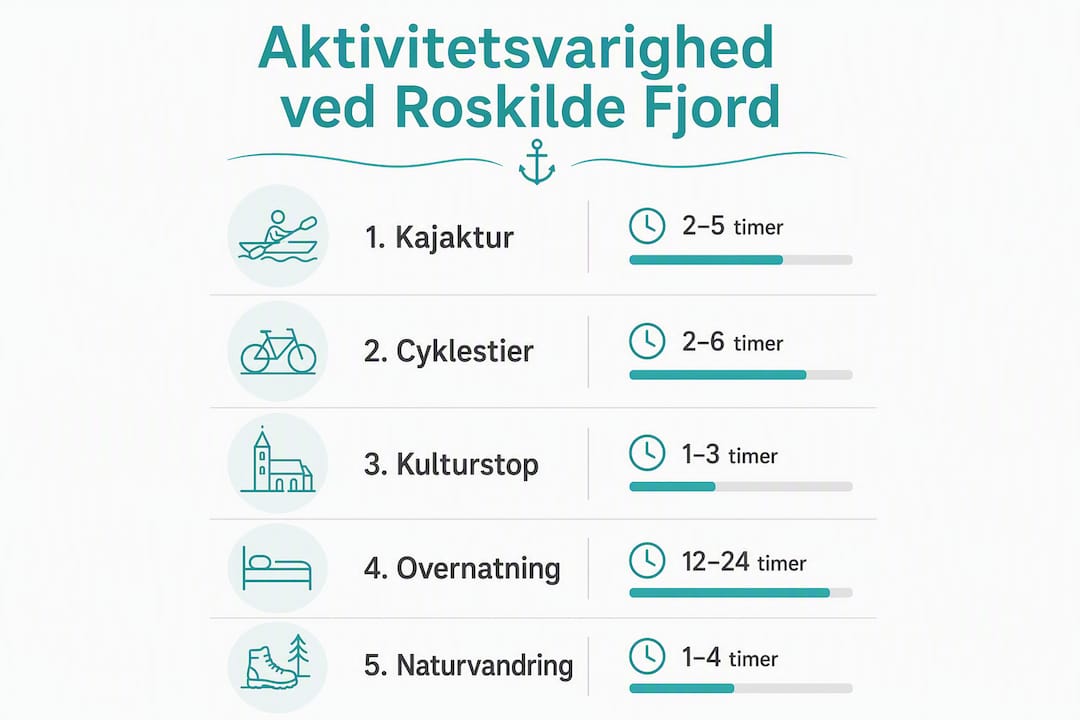
How long do the different activities take?
Half a day is enough for a kayak trip from Jyllinge Harbour and back, or to cycle the southern part of the Fjord Path with a stop in Roskilde. A whole day allows for combining water and culture, for example kayaking in the morning and the Viking Ship Museum in the afternoon.
If you want to cycle the entire Fjordstien, there is a longer route that can take one or two days to complete; you should plan for a full day or split it over two days with an overnight stay along the way. The trail is primarily asphalt and gravel, so it is manageable for most people. Birdwatching doesn't require much time in itself, but early mornings provide the best observations.
| Activity | Duration | Suitable for |
|---|---|---|
| Kajaktur (Jyllinge t/r) | 2–4 hours | Familiar, beginners |
| Fjord Path, full route | A full day | Cyclists, hiking enthusiasts |
| Fjord Path, half-day trip | 3–4 hours | All levels |
| Viking Ship Museum | 2–3 hours | Familiar, culture enthusiasts |
| Bird watching, morning trip | 1–2 hours | Nature enthusiasts |
| Bathing and picnic | 2–4 hours | Familiar |
What facilities do you find by the fjord?
Along the fjord, there are about ten harbors with toilets, drinking water, bathing piers, and access to shelters or tent sites. The four most used starting points are:
Roskilde Harbour They have the best facilities: parking, toilets, café, and direct access to the Viking Ship Museum. Jyllinge Harbour It is the preferred starting point for kayakers and has a bathing pier and toilets. Gershøj Harbour He is small and calm, with shelters close to the water. Herslev Harbor It is suitable for families with children and has calm, shallow water.
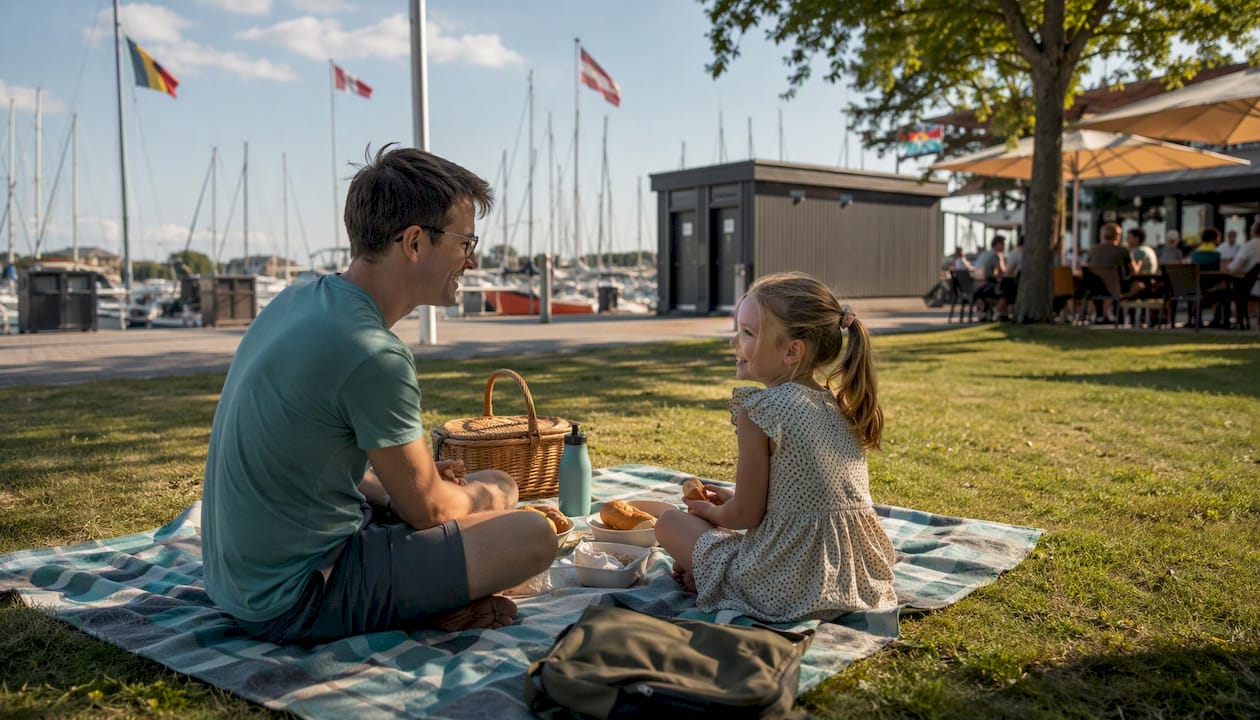
Shelters along the fjord are typically free or cost a symbolic price. Check the current availability with the municipality or National Park Skjoldungernes Land, as spots may be fully booked during the summer season. At the Lock House near Boserup Forest, you can borrow traditional wooden boats and row out into the fjord in a manner reminiscent of Viking Age travel.
What do you need to know about safety in the fjord?
The fjord is shallow., typically under 4–6 meters, making it suitable for kayak and canoe, but requiring attention. Low water means that weather and wind can quickly create waves that are difficult for the inexperienced to handle.
Three practical safety rules:
- Always wear a life jacket Or kayak or canoe, even on calm days.
- Check the weather forecast Before departure. The west wind can rise quickly and make the return trip difficult.
- Call 112 in emergencies on the water. Tell your position based on the nearest harbor or landmark.
The traffic rules also set speed limits that apply in vulnerable areas for motorized vessels, including reduced speed near the coast. These rules apply to motorized vessels, but kayakers should know them to understand the traffic on the water.
Roskilde Fjord deserves more than one trip
The fjord is not just a place to row a trip. It is a cultural-historical thoroughfare that connects the Stone Age, the Viking Age, and the present day in one and the same landscape. It is rare for nature and history to be so closely intertwined.
What many visitors underestimate is the fragility of bird life. The Environmental Agency documents 10,000–20,000 pairs of breeding birds distributed across 25–30 species on the fjord's islands. They are not abstract numbers. That is the reason why the 50-meter rule exists, and it applies whether you are in a kayak or a motorboat. A kayaker landing on an island in April can ruin an entire season's breeding success for the harbor seals.
My recommendation: always combine a water activity with a cultural stop. Viking Ship Museum Give the fjord experience a historical dimension that makes the trip more than just exercise. And choose early morning for birdwatching, preferably before 8:00, where the light is soft and the birds are active. That afternoon is the second best. There is the least to see in the middle of the day.
The floating outdoor lakes at Veddelev are a good example of how you can be considerate and still take a break on the water. Use them to push forward rather than land on protected islands.
Rejsidanmark helps you plan the trip
Rejsidanmark is a free planning tool that gathers routes, harbors, attractions, and seasonal tips for a trip to Roskilde Fjord. Three concrete ways the platform helps:
- Interactive map with filters for activity type, season, and age group.
- Route planning for cycling and hiking, including Fjordstien and combination routes with cultural stops.
- Family-friendly suggestions with practical information about facilities and access conditions.
The platform does not book tickets or equipment directly, but gives you an overview before you go. Check Transport Guide to find out how to reach the ports without a car, and use Filters of the experience overview to put together a day that fits exactly for your group.
Useful sources for your planning
These sources give you what you won't find in a general guide:
| Source | What it gives you |
|---|---|
| Skjoldungernes Land National Park | Harbor overview, facilities, local initiatives, and floating outdoor islands |
| Fuglenes Fjord (National Park PDF) | Precise traffic rules, speed limits, and breeding season zones |
| Environmental Agency — Roskilde Fjord | Facts about bird populations, Natura 2000 designation, and shallow character |
| Visit Fjordlandet | Inspiration for combined nature and cultural tours |
| Roskilde Municipality — wooden boats | Loan regulations for traditional wooden boats at the Lock House |
Professional tip: Check the nesting season zones on the National Park Skjoldungernes Lands map before choosing a launch point. Some routes are free all year round, while others require a detour from April to mid-July.