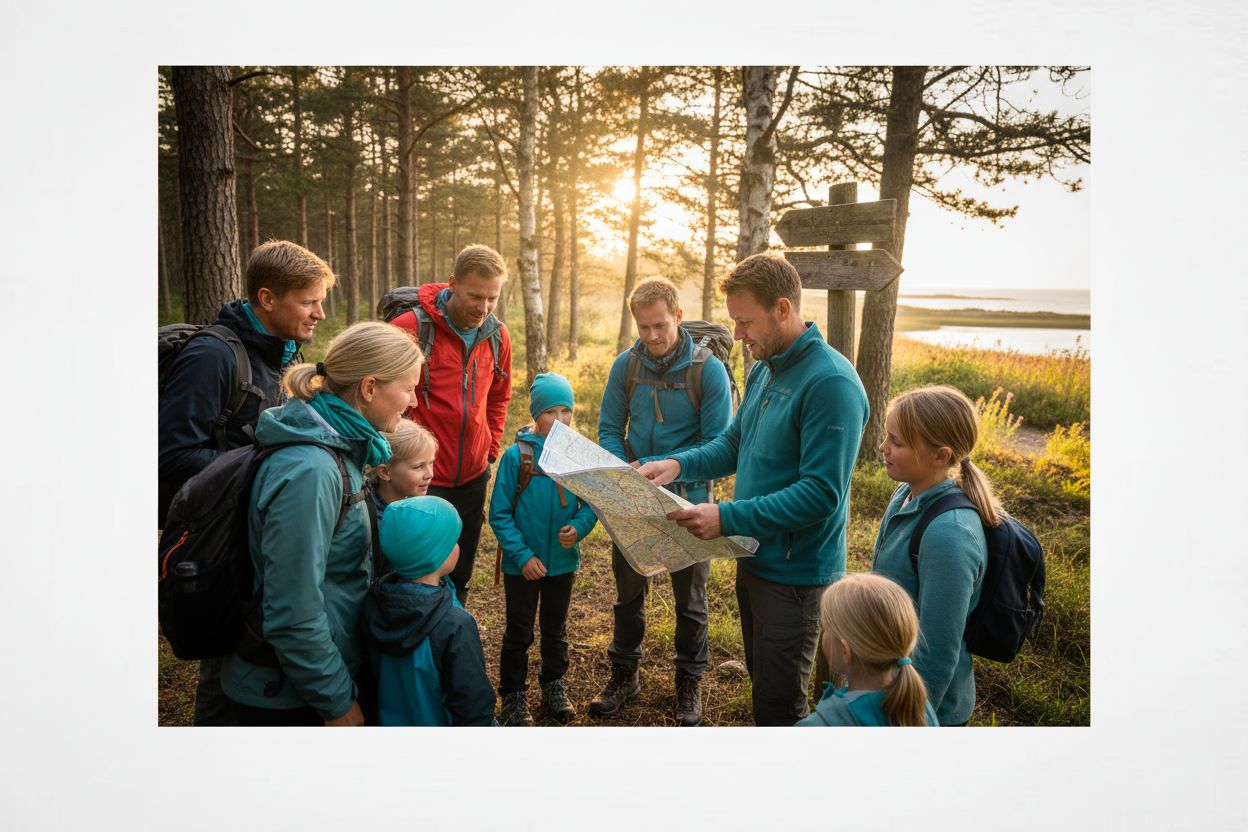
Hiking trips happen all over Denmark. Every single year, they set out. 2 million Danes out on trails and nature paths In pursuit of unforgettable experiences. Many believe that it all revolves around exercise and fresh air, but they are mistaken. Because a simple hiking guide makes your adventures safer, more fun, and much more educational than you would think.
What is a hiking guide and its role?
A hiking guide is a comprehensive tool that helps hikers explore and navigate through Denmark's amazing natural landscapes. It functions as a complete guide, not only showing the route but also providing in-depth information about the experiences and challenges one may encounter along the way.
The purpose of a hiking guide
The main purpose of a hiking guide is to provide hikers with reliable and detailed information that makes their journey safer, more comfortable, and educational. A good guide includes important details such as:
- Accurate route map with GPS coordinates
- Difficulty levels for different hiking trails
- Expected duration of the hike
- Recommendations for necessary equipment
- Information about local sights and natural attractions
According to the Danish Hiking Association, a hiking guide is more than just a navigation tool. It is an educational tool that introduces hikers to local ecosystems, cultural history, and the diversity of nature.
Elements of a complete hiking guide
A comprehensive hiking guide for Denmark would typically include the following components:
- Geographical descriptionDetailed information about the landscape's character
- Safety instructionsHow to navigate safely in nature
- Natural informationDescription of local plant and animal life
- Cultural insightsHistorical and cultural significance along the route
When you Exploring Denmark's sightsA hiking guide will be your indispensable companion. It not only helps you find your way but also provides a deep understanding of the amazing natural and cultural landscapes you pass through.
To provide an overview of the main components in a Danish hiking guide, the table below highlights the main elements and their functions.
| Component | Description |
|---|---|
| Geographical description | Detailed characteristics of landscape and terrain |
| Safety instructions | Advice on safe navigation and behavior in nature |
| Natural information | Information about local plants, animals, and ecosystems |
| Cultural insights | Information about the historical and cultural significance of the routes |
| Route cards and GPS | Precise map and coordinates for navigation |
| Equipment Recommendations | Clothing and equipment suggestions depending on the route and season |
| Duration and severity | Estimated time consumption and assessment of the route's level of difficulty |
Why are hiking trips popular in Denmark?
Hiking in Denmark is more than just a leisure activity. They represent a deep cultural and natural connection rooted in Danes' love of nature and movement. Denmark offers a unique landscape that makes hiking a fantastic experience for both locals and tourists.
Landscape Diversity
Denmark's landscape is surprisingly diverse, making hiking an exciting and inclusive activity. From gentle hills and lush forests to open coastlines and picturesque rural areas, the country offers a diversity of natural environments. These landscapes allow hikers to experience different terrain types at relatively short distances.
According to Danish Society for Nature Conservation, the country's many hiking trails are an exceptional example of how to preserve while also providing the population access to natural environments.
Health and Well-being
Hiking has a significant impact on Danes' physical and mental health. They offer a Natural and free form of exercisethat combines physical activity with mental relaxation. Danish hiking trails are typically well-maintained and accessible, making them suitable for all age groups and physical abilities.
The Danes have a strong tradition of Prioritize outdoor activities, which is reflected in their high quality of life. Family holidays in Denmark It precisely emphasizes this trend, where natural experiences are central.
Cultural and Historical Connection
Hiking in Denmark is not just about physical movement, but also about connecting with the country's rich cultural heritage. Many hiking trails cross historic landscapes, old villages, and areas of deep cultural significance. Travelers will have the opportunity to:
- Experience authentic Danish landscapes
- Explore local traditions
- Understand the country's historical development
- Get close to the Danish natural heritage
This combination of natural beauty, health benefits, and cultural exploration makes hiking an extremely popular activity in Denmark.
How does the hiking system in Denmark work?
The hiking trail system in Denmark is a sophisticated and well-organized network that makes it easy and safe for hikers to explore the country. It is designed with a focus on accessibility, safety, and an immersive navigation through the Danish landscapes.
Route marking system
The Danish hiking trail system is characterized by a well-thought-out route marking system, which effectively guides hikers through different landscapes. These markings include:
- Color-coded signs
- GPS coordinates
- Clear signposts
- Informative boards at the start of the route
According to the Danish Hiking Association, this system helps ensure that hikers can easily navigate even in less known areas.
Infrastructure and Maintenance
The Danish hiking trail system is particularly remarkable because of its high maintenance standardPublic authorities and local nature associations collaborate to maintain hiking trails.
- Cleared for obstacles
- Secret mod erosion
- Protected against excessive wear
- Equipped with necessary facilities
The state's investment in these trails makes them accessible to all population groups, regardless of age or physical ability. Read more about Danish experiences for further insight into our nature-rich areas.
Digital Integration
Modern technology plays an increasingly important role in the Danish hiking system. Digital platforms Giver hikers
- Interactive route map
- Real-time updates
- Weather conditions
- Safety information
These digital tools make hiking more accessible and safer, increasing the chances of a pleasant experience in Denmark's scenic landscapes.
To facilitate the understanding of the structure and function of the Danish hiking trail system, this table provides a comparative overview of the main elements.
| Element | Function/focus | Examples |
|---|---|---|
| Route marking system | Guidance and navigation | Color-coded signs, directional signs, GPS coordinates |
| Infrastructure | Availability and maintenance | Riding, erosion control, facilities, access for all |
| Digital integration | Modern technology for safety and experience | Interactive map, real-time updates, weather conditions, safety information |
Key concepts and facts about hiking in Denmark
Hiking in Denmark is more than just a simple walk through the landscape. They represent a complex and well-organized activity with specific technical and cultural dimensions that make them unique and attractive to both local and international hikers.
Classification of walking sticks
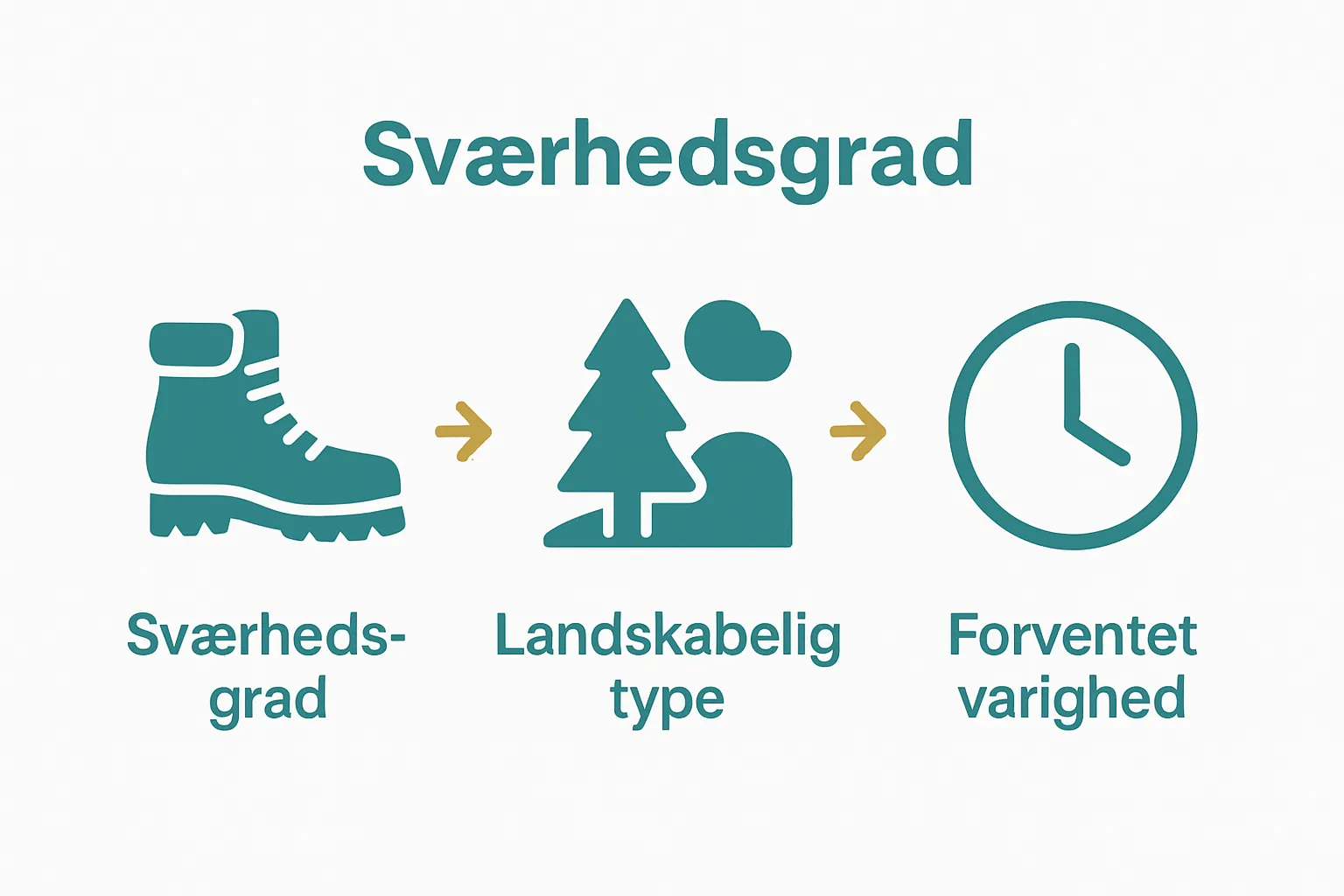
The Danish hiking trail system operates with a sophisticated classification system, which categorizes routes based on several important parameters:
- Difficulty level
- Landscape type
- Physical challenge level
- Expected duration
- Accessibility for different age groups
According to the Danish Hiking Association, this classification helps hikers choose routes that match their individual skills and preferences.
Legislation and Public Access
Denmark has Unique laws about public access in naturecalled the German law. This legislation ensures that hikers have broad access to almost all natural areas, with few restrictions. Central principles include:
- Respect for private property
- Minimum distance to inhabited buildings
- Prohibition against damaging nature and vegetation
- Requirement to remove own waste
Free nature experiences is a direct consequence of these liberal access rules, making hiking an inclusive and economically accessible activity.
Technical and Practical Aspects
Modern hiking in Denmark integrates advanced technology and traditional nature explorationImportant technical elements include:
- GPS tracking systems
- Mobile applications for route navigation
- Digital card platforms
- Real-time weather and terrain information
These technological tools enhance safety and make hiking more informative and user-friendly without compromising the essence of the authentic nature experience.
How do hikes contribute to nature conservation?
Hiking is much more than just a physical activity. They constitute a vital part of Denmark's active nature conservation strategy, where hikers become direct ambassadors for environmental protection through their movement and awareness.
Education and Environmental Awareness
Through organized hikes, a creation is made direct connection between people and natureThis immediate experience has several important dimensions:
- Increased understanding of the complexity of ecosystems
- Personal emotional attachment to natural areas
- Learning about the importance of local plants and animals
- Greater respect for ecological balance
According to the Danish Society for Nature Conservation, this direct contact with nature is crucial for creating long-term protection strategies.
Sustainable Tourism
Hiking implements Principles for gentle nature use through
- Defined trail systems that minimize landscape impact
- Restriction of unwanted vegetation and animal disturbance
- Controlled human traffic in vulnerable areas
- Education in "Leave No Trace" principles
Museums in Denmark Supports this approach by conveying the importance of nature conservation through educational exhibitions.
Economic Incentive for Nature Conservation
Hiking creates a Economic rationale for nature conservation by:
- Make the economic value of natural areas visible
- Create local economic incentives for nature conservation
- Support local protection initiatives
- Generate funds for nature restoration projects
This symbiosis between tourism and nature conservation ensures that Danish natural areas are not only preserved but also actively cared for and maintained through ongoing interest and investment.
Get more out of your next hike with Travel in Denmark
Are you lacking an overview and inspiration for your next hike in Denmark? Many experience that it can be difficult to find the right route or gather all the important information in one place. The article has shown how crucial a good hiking guide can be for experiencing safety, variety, and excitement in nature – but how do you put it all together so you can easily plan your adventure?
On Travel in Denmark Find interactive maps, detailed descriptions, and filtering options that help you choose the experiences that match your desires. Whether you're looking for family-friendly nature trails, cultural gems, or free outdoor experiences, you can quickly get an overview using our convenient search function. Check out our inspiration for free experiences in nature or read more about how you can make the most of Danish nature. Make your hikes easier and more fun now – start your journey with Rejs i Danmark and experience all the best Denmark has to offer.
Frequently Asked Questions
What is the purpose of a hiking guide?
A hiking guide helps hikers navigate and explore Denmark's natural landscapes by providing detailed route information and recommendations for safety and equipment.
What information does a hiking guide contain?
A hiking guide typically includes route maps, difficulty levels of trails, expected duration, necessary equipment, and information about local attractions and natural sights.
How does the Danish hiking trail system work?
The Danish hiking system is well-organized with color-coded signs, GPS coordinates, and informative boards, making it easy for hikers to find their way.
How do hiking activities contribute to nature conservation?
Hiking contributes to nature conservation by increasing environmental awareness among hikers and implementing sustainable practices that protect ecosystems in nature.