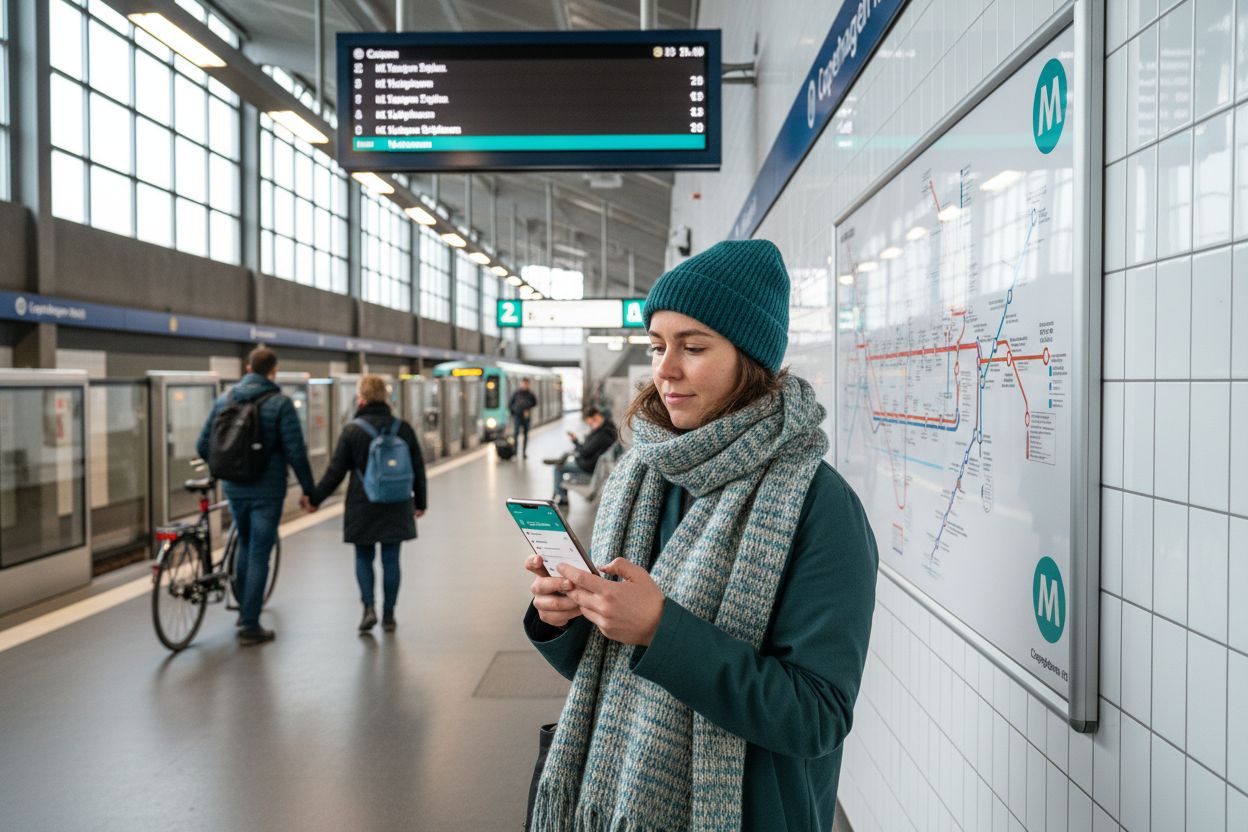
Getting around Copenhagen doesn't have to be a jungle. The city's public transportation system connects over 350 bus lines, metro, trains, and harbor boats across the city every single day. Many assume that it is impossible to keep an overview and get from A to B without getting lost. But even first-time visitors can experience that Copenhagen is actually one of the most accessible European capitals if you know just a few clever tricks.
Step 1: Choose your route and determine your destination
Planning your trip through Copenhagen's public transportation system begins with thorough route and destination planning. This initial phase is crucial for a smooth and efficient transportation experience in the Danish capital. Copenhagen has a complex but user-friendly transportation system, which requires some strategic preparation.
Before you start your journey, you must precisely determine your final destination. It means not only knowing the general district but also the specific address or location. Use digital tools such as Google Maps or the official Travel Planner app to identify the exact location. These digital maps not only give you the destination but also alternative routes and transportation options.
Once you have determined your destination, the next step is to choose the most efficient mode of transportation. Copenhagen offers an extensive network of metro, bus, train, and harbor ferries. Your chosen route depends on several factors: the distance, the time of day, the traffic load, and your personal preference. The metro system is typically fastest over longer distances., but buses and harbor boats may be more suitable for shorter or more scenic routes.
If you are new in town, it is recommended to download The Journey Planner or DOT Mobile Tickets the application These apps provide real-time information on departure times, route planning, and ticket booking. They also show the nearest bus stops and metro stations relative to your current location, which greatly simplifies navigation.
Remember to check the schedule options at different times. Rush hour in Copenhagen can vary, so a route that takes 20 minutes outside of rush hour can take twice as long in the morning or late afternoon. Be flexible and plan a little extra time into your trip to avoid stress and delays.
Your route and destination planning is successful when you have:
Here is an overview of the most important steps for effective use of public transportation in Copenhagen, including purposes and key actions for each step:
| Trin | Purpose | Central processing |
|---|---|---|
| Plan the route | Choose destination and means of transportation | Use Rejseplanen, identify address, check alternatives |
| 2. Check options | Compare routes and check schedules | Use travel apps, check departure times, note rush hours |
| 3. Buy ticket | Ensure a valid ticket for the journey | Buy via app or machine, select the correct ticket |
| 4. Find the stopping point | Locate the station/stop correctly | Use digital maps, check route numbers/departure times |
| 5. Boarding | Arrive safely and considerately | Wait for descending, find a seat, show ticket |
| 6. Confirm arrival | Ensure correct destination & plan further | Check position, find next transportation option, verify times |
- A precise address of your destination
- Choose the fastest and most convenient transportation method
- Downloaded a reliable travel app
- Checked alternative routes and departure times
Step 2: Check transportation options and schedules
After determining your destination, the next critical step is to investigate the available transportation options and precise schedules in Copenhagen's public transportation system. This phase is about optimizing your journey through thorough preparation and strategic planning..
Copenhagen's traffic system is complex and includes the metro, bus, train, and harbor boats. Each mode of transportation has its own characteristics and time intervals. The metro system, for example, runs with frequent departures, often with only 2-4 minutes between them during rush hour.Buses and trains have more variable frequencies, which requires careful planning.
Use official digital platforms like Rejseplanen to compare different routes and modes of transportation. These tools provide real-time information on departure times, delays, and alternative routes. Choose the route that combines the fastest possible transportation with the least waiting time..
Be aware of the rush hours, which are typically between the hours of 7-9 in the morning and 3-5 in the afternoon. During these periods, travel time can double, so plan with extra margin. Some routes have more direct connections without transfers, which can save you significant travel time.
Also check the operating hours of the specific transportation modes. The metro runs all night on weekends, while the bus network has reduced service late in the evening. DSB trains connect the outer districts and surrounding municipalities with frequent departures.The harbor boats offer a scenic alternative route through central parts of the city.
To help choose a transportation method, this table summarizes the main features of the Metro system, Bus, Train, and Harbor Boat, so you can more easily compare your options.
| Transport vehicle | Frequency | Suitable for | Special features |
|---|---|---|---|
| subway | 2-4 minutes (rush hour) | Long distances, quick travel | Running all night (weekend), central location |
| Bus | Varies | Short/scenic routes | Different lines and stops, reduced operation late |
| Tog (DSB) | Frequent | Urban and regional trips | Connects the outer district and surrounding area |
| Harbor boat | Varies | Scenic routes through the city | Good supplement, fewer departures |
Your transportation planning is successful when you have:
- Identified the fastest route
- Checked departure times for all relevant modes of transport
- Notes alternative routes in case of delays
- Downloaded a real-time travel app
Bonus tipBuy a DOT Travel Card or mobile ticket, which provides flexibility across different modes of transportation and saves you money.
Step 3: Buy a ticket through the app or ticket machine
Once you have planned your route and checked the schedules, the next critical step is to ensure you have the right ticket for your journey through Copenhagen's public transportation system. Tickets can be purchased in several ways, giving you flexibility and convenience..
The digital alternative is to use the DOT Mobile Tickets app, which is the most user-friendly method in today's technological era. Appen supports the purchase of tickets for metro, bus, and train with just a few taps on the screenDownload the app from the App Store or Google Play, create a profile, and select your desired ticket. You can choose between single tickets, punch cards, or period cards depending on your travel needs.
For those who prefer more traditional methods, ticket machines are available at all metro and train stations. The travel planner recommends having a payment card ready, as most machines only accept credit and debit cards. Please note that some machines are only available at certain times, so check in advance.
The price of the ticket depends on zones and travel duration. Copenhagen is divided into zones, and the more zones you travel through, the more expensive the ticket becomes.A good tip is to buy a DOT Travel Card, which gives discounts on your trips and works across all modes of transportation. The card can be easily recharged online or at ticket machines.
Pay special attention to any discount schemes. Students, children, young people, and pensioners can often get special ticket prices. Always buy the correct ticket to avoid fines during inspection.
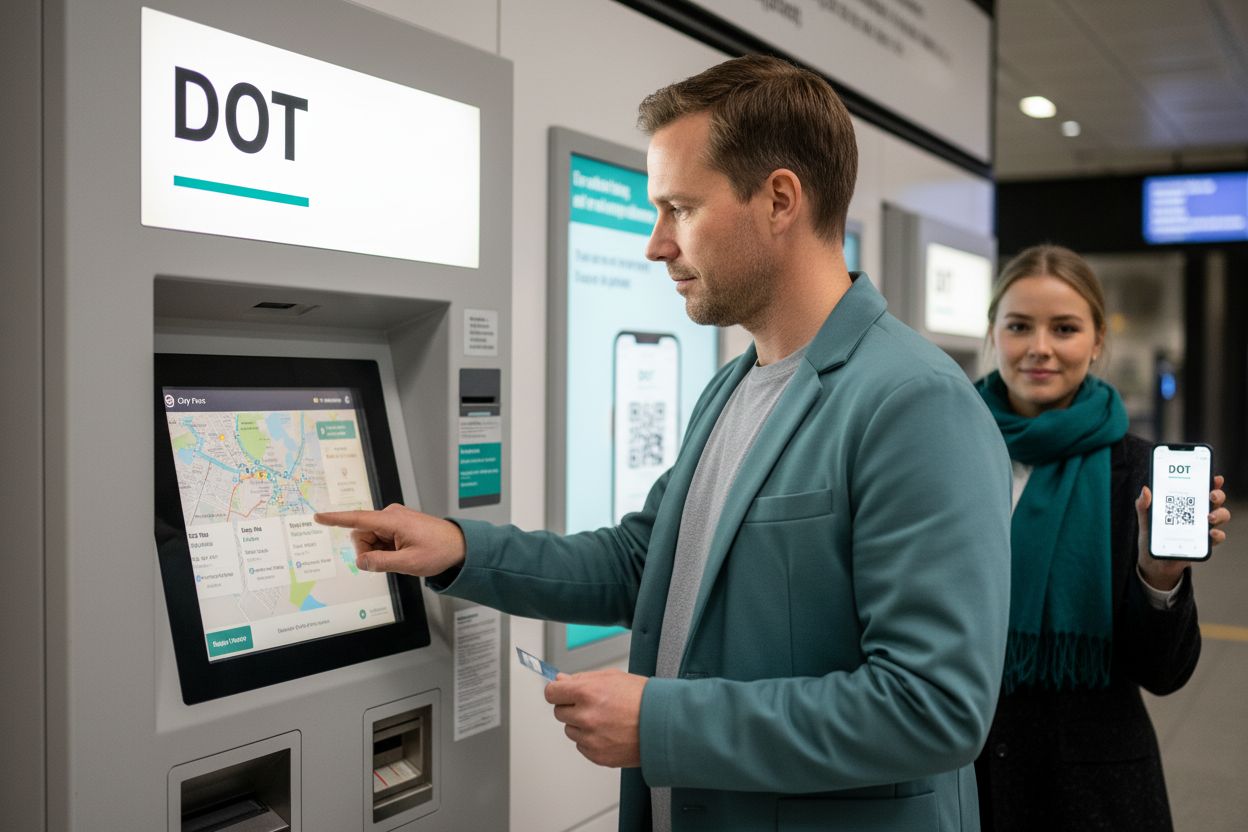 Spot checks are frequent in Copenhagen's public transport..
Your ticket purchase process is successful when you have:
- Choose the right ticket for your trip
- Paid with a valid payment method
- Received a digital or physical ticket
- Checked zone indications and validity period
Remember that the ticket is typically valid for a specific period, so plan your trip accordingly. One last tip: always keep your ticket visible throughout the entire journey..
Step 4: Find the right station or stop
After purchasing your ticket, the next crucial step is to locate the correct station or stop within Copenhagen's complex transportation network. Navigation accuracy is crucial for a smooth journey.
Use digital navigation tools like Google Maps or the official Rejseplanen app to identify precise station locations. These apps not only provide you with the exact location but also visual directions, which is especially useful for newcomers to the city or tourists. Metro stations are generally the easiest to find because they have clear signage and central locations..
Please note that some stops may be close to each other but serve different modes of transportation or directions. Double-check the destination on signs and electronic information boards. During rush hour, many people can make it difficult to navigate, so stay calm and check the route information carefully.
For bus and harbor boats, the stops may be less obvious. Look for official DOT transport standards with route numbers and destinations. Some stops have digital screens that display real-time departures and any delays.These information boards are worth their weight in gold for the strategic traveler.
Tip for efficient navigation: Identify primary reference points such as large buildings, the town hall, or central squares. These can help you orient yourself if you become unsure of the exact station location. Copenhagen is fortunately a compact city with relatively manageable transportation zones.
Your station and stop location is successful when you have:
- Confirmed the exact station location
- Checked route numbers and destinations
- Noted alternative routes
- Verified departure times at the stop
ImportantArrive at least 5-10 minutes before the scheduled departure time. This gives you time to confirm your route and find the correct platform or stop without stress.
Step 5: Get on the vehicle and find your seat
When you stand at the starting point, it is crucial to board the vehicle calmly and systematically. Copenhagen has a well-developed transportation culture with clear unwritten rules about good conduct., that new travelers should know about.
At metro stations and in trains, there are typically marked boarding and alighting areas. Let passengers get off before you get onThis is not only polite but also the most effective way to ensure smooth boarding and disembarking. I DSB train Are there often zones marked with different colors indicating the validity of different ticket types?
When you board, quickly look for available seats or suitable standing positions. During rush hour, it can be densely populated, so be prepared to stand. The metro and S-train system has designated areas for standing passengers with the possibility to hold onto handrails and handles.
If you have luggage or are elderly or pregnant, there are special areas reserved for these passengers. Be aware of the blue seats, which are traditionally reserved for passengers with special needs.Show consideration and offer them your seat if a person with an obvious need boards.
There are different strategies for seat selection on buses and the metro. In the metro, you can freely choose between different carriages, while city buses often have a more linear seating arrangement. Pay attention to the seating direction and choose a seat that suits your travel style and comfort.
Your boarding is successful when you have:
- Waiting patiently for passengers to disembark
- Found a free seat or a good standing position
- Checked that your ticket is ready
- Informed yourself about emergency exits
Bonus tipAlways keep your ticket easily accessible for any ticket inspection. Copenhagen has frequent random checks, and you risk a fine if you cannot show a valid ticket immediately.
Step 6: Confirm your arrival and plan your onward journey
When you arrive at your destination, it is important to act systematically and prepare for the next step. Copenhagen is a complex city with many transportation options., which requires attention and strategic planning.
First and foremost, you must verify that you have arrived at the correct destination. Look around and check road signs, digital information boards, or use your smartphone.The travel planner can help you confirm your exact location and plan further routes if necessary.
If your journey involves a transfer, it is recommended to use the next few minutes to inform yourself about the next transportation option. Metro stations and central traffic hubs like Nørreport Station have complex layouts, so be prepared to navigate through busy passenger flows. Stay calm and follow the clear signs.
Check your remaining travel route. Some travelers forget to plan their entire trip in advance, which can lead to unnecessary delays. Copenhagen has an integrated transportation system where the metro, bus, and train often connect with each other, so be aware of your overall transfer options.
Be especially mindful of the time of day and the remaining transportation options. In the evening, the frequency of departures is reduced, so it is important to plan your onward journey well in advance. Peak hours can vary, so check the exact departure times..
Your arrival and onward travel planning are successful when you have:
- Confirmed your exact position
- Checked the next transportation options
- Verified departure times for onward transport
- Informed yourself about alternative routes
Pro tipAlways keep your mobile app or a physical route card handy. Although Copenhagen has a well-organized transportation system, unforeseen events such as roadworks or temporary detours may occur.
Get ready for your next transportation experience in Copenhagen with Rejs i Danmark
It can be challenging to navigate Copenhagen's public transportation for the first time. Maybe you've experienced uncertainty about choosing a route, buying the right ticket, or finding the correct stop, especially when you want to efficiently visit the city's top attractions. The article has helped you with concrete knowledge about planning, apps, and tickets – but what do you do when you want to make the most of the city and combine your transportation with exciting experiences?
Save time and avoid poor planning by taking the next step. On Travel in Denmark Can you explore an interactive map with attractions near your planned transportation stops. Find inspiration for museums, parks, family activities, and local gems along your travel route. The advantages are:
- Route planning that matches your experiences with public transportation
- Filter by season, price, and age so you always find something for you
- Practical information about opening hours and estimated costs
Make your next transport trip both comfortable and unforgettableVisit Travel in Denmark now and plan a trip where you not only arrive – you get more out of the entire experience every time.
Frequently Asked Questions
How do I plan my route in Copenhagen's public transportation?
To plan your route, you can use apps like Rejseplanen or Google Maps. Enter your destination to find the fastest transportation method and alternative routes.
What are the different transportation options in Copenhagen?
Copenhagen offers several transportation options such as metro, bus, train, and harbor ferries. The choice depends on the distance, the time of day, and personal preferences.
How do I buy tickets for public transportation?
Tickets can be purchased via the DOT Mobile Tickets app, at ticket machines at stations, or online. It is recommended to choose a DOT Travel Card for flexibility and discounts.
How do I find the right station or stop?
Use digital navigation services like Google Maps or the Rejseplanen app to find the exact station or stop. Keep an eye on the road signs and electronic information boards at the stations.