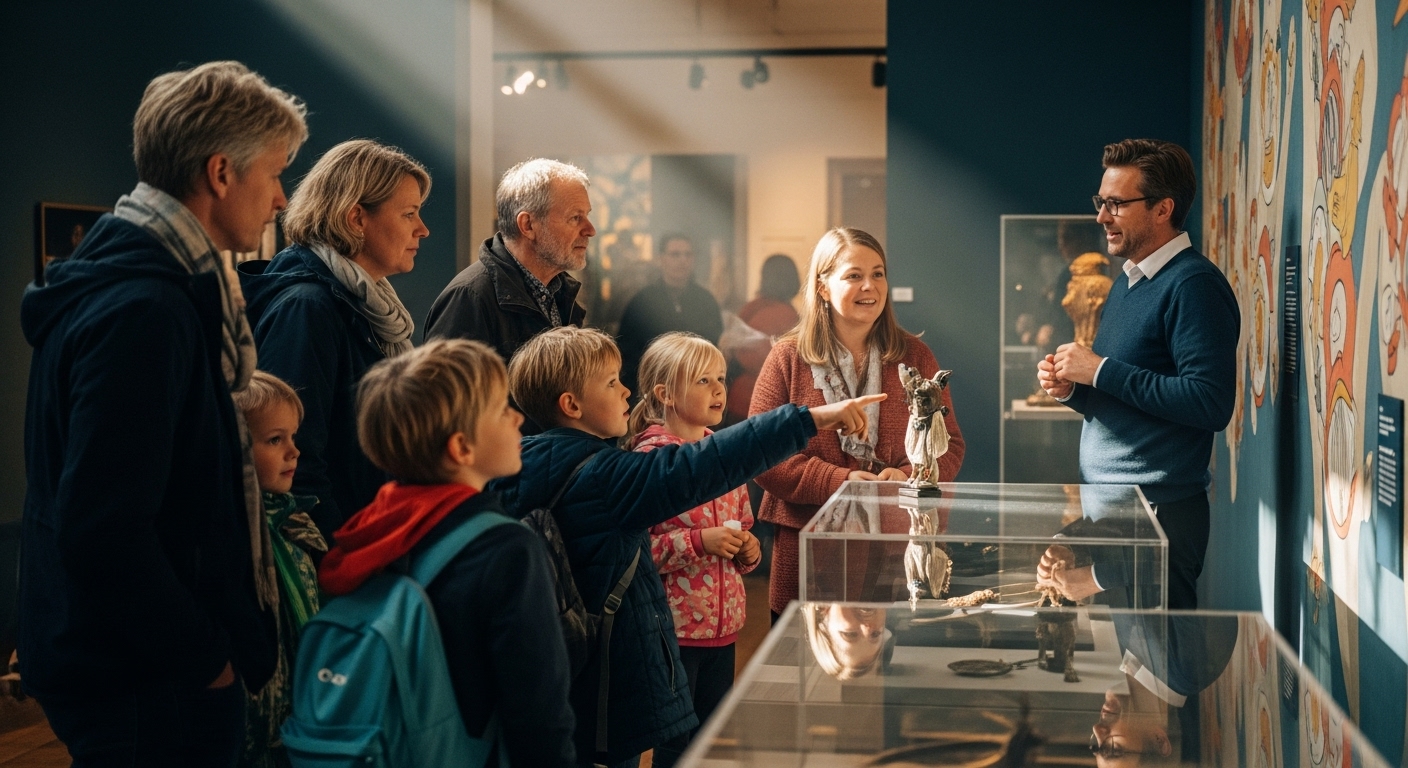
Danish museums encompass everything from Viking ships to modern art and attract millions of visitors each year. Many believe that museums are only dusty exhibition rooms for old objects. But in fact, the museums are much more lively than people think. Over 11 million people visit Danish museums annually and in several places you can experiment with digital installations yourself or participate in interactive learning activities.
What are museums, and how do they function in Denmark?
Museums are important cultural institutions that preserve and transmit historical, artistic, and scientific narratives. In Denmark, museums play a central role in documenting and communicating Danish culture, heritage, and identity to both local and international visitors.
The following table provides an overview of the most important types of museums in Denmark and their primary focus areas to facilitate understanding of their distinctive roles.
| Type of museum | Primary focus | Examples of content |
|---|---|---|
| art museums | Visual art, sculptures, artistic works | Paintings, modern art |
| Historical museums | Denmark's national and regional histories | Viking find, occupation period |
| Technical museums | Technology and industrial development | Machines, transportation tools |
| Natural History Museums | Ecology, biology, natural science | Animal skeletons, geological collections |
Museum types and their functions
Danish museums are much more than just exhibition venues. They can be categorized into different types, each with a specific purpose.
 :
:
- art museumsExhibits visual art, sculptures, and artistic works
- Historical museumsTells Denmark's national and regional stories
- Technical museumsShowcasing technological and industrial development
- Natural History MuseumsFocusing on ecology, biology, and natural sciences
According to the Danish Agency for Culture and Palaces, Danish museums function as central knowledge centers that not only exhibit but also conduct research and communicate knowledge within their respective fields.
The museum experience in Denmark
Danish museums are characterized by their interactive and inclusive approach. They aim to create engaging experiences for all age groups through innovative exhibition methods. From child-friendly activities to advanced multimedia installations Travel in Denmark's guide to free experiences many opportunities to explore the world of museums
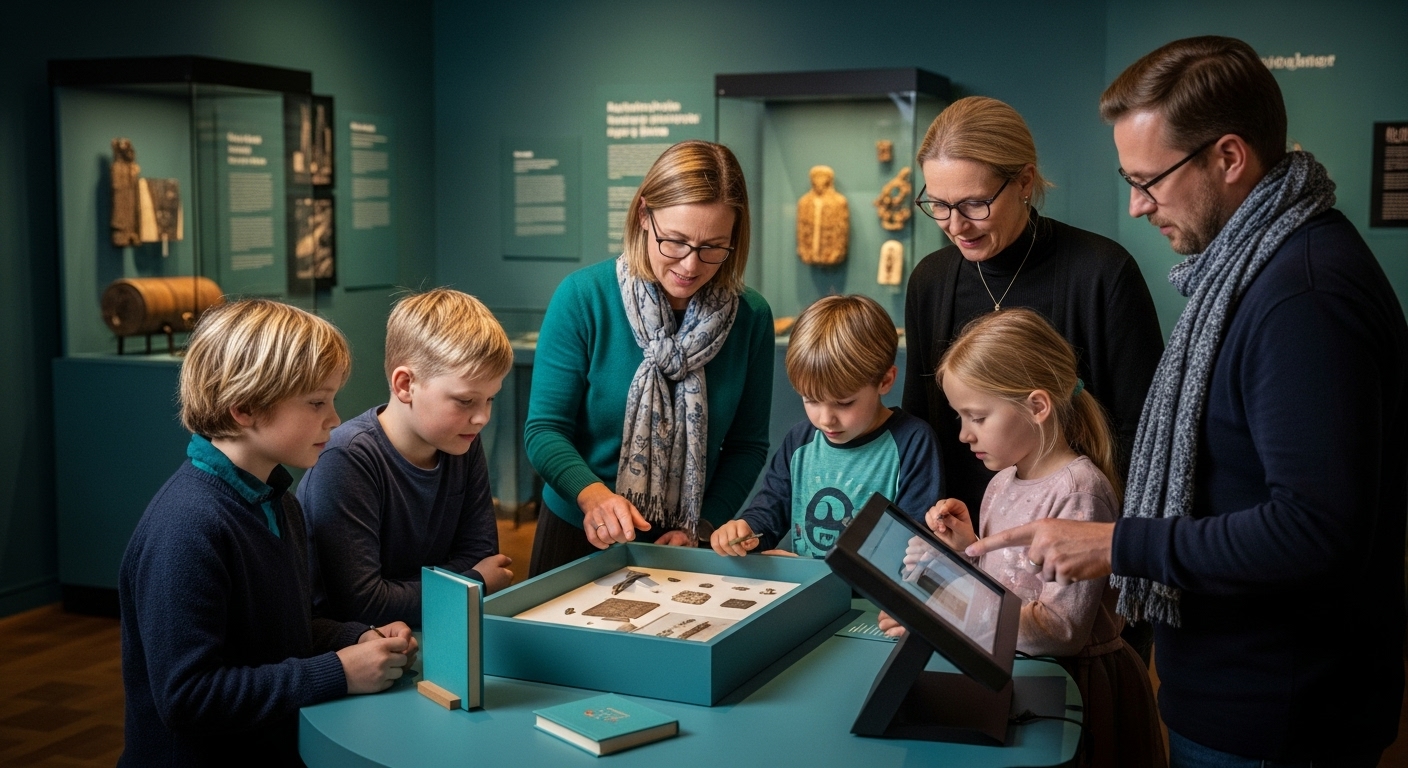
Interactive elements such as touch screens, virtual tours, and hands-on activities make museums accessible and relevant. Many museums also offer educational programs, research, and special events that go beyond traditional exhibitions.
Museums in Denmark are not just preservation institutions, but dynamic platforms that actively contribute to cultural understanding, learning, and national identity. They invite visitors to explore, understand, and appreciate the diverse stories that make up Danish cultural heritage.
Why are museums important for Danish culture and society?
Museums function as living archives that preserve and transmit Denmark's cultural heritage, identity, and social memory. They play a crucial role in connecting the past, present, and future through documentation, learning, and cultural understanding.
This table summarizes the key roles of museums in Danish society and highlights their importance for culture, education, and the economy.
| Role | How museums contribute |
|---|---|
| Cultural identity | Documents and conveys national stories; preserves cultural traditions |
| Education and knowledge sharing | Creates interactive learning environments; stimulates critical thinking |
| Economic growth | Attracts tourists; contributes to the local business sector and job creation |
| Social cohesion | Supports understanding between generations and promotes cultural exchange |
Cultural Identity and Historical Consciousness
Museums are more than just exhibition spaces; they are power centers for national self-understanding. It documents and interprets Denmark's complex historical narratives, helping the population understand their roots and social development. The Danish Agency for Culture and Palaces emphasizes that museums create connections between generations by preserving tangible and intangible cultural heritage.
Danish museums contribute to national identity through:
- Documentation of historical events
- Preservation of cultural traditions
- Conveying national narratives
- Exploration of social change processes
Education and Knowledge Sharing
Museums function as informal learning spaces that offer hands-on experiences and experimental approaches to education. They supplement traditional school education by creating interactive learning environments where visitors can experience history firsthand. Travel in Denmark's guide to experiences show how museums can be fantastic educational platforms for both children and adults
Educationally, museums contribute by:
- Offer interdisciplinary learning experiences
- Stimulate critical thinking
- Promote cultural understanding
- Present complex topics through visual and interactive methods
Museums are far more than passive institutions. They are dynamic platforms that actively shape our collective understanding, promote critical thinking, and strengthen social cohesion in Danish society.
How do museums contribute to tourism and economic growth?
Museums are not only cultural institutions but also important economic actors that play a crucial role in Danish tourism and regional development. They attract both national and international visitors, creating significant economic and social ripple effects.
The Tourist Significance of Museers
Danish museums serve as powerful magnets for tourists seeking authentic cultural experiences. By conveying unique historical and artistic stories, they create a strong foundation for cultural tourism. Danish Tourist Board emphasizes that museums are among the most attractive attractions for foreign tourists, which directly contributes to the national tourism turnover.
The tourist value of Museers includes:
- Attracting international visitors
- Promotion of local and regional destinations
- Creating unique travel experiences
- Strengthening Denmark's international cultural reputation
Economic Ripple Effects
Museums not only generate direct income through entrance fees and shop sales but also create indirect economic effects in local communities. Restaurants, hotels, transportation companies, and small shops benefit from the visitors attracted by the museums. Travel in Denmark's travel guide Show how museums can be central hubs in the local tourism economy.
Financial contributions include:
- Job creation within the cultural sector
- Stimulating local retail trade
- Attracting investments to cultural destinations
- Support for small and medium-sized enterprises
Museums are much more than just exhibition spaces. They are dynamic economic engines that contribute to Denmark's tourism sector, promote cultural exchange, and create significant economic opportunities for local communities and regions.
The role of museums in education and awareness of history
Museums are more than just exhibition spaces; they are dynamic educational platforms that actively contribute to historical learning, critical thinking, and cultural awareness. They function as living bridges between the past and the present, helping people understand complex historical narratives and social change processes.
Historical Learning and Communication
Danish museums use innovative pedagogical methods to convey historical knowledge. They create interactive learning environments where visitors not only observe but actively engage with historical narratives. The National Museum has developed special educational programs that make history communication relevant and accessible to different age groups.
Museums' educational strategies include:
- Interactive exhibitions
- Hands-on learning stations
- Thematic historical narratives
- Incorporation of multimedia presentation formats
Critical Historical Consciousness
Museums play a crucial role in promoting critical thinking about historical events. They challenge visitors to reflect on historical processes, social changes, and complex cultural dynamics. By presenting multiple perspectives and nuanced interpretations, they help develop a more nuanced understanding of historical events.
Key aspects of critical historical consciousness include:
- Deconstruction of simple historical narratives
- Presentation of marginalized historical perspectives
- Promoting empathy and intercultural understanding
- Encouragement for independent reflection
Museums are much more than passive repositories of knowledge. They are active educational institutions that inspire lifelong learning, promote critical thinking, and contribute to the development of a more enlightened and nuanced historical awareness.
Future challenges and opportunities for Danish museums
Danish museums face a dynamic and changing future, where technological innovations, changing audience expectations, and global trends require continuous adaptation and rethinking. The ability to balance between traditional cultural heritage dissemination and modern user experiences will be crucial for the relevance of museums.
Technological Innovation and Digitalization
The digital transformation constitutes both a challenge and an opportunity for Danish museums. Modern technologies such as virtual reality, augmented reality, and interactive platforms open new dimensions for museum experiences. The Danish Agency for Culture and Palaces emphasizes the importance of integrating digital tools that can make cultural heritage more accessible and engaging.
Key technological possibilities include:
- Virtual exhibitions
- Online gatherings
- Interactive learning platforms
- Digital documentation of cultural heritage
Social and Cultural Challenges
Future museums will need to navigate a complex global context where audiences expect more than just passive exhibitions. They are to function as dynamic social spaces that promote dialogue, critical thinking, and intercultural understanding. The challenge lies in creating inclusive spaces that represent diverse perspectives and historical interpretations.
Significant social perspectives include:
- Representation of marginalized stories
- Promoting social inclusion
- Creation of intercultural dialogue
- Handling complex historical narratives
Museums will continue to be central institutions in Danish cultural dissemination, but their success depends on their ability to continuously rethink their role. They must balance between preserving historical authenticity and meeting modern audiences' expectations for interactive, inclusive, and technologically supported experiences.
The table compares future opportunities and challenges for Danish museums, as mentioned in the article, and shows the balance between tradition and renewal.
| Aspect | Opportunities | Challenges |
|---|---|---|
| Technological innovation | Virtual exhibitions, online collections | Requirement for digital adaptation |
| Social inclusion | Representation of diverse perspectives | Securing inclusive experiences |
| Dissemination of cultural heritage | Digital documentation, multimedia experiences | Maintain authenticity and relevance |
| Audience and experiences | Interactive, user-engaging formats | Meet changing expectations and preferences |
Experience Denmark's museums in a new way with Travel in Denmark
Are you lacking inspiration to explore Denmark's exciting museums and cultural heritage? Many people find it difficult to find the right museums or to get an overview of the opportunities in different regions. Often, people want to involve the whole family or find experiences that bridge the past and the present, as mentioned in the article about the role of museums in our society. With Rejs in Denmark, you can easily find and compare museums across the country. Use our interactive map, seasonal filters, and detailed descriptions to find the museums that will make your next outing both educational and memorable. Learn more about the benefits of planning museum visits and cultural experiences here.
Take the next step and get the full guide to Denmark's best cultural and historical experiences. See all the options at Travel in Denmark and find your next museum experience that brings the family together, sparks curiosity, and enhances Danish cultural understanding. Check out the entire selection of experiences in Denmark today and experience the culture you just read about in practice.
Frequently Asked Questions
What are the different types of museums in Denmark?
Danish museums can be categorized into several types, including art museums, historical museums, technical museums, and natural history museums, each focusing on specific themes and purposes.
How do museums contribute to Danish culture and identity?
Museums function as important archives that preserve and transmit Denmark's cultural heritage, create connections between generations, and help Danes understand their historical roots.
How do museums function as educational institutions?
Museums offer interactive learning experiences that complement traditional teaching. They engage visitors with hands-on activities, exhibitions, and educational programs.
How do museums affect tourism and economic growth?
Museums attract both national and international visitors, creating economic ripple effects in local communities such as job creation and increased income for local businesses.