
In short:
- Danish folklore is a living cultural heritage of legends, fairy tales, and customs that still influence Danish culture. Evald Tang Kristensen documented thousands of stories from the peasant community in the 19th century, which was a rescue operation against the threat of modernity. Folklore is experienced through practice, community, and traditions, not only in archives but in everyday life.
Danish folklore is the living cultural heritage consisting of stories, legends, folk songs, superstitions, and social customs that Danes have transmitted orally through generations. The concept covers everything from stories about elves and fairy folk to wedding customs and folk songs. Folklorist Evald Tang Kristensen systematically documented this heritage in the 19th century and saved thousands of stories from oblivion. Folklore in Denmark is not just old stories stored in archives. It is a practice that still shapes Danish identity and community today.
What is Danish folklore, and what does it contain?
Danish folklore is the collective term for the oral and practical traditions that the common people have passed down from generation to generation. Professionals also use the term intangible cultural heritage about this type of living traditions. The two concepts overlap, but intangible cultural heritage is the official term in the UNESCO context, while folklore is the popular and academic term for the content itself.
The core of folklore consists of several types of expressions. Legends are short stories associated with specific places or people. Fairy tales are longer fictional stories with supernatural elements. Folk songs convey stories and emotions through singing. Proverbs and riddles contain folk wisdom in a condensed form. Customs and rituals during holidays such as Christmas, Easter, and Midsummer constitute the practical side of the heritage.
Danish folklore differs from written literature in its oral origin. The stories lived on through retelling and adaptation to local conditions. A story about a key in Jutland could look different from the same type of story from Zealand because local storytellers shaped it according to their own environment.
How was Danish folklore collected and documented?
The collection of Danish folklore truly gained momentum in the 19th century when urbanization and industrialization threatened oral traditions. Folklorists and cultural historians realized that the knowledge of the peasant society would disappear if no one documented it. It was actually a rescue operation against the advance of modernity.
Evald Tang Kristensen is the most significant figure in Danish folklore collection. They have Approximately 3,000 fairy tales, 25,000 legendsOver 10,000 proverbs and 5,000 riddles through a long life as a fieldworker. This number is not only impressive. It represents a whole world of life that would otherwise be lost.
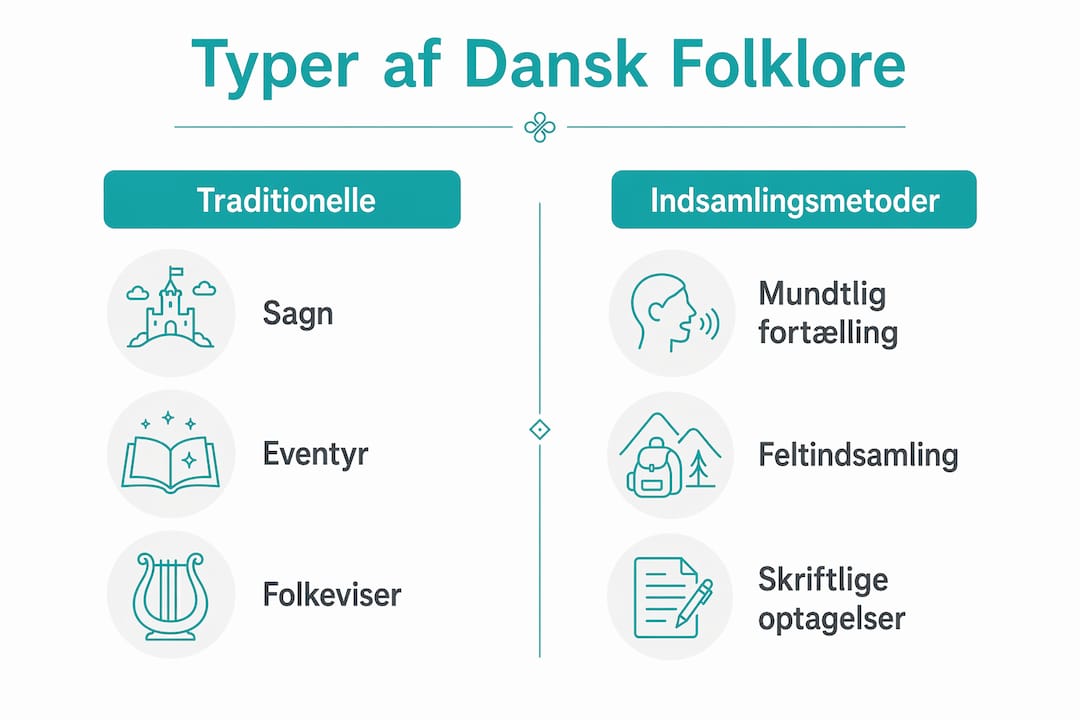
Tang Kristensen traveled around Jutland and spoke directly with farmers, fishermen, and craftsmen. He not only wrote the stories themselves but also the entire life world of the peasant community, including customs at weddings, baptisms, and funerals. Hans method was to listen and take notes, not to edit or embellish. It gives the collections an authenticity that makes them irreplaceable for the future.
The most important types of material Tang Kristensen collected
- Adventures and legends from Jutland, including local place name explanations and ghost stories
- Proverbs and riddles, which reflected the practical wisdom of the peasant society
- Superstitious beliefs about beings, omens, and healing methods
- Customs and rituals related to the course of the year and the major events of life
- Folk songs and shows, that was sung during work and celebration
Professional tip: If you want to read Tang Kristensen's collections yourself, you will find parts of them digitized at The Royal. Library's website and in the Danish Folklore Collection archives.
His work was not academic in the narrow sense. It was a popular deed driven by the belief that these stories belonged to the Danish people and deserved to survive.
What is the relationship between Danish folklore and Nordic mythology?
Danish folklore and Nordic mythology are historically connected, but they are not the same. The difference is crucial for correctly understanding both phenomena.
Nordic mythology and Danish folklore are different.Mythology represents religious stories from pre-Christian times with gods like Odin, Thor, and Freya at the center. Folklore is broader and encompasses popular traditions and practices across all social strata and time periods. Mythology is a part of folklore, but folklore is much more than mythology.
| Characteristic | Norse mythology | Danish folklore |
|---|---|---|
| Time period | Approximately 700–1350 AD. | From ancient times to today |
| Content | Gods, cosmology, hero legends | Legends, fairy tales, customs, superstitions |
| Handover | Written by Christian monks | Oral tradition, later written down |
| Function | Religious and cosmological explanation | Social practice and cultural identity |
| Examples | Yggdrasil, Ragnarok, Valhalla | Nisser, elves, folk songs, holiday customs |
The great gods disappeared from everyday life After the introduction of Christianity in Denmark, but the belief in smaller beings like nisses and trolls continued in folk belief. It is a central point. Christianity replaced the official religion, but the popular belief in supernatural forces in nature survived for generations. The trolls on the farm, the ogres in the forest, and the elves by the swamp belonged to a world that Christianity could not fully eradicate.
Archaeological findings and name searches suggest that Thor was more important to the Vikings End Odin in everyday life. It influences the understanding of which elements from mythology have embedded themselves deepest in popular consciousness and later appeared in folklore and legends.
What types of traditions and stories are found in Danish folklore?
Danish folklore encompasses a wide range of expressions. Diversity is precisely what makes it difficult to put into one formula.
Legends and superstitious stories
Legends are short stories presented as true accounts of real events or places. The Danes Legends of beings such as elves and the nixie Historically, it served as a warning against dangerous places in nature. A story about a key in a specific lake kept children away from the deep water. A report about elves and fairies in the forest warned against going out alone after dark. The story was, in other words, a rational tool for controlling behavior in a time without street lighting and mobile phones.
- Nøkken It is a water spirit that lures people into lakes and rivers.
- The Elle peoples they are beautiful but dangerous creatures associated with forests and meadows
- Nissen He is a house spirit who protects the farm if he is treated well.
- The Troll Lives among hills and stones and is hostile towards humans
- Maren It is a nocturnal creature that rides sleeping people and gives nightmares.
Folk songs and oral poetry
The folk song is one of the oldest and most widespread forms of Danish folklore. Viserne tell stories of love, betrayal, supernatural events, and historical occurrences. They were sung at work, at parties, and during holidays. Denmark's folk songs, published by philologist Svend Grundtvig in the 19th century, gather hundreds of these songs and are a cornerstone of Danish cultural history.
Festivals and life cycle rituals
Folk customs during Christmas, Easter, Pentecost, and Midsummer constitute an important part of the heritage. The origin of Santa Claus in Danish folklore is older than the commercial figure known today. Carnival with knocking down the barrel, Easter witches, and Midsummer fires are all examples of customs rooted in folk tradition. Lifecycle rituals at birth, confirmation, wedding, and funeral also contain folkloristic elements, which Tang Kristensen documented thoroughly.
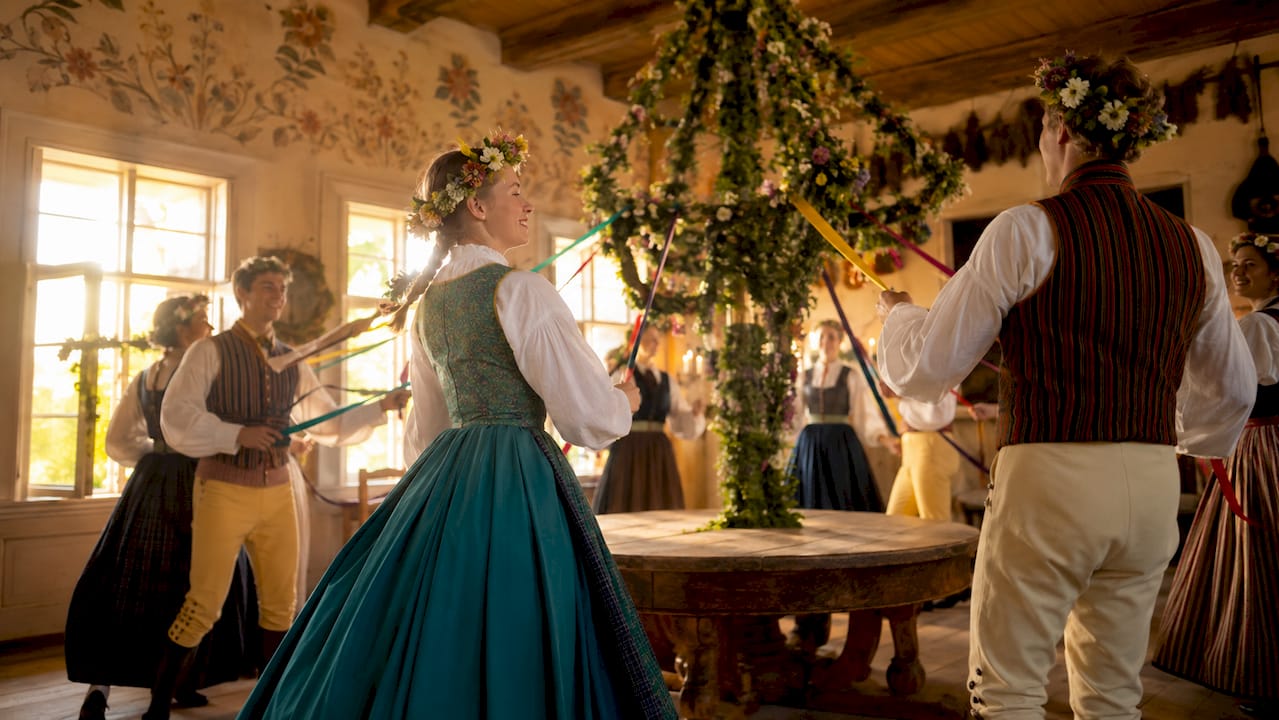
Professional tip: Eat cultural activities in Denmark It is based precisely on these folkloric traditions. Museums and folk high schools regularly organize events where you can experience the traditions up close.
How does Danish folklore continue in the present day?
Danish folklore is not a closed chapter in history books. It is a living practice that still influences Danish everyday life and culture.
Denmark acceded to UNESCO's Convention for the Safeguarding of the Intangible Cultural Heritage in 2010. It meant a commitment to identify, document, and preserve living traditions such as dance, music, crafts, and oral storytelling forms. The conventions shifted focus from objects in museums to living practices in society. There is a crucial difference.
| arena | Example of folklore today |
|---|---|
| School and Education | H.C. Andersen's fairy tales and folk legends in Danish studies |
| Festivals and Events | People's Meeting, folk dance festivals, Midsummer events |
| Museums | Open-Air Museum, The Old Town, National Museum |
| Media and Literature | Reinterpretations of Nordic legends in films and novels |
| Everyday life | Christmas elves, Easter witches, Carnival with barrel pounding |
Folkloristical ideas do not just live as Living practice in dance and singing, but also strengthen social community. That's the point that many overlook. Folklore is not primarily information about the past. It is a social technology that creates a sense of belonging and shared reference frameworks.
H.C. Andersen is the most well-known example of how Danish folklore reached the world. Hans eventyr draws on folkloristic motifs and figures but are deliberately artistically adapted. They show how folkloric material can be transformed into literature without losing its cultural power. Modern writers and film directors do the same today when they reinterpret legends about elves, trolls, and fairy folk in new media.
Folklore is not a museum, it is a community
I have spent many years traveling around Denmark and talking to people about what connects them to their region. Again and again, the conversation returns to the same things: a story about a ghost in the old farm, a Christmas tradition that no one can really explain, a song that the grandparents used to sing. It is folklore in its purest form.
The biggest problem with the dissemination of Danish folklore is that we make it into something static. We put it in a showcase and call it cultural heritage. But the value lies in the social practice, in dance and storytelling and communal singing, not in glass display cases. A folk dance, danced by living people at a festival in Silkeborg, is more folklore than the best-preserved song in an archive.
I believe that the best way to understand Danish folklore is to participate in it. Go to a people's meeting. Learn a folk song. Tell your children the story of the nixie in the lake. Folklore does not survive by being observed. It survives by being practiced. It's not nostalgia. It is cultural self-preservation.
— Tommy
Danish culture and folklore await you throughout the country
Rejsidanmark gathers the best experiences with Danish culture, traditions, and folklore in one place. From the Frilandsmuseet north of Copenhagen to folk festivals in Jutland, you will find events that bring folklore to life outside the archives. Plan your visit with the help of our Guide to local transportationso that you can easily get around to the places where Danish cultural heritage is still practiced. If you want inspiration for specific experiences, our... Guide to adventure activities A good starting point for your next visit to Denmark.
Frequently Asked Questions
What is Danish folklore briefly explained?
Danish folklore is the oral and practical cultural heritage consisting of legends, fairy tales, folk songs, superstitions, and customs that Danes have passed down through generations. It is a living tradition, not just historical texts.
Who collected the most Danish folklore?
Evald Tang Kristensen is the most productive Danish folklore collector. He collected approximately. 3,000 fairy tales, 25,000 legends, and over 10,000 proverbs, primarily from Jutland in the 19th century.
What is the difference between Danish folklore and Nordic mythology?
Nordic mythology is religious stories about gods from around 700–1350. AD, but Danish folklore is broader and covers all popular traditions and practices across time. Mythology is a part of folklore, but not the same.
Which creatures appear in Danish folklore?
The most well-known creatures are the elf, the nix, the elves, the troll, and the mermaid. Stories about these creatures historically served as warnings against dangerous places in nature and as explanations for inexplicable events.
Is Danish folklore still alive today?
Danish folklore lives on in folk festivals, folk songs, holiday customs, and oral storytelling traditions. Denmark joined UNESCO's Convention for the Safeguarding of the Intangible Cultural Heritage in 2010, which commits the country to actively preserving these living traditions.
Recommendation
- What is Danish culture: traditions, norms, and identity – Travel in Denmark
- Discover Danish traditions: your guide to culture and experiences – Travel in Denmark
- Danish traditional food – regional specialties from all over Denmark – Travel in Denmark
- How to Celebrate Christmas in Denmark: Everything You Need to Know – Travel in Denmark