
TL;DR:
- Danish traditions are deeply rooted in national holidays and culture, which strengthen community and social cohesion. These events are often open to everyone and can be actively experienced if you plan your trip around special days such as Midsummer, Christmas, or Carnival. Showing interest and participating locally provides the most authentic experience of Denmark's cultural heritage.
Denmark is filled with traditions that shape life in the country in ways that both Danes and visitors rarely stop to think about. Many of the country's most important holidays are directly linked to days off, family celebrations, and folk festivals that open the doors to a very special part of Danish culture. If you know the meaning behind Fastelavn, St. John's Day, or the classic Easter lunch, you will have a deeper and more meaningful experience of Denmark, whether you live here or are visiting for the first time.
Main Points
| Point | Details |
|---|---|
| Traditions structure the year | Danish traditions bind the calendar together and offer strong communities. |
| Anniversaries are good experiences | The most well-known holidays include open events for both Danes and tourists. |
| Experience actively rather than passively | You get the most out of travel and stays in Denmark by actively seeking out traditions and participating together with the locals. |
| Plan with knowledge | A good trip starts with knowing the most important Danish holidays and local traditions. |
What characterizes Danish traditions?
Danish traditions are not just festive occasions. They are recurring events and customs tied to specific times of the year, historical anniversaries, or seasonal changes. They distinguish themselves from everyday activities by having a deeper social and cultural significance, bringing people together across generations and backgrounds.
According to Fact sheet about traditions and special days Are there many traditions associated with specific days in Denmark, often with time off from work. That means that the traditions are not just symbolic; they are actually embedded in the structure of Danish society and working life.
Some traditions are celebrated nationally and known by all Danes, while others are strongly locally rooted. In Ribe, medieval markets are celebrated with historical events, in Frederikshavn there are large fish festivals, and in Copenhagen there are always unique city celebrations related to special occasions. These cultural experiences Varies from region to region, but common to all of them is that they create frameworks for socializing and strengthen community.
The three core values characterize almost all Danish traditions:
Traditions in Denmark are fundamentally about bringing people together. It is not the rituals themselves that are most important, but the connection they create between people.
- Family and closeness Most traditions revolve around the home and family.
- Community and openness Many events are open to everyone; neighborhoods and local communities often celebrate together.
- Compassion and care It is important to give and receive, whether it is gifts, food, or time.
Understanding these fundamental values gives you a much better starting point to comprehend what you experience when witnessing or participating in a Danish tradition. When you understand that Danish traditions are more than just festive occasions, we can zoom in on the most significant anniversaries.
The biggest holidays and celebrations in Denmark
After gaining an overview of what characterizes traditions, here is a concrete overview of the year's most important holidays and their distinctive content. Many special days in Denmark are marked with a day off, and this reflects how deeply the traditions are rooted in society.
This year's most important Danish holidays
| Anniversary | Time | Characteristic | Typical activity |
|---|---|---|---|
| Carnival | 7 weeks before Easter | Costumes, play, and candy | Barrel pounding, Fastelavn buns |
| Easter | March/April | Family, spring, and eggs | Easter brunch, egg hunt |
| Store Bededag | April/May | Reflection and coziness | Warm wheat, walks |
| Midsummer Night | June 23 | Midsummer and community | Bonfire, communal singing, witch burning |
| July | December | Hygge, gifts, and family time | Christmas parties, elves, calendar candles |
| New Year | December 31 | Expectations and celebration | Fireworks, New Year's dinner |
Carnival It is a tradition that dates back to the Catholic period, but today it is a pure folk festival for children. Seven weeks before Easter, children dress up in costumes and hit a barrel filled with candy and fruit. The one who pulls out the bottom becomes a "cat king" or "cat queen," and the tradition brings families, school classes, and kindergartens together for a shared celebration.
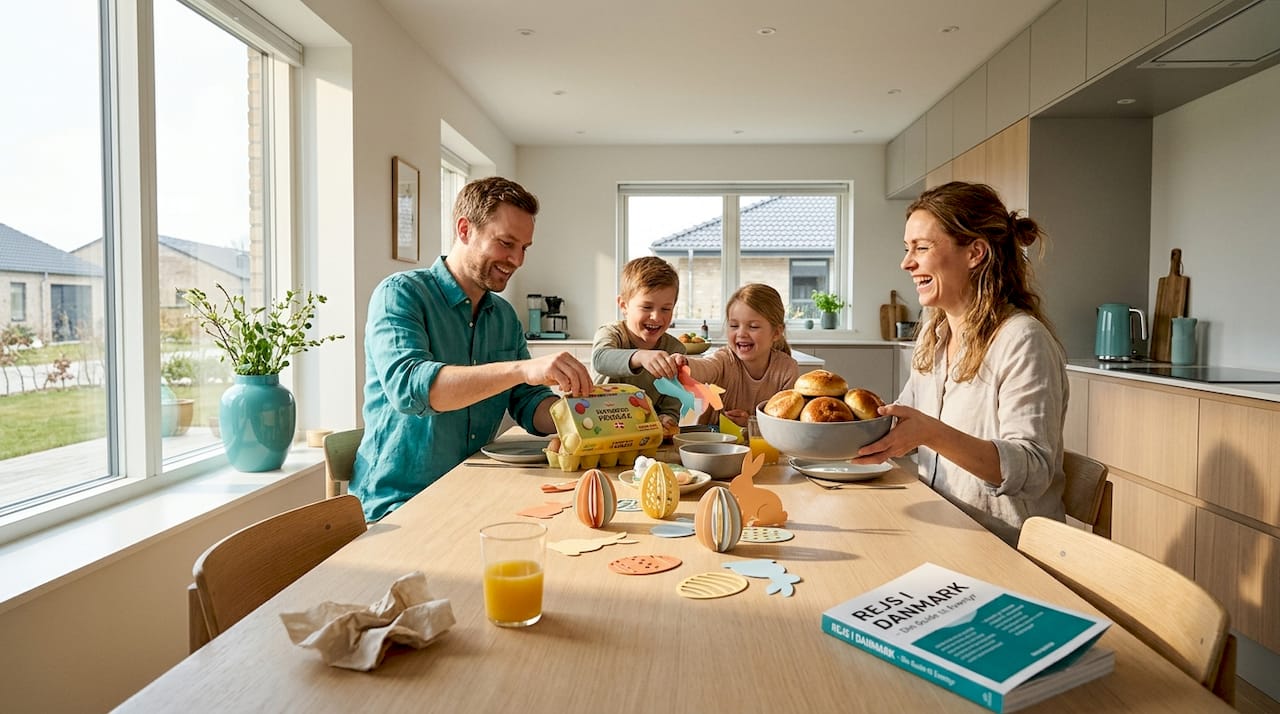
Easter in Denmark It is characterized by family celebrations and Easter eggs, and it spans over four days off: Maundy Thursday, Good Friday, Easter Sunday, and the 2nd. Easter Sunday. It gives the Danes a long weekend to gather, and many travel to summer houses, visit family, or go on excursions in early spring. The Easter lunch is an important element, with traditional dishes such as herring, eggs, and lamb.
Midsummer Eve the 23rd June is one of the most beloved traditions of the summer. The Danes gather at beaches, in parks, and in squares to light large bonfires and sing communal songs. A figure representing a witch is burned on the bonfire, a custom that historically was meant to send the witches to Bloksbjerg. Today is a cozy summer evening with singing and socializing.
Christmas It takes up a huge space in the Danish calendar from the beginning of December. Christmas parties at the workplaces, Advent candles, and elves create a special atmosphere. We have a dedicated guide for Christmas traditionsif you want to delve into everything that Christmas encompasses in Denmark
Statistics: Denmark has 10 official holidays a year, and many Danes have time off on all these days, which gives the country one of Europe's strongest foundations for celebrating traditions within families.
These historical anniversaries are not random. Most have deep roots in Christian tradition, in folk customs, or in the rhythms of nature. It is important to understand that they Danish holidays Directly affects opening hours and opportunities during your trip, so know them before you travel.
How to experience Danish traditions as a tourist
Now that you know the most important days of the year, it's time to learn how you can actively experience and engage in Danish traditions. Traditions in Denmark often take place within family and community frameworks, but as a tourist, there are plenty of opportunities to participate actively.
Here are five concrete ways to experience the traditions as a visitor:
-
Find local events in advance. Municipalities, museums, and associations always announce public celebrations of special days. Search on the local municipality's website or check the tourist information in the city you are visiting. Saint John's bonfire is for example organized in most cities and is free for everyone.
-
Plan your trip according to the special days. If you arrive in Denmark during Easter or Sankt Hans, you experience the country on a completely different level than in an ordinary week. The atmosphere is different, and there are many more social experiences available. Look at cultural activities to find what suits your visit.
-
Be prepared for changed opening hours. On holidays, many shops, museums, and restaurants are closed or have reduced opening hours. This applies especially to Good Friday, Easter Sunday, Pentecost, and Christmas Day. It's a good idea to check opening hours in advance so you won't be surprised.
-
Participate in public events without an invitation. Most public parties in Denmark are open to everyone who shows up. Carnival celebrations in the parks, St. John's bonfires on the beach, and New Year's fireworks in the squares are just examples of traditions you can experience simply by showing up.
-
Ask locals for advice and recommendations. Danes are generally happy to share their traditions with interested visitors. Ask at your hotel, your café, or your neighboring shop. You will often be surprised by the hidden local traditions that exist, which are not visible to the average tourist.
Professional tip: Have a quick chat with a local about what happens during your travel period. Danes are proud of their traditions and will typically tell you about local events that you won't find in a guidebook. A spontaneous meeting by a St. John's Eve bonfire can become the most memorable moment of the journey.
An extra thing to remember: many traditional celebrations involve food. Trying fastelavnsboller, Easter lamb, warm wheat buns, or æbleskiver at Christmas is a direct and delicious way to experience the tradition. Food is a large part of Danish cultural heritage, and most traditions are associated with one or more characteristic dishes.
Danish traditions throughout the year: comparison and special features
With this practical approach, we can take a closer look at how the seasons and the characteristics of traditions influence the experience. It really does matter when during the year you visit Denmark. Winter and summer offer very different traditions, atmospheres, and social dynamics.
Comparison of winter and summer traditions
| Category | Winter traditions | Summer traditions |
|---|---|---|
| Time | October to March | May to September |
| Location | Primarily indoors | Primarily outdoor |
| Mood | Cozy, intimate, family-oriented | Open, festive, community-oriented |
| Typical activities | Christmas parties, Advent candles, Santa parties | St. John's bonfire, midsummer festival, harbor festivals |
| Open to tourists | Partly, through the Christmas market and events | To a large extent, many open folk festivals |
| Clothing and weather | Warm clothes, dark evenings | Light clothes, long bright evenings |
The winter traditions are characterized by what Danes call hygge (a central concept for a warm and cozy atmosphere at home). The Advent season from the first Sunday in November until Christmas is filled with Christmas parties, candlelight, and togetherness. It is primarily an indoor tradition that largely takes place in private homes, but the Christmas markets in cities like Tivoli in Copenhagen, Ribe, and Odense are open to all visitors.
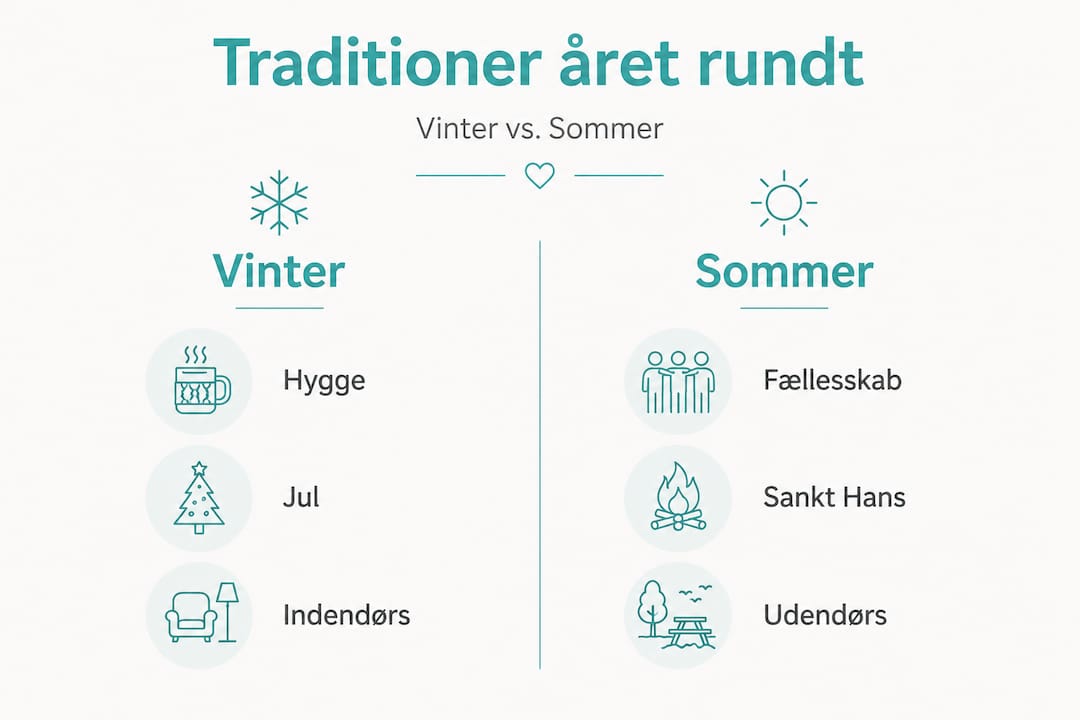
Summer traditions are more open and more accessible to tourists. St. Hans marks midsummer with bonfire, communal singing, and gathering, and the event typically takes place in public places. It is one of the traditions where you as a tourist can most easily participate without prior invitation or knowledge.
Special features of the two seasons:
- Winter traditions most often religious or historical roots in the Christian tradition
- Summer traditions more closely linked to the cycle of nature and the bright nights
- Both seasons or all secular elements available to everyone regardless of religious background
- Spring traditions like Shrovetide and Easter are a blend of both, with family gatherings and folk festivals.
Professional tip: If you are planning a summer trip to Denmark, it is the 23rd. June, the date you absolutely must not miss. Saint John's bonfires are lit all over the country, and you can see and feel a tradition that unites thousands of Danes at the same time. Find a local beach or park, and you're right in the middle of it.
The differences between traditional types help you specifically with Choose Danish holiday or decide what best suits your interests and the timing of your trip. A cultural tourist who wishes to understand the Danish soul should consider visiting the country across the seasons. For those who are interested in activities for culture enthusiastsDenmark is an open book all year round.
A new way to experience Danish traditions
Most travel guides tell you which traditions exist and when they are celebrated. It is useful. But there is a layer beneath the surface that is rarely described, and it is the most important.
Many visitors and even many Danes themselves experience the traditions as something exclusive. Christmas takes place in private homes, the Easter lunch is a family event, and Store Bededag seems irrelevant if you don't know the context. It creates a sense that the traditions are reserved for those who are already inside.
But it is a misunderstanding.
Most Danish traditions are actually open to anyone who shows genuine interest and curiosity. Danes are not closed people; they are just reserved. If you show genuine interest in traditions and celebrations, you will experience a friendliness and openness that surprises many visitors. And if you plan your trip around Danish holidays and special days, opportunities will open up that are completely hidden from those arriving on a random Tuesday in September.
Here is our sincere recommendation: prioritize the small, local traditions over the large tourist-friendly spectacles. A Midsummer's Eve bonfire in a small coastal town with 200 locals is a much more authentic experience than the large event in a big city with hundreds of tourists. A carnival event at a local public school will give you insight into Danish everyday life like no museum can convey.
If you delve into deeper cultural understanding, you will discover that traditions are not just rituals, they are mirrors. They show what Danes value: togetherness over achievement, community over individualism, and coziness over drama. To understand it is to understand Denmark.
Our experience is that the travelers who remember Denmark best are those who happened to come across a local bonfire, were offered a warm wheat by a stranger, or were invited inside to a Shrovetide party. It doesn't happen by standing outside and observing. It happens by showing interest, asking questions, and saying yes when the opportunity arises.
Plan your trip and experience the traditions yourself
Now that you have a solid understanding of Danish traditions, the next step is to translate that knowledge into a concrete journey. It requires a bit of planning, but it doesn't have to be troublesome.
At Rejs in Denmark, we have gathered everything you need to get started well. Our Guide to planning Denmark trip guides you through the most important considerations step by step, from choosing a destination to booking activities and accommodation. If you stick to seasonal content, you will find inspiration for the right experiences at the right time through our guide to seasonal experiencesAnd if you need to know the best way to travel around the country to go from tradition to tradition, our Guide to local transportation The perfect starting point. The traditions are waiting. You just need to book the trip.
Frequently Asked Questions About Danish Traditions
Which Danish traditions should tourists experience?
Carnival, Easter, St. Hans, and Christmas are ideal to experience as a tourist, as they include folk festivals, open events, and strong communities. Denmark has many notable holidays, typically with community activities that are open to everyone.
How do I know when Danish traditions are celebrated?
Traditions usually follow official holidays and special days, which can be found on Danish calendars or travel guides. Most Danish traditions are linked to specific calendar days, often with time off from work.
Are Danish traditions open to everyone or only to Danes?
Most traditions and events are open to everyone, and locals often warmly welcome interested visitors. Traditions and special days are often publicly marked with open events that do not require an invitation.
What is the significance of traditions for Danish culture?
They create the framework for community, national identity, and many social experiences throughout the year. Traditions are important for cohesion and social communities in Denmark, and they reflect the country's core values.
How can I best plan my trip around Danish traditions?
Look out for national holidays and check local event calendars to make the most of your trip. Planning according to periods with Danish holidays and special days is the most effective method to experience the authentic Denmark.