
Over 70 percent of Danish families serve duck roast on Christmas Eve, making it the undisputed star of the holiday table. Christmas dinner is not just a meal, but an important gathering point where memories and traditions are passed down from generation to generation. Here you get an insight into the historical roots of Christmas food, the classic dishes, and the diverse regional specialties, which together create Danish Christmas spirit for both young and old.
Danish Christmas dinner traditions and their significance
Danish Christmas dinner traditions are more than just a meal – they are a deeply felt cultural and family event with roots far back in history. Christmas traditions in Denmark showing how food plays a central role in celebrating the holiday, where families gather around lavish and delicious dishes.
The Christmas Eve menu itself has a fascinating historical development. According to historical records, Danish Christmas menus changed significantly over the centuries. It was the 19th century salted cod the traditional dish, which was later replaced by the now classic Danish Christmas main courses: duck, goose, or pork roast. Today, 74% of Danish households prefer roast duck, highlighting the dish's central importance in Danish Christmas tradition.
The culinary traditions are not just about the food, but about community and togetherness. Brown sauce, which 84% of Danes consider indispensable, symbolizes this deep connection. The consumption of food and drink increases significantly in December – for example, the consumption of whipped cream doubles, with Arla expecting to sell a total of 3 million liters, equivalent to half a liter per. Dane.
The Christmas lunch itself, which starts even before Christmas Eve, is an important social event. Businesses, associations, and families gather around a lavish table filled with cold and warm dishes, various spreads, cheeses, and desserts. Risalamande with almonds has become a modern classic, adding a playful and anticipatory atmosphere to the entire meal. These traditions are fundamentally about creating memories, sharing love, and celebrating community through food.
Typical dishes at the Christmas table in Denmark
The Danish Christmas feast is a complex and rich culinary tradition that reflects generations of cooking skills and family unity. Christmas markets in Denmark showing how the food culture is not just about dishes, but about creating community and traditions.
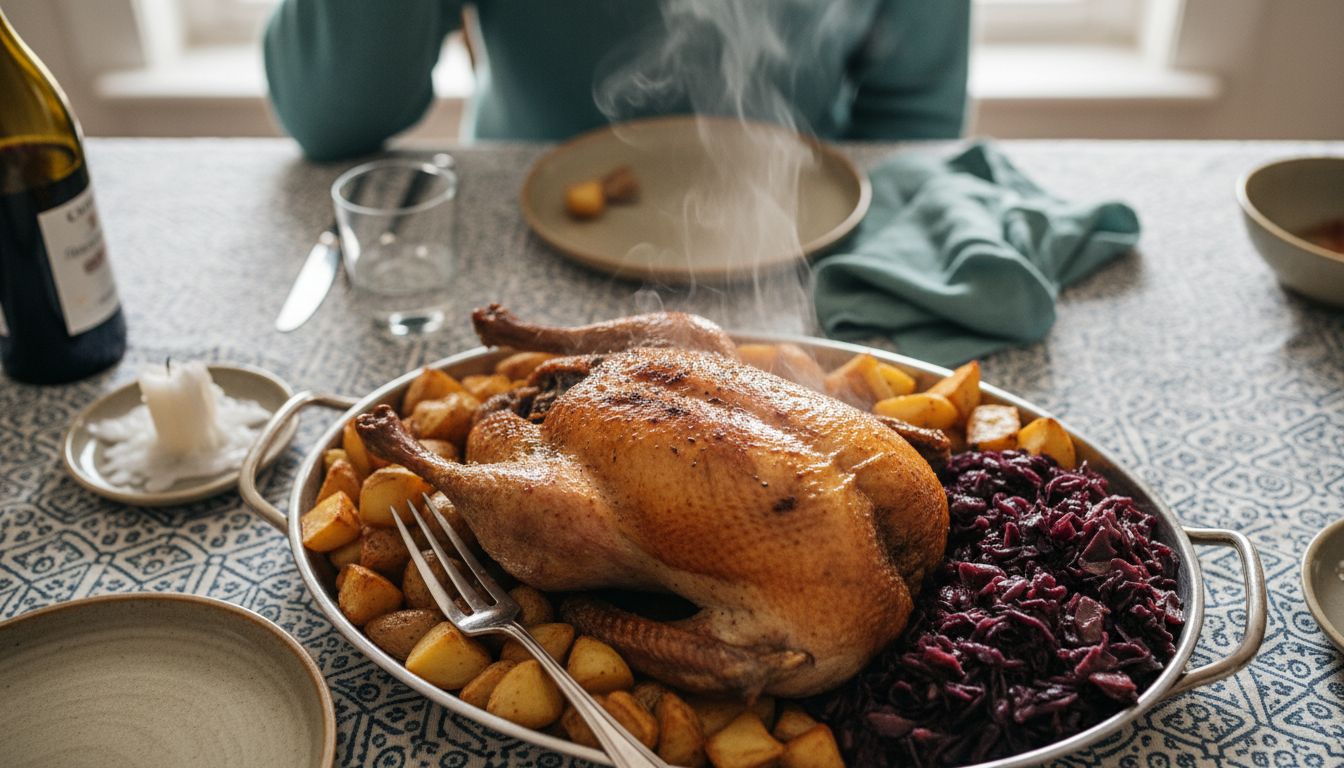
The main courses are particularly traditional and well-defined. Andestegen is the absolute classic, served in 74% of Danish homes, often accompanied by classic side dishes such as caramelized potatoes, red cabbage, and brown gravy. As much as 84% of Danes consider brown gravy indispensable, highlighting its central role in the Danish Christmas meal. The roast pork is another popular choice, served in 63% of households, typically with crispy crackling and filled with traditional Danish culinary joy.
The dessert part of the Christmas buffet is almost as important as the main course. Risalamande is the undisputed classic – a creamy rice dish mixed with whipped cream, chopped almonds, and served with cherry sauce. It contains the tradition of the hidden whole almond, which gives winners a special gift, adding a playful dimension to the dessert. Next to the rice pudding, you often find a wealth of homemade cookies, confectionery, and other sweet treats that complete the festive meal.
The serving itself is about more than just food. It is a ritual where families gather, share stories, and create memories. From the caramelized potatoes to the creamy risalamande, each dish represents a part of Danish Christmas tradition – a blend of historical heritage, culinary joy, and a sense of community.
Regional variations in Christmas food and specialties
Danish Christmas food is much more than just a meal – it is a story of local traditions and culinary diversity. Christmas holiday in Denmark showing how geography plays a crucial role in culinary traditions
Regional differences They are clear in the Danish Christmas food choices. In Copenhagen, many prefer to buy pre-made risalamande, while North and Central Jutlanders stick to the tradition of preparing the dish themselves. Roast duck dominates in the Capital Region, while pork roast is preferred in Zealand. Interestingly, medister sausage is served in every fourth home in the Region of Southern Denmark, but is almost invisible on the Christmas tables of Zealand.
The Christmas parties also vary significantly from region to region. In Zealand, it is characterized by a wide selection of cold dishes such as herring, fish fillets, meatballs, and liver pâté. In Jutland, the Christmas dinner is more focused on warm dishes such as roast pork, roast duck, medister sausage, head cheese, red cabbage, and caramelized potatoes. Even more interesting are the culinary traditions in the Faroe Islands, where 'skerpikjøt' – dried lamb or mutton – is a central part of the Christmas menu.
These regional variations tell more than just a food story. They reflect local identities, family patterns, and historical influences. From the homemade rice pudding in Jutland to the complex Christmas lunches in Zealand, each region's culinary traditions represent a unique story of Danish culture and community.
How the Christmas party differs from Christmas Eve
Danish Christmas festivities have two distinctly different culinary events, each with its own character and significance. Danish holidays Shows the complexity of these traditions, where social and family aspects play a crucial role.
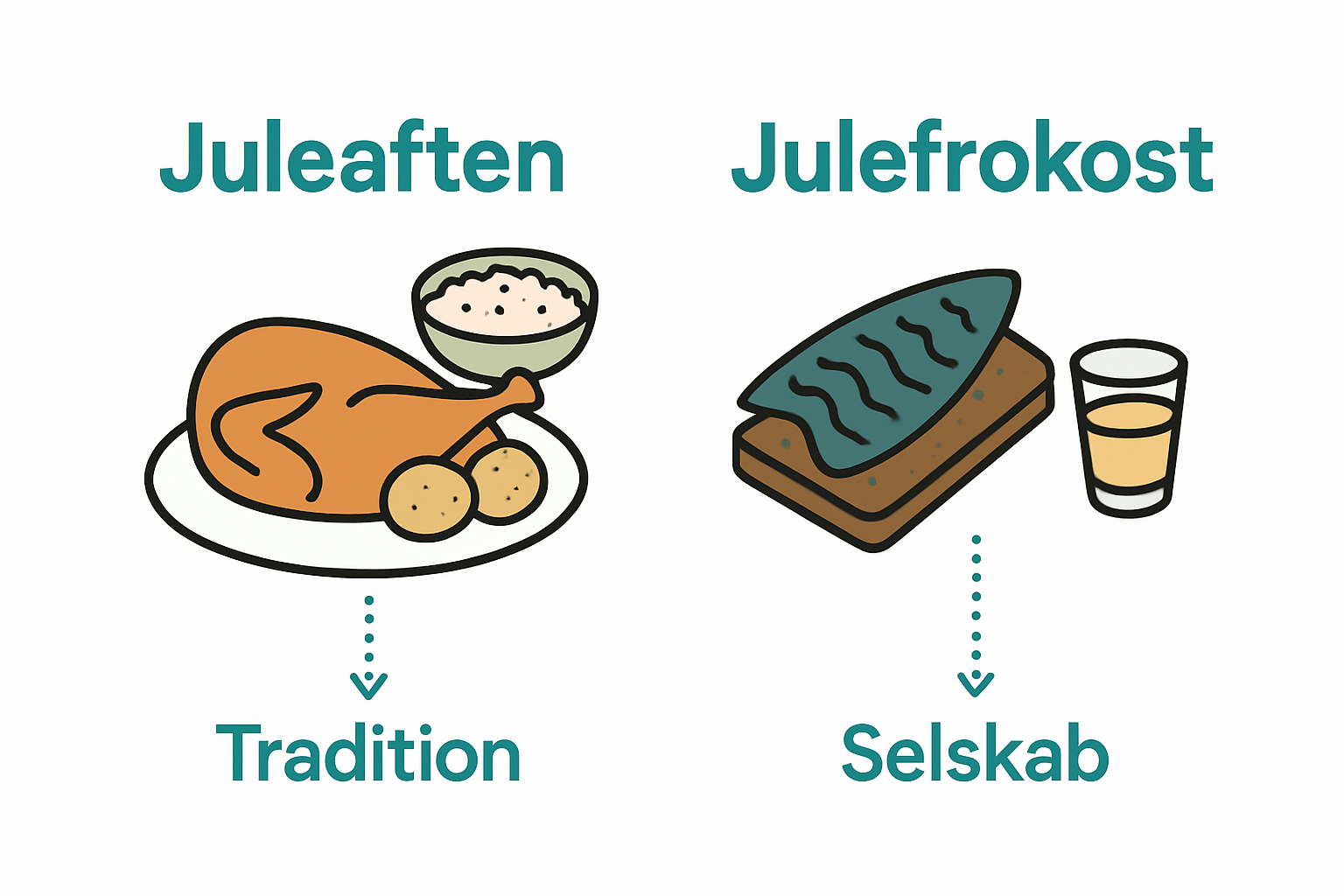
The Christmas party is a more informal and social event, typically held in the days leading up to or after Christmas Eve. The menu is characterized by a wide selection of cold and warm dishes such as herring, fish fillets, meatballs, liver pâté, and cheese. These brunches are often organized by companies, associations, and groups of friends, where the atmosphere is more relaxed and festive. In contrast, Christmas Eve dinner is a much more intimate and solemn event, centered around the family's core community.
Christmas Eve dinner itself has a more structured and traditional character. The main course is either roast duck or roast pork, served with classic accompaniments such as caramelized potatoes, red cabbage, and brown gravy. The dessert is almost always the same – rice pudding with cherry sauce, often with the hidden almond, which creates extra excitement at the table. While the Christmas party is about social relationships and informal coziness, Christmas Eve dinner is about the family's deepest traditions and emotional bonds.
Both events, however, share a fundamental common trait: they are about more than just food. They are rituals that strengthen social bonds, revive traditions, and create memories. From the somewhat more relaxed Christmas lunch to the sacred Christmas Eve dinner, the two meals represent different but equally important aspects of Danish Christmas celebration.
Vegetarian and modern alternatives to Christmas food
Danish Christmas food culture is rapidly changing, where traditions meet modern lifestyle choices and sustainable principles. Free experiences showing how Danes constantly find new ways to renew their culinary traditions.
Vegetarian options has gained significant influence in Danish Christmas celebrations. Now experiments are underway with plant-based versions of classic dishes like nut pâté, which can replace traditional meat dishes. These new interpretations use ingredients such as nuts, lentils, and vegetables that mimic the taste and texture of traditional Christmas dishes. The goal is not only to cater to vegetarians and vegans but also to create more sustainable and health-conscious meals.
Modern Christmas menus now include a multitude of creative dishes that challenge traditional perceptions. Examples include fried portobello mushrooms as a substitute for duck roast, quinoa stuffing instead of traditional meatballs, and lentil patties with seasonal vegetables. These rights preserve the core of Christmas – community and togetherness – while also meeting a growing desire for more plant-based nutrition.
Whether choosing traditional duck or a creative vegetarian dish, the essence of Christmas food remains about creating connection, sharing love, and celebrating community. The modern alternatives merely show that Danish Christmas traditions are lively, flexible, and capable of adapting to new lifestyles and values.
Experience Denmark's Christmas through Food and Traditions
Christmas in Denmark is not only about eating traditional dishes like roast duck, brown gravy, and rice pudding but also about diving into the special Christmas experiences and local traditions that bring families and friends together. The article "What Do People Eat at Christmas in Denmark: The Complete Guide" describes how Christmas food, with its historical roots and regional variations, is not just a meal but an important part of Danish culture and community.
When planning your Christmas in Denmark, it can be a challenge to find the right experiences that also enhance your understanding of Christmas traditions. On Travel in Denmark Find a wide range of activities and destinations that allow you to experience Christmas food traditions and the magical atmosphere up close. Whether you want to visit cozy Christmas markets, experience local Christmas parties, or explore regional differences in Christmas food, you can find inspiration for the whole family and groups with different interests.
Take the step further and plan a unique Christmas experience that goes hand in hand with authentic Christmas food. Visit Christmas markets in Denmark or read more about Christmas traditions in Denmark to build your perfect Christmas holiday that combines classic flavors with new adventures. Start your journey today and let the Christmas magic capture you at Travel in Denmark.
Frequently Asked Questions
What are the typical dishes on the Danish Christmas table?
The typical dishes include duck roast, pork roast, caramelized potatoes, red cabbage, and rice pudding, which are often served as dessert with cherry sauce.
How does the Christmas lunch differ from Christmas Eve?
The Christmas party is more informal and social, with a wide selection of cold and hot dishes, while Christmas Eve dinner is a more ceremonial gathering focused on traditional food such as duck roast and rice pudding.
Are there vegetarian options for Christmas food?
Yes, vegetarian options such as nut pâté and portobello mushrooms as replacements for duck roast have become popular. These rights preserve the spirit of Christmas and can be adapted to modern diets and preferences.
What does brown gravy symbolize in Danish Christmas tradition?
Brown gravy is considered an essential part of the Christmas meal and represents an important part of community and tradition, where it is often prepared from the juices of the roast.
Recommendation
- Christmas traditions in Denmark: Everything You Need to Know – Travel in Denmark
- Christmas markets in Denmark – experience the magical Christmas atmosphere – Travel in Denmark
- Christmas holiday in Denmark – Cosiness, markets, and New Year – Travel in Denmark
- Guide to Denmark: Everything for First-Time Visitors – Travel in Denmark