
TL;DR:
- Good planning and flexibility are the keys to successful family outings where everyone has a good experience.
- Involve the children early, and create clear, simple plans and packing lists to avoid stress and misunderstandings.
Family outings have enormous potential to create strong memories, but far too often they end in stress, grumpy children, and adults looking at the clock. The problem is rarely the destination. It is the planning. If you haven't thought carefully about food, breaks, and the order of activities, even the most beautiful excursion can collapse by lunchtime. But it doesn't have to go that way. With the right preparations and a flexible approach, you can create a day your family will talk about for years. This guide gives you everything you need.
Main Points
| Point | Details |
|---|---|
| Involve the children | Let the children be involved in choosing and planning so that everyone feels ownership and is happy. |
| Prepare everything practically | Make a packing list and consider age, equipment, and catering before departure. |
| Be flexible | Adjust the plan along the way and schedule breaks to avoid stress and disappointments. |
| Choose the right activities | Between nature and the city, free and paid experiences, and ensure everyone gets to try something they want. |
How to prepare a successful family outing
Once you recognize the potential of excursions, it is about good preparation from the very beginning. The families who experience the best days on excursions have typically spent time thinking things through in advance. It's not about planning down to the smallest detail, but about having a solid foundation to stand on.
Understanding of value of family outings The starter is actually already in the planning phase. When children are involved early, they become co-owners of the experience, and it directly influences the atmosphere. Ask them specifically what they are looking forward to. Maybe one wants to see animals, while the other dreams of playing on a playground. When you know these desires, you can shape the program so that everyone feels seen.
Step-by-step planning Starts with a simple packing list. It doesn't need to be long, but it must be complete. Forgotten sunscreens, missing rain gear, or too little food can ruin an entire day. Write the list the night before, and feel free to let the children help pack their own backpacks.
It is also important to choose activities that match the children's actual age and energy level, not the level you hope they have. A three-year-old cannot walk seven kilometers on a trail, and a teenager will rarely find a baby-friendly playground fun. Activities tailored to age and energy level It is one of the most important principles for a good family experience.
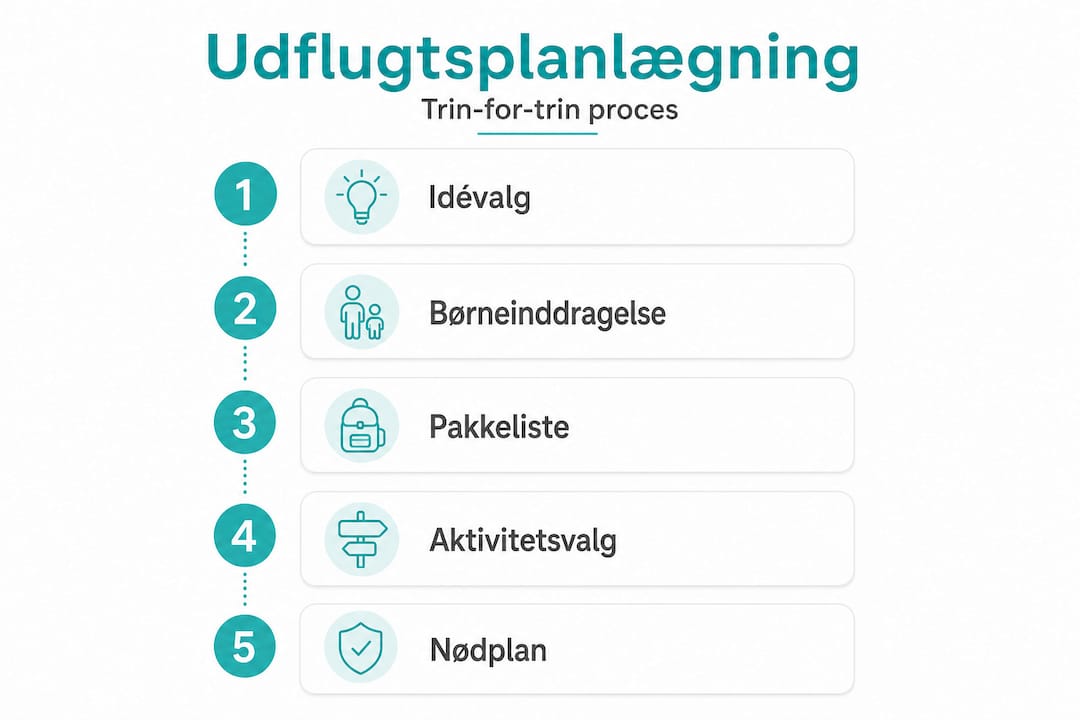
Mentally prepare the children before departure. Tell them in short, simple words what will happen and when. First, we drive for half an hour, then we have lunch by the lake, and afterwards we visit the museum. This simple frame removes uncertainty and reduces questions like "Are we there yet?" in the car.
Key elements for good preparation:
- Actively involve the children in choosing activities
- Make a packing list the night before and check it twice
- Choose a program that suits the youngest child's energy
- Tell the children the plan in simple steps before departure
- Plan meals breaks as fixed points in the schedule
| Preparation | What it solves | Time saving |
|---|---|---|
| Packing list the night before | Forgotten things and morning stress | 20-30 minutes |
| Children involved in elections | On mood and lack of motivation | All day long |
| Forklift program explained to children | Insecurity and constant questions | Ongoing |
| Crazy package from home | Expensive and poor food along the way | Money and mood |
| Extra clothes in the bag | Accidents with food or mud | Rescue potential |
Professional tip: Always bring an extra set of clothes for each child, whether you're going to the beach or a museum. Mom, water and puddles always find their way to the smallest ones, and a change of clothes can save the whole afternoon from becoming grumpy and sticky.
Trin-for-trin: Sådan udfører du din familieudflugt
When the preparation is in place, it's about executing the plan without stress and with room for experiences. The very day is when all your preparations either bear fruit or fall apart. The good news is that a well-structured day does not require military discipline. It only requires attention and flexibility.

Check out our collection of family adventure in Denmark For inspiration, before you set out. It can give you a concrete foundation to build today's program around.
This is how a good family outing goes:
-
Begin the day with a joint introduction. Gather the family and give a short and engaging overview of today's program. Make it exciting, almost like revealing a secret. Today we will experience something you have never seen before.
-
Set clear but flexible timeframes. A program doesn't need to have minute-precise times, but it helps to have a rough schedule. We arrive around noon, eat, and then there are two hours until activities.
-
Plan breaks as part of the program, not as interruptions. Taking a break on a bench, an iceberg, or a small playground along the way gives the body and mind rest and makes the rest of the trip better.
-
Create small spontaneous moments. Let there be time to look at a funny sculpture, follow a butterfly, or collect a stick. These unplanned moments are often the ones children remember best.
-
Balance calm and active segments. Veksler between sedentary experiences like a museum and physical activity like a nature trail, the energy level remains stable throughout the day.
-
Make sure that each child gets their favorite experience. If you promise one of them a specific segment, then keep it. It builds trust and gives the child motivation to participate actively in the rest of the program.
The principle of adjusting activities to age and energy applies not only in the planning phase. It is just as important on the day itself. If the children are unexpectedly tired after the morning, it is better to shorten the afternoon program than to force everyone through a tight schedule.
Professional tip: Bring a little surprise in the middle of the day, for example, an ice cream, a small game, or a fun activity you haven't told about. These mini-surprises give new energy when the mood starts to dip, and the children experience it as an extra gift in the middle of everyday life.
Remember, adults also need to enjoy the day. It is tempting to sacrifice everything for the sake of the children, but a parent who is stressed and exhausted cannot create a good atmosphere. Allow yourself to slow down and enjoy the moment with your family.
Avoid the classic mistakes: Good advice for a trouble-free trip
Even with good plans, challenges can arise. Here are the travel traps and how to avoid them. The most common problems on family outings are predictable and can almost all be prevented with a little thought.
The most common source of stress is a overpacked schedule. Many families try to do too much in one day, and the result is that no activity is fully enjoyed. In family-friendly holiday step by step Based on the principle of "less is more". Three well-chosen activities with plenty of time for each are far better than six activities, all of which feel stressful.
Another classic mistake is forgetting the food. Sultne børn er urolige børn. Plan meals as fixed elements in the schedule, and always bring extra snacks. Nuts, fruit, biscuits, and juice are easy to carry and save the mood in many critical situations.
Expectation alignment is underrated. Tell the children in advance what you will do and what you will not do. If the children expect an amusement park but discover that you are on your way to a nature center, disappointment arises that is difficult to turn around. Be honest and specific in your communication.
Balance actively and calmly to ensure everyone has a good experience. (Tips for an unforgettable family vacation)
Always use a packing list and have a contingency plan ready. What do you do if it rains? What if the selected museum is closed? Familiar people with an alternative plan B handle unexpected situations much more calmly.
| Classic mistake | Consequence | Solution |
|---|---|---|
| For package program | Stress and bad atmosphere | Maximum three activities a day |
| Forgotten food | Of course, tired children | Lunchbox and extra snacks |
| No expectation alignment | Disappointment and conflicts | Tell the plan the evening before |
| No emergency plan | Panic in the event of unexpected incidents | Always have a plan B ready |
| For long driving stretches | Impatient children in the car | Divide the trip with stops along the way |
Typical pitfalls to watch out for:
- Choosing activities based on parents' interests rather than children's
- Underestimating the impact of transportation time on children's mood
- Forget sunscreen, raincoat, or change of shoes
- Planning activities too late in the day when the children are tired
- Ignore the signals from the children that they need a break
Family-friendly activities In Denmark, the options are broad, giving you the opportunity to always find something that suits your family's specific needs and temperament. Actively use this diversity in your planning.
How to choose a destination and activities the whole family will love
Once the classic mistakes are avoided, it's about choosing a destination and activities that match the family's dreams. This is where the real inspiration comes in. Denmark is full of opportunities, and it can actually be overwhelming to choose. The key is to know the family's profile.
Start by asking the children directly what they want to try. Would you like to sail, climb, see animals, or visit an exciting museum? This conversation reveals a lot about the children's current interests and helps you narrow down the options. Activities tailored to age and ownership start right here, with the child's own wishes as the starting point.
Find places that combine learning and play. The best family destinations offer both. A nature center with animals to pet and exhibits to see satisfies both the curious five-year-old and the critical ten-year-old. Museums with interactive elements and zoos with guided tours are classic examples of destinations that appeal to a wide audience.
Keep in mind the transportation time and be realistic. Reaching your destination requires planning breaks in the car and having entertainment ready for the road. Audiobooks, quiz games, and the sitrunden are simple solutions that turn the car ride into part of the experience rather than just a logistical challenge.
Mix free natural experiences with paid attractions. Denmark's nature is accessible to everyone, and a walk in the forest, on the beach, or along a stream costs nothing but offers immense value. Combine it with one paid visit, and you have a varied day without breaking the budget.
Good advice for choosing the right destination:
- Check child-friendly attractions in this local area, before you travel far
- Choose places with toilet facilities and the possibility to eat baked food together
- Search for destinations that offer something for both the youngest and the oldest children
- Consider the season and weather conditions, and choose destinations that work regardless of the weather.
- Book tickets online in advance, if possible, to avoid queues and disappointment
Family experiences in Denmark covers everything from historic castles and nature parks to interactive science centers and cozy coastal towns. Whether you live in Jutland, Funen, or Zealand, there are plenty of experiences within reach.
A particularly effective strategy is to alternate between known and new destinations. Children love to return to their favorite places, but they also grow by discovering something new. A good rule of thumb is to mix two familiar places with one new one for every three excursions. It creates security and curiosity at the same time.
Also consider the time of day. Many families make the mistake of arriving too late and discover that the best activities are already over. Plan to arrive at opening time or shortly thereafter, especially at popular destinations on weekends and holidays. It gives you the full experience and avoids the crowds.
Therefore, there is no perfect recipe for the good family outing.
Here is a truth that may seem counterintuitive when you have just read a guide on planning family outings. The perfect plan does not exist. And it is actually a liberating thought, not a mistake.
Reality always hits a fixed plan. The bus is delayed, it suddenly starts raining, a child falls and injures their knee, and the planned museum is unexpectedly filled to capacity. Family members who have invested too much in a specific plan easily become frustrated when things do not go as expected. Familiar ones who use the plan as a framework adapt much more easily.
There is an important difference between having a plan and being a slave to a plan. A good plan gives you direction, milestones, and security. But it should never become an end in itself. If you spontaneously find a small street fair with a flea market and crafts, and the children are wildly excited, then let the plan wait for half an hour. The moments are worth gold.
Involving children is not just about them choosing activities. It's about them feeling heard and seen along the way. Ask them continuously what they think, what they would like to try next, and if they are okay. This ongoing dialogue provides you with information about the family's actual situation and creates a better atmosphere than any detailed schedule can.
The understanding of the importance of family outings goes far beyond the activities themselves. It's about shared presence, creating space for conversations that don't happen in everyday life, and giving children experiences that shape their worldview. A day out of the routine has a power that one rarely fully understands until one feels it oneself.
Sometimes the best memories are not the ones that were planned. It was the day it rained, and you ended up playing board games at a cafe for three hours. It is the unexpected ice at the harbor, or the wild rabbit suddenly deep inside the forest. Perfection is not the goal. Presence is.
Our honest advice is this: Use the practical tips in this guide as your backpack, not as your GPS. You know best what your family needs. The more you practice planning with flexibility in mind, the better your family outings will become.
Get help to make the next family outing perfect
Now you have a solid foundation to plan a day your family will love. The next step is to translate that knowledge into concrete action. At Rejs in Denmark, you will find all the practical things you need, gathered in one place. Use our Checklist for family outings to ensure that you don't forget anything important before departure. If you want an overview of possible destinations and activities, our Plan your Denmark trip Search for the best options near you. And if you are new to exploring the country, our Guide to Denmark Get a broad overview of everything that awaits.
Frequently Asked Questions
How do I involve children in planning the family trip?
Let the children choose between two or three specific activities and give them a small task, such as packing their own backpack, so they feel a sense of ownership from the beginning.
What should I do if the trip doesn't go as planned?
Be flexible and always have an alternative activity ready, such as a nature game or a visit to a local cafe, as well as extra snacks that quickly restore the mood.
How do I keep the energy and mood high among the children on the trip?
Plan regular breaks, switch between quiet and active activities, and save a small surprise for midday to keep your energy levels up.
Is it better to choose free or paid attractions for the family outing?
A combination works best: free nature experiences like forests and beaches provide freedom and movement, while one or two selected paid places create variety and special experiences without breaking the budget.
Recommendation
- Step by step for a family trip in Denmark: Plan easily – Travel in Denmark
- Checklist for family outings: Plan safely and efficiently – Travel in Denmark
- Family outings – Create togetherness and lasting memories – Travel in Denmark
- Plan Family Adventure Denmark: Guide to Unforgettable Experiences – Travel in Denmark