
TL;DR:
- Thematic activities in Denmark create cohesive cultural experiences that deepen tourists' understanding. The spreader geographically diversifies tourism and strengthens the local community's economy and identity. Preparation and early booking are the key to making the most of experiences that suit different target groups.
Cultural tourism is growing globally by 14.4% annually, and 57% of international city tourists choose their destination based on cultural offerings. It tells you something important: a week in Denmark is no longer just about ticking off sights on a list. The role of thematic activities is to turn a visit into an experience you remember for years. Instead of going from museum to museum without a common thread, thematic activities give your holiday coherence and a story. This guide shows you exactly what to expect and how to use it in the best possible way.
What are thematic activities, and why are they important for Danish tourists?
A thematic activity is not just a trip or a visit. It is an experience built around a specific theme, a story, a historical period, or a cultural phenomenon that ties all the elements together. Think about the difference between visiting a Viking site alone and following a whole route that connects Viking graves, gathering places, and the story of Denmark's earliest kings in a coherent narrative. That's exactly what thematic activities do.
The advantage for tourists in Denmark is clear. The local stories associated with places like Jelling, Roskilde, and Odense are complex and profound. Without a theme, you can easily miss the most important thing. With a theme, you get context, and context transforms a visit into understanding.
The importance of thematic activities also involves moving tourists away from the most visited places and out into parts of the country that are usually overlooked. Over 23 million overnight stays In Danish summer houses, activities take place in areas with themes such as Viking experiences, and this is no coincidence. The themes draw people to where the stories are strongest.
Central advantages of thematic activities over traditional sightseeing:
- You understand contexts instead of accumulating isolated facts.
- Local guides and stories create a personal connection to the place
- The activities are designed to engage actively, not just to observe.
- You spread your visits over a larger geographical area
- The experience is more memorable and unique than standard tourism
If you want to understand what types of activities are available throughout the year, give Denmark's seasonal activities a good starting point for the planning.
Examples of popular themed activities in Denmark
Denmark is not a small country in a historical sense. It is a country that has left a decisive mark on European and global history, from the Vikings' expansion to H.C. Andersen's fairy tales and modern design traditions. Thematic activities engage exactly these layers and present them in a way that feels lively rather than archived.
Here are some of the most notable examples you should know about:
- Vikingeruten "The Rise and Fall of the Vikings" The Viking route connects Jelling, Funen, and the Fjordland In a unifying cultural narrative about Denmark's Viking history. You move physically through the landscape as the story unfolds before you.
- Odense River Treasure Hunt A family-friendly activity, where Odense Å treasure hunt lasts 2 hours and costs 100 to 200 DKK per family. The activity combines a boat trip on the river with solving historical riddles, and children are typically completely absorbed from the first task.
- Medieval Walks in Roskilde Here you take a guided tour through the city's medieval streets focusing on the city's role as a royal seat and church center. The price is low, and the trip is aimed at history-interested adults.
- H.C. Andersen-themed route in Odense Follow in the footsteps of the storyteller, visit his childhood home and the streets that inspired his tales. The trail can be made partially independent or with a guide.
- Nature-based theme routes on Bornholm The island offers hiking trails that combine the characteristic nature with historic round churches and the craft tradition, which is unique to Bornholm.
| Activity | Duration | Price (DKK) | Target audience |
|---|---|---|---|
| Viking route | Several days | Varies | Adults, culture enthusiasts |
| Odense River Treasure Hunt | 2 hours | 100 to 200 per family | Familiar with children |
| Roskilde Medieval Walk | 1.5 hours | Free to low price | Adults |
| H.C. Andersen Route in Odense | 2 to 3 hours | Make it medium | All age groups |
| Natural thermal springs on Bornholm | Half day | Free to moderate | Active tourists |
Professional tip: Book family activities at least a week in advance, especially during the summer months. The most popular themed activities for children have limited spaces, and spontaneous visits risk leaving disappointed children at the ticket office.
For concrete inspiration for activities with children is family activities in Denmark A good place to start, and if you want to combine the themes with actual historical sites, you can find more at historical sights.
How thematic activities improve travel experiences and local communities
It's easy to see the personal benefit of a good thematic activity. But the effect of thematic activities extends far beyond your individual experience. They directly affect the local communities, and it is an important part of the story.
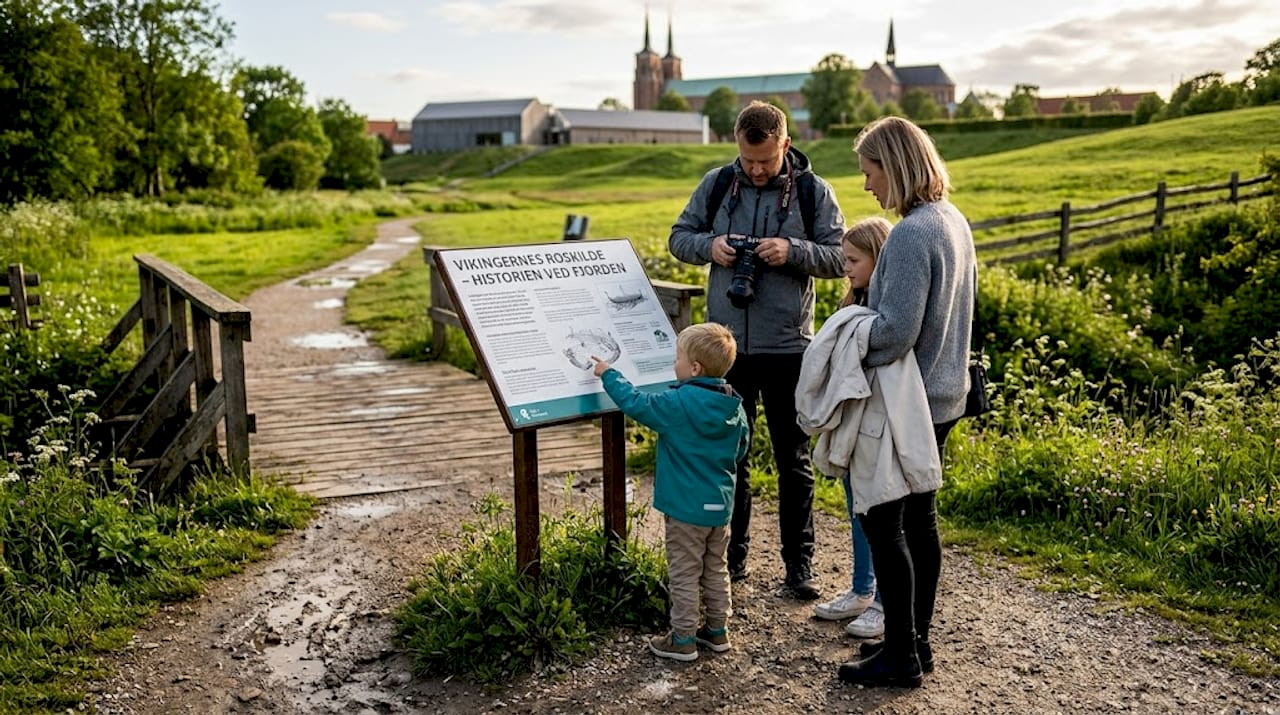
Thematic routes like Viking projects significantly increase tourists' length of stay, expenses, and cultural engagement. When a tourist doesn't just visit one museum, but follows a route over two or three days, they spend money on local accommodations, restaurants, and experiences along the way. It is local economy in practice.
For local communities, it is also about pride. When stories about one's city or region are told professionally and presented to visitors from around the world, the local identity is strengthened. It is not an abstract concept. It is the local baker who sees people coming in to inquire about the Vikings' eating habits, and the local guide who shares his family's connection to a place that is now part of a themed route.
What specific thematic activities contribute to the local community:
- Increased turnover in local shops, cafes, and accommodation establishments
- Employment for local guides, interpreters, and cultural actors
- Preservation of cultural heritage because it is actively used and told
- Pride and ownership of local identity
- Spreading of tourists from big cities to smaller, but wealthy destinations
We thread the pearls on a string and create connections that invite tourists to discover new places. It is not just entertainment. It is a way to give the destination meaning, says Martin Perregaard-Bitsch about thematic route developments.
A good example of local awareness can be found in Middelfart, where Destination Middelfart prioritizes depth over volume and integrates tourists as guests in the community rather than attracting as many visitors as possible. It is a philosophy that is spreading throughout Denmark.
If you want to understand the bigger picture, the article explains about Role of experiential travel precisely what distinguishes modern tourism from the traditional holiday concept.
Tips for making the most of thematic activities as a tourist in Denmark
Planning thematic activities requires a bit more preparation than a museum visit. Not because it's complicated, but because the best experiences often have limited spots and specific times. If you are prepared, the rest will take care of itself.
Here are the most important steps for a good experience:
- Book early and check the number of participants. Odense treasure hunt recommends a maximum of 5 people per group and separate booking of the return trip to ensure good rhythm and quality. Many activities have similar restrictions that you won't notice if you arrive without a reservation.
- Read the activity description carefully beforehand. Many thematic activities require you to take notes, solve puzzles along the way, or bring specific items. An prepared participant gets five times more out of it.
- Arrive 10 to 15 minutes earlier. Guides and presentations start on time. A late arrival not only disturbs you but also the other participants and shortens your experience.
- Bring headphones for self-guided routes. Many modern thematic activities use audio guides or apps, and your phone's speaker is rarely sufficient outdoors.
- Actively promote local recommendations. Ask your accommodation or the local tourist information which themed activities they recommend themselves. You know the hidden gems that are not always highlighted in the big guides.
- Combine activities with the local eatery. Many thematic routes end close to a café or restaurant that is part of the same story. It extends the experience and supports local businesses.
Professional tip: If the weather doesn't cooperate on the scheduled day, then call the activity provider instead of just showing up. Many thematic outdoor activities have rain plans or can be rebooked flexibly, but this requires you to contact them well in advance.
To plan your entire trip, not just individual activities, provides Planning Denmark trip og practical travel tips both a good basis to work from.
Comparison of formats and target audiences of thematic activities
Not all thematic activities are created equal. And this is an important point that many tourists overlook until they find themselves in the middle of an activity that doesn't suit the group. A historical city tour is not the same as a treasure hunt, even though both involve cultural history and movement.
Here is an overview that makes it easier to choose correctly:
| Format | Duration | Price | Best for | Physical requirement |
|---|---|---|---|---|
| Guided city tour | 1.5 to 2 hours | Free up to 150 DKK | Adults, couples, groups | Let to moderate |
| Treasure Hunt | 1.5 to 3 hours | 100 to 300 DKK | Familiar with children | Let |
| Thematic multi-day route | 2 to 5 days | Varies | Adults interested in culture | Moderate to high |
| Museum-based theme | 1 to 2 hours | 80 to 200 DKK | Everyone, including the elderly | Minimal |
| Nature-based theme route | 3 to 6 hours | Free to moderate | Active tourists | High |
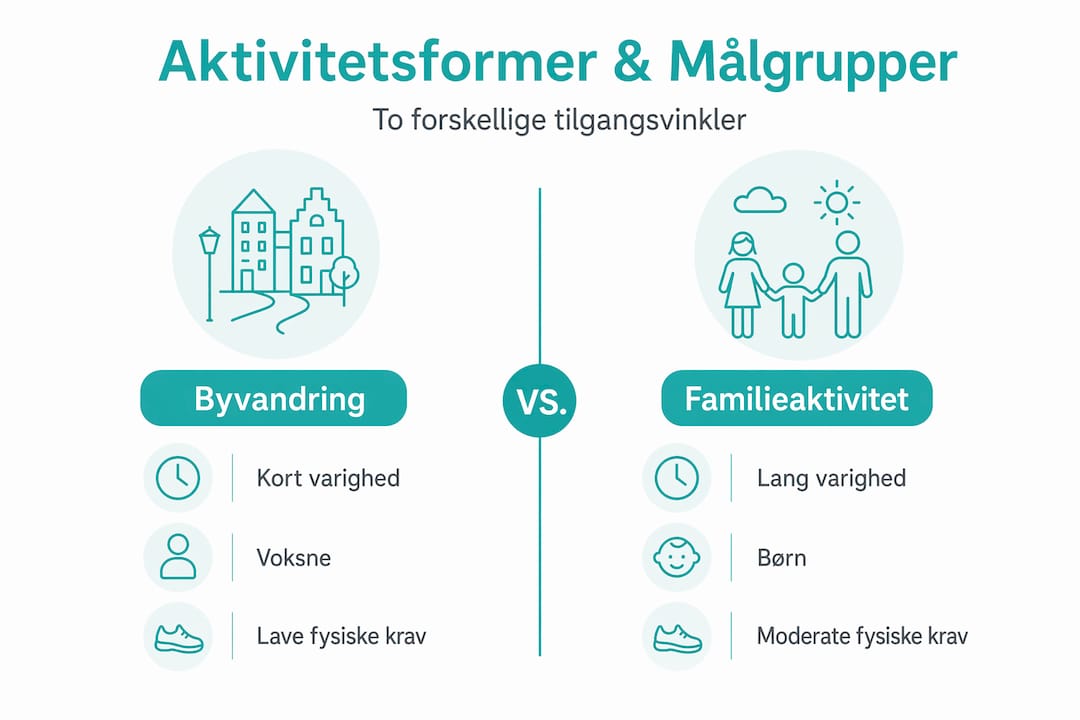
Roskilde Medieval Walk is free at a low price, lasts 1.5 hours and is most suitable for adults without walking difficulties. This type of activity requires neither preparation nor special equipment, and it is a good example that thematic experiences do not have to be expensive or complicated.
How to choose the right format:
- If you have children under 12 years old, prioritize interactive formats such as treasure hunts and playful routes.
- If the group is historically interested and mobile, a multi-day route is ideal.
- If you have limited time or mobility, choose a museum-based theme with seating options.
- Whether you are traveling alone or as a couple, city tours with a guide are especially good for meeting other travelers.
If you want to discover what else there is to do in the cultural scene in Denmark, give cultural activities in Denmark A broad overview with concrete suggestions.
Thematic activities as the path to deeper cultural experiences and sustainable tourism in Denmark
Here is the uncomfortable truth about mass tourism: it is boring for tourists and destructive to the destinations. When 500 people drag themselves through the same castle daily and rush on to the next item on the list, nothing meaningful happens. Neither for the tourist nor for the place.
Thematic activities are the answer to the problem. Not because they are trendy, but because they are structurally better. Danish Industry urges prioritizing culture It is a strategic driver for tourism development beyond the big cities, and it is not just an economic policy signal. It reflects an acknowledgment that Denmark's strength as a destination is not its location or climate. It is stories and culture.
"We thread the beads on a string," says Martin Perregaard-Bitsch about thematic routes. That picture says more than most tourism strategies. Beads without a string are just beads in a drawer. With a string, they become something that is carried, noticed, and remembered.
From our perspective at Rejs i Danmark, the most important change happening in Danish tourism these days is exactly that. Tourists no longer just want to with Denmark. They want understand They will go home with a story, not with a photo album. And thematic activities are the most effective means of delivering the story.
There is also a sustainability argument that is rarely mentioned clearly enough. Thematic routes spread tourists geographically. Instead of pushing everyone into Copenhagen, Tivoli, and Kronborg, they lead people to Jelling, Ribe, Silkeborg, and Middelfart. It reduces the burden on the most exhausting destinations and brings life to places that would otherwise be overlooked. It is Experiential economy in travel In its most concrete form.
The conventional thinking says that tourists want the easy and the familiar. We disagree. Tourists traveling to Denmark in 2026 are generally curious, information-seeking, and open to something different from the same experience they can get at home. These are exactly the kinds of tourists that thematic activities are designed for.
Get started easily with thematic activities in Denmark
Finding the right thematic activities doesn't require weeks of research. With the right planning and the right resources, it is much easier than most think. On trips in Denmark, you can use our planning guide for your Denmark trip to create an itinerary that combines thematic experiences with practical details such as transportation, accommodation, and budget. If you need help choosing the right activities, our Guides in travel planning a natural next step. And to ensure that you have all the practical arrangements in place before you travel, our practical travel tips for Danish trips provide you with the foundation you need for a good experience from day one.
Frequently Asked Questions about thematic activities in Denmark
What is the typical cost of participating in thematic activities such as the Viking route or treasure hunts?
Prices vary a lot, but many activities are affordable. Odense Å treasure hunt costs 100 to 200 DKK per family, while city walks and nature-based routes are often free or at a very low price.
How can I best plan to participate in thematic activities during my holiday in Denmark?
Book in good time and check schedules, number of participants, and weather conditions. Using local guides and qualified travel planners typically provides a much richer experience than finding your way on your own.
Are the thematic activities suitable for children and families?
Yes, many are directly designed for families. The treasure hunt on Odense River is a good example with its interactive riddles and boat trip, keeping children engaged for the entire two hours.
Can thematic activities help learn about Danish culture in an authentic way?
Absolutely. The Viking Route connects historical sites in a shared narrative about Denmark's earliest kings, and it provides an understanding of the cultural heritage that no single exhibition can match.
Recommendation
- Role of Events in Travel Experiences: Complete Guide – Travel in Denmark
- How to choose activities in Denmark: The best experiences – Travel in Denmark
- The role of guides in travel planning – The key to unique experiences – Travel in Denmark
- How to find family-friendly activities in Denmark – Travel in Denmark