TL;DR:
- Camping in Denmark is becoming more popular, but it requires good preparation and knowledge of the rules. It is important to choose the right accommodation, book well in advance, and plan the setup carefully. Respect the rules for free camping, motorhomes, and nature for a safe and sustainable camping experience.
Camping in Denmark is more popular than ever, but many campers are stuck with the same challenge: where do you actually start? Choosing the type of accommodation, the rules for free camping, booking during the high season, and the packing list can quickly feel overwhelming. This guide takes you step by step to camping in Denmark, from the first spadeful of planning to sitting with a cup of coffee in front of the tent and enjoying nature. Whether you're camping for the first time or want to understand the Danish rules, you will find concrete answers here.
Preparation for your camping trip in Denmark
God preparation is what distinguishes a stress-free camping experience from one that starts with a forgotten sleeping pad and no matches. Planning is the key for a safe and successful camping experience, whether you are traveling alone, with friends, or with the whole family.
Equipment you can't do without
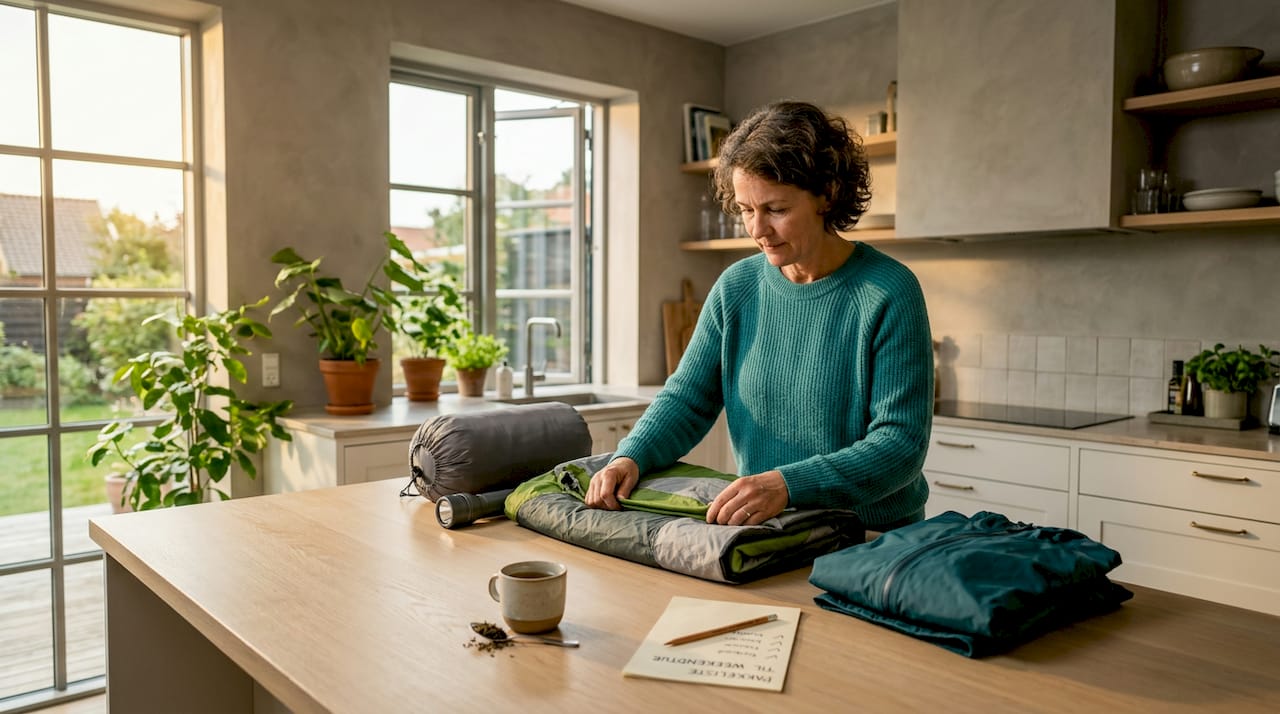
Start by gathering the basic equipment before you even think about the destination. A waterproof tent of good quality is the starting point. A sleeping bag suitable for the season, an insulating sleeping mat or inflatable sleeping pad, and a basic cooking set with a gas burner. Don't forget the first aid kit, headlamp, and a good waterproof ignition system.
A practical rule of thumb: pack for the weather you not expects Denmark can offer rain in July and sunshine in September, and you will thank yourself for the extra raincoat.
Professional tip: Always check the caravan's or trailer's tires before the trip. Tires age over 5 years, even if the tread looks fine, and deteriorated rubber significantly increases the risk of failure.
Overview of accommodation options
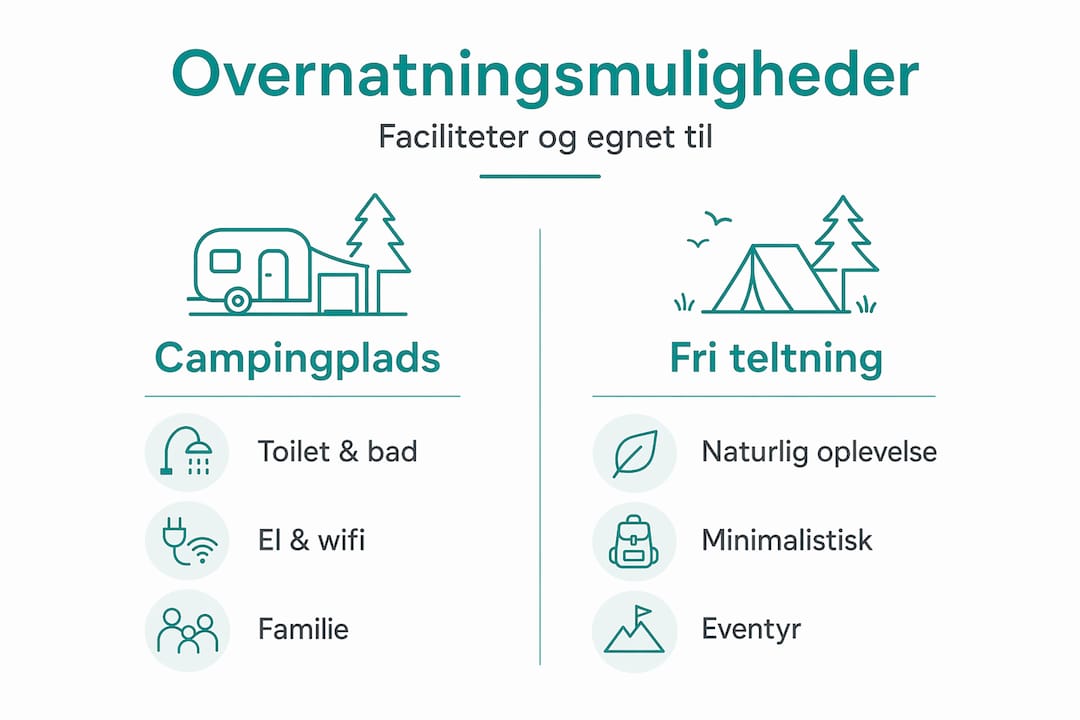
| Accommodation type | Facilities | Price | Suitable for |
|---|---|---|---|
| Camping site (shared) | Toilet, bath, electricity, Wi-Fi | Medium to high | Familiar, comfort campers |
| Primitive campsite | Bonfire site, toilet (if any) | Make it free | Natural lovers, wanderers |
| Free camping (state and private forest) | Ingen | Free | Experienced campers |
| Parking space (campervan) | Electricity, service point | Make it medium | Autocamperist |
Over 275 state forests In Denmark, free camping is offered, but the rules are strict: a maximum of one night per place, a maximum of three people per tent, and you must be on foot, cycling, or in a kayak. Parking spaces Gives motorhome owners access to electricity and service facilities close to nature, and they are typically an inexpensive and good solution compared to a full campground.
Choose your accommodation type based on your group, your facilities, and your travel style. Families with young children are best served by a well-established campsite with a shower, playground, and electricity for the first trips.
Arrival and setup at the campsite
When the preparation is in place, the actual arrival and setup are the phases that most often cause trouble. Here is a concrete, numbered guide to what you do from the moment you turn into the campsite.
-
Book in good time. Digital booking systems It is the standard on modern Danish campsites and provides options for online reservation, payment, and access control. During the high season from June to August, popular spots are sold out weeks in advance. Always book at least two to three weeks in advance to secure your spot.
-
Check in at the reception or via self-service. Many places now have automated check-in, so you can arrive outside of opening hours. Have your booking confirmation ready on your phone or printed.
-
Choose your parking spot carefully. Look at the terrain: is it flat? Is there a lee from the wind? Is there shade for lunch? Don't stand too close to the neighbors. A few meters make a big difference for everyone's comfort.
-
Set up the tent systematically. First lay the ground tarp, then the inner tent, and finally the outer tent. Make sure all tent pegs are properly driven into the ground. Check the tension lines so that the tent can withstand rain and wind.
-
Organize the campsite logically. Cooking area separated from sleeping zones, trash in bags ready for disposal, and shoes outside the tent. It sounds simple, but an organized space makes everyday life much easier.
-
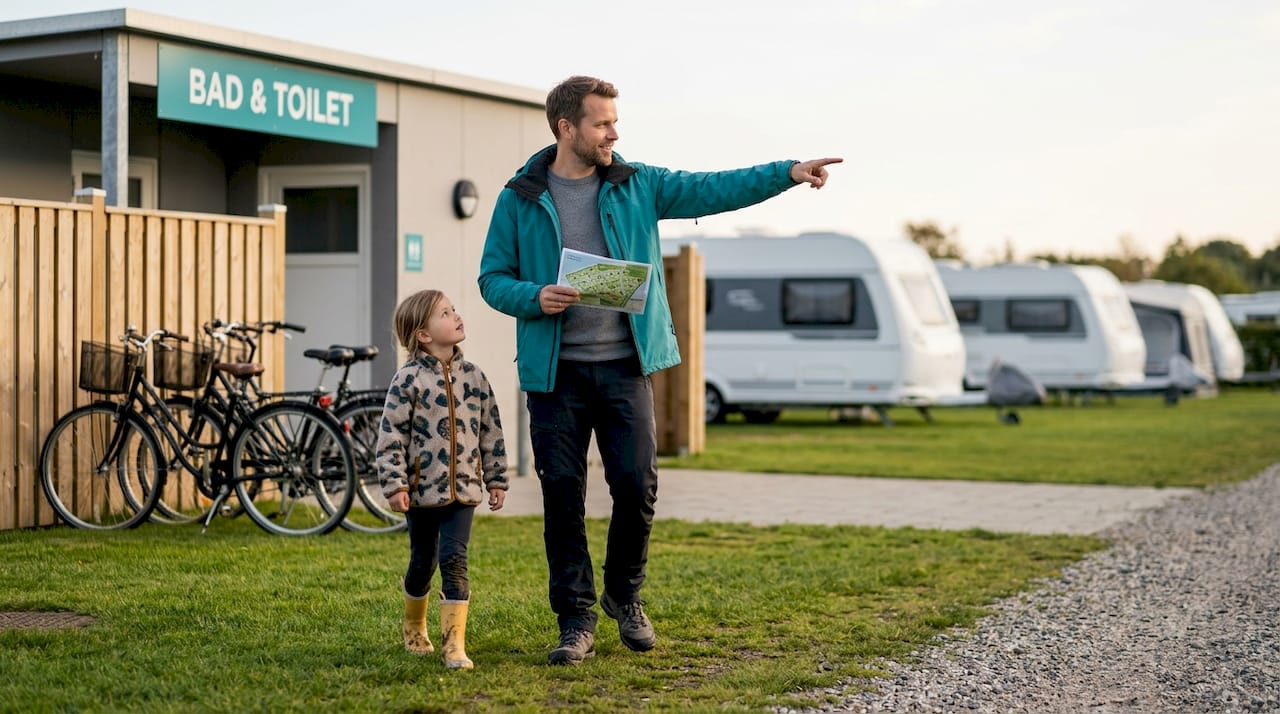
Guide yourself around the area. Find toilets and bathrooms, waste stations, common areas, and any safety information. Note the emergency number or the reception phone number.
Professional tip: Use the first 15 minutes on the site to take a walk around and check out the facilities before you unpack. You avoid discovering too late that the toilets are at the other end of the square.
Camping in Denmark with proper preparation and a clear arrival plan gives you much more time for what matters: relaxation and experiences in nature.
Camping rules and good etiquette in Denmark
The rules for camping in Denmark are not something you should guess about. Knowing them ensures you are protected from fines, conflicts with neighbors, and guilt towards nature.
Parking versus camping in a motorhome
Here is a difference that many motorhome owners overlook. A camper van under 3,500 kg can park in public spaces like a car for up to 24 hours, but only without displaying camping behavior. If you set up a awning, put down support legs, or bring out chairs, it is legally defined as camping, and it requires a legal camping site or parking space.
Leisure behavior is precisely defined in the legislation: awnings, support legs, and outdoor furniture are sufficient to change the status from parking to camping. There is a distinction with consequences.
Use parking spaces when camping in a motorhome. They are cheap, legal, and offer the basics you need without putting you in a legal gray area.
What you may and may not do
| Activity | Allowed | Condition |
|---|---|---|
| Counting in state forests | Yes | Maximum 1 night, maximum 3 per tent, on foot/bike/kayak |
| Free camping in private forest | Only with permission | Does not require the owner's acceptance |
| Autocamper in state forests | No | For free parking for non-motorized vehicles |
| Parking in a campervan (public) | Yes | Maximum 24 hours, no rental behavior |
| Camping at the campsite | Yes | Payment, but with few restrictions |
| Bonfire in nature | Conditional | Only at designated fire pits, and only during low fire risk. |
Camping in a campervan in the wild is not allowed in state forests. It is a common misconception. Camping in the woods is reserved for those arriving on foot, by bike, or by boat.
The camping industry in Denmark There are approximately 12 million overnight stays annually, and there is strong political focus on modernizing the regulations for greater flexibility and sustainability. This means that the rules are continuously updated, and it is always a good idea to check the latest guidelines with the Danish Camping Union before the trip.
God camping etiquette is not just about rules. Respect the quiet zones on the site, typically from the hour. 22 to 07, clean up after yourself, and leave nature as you found it.
Family-friendly camping in Denmark
Camping in Denmark with children requires a little extra planning, but it's worth the effort. A camping holiday gives children experiences in nature that they remember well into adulthood.
Choose the right spot for the family
Not all campsites are created equal. Many campsites have quiet zones and facilities specially designed for families with children, including playgrounds, swimming pools, and activity programs. When you search for them best campsites in Denmark For families, you should prioritize these elements:
- Playground and marked safe play routes within the area
- Large facilities (pool or beach nearby)
- Family toilets and bathrooms
- Low vehicle traffic inside the site
- Activity program or mini club in the high season
Professional tip: Book a spot close to the toilets when camping with small children. It's not glamorous, but those midnight shifts are much easier, and you sleep better.
Dos and Don'ts with children on camping
Do this:
- Familiar games and activities for quiet evenings (card games, drawing blocks)
- Set clear rules for where children are allowed to go alone
- Make food, they know, at least for the first few days, while they get used to the surroundings
- Always keep sunscreen, insect repellent, and plasters on hand
- Plan facilities based on children's needs already when choosing a campsite
Avoid this:
- Set up a primitive campsite as the first camping trip with toddlers
- Allow children to store food in the tent (attractive to insects and small animals)
- Forget to bring enough clothes for cold evenings, even in the summer months
- Planning too many activities on the first day, where everyone has to get used to the new setup
Family-friendly camping in Denmark is largely about setting the bar correctly from the start. Choose a site with good facilities for the first trip, and gradually work your way towards more primitive experiences as the family gains experience and confidence. You can find good inspiration for the whole family's Denmark trip at Rejsidanmark
My experience: the underrated importance of good preparation
I have camped in Denmark for many years, and the mistake I see most often is that people underestimate the preparation and overestimate improvisation. It sounds romantic to just "hit the road and see what happens," but in reality, it often ends up with being on a crowded campsite in peak season without a reservation, or putting out the awning in a parking lot and being surprised by a fine.
What I have learned is that preparation does not steal the adventure. It releases it. When you know which spot you are arriving at, what the rules are, and what the equipment list contains, you actually have more mental capacity to enjoy the trip.
The other thing I really want to emphasize is that respect for the rules is more than a legal issue. Danish nature is fragile and shared by many. Campers who park camper vans in forests or light fires illegally ruin the experience for everyone else and pressure the authorities to tighten the rules further. No servant benefits from it.
My personal recommendation for new campers: start with an established campsite, learn the routines, and gradually expand your comfort zone towards primitive camping sites and wild camping. That journey is actually much more satisfying than jumping into it too quickly.
— Tommy
Plan your camping trip with Rejsidanmark
Rejsidanmark gathers the best guides, tips, and inspiration for camping and experiences in Denmark, all in one place. Whether you're planning your very first camping trip or looking for new destinations, you'll find concrete answers and recommendations tailored to your travel style and budget.
Use our Guide to Denmark for first-time visitors as a starting point, and supplement with ours Practical travel checklistwho helps you pack correctly and plan your route. Would you like an overview of holiday parks and camping options With facilities across the country, Rejsidanmark has an interactive map and filters that make it easy to find exactly what you're looking for.
FAQ
What is free camping, and who is allowed to do it?
Camping in tents is allowed in selected state forests in Denmark for people arriving on foot, by bicycle, or by kayak. Over 275 state forests are open for free camping with a maximum of one night per site and a maximum of three people per tent.
May I sleep in my camper in the forest?
No. Camping with a camper van is not allowed in state forests. Camping in forests is reserved for non-motorized travelers. Autocamper owners should use parking areas.
When should I book a campsite in Denmark?
Book at least three weeks in advance during the high season from June to August. Digital booking systems make it easy to reserve online, and many popular spots are sold out long in advance.
What defines camping versus parking in a motorhome?
If you set up a awning, put down support legs, or bring out furniture, it is legally defined as camping. Without a parking permit, a camper van under 3,500 kg can park in public spaces for up to 24 hours.
What facilities should I look for when camping with family?
Prioritize playgrounds, bathing facilities, family toilets, and minimize internal car traffic. Many Danish campsites have quiet zones and activity programs specially designed for families with children.
Recommendation
- Checklist for a road trip in Denmark – How to organize your trip – Travel in Denmark
- How to plan your trip to Denmark: Your complete guide – Travel in Denmark
- Practical checklist for a day trip in Denmark: Plan for success – Travel in Denmark
- Checklist for Denmark trip: Plan your perfect adventure – Travel in Denmark