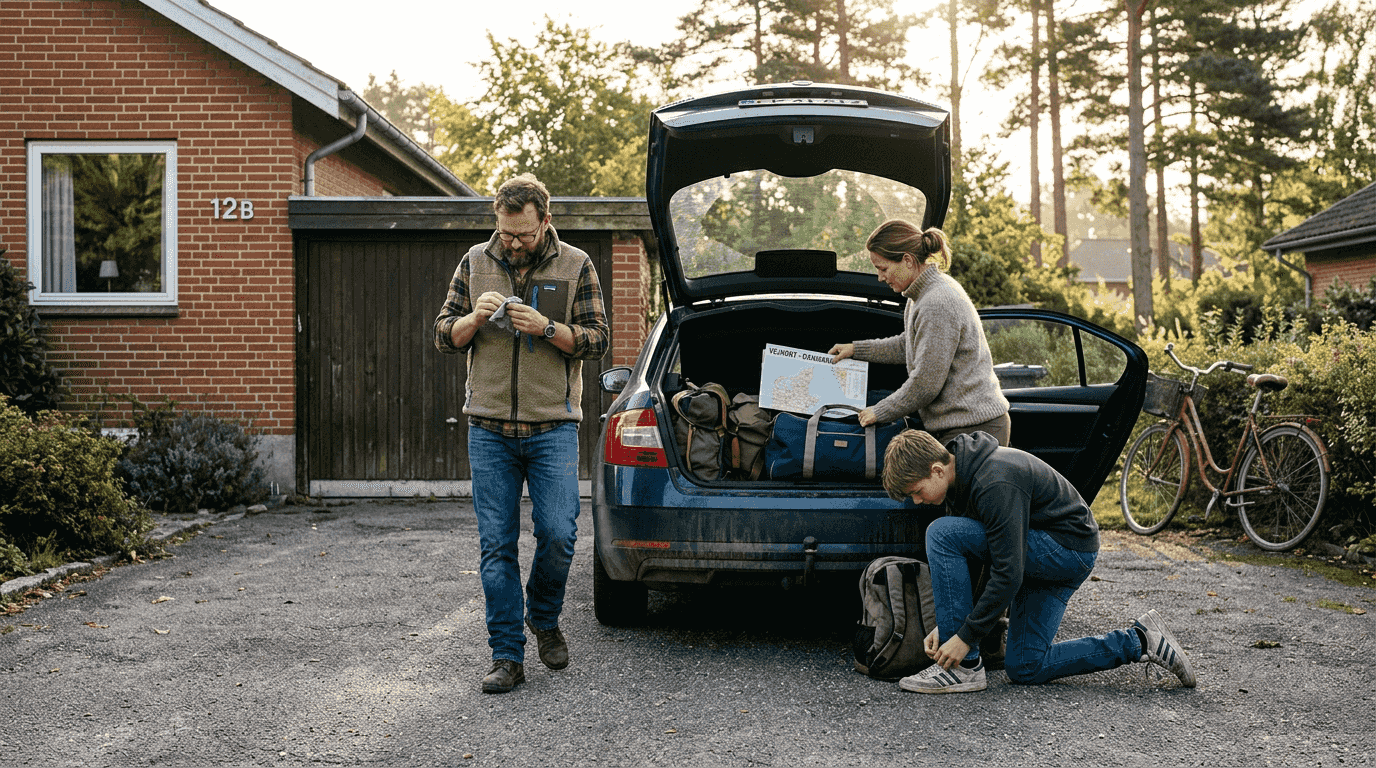
Planning a road trip in Denmark can seem overwhelming without clear guidance. Where should you start? Which destinations are worth visiting? How do you pack smart for changing weather? Denmark's compact size makes it possible to experience a surprisingly large variety of areas in a short time, but without a solid plan, you risk missing out on the best experiences. This guide helps you plan your route, pack efficiently, book accommodation, and drive safely so you can focus on enjoying your journey through Denmark's beautiful landscapes and charming towns.
Key points
| Point | Details |
|---|---|
| Plan the route according to interests | Adjust your road trip to your preferences for nature, culture, or activities for maximum enjoyment. |
| Pak smart for changing weather | Bring rain gear, comfortable footwear, and essentials like snacks to ensure a pleasant trip. |
| Book early accommodation | Reserve especially in the high season to avoid sold-out locations and secure better prices. |
| Here are Danish driving tips | Drive correct lane behavior and safety practices for a secure driving experience. |
| Create memorable experiences | Combine sights with local culture and coziness for an authentic Danish trip. |
Plan your route and choose destinations
Denmark's size makes it ideal for road trips, as you can Experience the country thoroughly in a short timeA typical tour can start in North Jutland with visits to Skagen and Grenen, where two seas meet. Continue south through Central Jutland with stops at Aarhus and Silkeborg Lakes. Southern Jutland offers the Wadden Sea and Ribe, Denmark's oldest town. Fyn concludes with H.C. Andersen's Odense and Egeskov Castle, while Zealand finishes the trip with Copenhagen and North Zealand castles.
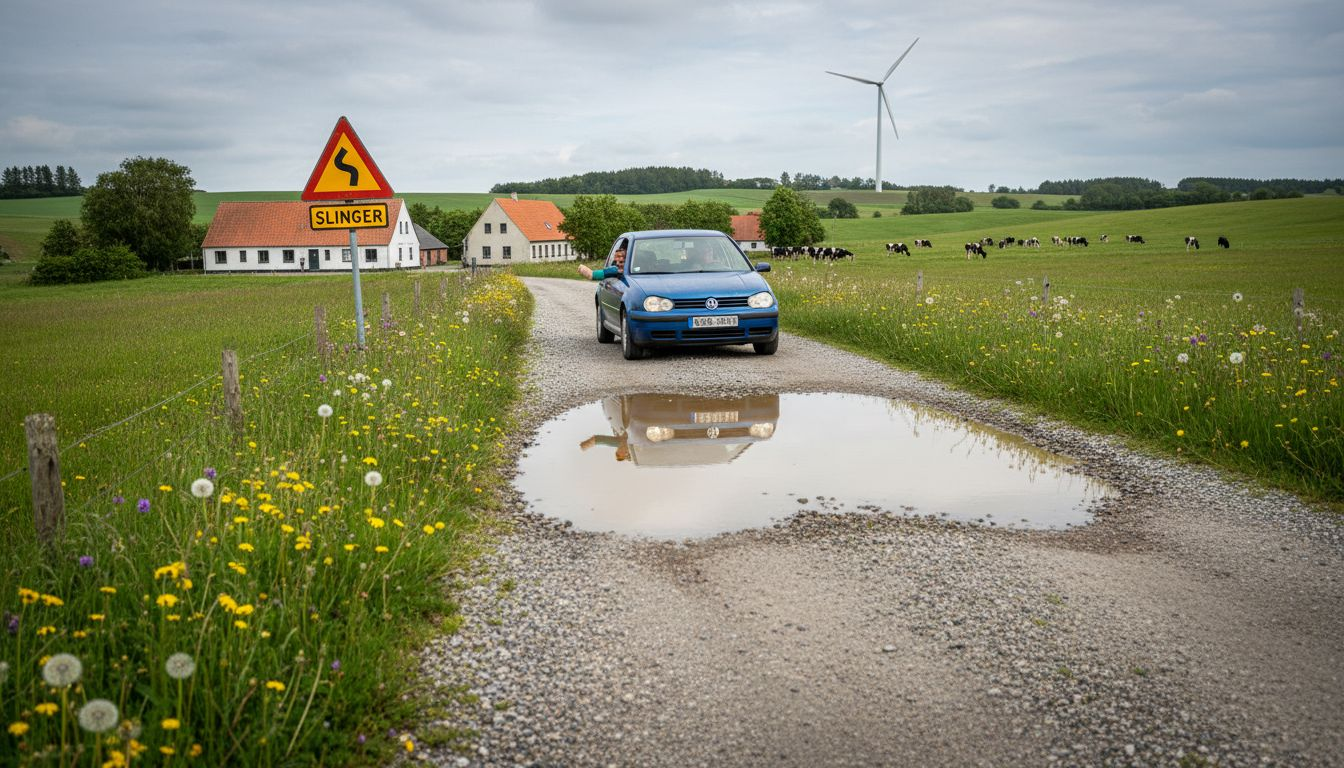
The daisy route is an excellent source of inspiration for road trippers. This national tourist route connects over 1000 attractions over 3600 kilometers and marked with brown signs with a white daisy. The route takes you through Denmark's most picturesque areas and ensures you don't miss hidden gems. You don't need to follow the entire route, but can choose the sections that match your time frame and interests.
Carefully consider your preferences when planning. Are you a nature lover? Prioritize coastal areas, national parks, and forest areas. Interested in culture? Focus on museums, castles, and historic towns. Are you looking for activities? Include amusement parks, water activities, and cycling routes. In step-by-step approach Helps you organize the planning effectively.
Here is an example of a five-day itinerary:
| Day | Destination | Highlights | Travel time |
|---|---|---|---|
| 1 | Skagen | The dune, Råbjerg Mile, yellow houses | 1 time from Aalborg |
| 2 | Aarhus | ARoS Art Museum, The Old Town | 2 hours from Skagen |
| 3 | Ribe | Viking Center, Wadden Sea | 2.5 hours from Aarhus |
| 4 | Odense | H.C. Andersen's House, Egeskov Castle | 1.5 hours from Ribe |
| 5 | Copenhagen | Nyhavn, Tivoli, Amalienborg | 1.5 hours from Odense |
This flexible frame gives you time for spontaneous stops and extra time at attractions that catch your interest. Find more inspiring experience routes tailored to different interests and age groups
Pak smart and get ready for the road
Danish weather is notoriously unpredictable, so packing requires consideration of changing conditions. Even during the summer months, temperatures can vary significantly between day and night, and sudden rain showers are common. Bringing multiple layers of clothing gives you the flexibility to adapt to the weather throughout the day.
Essential items to pack:
- High-quality rainwear that keeps you dry without being bulky
- Comfortable footwear suitable for both city walking and nature trails
- Sunglasses and sunscreen for sunny days by the coast
- Light jackets or sweatshirts for cooler evenings
- Extra pair of shoes, because wet footwear is uncomfortable on long drives
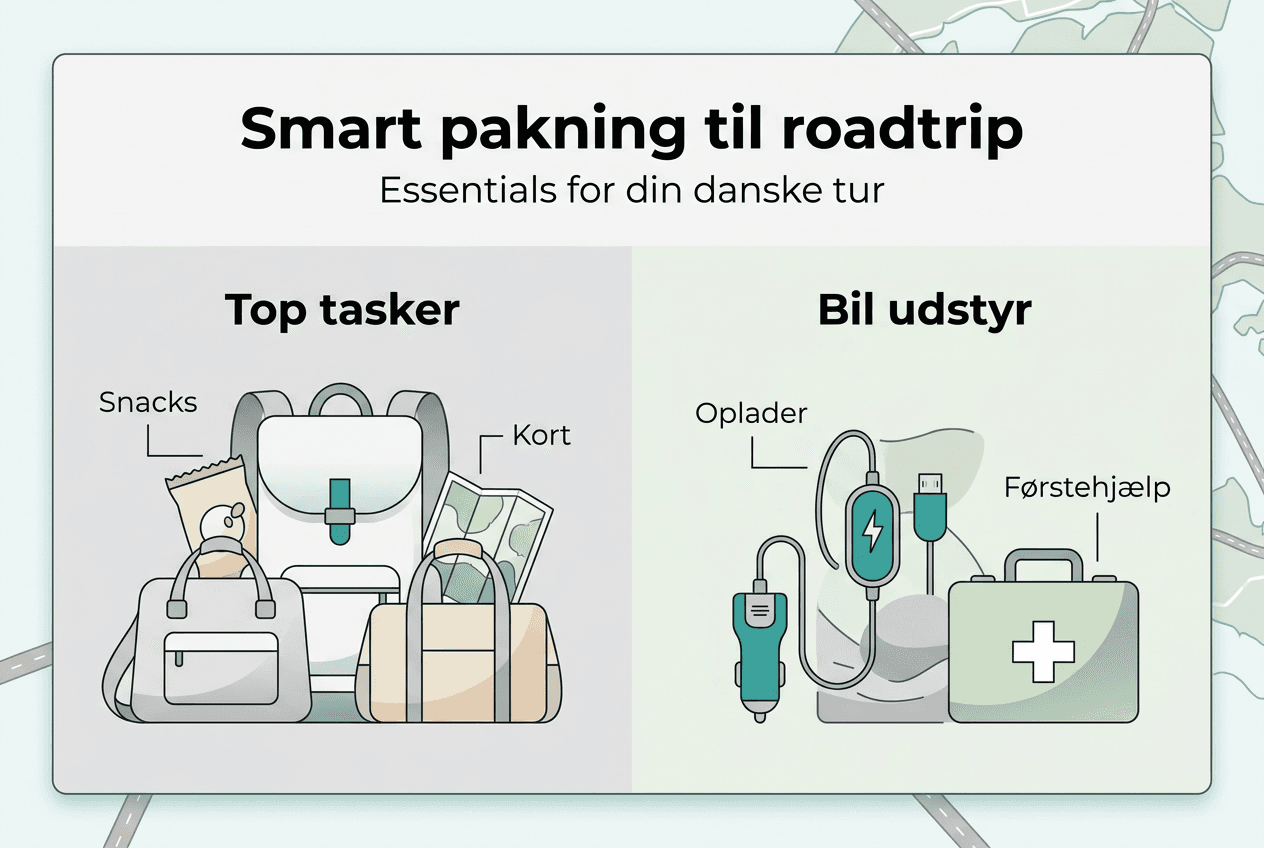
Snacks and drinks are essential for maintaining energy between meals. Danish rest areas are often well-maintained but can be scattered along smaller roads. A cooler bag with water, fruit, nuts, and sandwiches. A good camera or smartphone with ample storage captures the memorable moments along the route.
Don't forget practical necessities such as car chargers for phones and GPS, physical maps as backup, a first aid kit, and possibly entertainment for children. In detailed checklist ensures that nothing important is forgotten at home.
Professional tip: Organize your tasks so that the most used items are easily accessible. Place snacks, water, and rain gear at the top or in a separate bag in the cabin. This minimizes the need to stop and rummage in the trunk, saving time and making the trip more comfortable. Use transparent bags for small items like chargers and medicine so you can find them quickly.
Book accommodation and plan according to the season
Pre-booking accommodation is critical, especially during the high season from June to August. Popular destinations such as Skagen, Bornholm, and coastal areas quickly become fully booked. Prices also increase significantly during these months, so early booking ensures both availability and better economy.
Denmark offers a variety of accommodation options:
- Camping sites with facilities ranging from basic to luxury glamping
- Holiday homes perfect for families seeking privacy and kitchen facilities
- Hotels in cities for those who prefer service and convenience
- Holiday park with activities and entertainment included
- Bed and breakfast for personalized service and local insight
Flexibility in your accommodation allocation helps avoid overcrowded areas. Consider staying overnight in smaller towns near main attractions instead of in the tourist centers themselves. This often provides authentic experiences, lower prices, and easier parking. Make sure that your accommodations are strategically located in relation to planned attractions to minimize unnecessary driving.
Spring and autumn are excellent alternatives to the high season. The weather is still pleasant, attractions are open, and there are fewer tourists. Prices are falling significantly, and you experience Denmark at a more relaxed pace. Winter road trips have their own charm with the Christmas market and cozy indoor experiences, even though some coastal attractions may have reduced opening hours.
Explore holiday parks in Denmark for family-friendly solutions with everything included. Many offer pool areas, playgrounds, and organized activities, making them ideal for families with children. Plan your Vacation in Denmark by combining different types of accommodation for variety and an optimal experience
Safety and good driving tips for a road trip in Denmark
Safe driving starts with understanding Danish traffic behavior and avoiding common mistakes. Many drivers drive unnecessarily In the middle lane on the highway, which causes traffic problems. The left lane is for overtaking, the right lane for normal driving. Use only the middle lane when actively overtaking traffic in the right lane.
When merging onto the highway, you should match the traffic speed for safe merging. Many drivers are driving too slowly on the on-ramps, creating dangerous situations. Accelerate to highway speed before merging in. Check mirrors and blind spots thoroughly.
Before you start driving:
- Adjust the seat and backrest for optimal comfort and control
- Adjust all mirrors correctly for minimal blind spots
- Program the GPS and select music or a podcast in advance
- Make sure that all passengers are wearing seat belts.
- Check tire pressure and fuel level
The speedometer in the car often shows a lower speed than you are actually driving. If you are consistently being overtaken even though you believe you are driving within the speed limit, check your actual speed with GPS. Do not drive unnecessarily slowly, as this frustrates other drivers and can create dangerous situations.
Driving into parking spaces increases safety when you need to drive out again. You have a better overview of pedestrians and other traffic when you drive forward out of the parking space. This is especially important in busy parking lots at attractions.
Professional tip: Take regular breaks every two hours to avoid fatigue. Danish rest areas are often beautiful and well-maintained with toilets and tables. Use these stops to stretch your legs, snack, and enjoy the view. Tired drivers react more slowly and make more mistakes. A fifteen-minute break can significantly renew your concentration.
Get more practical travel tips about navigation, parking, and local customs for a hassle-free experience
Get more help for your road trip in Denmark
After reading this guide, you are well equipped to plan your Danish road trip, but there is much more to explore. Our step-by-step guide provides you with even more detailed instructions throughout the entire planning process from start to finish. You will find concrete tools, templates, and schedules that make planning simple and efficient.
Explore our comprehensive experience archive with hundreds of attractions, activities, and destinations spread across Denmark. Filter by region, season, price, and age group to find the experiences that match your family's interests. Each experience includes detailed descriptions, prices, and practical information.
Consider booking through our selection of holiday parks for a worry-free accommodation solution with facilities and activities all in one place. This gives you more time to enjoy your road trip without constantly packing and moving to new places.
Frequently Asked Questions
How long should I spend on a road trip in Denmark?
A week-long road trip gives you time to see the main attractions in several regions without feeling stressed. Five days is the minimum for a meaningful tour, while two weeks allow for deeper exploration and more spontaneous stops.
What is the best time of year for a road trip in Denmark?
May to September is ideal with longer days and warmer weather. June to August is the high season with full attractions but also more tourists. Spring and early autumn combine good weather with fewer people and lower prices.
Should I rent a car or use my own for the road trip?
Your own car is often cheaper and more convenient because you know it well. Rent only if your car is unreliable or you are flying to Denmark. Modern rental cars have good fuel economy and often include GPS.
How do I find family-friendly routes in Denmark?
Prioritize destinations with varied activities such as Legoland, zoos, and beaches. Plan shorter driving stretches with frequent stops to avoid boredom. Holiday parks along the route give children the opportunity to run around and use energy.
What should I do if the weather turns bad during the road trip?
Have backup indoor activities planned such as museums, aquariums, and indoor playlands. Danish cities offer many covered experiences. Flexibility in your schedule allows you to reschedule outdoor activities for better weather days.
How do I avoid traffic problems in larger cities?
Drive outside of rush hour in the morning and afternoon. Park at the edge and use public transportation to the center. Copenhagen has excellent metro and bus services. Many attractions have dedicated parking lots, but they fill up quickly during the high season.
Recommendation
- Plan a road trip in Denmark step by step – how to succeed – Travel in Denmark
- Checklist for a road trip in Denmark – How to organize your trip – Travel in Denmark
- How to plan your trip to Denmark: Your complete guide – Travel in Denmark
- How to plan your trip to Denmark for the whole family – Travel in Denmark
- Creative camper route ideas for Chile 2026