TL;DR:
- Sustainable vacation is about positively impacting the environment, society, and the economy through conscious choices. It involves respect for nature, culture, and support for local actors, not just CO2 compensation. Small individual actions can collectively make a greater difference and reduce the negative impact of tourism.
Most people believe that sustainable holidays mainly involve avoiding flights and purchasing CO2 credits. It is a widespread misconception that actually makes it harder to understand what the concept truly entails. Sustainable vacation encompasses a much broader range of choices: how you impact the local community, whether the money you spend stays in the local economy, and whether your activities respect the culture and nature you visit. This guide gives you a clear understanding of the concept and practical tools to make your next trip to Denmark more sustainable from start to finish.
Main Points
| Point | Details |
|---|---|
| A sustainable holiday is balanced | It's about uniting the environment, community, and economy in your choices during the holiday. |
| Handling comes before ideals | Small, concrete changes in your travel pattern make the biggest difference for sustainability. |
| Individual and destination responsibility | Both your choices and local regulations are important for protecting nature and culture. |
| Practical possibilities are available everywhere | You can choose sustainable alternatives in planning, transportation, and activities in Denmark. |
What does sustainable vacation really mean?
The concept of "sustainable holiday" is thrown around like a frisbee in the air, but many don't know exactly what it entails. It's not just a matter of green transportation or reusable coffee cups at the campsite. It's about something much more fundamental.
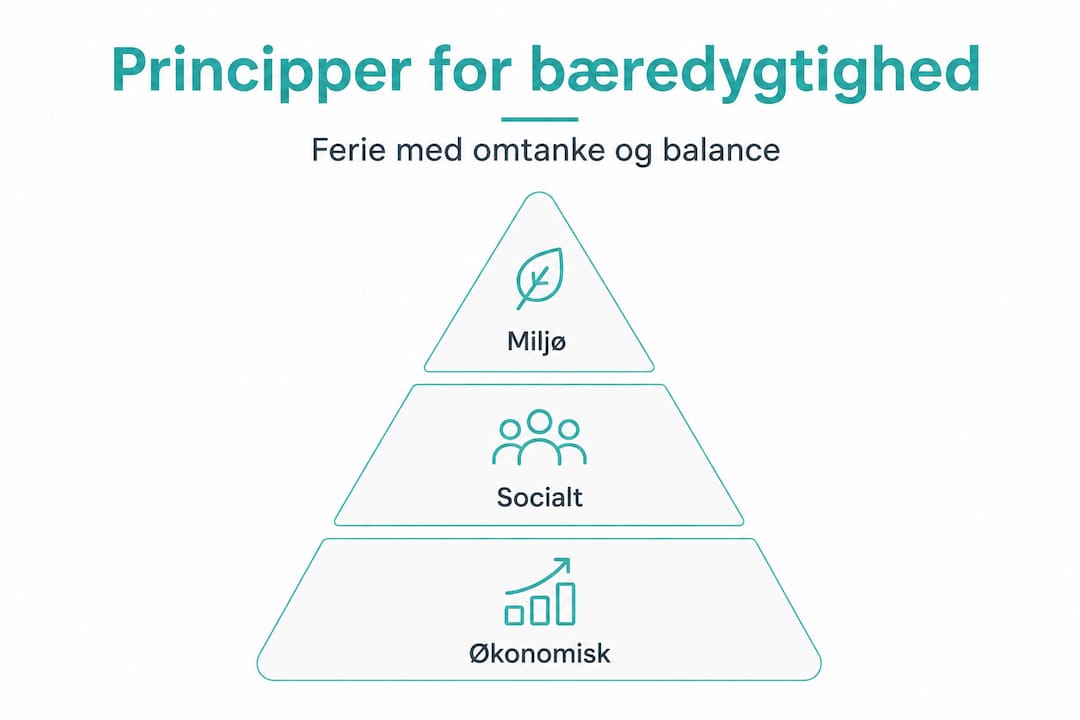
Sustainable tourism It is about balancing three dimensions: the environment, the local community, and the local economy. All three must be connected. If you choose a nature experience that takes a heavy toll on a vulnerable coastline, it doesn't help much that you got there by train.
The three dimensions look like this in practice:
- Environmental sustainability Minimize impact on nature, choose activities that do not disturb wildlife, and reduce waste production and water consumption along the way.
- Social sustainability Respect local traditions and cultures, contribute positively to the community you visit, and avoid behaviors that create conflicts or displace locals.
- Economic sustainability Make sure your money benefits local actors directly. Choose local accommodations over international hotel chains, buy food from local producers, and use local guides.
Sustainability in tourism is an ongoing process and requires continuous monitoring of the impacts that tourist activities have on the environment and society. UN Tourism
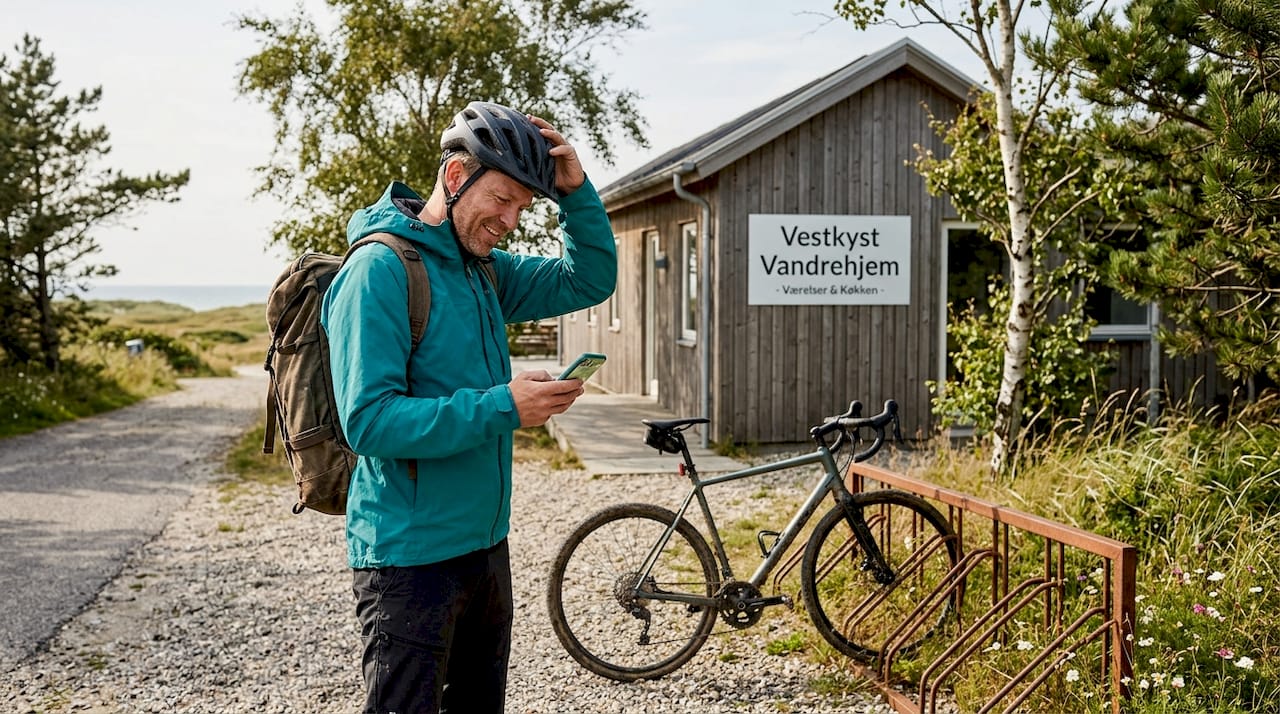
A good example from Danish holiday: If you take a bike ride along the West Coast and stay overnight at a locally run hostel, you support all three dimensions at once. You do not unnecessarily burden the environment, you respect the local way of life, and your money goes directly to a local business owner.
It is also important to understand what sustainable holiday is not. It does not mean avoiding all tourism. It is also not an absolute state that you achieve once and then have in place. Sustainable tourism is an ongoing approach that requires reflection and adjustment. You don't need to do everything perfectly from day one, but you should keep an eye on your habits and try to improve them over time.
Do you want a deeper understanding of how nature plays a role? Our Danish Nature Tourism Guide Provides a good starting point for integrating sustainability into nature experiences.
The most important principles for sustainable holidays
Now that you know the three dimensions, it's time to look at how to translate them into concrete actions. Here are three overarching principles that serve as a practical guide.
The principles of optimal use of environmental resources, respect for local culture and community, as well as a long-term and fair economy, form the backbone of sustainable tourism. Let's go through them one by one.
-
Respect and protect environmental resources. Choose activities that do not overload nature. Denmark has plenty of nature that can be experienced without leaving permanent traces. Coastal beaches, forests, and nature reserves are vulnerable, and it's about using them with care. Stay on the marked paths, avoid disturbing birds and animals during the breeding season, and always take your trash home with you.
-
Respect and support local cultures and communities. This principle is about recognizing that you are a guest. Learn a little about the history of the place, buy local products and crafts, and be curious rather than expecting everything to adapt to your habits. In Denmark, you can experience inspiring cultural activities In many places, they are deeply rooted in the community's identity.
-
Ensure that your holiday contributes positively to the local economy. It means that you actively choose local alternatives over chains. Book accommodation with a local host instead of an anonymous platform. Choose the local café over the fast food chain. Use a local guided service instead of an app-based international service. These small choices may seem minor, but they add up to a big difference for the community.
Here is an overview of specific actions divided according to the three principles:
| Principle | Example of action | Effect |
|---|---|---|
| Environment | Bike over car for shorter trips | Fewer emissions, noise, and road wear |
| Environment | Choose organic food and local ingredients | Reduces the burden on agriculture |
| Local culture | Visit local museums and markets | Supports cultural institutions |
| Local culture | Participate in local events | Creates authentic contact |
| Economy | Book local accommodation places | Money remains in the local economy |
| Economy | Travel outside the high season | Advantages of tourist pressure more evenly |
Professional tip: Just change one element in your next vacation. Try traveling during the shoulder season instead of in July, and notice how much calmer and more authentic the experience is. Small changes, repeated over many holidays, are more effective than one perfect "green" trip every five years.
For concrete examples of nature experiences tailored to the sustainable traveler, our collection of Inspiring nature experiences a lot of inspiration
The balance between sustainability and tourism
Here is the uncomfortable truth: Tourism and sustainability are not always natural friends. Basically, tourism puts more pressure on the places that attract people. The more popular a destination is, the greater the risk that it will wear out or lose its soul.
Tourists are gathering in increasing numbers to popular destinations such as the Faroe Islands, but is increasingly facing local resistance and social tensions. It is not an isolated phenomenon. It happens everywhere where tourism grows faster than the destination's capacity to handle it.
The consequences of overtourism can look like this:
- Natural wear and erosion on trails, dunes, and coastlines
- Rising rents in popular tourist cities pushing locals out
- Traffic phobia and parking problems in otherwise peaceful villages
- Loss of local identity when shops and cafes are replaced by souvenir shops and tourist traps
- Increased waste volume and pressure on water resources
It is crucial to understand that individual choices alone do not solve these problems. There is a need for active destination management, regulation, and policy. Some places require limiting the number of visitors in particularly vulnerable natural areas. In some places, it is about channeling tourists away from the most crowded spots and towards alternative destinations.
The biggest challenge is not that people travel, but that travel flows are too concentrated in time and place. Dispersion is the key to sustainable tourism.
Here is a comparison of what increased tourism typically brings:
| Advantages of increased tourism | Disadvantages of increased tourism |
|---|---|
| Increased income for local businesses | Price increase on housing and daily necessities |
| Funding of cultural heritage and nature | Slide on natural and cultural environments |
| Job creation in the local area | Seasonal and uncertain employment |
| Visibility and pride in local culture | Loss of local character and identity |
| Improved infrastructure | The infrastructure is overloaded during peak season |
As an individual traveler, you can still make a real difference. Choose to visit The role of nature on vacation With respect for the places that are particularly vulnerable. Avoid visiting the most famous places at the busiest times, and instead seek out the slightly less known destinations that will appreciate your visit.
It's not about avoiding popular places forever. It's about consciousness and timing. If everyone visits Møns Klint on a random Tuesday in September instead of a Saturday in August, it is already a huge step in the right direction.
How do you plan and experience a sustainable holiday yourself?
Now it's time to make it concrete. Here is a step-by-step approach to planning your next sustainable Denmark vacation that actually works in practice.
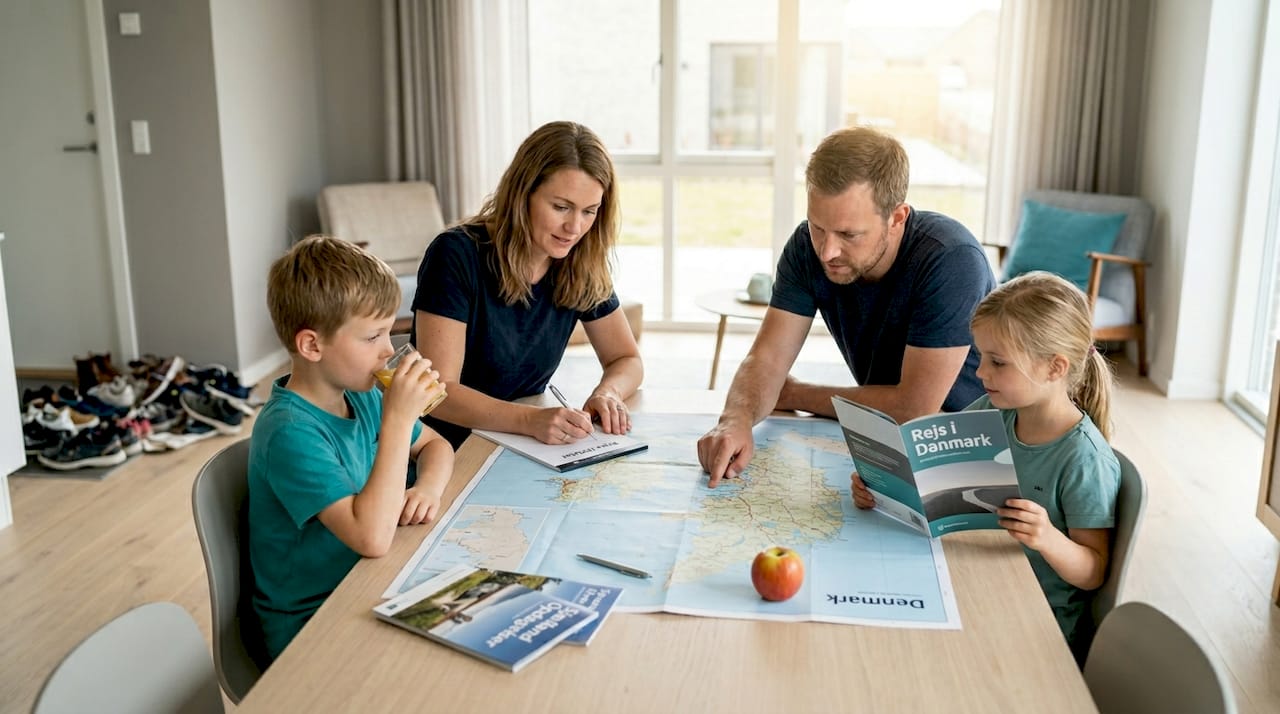
Tourists who are particularly proactive With sustainable choices, they typically choose the season and mode of transportation carefully and prioritize local experiences over mass tourism. It's an approach you can easily adopt with a few simple adjustments.
Planning steps for a sustainable holiday:
-
Choose your destination carefully. Consider whether the destination is ready to receive tourists sustainably. Search for information on local guidelines and capacity. Many Danish nature parks and coastal areas have information signs about what visitors should and should not do.
-
Travel in shoulder season. May, June, August, and September are excellent months in Denmark. The beauty of nature is intact, and you encounter far fewer tourists than in July. It is good for you and good for the destination.
-
Choose green transportation. Tog, bus and bicycle are the best alternatives to the car when you travel in Denmark. The car is necessary, so share it with others or use an electric car. Most Danish destinations are well served by public transportation.
-
Book locally. Choose local accommodations, bed and breakfasts, campsites run by local families, or holiday homes owned by locals instead of international chains. Ask the host about local restaurants and experiences.
-
Eat locally and seasonally. The Danes are skilled at producing excellent raw materials. Eat what is in season and nearby. It tastes better, supports local farmers, and reduces the CO2 footprint of transportation.
-
Choose experiences with ethics and respect. Avoid activities that exploit animals, overburden nature, or are culturally disrespectful. Prioritize experience providers that clearly communicate their sustainability policy.
Professional tip: Look for year-round experiences when you plan. Denmark is actually an excellent destination year-round, and many of the most beautiful experiences take place outside the tourist season, for example in stormy autumn weather along the West Coast or a quiet winter walk in Dyrehaven.
Here is a practical checklist you can use before booking:
- Does the destination have a sustainability policy or certification?
- Is the accommodation locally owned or part of a large chain?
- Can you get there by train or bus?
- Is there an option to eat locally produced foods?
- Does your trip fall outside the busiest time?
- Are the activities you plan environmentally and culturally responsible?
- Have you familiarized yourself with local regulations regarding nature (for example, access rights and camping rules)?
There are many good reasons to Choose Danish holiday More for a foreign trip. The shorter transport immediately has a positive impact on the CO2 account, and you directly support Danish business and cultural life.
Our experience: What most people misunderstand about sustainable holidays
Here we would like to share something that is rarely said aloud: Most Danes trying to travel sustainably start at the wrong end.
They focus intensely on CO2 from airplanes and transportation, buy carbon offsets, and throw the wrong items in the trash bin at the hotel. And then they continue to stay at chain hotels, eat imported food, and visit crowded tourist attractions in the middle of the peak season. It's not an attack, it's an observation. And we recognize it because transportation is the most visible and measurable parameter.
But a sustainable holiday is not a single big decision. It is the sum of many small, repeated choices. And the social and economic dimensions are at least as important as the CO2 accounting.
Think of it this way: a family taking the train to Bornholm, staying with a local host, eating at local restaurants, and cycling around the island does much more for sustainability than a family that buys CO2 offsets and flies to a luxury resort in Southern Europe, regardless of the resort calling itself "eco-certified."
It's about wholeness, not individual actions. And the whole requires a slightly different way of planning and thinking about holidays. It's not necessarily harder. It's just different.
Another misconception we encounter is that sustainable vacation is a sacrifice. You must give up comfort, experiences, and spontaneity. It's simply not true. Some of the most memorable holidays happen precisely when you slow down, choose the local, and let yourself be surprised. Our collection of inspiring examples clearly shows that sustainable nature experiences can easily match major tourist attractions in terms of experiential value.
The essential thing is to start somewhere. Choose one principle for your next vacation and incorporate it into your planning. Maybe it's traveling in the shoulder season. Maybe it's booking a local accommodation. Maybe it's better to cycle than to drive on that short distance. Repeat it during the next holiday and add a new element. Over time, you build a travel pattern that actually makes a difference.
Sustainability is not a goal you cross one day. It's a direction you choose to move in, holiday after holiday.
Get more out of your sustainable holiday with our guides
When you're ready to take the next step towards a more sustainable holiday in Denmark, you're not alone. We have gathered a number of guides and resources that make planning both easier and more inspiring. If you are new to traveling in Denmark, our Guide for first-time visitors a strong foundation for understanding what the country has to offer. If you want to make sure you don't forget anything important, our Checklist for Denmark trip and an indispensable tool. And for the practical travel tips We have you covered to make everyday life on vacation easier and greener.
Frequently Asked Questions About Sustainable Holidays
What are the three dimensions of sustainable vacation?
The three dimensions are environmental, social, and economic sustainability, and sustainable tourism is about balancing all three in your travel choices.
How can I, as a tourist, travel more sustainably in Denmark?
You can support local actors, choose green transportation, and avoid peak season to reduce your footprint, and sustainable tourists typically choose the season and mode of transportation carefully.
Is a sustainable holiday always the same as a holiday in nature?
No, sustainability in tourism is about social, environmental, and economic choices, and you can travel sustainably in cities, at cultural sites, and in nature.
Can more tourists make a destination less sustainable?
Yes, over-tourism can put pressure on nature and social conditions and requires active destination management and conscious choices from tourists.
Recommendation
- Why choose Danish holiday? A thorough understanding – Travel in Denmark
- The role of nature in your holiday in Denmark 2026 – Travel in Denmark
- How to make the most of your vacation in Denmark 2026 – Travel in Denmark
- How to make the most of your autumn holiday in Denmark – Travel in Denmark
- Protect your hair during summer vacation –