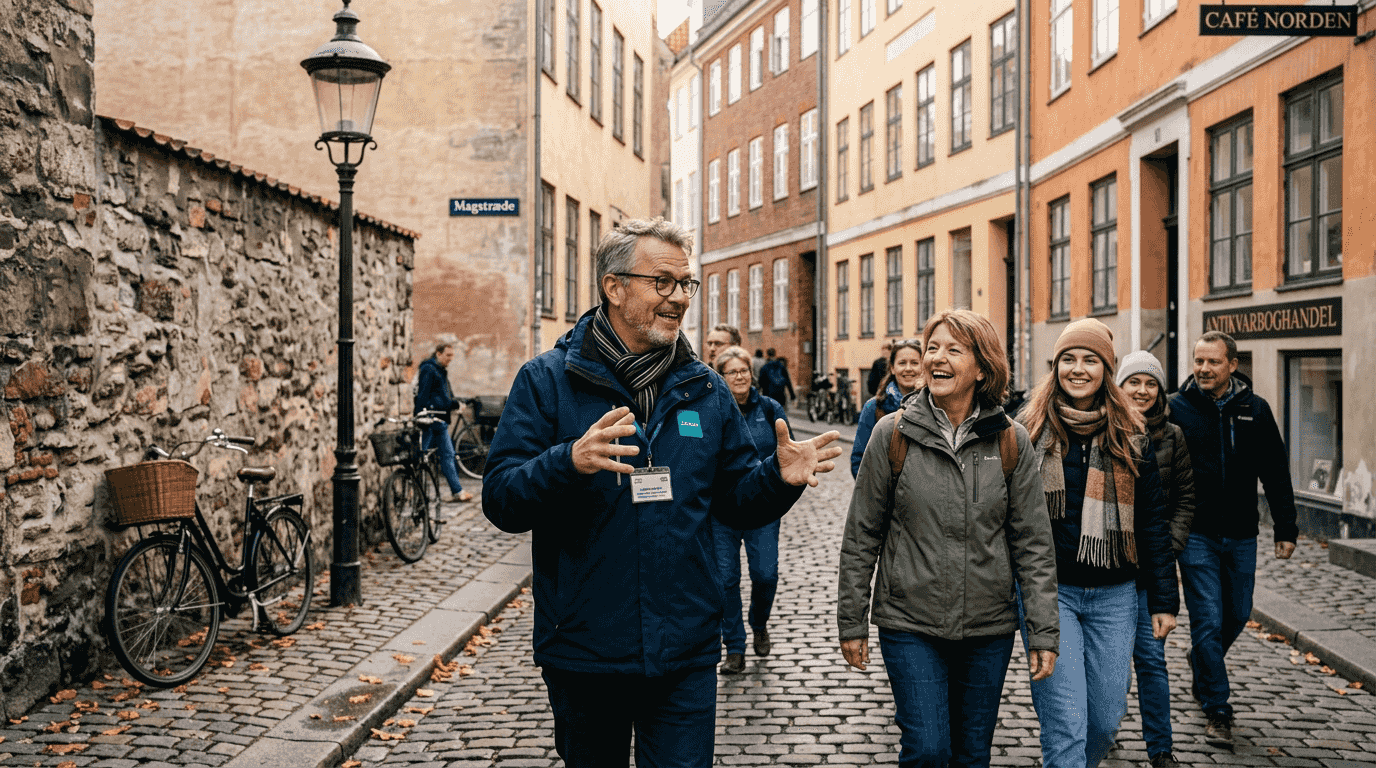
Most travelers consider storytelling to be pure entertainment, but this perception overlooks the transformative power of stories. When you travel through Denmark, authentic stories open doors to deeper cultural understanding and emotional connections that traditional sightseeing rarely can match. Storytelling creates emotional connections, that makes experiences memorable and meaningful. This guide reveals how you can actively use stories to transform ordinary trips into enriched journeys through Danish culture, history, and nature.
Key points
| Point | Details |
|---|---|
| Emotional connection | Storytelling creates deeper connections between travelers and Danish culture through personal narratives |
| Increased engagement | Integrated stories make experiences more memorable and engaging for all travelers. |
| Spiritual dimension | Pilgrimage routes and walks connect existential reflections with the stories of the place |
| Targeted value | Familiar, culture enthusiasts, and adventure seekers each uniquely benefit from storytelling |
| Transformation | Stories transform simple visits into meaningful journeys with lasting personal significance |
What is storytelling, and why does it matter for travel?
Storytelling in the context of travel is about connecting places, people, and experiences through meaningful narratives. It's much more than just reading information signs or listening to facts. When you engage with authentic stories about Danish places, you activate emotional and cognitive processes that make the experience personal. A medieval castle is not just stones and mortar, but the scene of dramatic events where real people lived, loved, and fought.
Storytelling creates emotional connections, which are essential for memorable travel experiences. When a local guide talks about their grandmother's childhood in a fishing village, or when you learn about the Vikings' daily life through vivid descriptions, the information becomes relevant and meaningful. These narratives serve as bridges between the past and the present, between foreign culture and your own understanding.
Many misunderstand storytelling as pure marketing or superficial entertainment. This perception ignores the deeper psychological function of stories. Authentic cultural stories, myths, and personal accounts shape our perception of places and create meaning beyond the purely visual. They help us organize impressions, remember details, and integrate experiences into our own life story.
Cultural stories in Denmark range from Old Norse sagas to modern migrant stories. Myths about gods and heroes, historical events such as the Reformation, and contemporary stories about sustainability and design form a rich narrative landscape. When you actively seek these stories, you gain access to layers of meaning that passive tourists never discover.
Personal narratives also play a central role. When you share your own travel experiences through stories, you consolidate memories and create coherence. Storytelling thus becomes both a tool for receiving and processing experiences.
Professional tip: Before visiting a Danish place, read at least one personal account or historical story about the area. This prepares your brain to recognize and appreciate details that would otherwise go unnoticed. Actively engage with local storytellers to gain authentic perspectives that enrich your visit far beyond the standard information in guidebooks. Visit blog archive for inspiration for Danish stories.
Important elements in travel storytelling:
- Authenticity in the narrator's perspective and voice
- Cultural context that connects the past with the present
- Emotional resonance through universal human themes
- Sensory details that make the story lively and concrete
- Personal relevance that creates a connection to the listener's own experience
Examples of storytelling in Danish travel experiences
Danish pilgrimage routes such as Hærvejen and Munkevejen offer profound storytelling through existential wanderingThese millennia-old paths carry stories of medieval pilgrims, merchants, and travelers seeking meaning through the journey itself. When you take the same route, you step into a story of spiritual quest and transformation. The landscape becomes a text where each hill and forest contains stories of past travelers' hopes, fears, and discoveries.
Cultural festivals such as the Viking Market in Ribe and the Medieval Festival in Horsens actively use storytelling through live role-playing and authentic retellings. Visitors do not become passive spectators, but participants in historical narratives. Children can experience Viking life through interactive stories, while adults gain a deeper understanding of the realities of daily life in the past. These experiences combine entertainment with genuine cultural learning.
Heritage sites such as Kronborg Castle and the Jelling Monuments embed stories within the architecture and the landscape itself. The narrative of Hamlet at Kronborg transcends Shakespeare's fiction and connects visitors with universal themes of power, loyalty, and existential doubt. Jelling tells Denmark's Christianization history through runestones and burial mounds, where each stone bears kings' messages through the centuries.
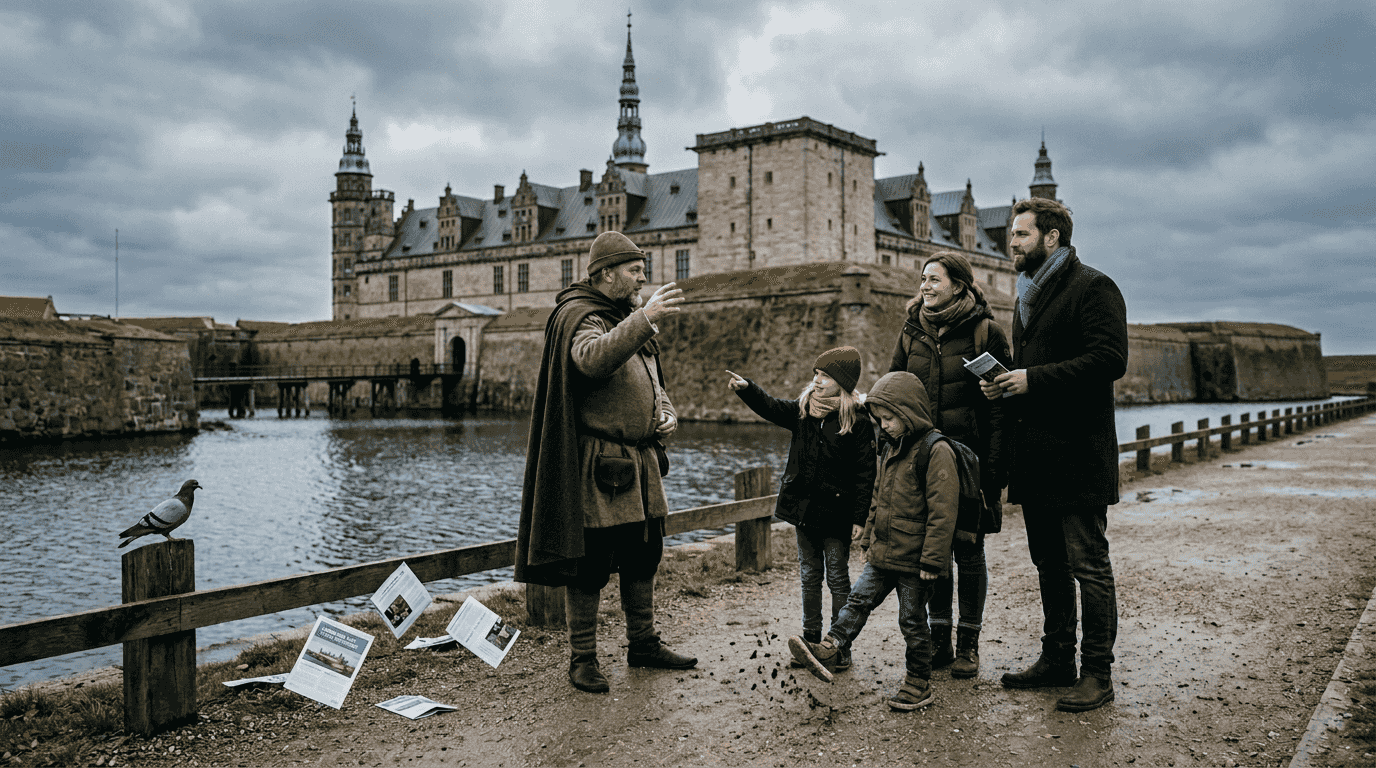
Family-friendly storytelling tours can be found in parks like Legoland and The Old Town, where narratives structure the entire experience. In the Old Town, families walk through time periods, where each street and building tells stories about the lives of ordinary Danes. Costumed interpreters share personal stories that make history tangible for children and adults.
| Tourism type | Storytelling approach | Primary value |
|---|---|---|
| Urban tourism | Guided hikes with local storytellers | Authentic perspectives on the city's development and culture |
| Nature-based tourism | Landscape interpretation through myths and ecology | Deeper connection to nature through cultural narratives |
| Cultural tourism | Interactive museum experiences with personal stories | Emotional understanding of historical events |
| Pilgrimage tourism | Existential reflections through walking stories | Spiritual and personal transformation |
Top five Danish destinations where storytelling enhances relevance:
- Skagen Museum tells about the artist colony through the painters' personal letters and diaries, which reveal their creative processes and mutual relationships.
- Moesgaard Museum uses multisensory storytelling to recreate Iron Age Denmark with authentic sounds, smells, and visual narratives.
- Thy National Park combines nature guiding with stories about dune dwellers, fishermen, and the landscape's transformation over centuries.
- Frederiksborg Castle presents royal histories through portraits, where each hall tells of the narratives of power and dynastic intrigues.
- Bornholm's round churches reveal medieval defensive architecture through stories of local communities under threats from pirates.
Explore cultural activities in Denmark for several narrative experiences. Read about role of experiential travel Denmark to understand the placement of storytelling in modern tourism.
How storytelling transforms the meaning and engagement of the journey
Storytelling creates empathy and personal connection to places by humanizing abstract historical events. When you hear about a specific family's experience during the occupation in World War II, the story is no longer distant statistics but human reality. This emotional resonance leaves a lasting impression and transforms your understanding of the place. You begin to see buildings, streets, and landscapes as scenes for real people's lives.
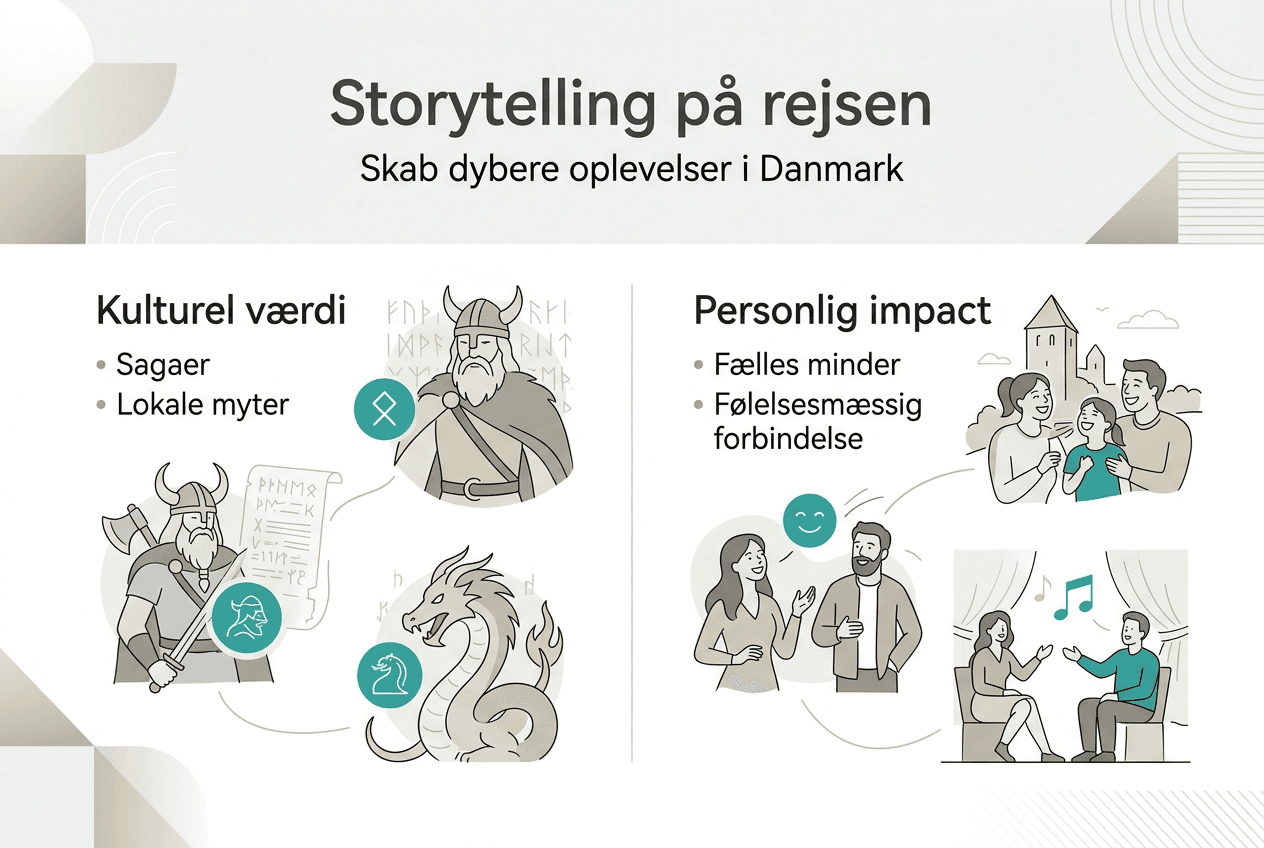
Storytelling supports spiritual and existential meaning-making in journeys. On pilgrimage routes and reflective walks, stories of previous travelers' search for meaning become catalysts for your own reflections. The landscape functions as a narrative space where you can project and process personal questions. This process creates depth that superficial tourism never achieves.
Mindfulness and presence are enhanced through storytelling because narratives focus attention on specific details. When a guide talks about craftsmanship traditions in an old farm, you start to notice the texture of the wood, the patina of the tools, and the atmosphere of the space. The story guides your perception and deepens your sensory experience of the place.
Family members particularly benefit from shared narratives that create common frames of reference and strengthen social bonds. When children and adults experience stories together at museums or during guided tours, they create shared memories and topics of conversation. These narrative experiences become the foundation for family stories that are retold at the dinner table for years to come.
Cultural learning is accelerated through storytelling because narratives make abstract cultural differences concrete and understandable. Instead of reading about Danish values like hygge or the Jante Law, you hear stories about how these concepts manifest in real situations. This contextualization makes cultural knowledge actionable and relevant.
Professional tip: Use storytelling to create a meaningful travel journal by structuring your notes as narratives rather than lists. Not only describe what you saw, but tell the story of how the experience unfolded, what feelings it evoked, and what connections you discovered. This narrative format makes your memories more vivid and easier to recall later. Include quotes from locals you met and small details that capture the essence of the place.
Storytelling facilitates local community engagement by providing you with access to conversations with residents.
- Still asking about local legends and stories as icebreakers
- Share your own cultural background through comparative stories
- Listen actively to personal stories without interrupting or judging
- Respect that some stories are private or sacred to the community
- Use stories to understand contemporary social dynamics and challenges
Discover experiences all year round in Denmark and learn how Digital travel guides Danish tourism can supplement your narrative experiences.
How to use storytelling to enrich your travels in Denmark
Identify local stories and cultural narratives before you travel by researching the region's specific tales. Each Danish region has unique stories related to geography, industry, and historical events. Vestjylland tells about the fishing culture and the power of storms, while Fyn offers H.C. Andersen's fairy tale world and the castles of the nobility. Use libraries, local blogs, and cultural-historical resources to find authentic stories, not just the polished versions from tourist brochures.
Engage with guides and locals to hear authentic stories that are rarely found in written sources. Small museums, local cafes, and craft shops often host people with deep knowledge and personal connections to the history of the place. Still open questions like "What is the most interesting story about this place?" or "How has the area changed during your lifetime?" These conversations reveal perspectives that no guidebook can convey.
Use storytelling techniques to create your own travel memories by structuring experiences as stories with a beginning, middle, and end. Identify narrative moments during the journey, such as when you discover an unexpected connection between two places, or when a local shares a surprising insight. These moments become chapters in your personal journey narrative.
Steps to incorporate storytelling into different types of travel:
- Familierejser: Forbered børn med alderspassende historier om destinationen før afrejse, så de har narrative rammer at genkende under besøget
- Kulturrejser: Book guidede ture med certificerede kulturformidlere, der prioriterer dybde og autenticitet frem for overfladisk information
- Eventyrrejser: Søg fortællinger om tidligere ekspeditioner, lokale helte og landskabets transformation for at give fysiske udfordringer narrativ kontekst
- Spiritual journeys: Combine hiking with reading pilgrim diaries or philosophical texts that resonate with your own quest
- Shorter day trips: Choose one narrative theme for the day and let it guide your choices of places and activities for a cohesive experience
Avoid these common pitfalls when engaging with storytelling:
- To believe that all stories are equally authentic or historically accurate without source evaluation
- Allowing narrative experiences to completely replace direct observation and personal reflection
- They ignore local perspectives in favor of the polished versions of the tourism industry
- Force a narrative on experiences where silence and direct perception are more appropriate
- Storytelling at overse kræver aktivt engagement, ikke passiv konsumtion
Explore Guide to Denmark for first-time visitors to start your narrative journey. Learn how you can Plan your Denmark trip with storytelling as a central element.
Discover more experiences in Denmark with the help of Rejs i Danmark
Rejs i Danmark offers comprehensive guides tailored for first-time visitors who wish to experience Danish culture through meaningful narratives. The platforms collect detailed descriptions of attractions, where historical and cultural stories are central to the experience. You will find not only practical information about opening hours and prices but also context that makes each visit part of a larger story about Denmark.
Use the interactive planning tools and checklists to maximize your trip based on storytelling principles. Filter experiences by season, age group, and interest to find narratively rich destinations that match your travel style. The platform helps you structure your route so that it creates a coherent story rather than a random sequence of visits.
The resource is specifically designed for families and adventure seekers looking for memorable experiences with depth. Guide for first-time visitors to Denmark for narrative introductions to Danish regions. Plan your Denmark trip to create a journey structured around stories. Pick up Checklist for a day trip in Denmark to ensure you capture narrative moments along the way.
Frequently Asked Questions about Storytelling in Travel Experiences
Why is storytelling important for family travelers?
Storytelling makes abstract historical facts concrete and engaging for children by presenting information through characters and plots. When children hear stories about the daily life of Viking children or about how castles were built, they develop empathy and historical understanding at their level. Shared narrative experiences also create family memories that strengthen social bonds and provide topics of conversation that the family can return to for years.
How can I find authentic Danish stories during my visit?
Look beyond the polished narratives of the tourism industry by visiting small local museums, participating in guided tours with certified cultural interpreters, and engaging in conversations with local residents at cafes and shops. Read local newspapers and cultural history blogs for perspectives that reflect contemporary reality. Libraries and archives also provide access to primary sources such as diaries and letters, which offer authentic voices from the past.
Can storytelling make even short day trips more memorable?
Absolutely, by choosing a single narrative theme for the day and letting it guide your choices of places and activities. For example, if you focus on maritime history, even a short trip to a harbor can become a coherent story about Denmark's relationship with the sea. This thematic approach creates structure and meaning, making even short visits deeper and easier to remember than random stops.
What types of storytelling experiences are best suited for adventure seekers?
Pilgrimage routes like the Hærvejen combine physical challenge with existential narratives about previous travelers' search for meaning. Nature-based experiences in national parks can be enriched with stories about the landscape's transformation and the adaptation of local communities. Adventure trips to islands like Bornholm or Ærø offer narratives of isolation, self-sufficiency, and maritime traditions that give physical activities cultural depth. Explore cultural activities in Denmark for inspiration.
How is spirituality connected with storytelling in Danish pilgrimages?
Pilgrimage routes carry stories of centuries of search for meaning, where the journey itself becomes a metaphor for the voyage of life. The landscape functions as a narrative text, where each hill and valley represents challenges and reflection. Modern wanderers step into these existential stories and use them as frameworks for personal transformation. Silence and physical exertion open space for deep reflections, where historical narratives and personal questions merge.
Should I prepare stories before visiting a Danish place?
Yes, preparation with at least one authentic story sharpens your attention and makes the visit more meaningful. When you know the background, you recognize details and contexts that would otherwise go unnoticed. This creates a deeper experience, where the place comes alive through the layers of meaning you have already established. However, the preparation should not be so extensive that it replaces spontaneous discovery and personal interpretation.
Recommendation
- 7 unforgettable tips for top attractions in Denmark 2025 – Travel in Denmark
- Guide to action experiences in Denmark – Top 8 comparison 2025 – Travel in Denmark
- Top nature experiences Denmark – Comparison 2025 – Travel in Denmark
- Benefits of Family Experiences – Strengthen Togetherness and Learning – Travel in Denmark
- قصهگویی در لوکس: چرا اعتبار را ارتقاء میدهد – کورادو ماننتی
- Country information Denmark