TL;DR:
- A structured guide to museum visits helps create memorable experiences through thorough preparation and focus. By planning tickets, transportation, and selecting exhibitions, the visit can be tailored to individual interests and needs, especially with children. Focused, relaxed visits supported by staff knowledge and the museum's digital materials provide greater benefit and enjoyment.
A structured guide to museum visits is the most direct way to an experience you actually remember. Many visitors arrive without a plan, spend the first 20 minutes getting oriented, and leave the museum with a feeling that they didn't reach the most important things. This step-by-step guide to museum visits changes it. You will get concrete steps for preparation, execution, and adaptation, whether you visit H.C. Andersen's House in Odense, the Design Museum Denmark in Copenhagen, or a local museum with your family. The guide covers everything from ticket booking to children's energy levels.
How do you plan your museum visit step by step?
God planning for museum visits starts the week before, not the morning you leave. The first step is to check the museum's opening hours and ticket rules, because many Danish museums use timed entry. H.C. Andersen's House recommends to buy a ticket online to secure a spot, even if you have a yearly pass or a free ticket. That means you cannot show up and expect to get in without a reservation.
The second step is to choose a museum based on your interests and the time you have available. A large national museum requires at least three hours to see the main sections. A special museum like the MAPS Museum in Copenhagen can be thoroughly explored in an hour and a half. Choose what suits your day, not what sounds most impressive.
Professional tip: Design Museum Denmark recommends Weekdays, especially late morning or late afternoon on Thursdays, for fewer guests and more tranquility for immersion. Silent hours provide a completely different experience than the busy weekends.
The third step is to plan transportation and parking. Many museums are located centrally and are most accessible by public transport. Rejsidanmark has a Trinvis Transport Guide for tourists in Denmark, who help you find the easiest route to your chosen museum.
Here is an overview of the most important preparation steps:
| Preparation step | What you do | Important details |
|---|---|---|
| Ticket booking | Buy online in good time | Also applies to free tickets and annual passes |
| Selection of museum | Match with interests and time | Stores museums require 3+ hours |
| Time | Choose weekdays and forenoon | Fewer guests, more peace |
| Transport | Plan the route in advance | Public transportation is recommended |
| Equipment | Camera, notebook, snacks | Especially important with children |
| Free admission | Check the museum's website | Rules vary per museum |
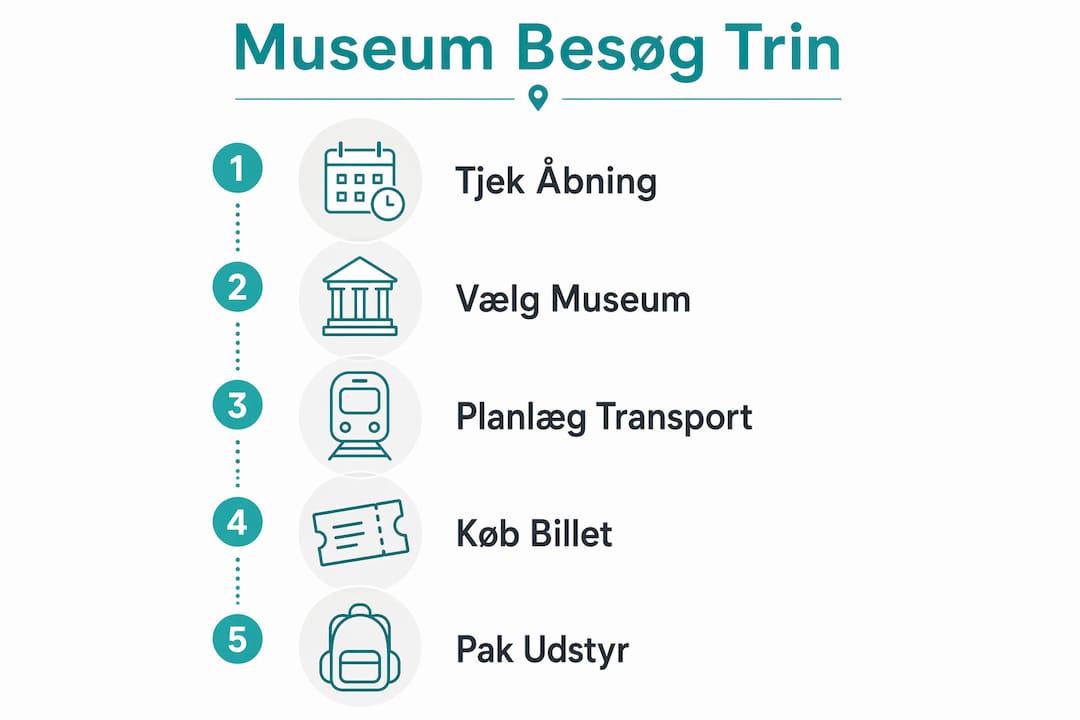
The fourth step is to pack the right one. A notebook to jot down what catches your attention adds an extra dimension to the visit. With children, snacks and a small backpack with activities for breaks are almost indispensable.
How do you get the most out of the experience during the visit?
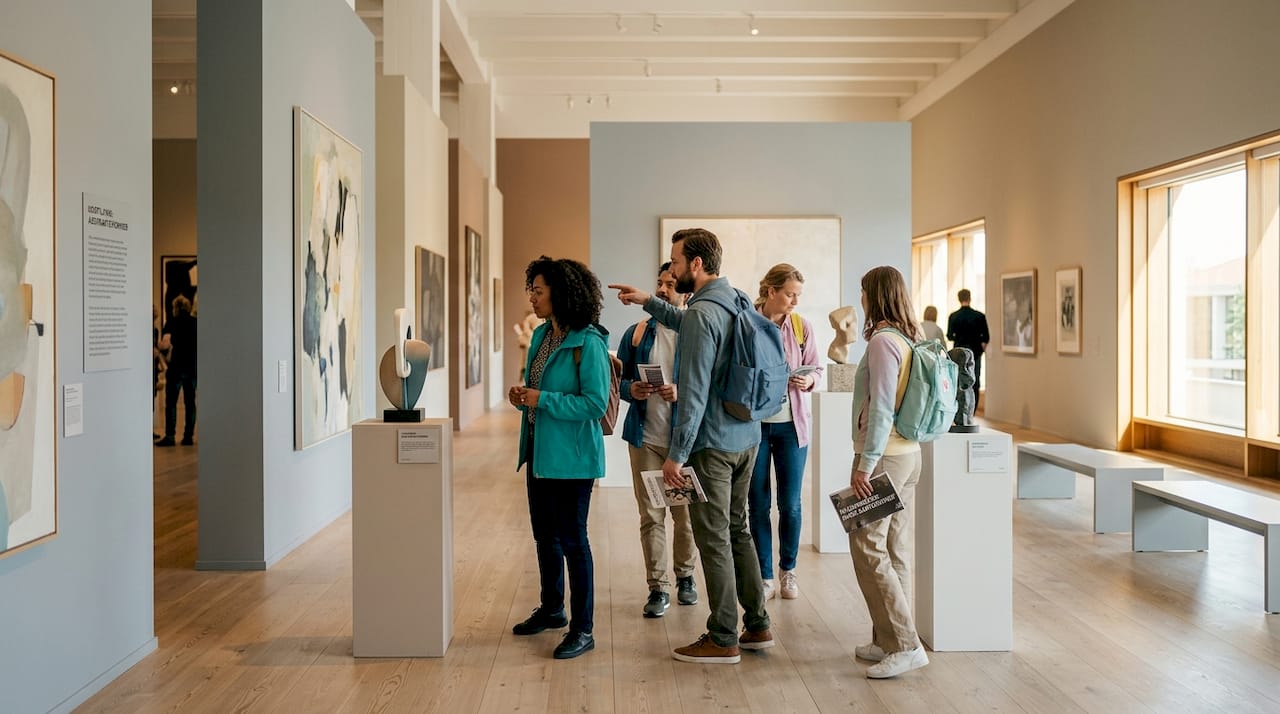
The biggest mistake in a museum is trying to see everything. DR's Communications Inspector Emilia Nykjær Isaksson Encourages mental relaxation and focus on one's own interests rather than following a fixed route through all the rooms. It frees you from the pressure to "do it right" and opens up genuine curiosity.
The method is simple: choose three to five exhibitions or works you want to spend time on, and let the rest be in the background. Shorter and focused visits in smaller segments provide much greater benefit than a quick overview of the entire collection. It's better to remember two things clearly than to have seen 40 things without remembering any of them.
Here are the most important principles for a good visit:
- Put away the phone In the first 30 minutes. Let your eyes and thoughts work without distractions, and take pictures afterward.
- Bridge of the museum's plan at the entrance to orient yourself. Mark the departments you prioritize, and find the nearest toilets and cafes.
- Talk to the staff. Museum staff know the collection and can point you toward what is not obvious from signs and catalogs.
- Respect the rules of order regarding distance from objects and prohibition of touching The rules protect the collection and ensure that everyone can experience it.
- Bridge guided introductions when they are offered. MAPS Museum offers Free 15-minute daily introduction at. 12.15 after the entrance ticket is paid. It's an easy way to get context without committing to a long tour.
Professional tip: Sit down in front of a single artwork for five minutes without reading the text beside it. Look at the details, colors, and composition. Then read the text. This sequence creates a much stronger experience than understanding by reading without properly seeing.
The museum's digital and printed materials are underrated resources. Many museums offer free apps or QR codes at exhibitions that provide audio and video content. The National Museum in Copenhagen, for example, has digital layers for many of its permanent exhibitions, which elaborate on what signs cannot contain.
How do you conduct museum visits with children step by step?
Visiting museums with children requires a different strategy than visiting with adults. The most important principle is that Children's energy level determines the duration of the visit, not a fixed schedule. A museum director directly recommends ending the visit while it's still fun, because it ensures that children will come back. A visit that ends at a high point is far more valuable than one that drags on into boredom.
Follow these steps for a successful family visit:
- Prepare the children in advance. Look at the museum's website together and find pictures of exhibitions. Ask the children what they are looking forward to seeing. It creates ownership and anticipation.
- Let each child choose one artwork or one exhibition. Children's ownership of the choice increases engagement and creates natural conversations during the visit. Ask them what they see and what they think.
- Plan breaks actively. Find out if the museum has a café, an outdoor area, or a children's room. Take a break in the middle of the visit, not just when someone complains.
- Avoid trying to see the entire museum. Choose two to three departments that match the children's age and interests, and stick to them.
- Bridge season and events strategically. Many museums offer special children's activities during school holidays and on weekends. Check the museum's calendar before you book.
Rejsidanmark has gathered practical advice for museum visit with children with a focus on how to avoid boredom and create good experiences for the whole family.
Consider a yearly pass to a museum that the family visits often. When the access does not cost extra per. Visit, you remove the pressure of "seeing it all" at once. The family can come again and again and discover new things at their own pace. The National Gallery of Denmark and the National Museum in Copenhagen both offer family annual passes that quickly pay for themselves through repeated visits.
A good family visit is not about the number of exhibitions you see. It's about the conversations you have along the way and the questions the children ask that neither of you can answer immediately.
How do you avoid the typical mistakes when visiting a museum?
Most bad museum experiences are not caused by the museum. They are due to planning errors that are easy to avoid.
- Book for sent. Timed entry is the norm at many popular museums. Free tickets also require a reservation at capacity-controlled museums. Book at least a week in advance for popular attractions during the high season.
- Plan too much. Scheduling three museums in one day is a recipe for overexertion. Choose one museum and give it the time it deserves.
- Ignore free admission days. Free admission varies per museum of the day, and it is worth investigating individually. Some museums offer free admission on certain weekdays or for specific age groups.
- Forget about using the staff. Museum staff are not just guards. They are mediators who know the collection and can provide you with context that no app or sign can replace.
- Underestimate fatigue. Museums are physically and mentally demanding. Plan a seat and a cup of coffee in the middle of the visit, not just at the end.
Drop the idea that there is a right way to experience a museum. Go there, as it interests you, and take the time you want.
Emilia Nykjær Isaksson, communication inspector, DR
Flexibility is an underrated part of planning. If you arrive and discover that an exhibition is closed for renovation or that there is an unexpected event, it is helpful to have a plan B. Check the museum's website the day before your visit for updates.
Make active the museum's digital materials. Many museums have apps, audio files, and video guides that you can download before your visit. It is especially useful if you visit a museum with texts in a foreign language, or if you want to prepare thoroughly for a specific exhibition.
My experiences with planning museum visits
I have visited museums in Denmark for many years, and the biggest change in my experiences did not come from choosing better museums. It came from changing my approach to preparation and presence.
I used to try to see everything. I hurriedly moved from floor to floor, read all the signs, and left the museum with a feeling that I had "managed" it. It was exhausting and left me with very little. Now I choose three to five things I want to spend time on, and leave the rest.
The most surprising advice I have received is to visit museums during quiet periods. A Tuesday morning at the Design Museum Denmark is a fundamentally different experience than a Saturday afternoon. You can stand in front of a piece of furniture or a textile for five minutes without anyone pushing past. The peace is not just comfortable. It allows you to see details you would otherwise miss.
With children, I have learned that the best visit is the one that ends too early. Finish while the energy is still high, and let the child talk about what they saw on the way home. That conversation is often more valuable than an extra hour at the museum. Rejsidanmarks Guide to museums for children confirms this approach with concrete examples of how learning occurs in dialogue, not just in front of the exhibition.
The advice I give to everyone who asks me: spend five minutes looking at a single artwork without reading about it. Let your eyes do the work. It is the shortest way to an experience you actually remember.
— Tommy
Plan your next museum visit with Rejsidanmark
Rejsidanmark collects practical guides to cultural experiences throughout Denmark, from major national museums to local gems that you won't find in the big tourist guides. If you are planning a museum visit as part of a trip around Denmark, local transportation in Denmark is a natural next step. The guide covers train, bus, and bicycle step by step, so you arrive at your museum on time and without stress. You also find a Complete travel guide to Denmark, who helps you plan the entire trip, from accommodation to day trips with museums as the focal point.
FAQ
Should I always book museum tickets online in advance?
Not always, but for timed entry, online booking is necessary. H.C. Andersen's House requires, for example, a reservation in advance, even with a free ticket or annual pass.
When is the best time to visit a museum?
Weekdays and mornings have the fewest guests and the most tranquility. Designmuseum Denmark particularly highlights Thursday afternoons as quiet times with good opportunities for immersion.
How do I keep children engaged at the museum?
Let each child choose one artwork or one exhibition they want to see, and talk about it along the way. Finish the visit while the energy is still high so the children associate the museum with a good experience.
Are there free museums in Denmark?
Yes, but the rules vary. Museum and day. Check the individual museum's website before the visit, as free admission is often limited to specific days or age groups.
How long should a museum visit last?
It depends on the museum and the visiting group. A focused visit of one and a half to two hours is often more rewarding than an exhaustive four-hour visit, especially with children.