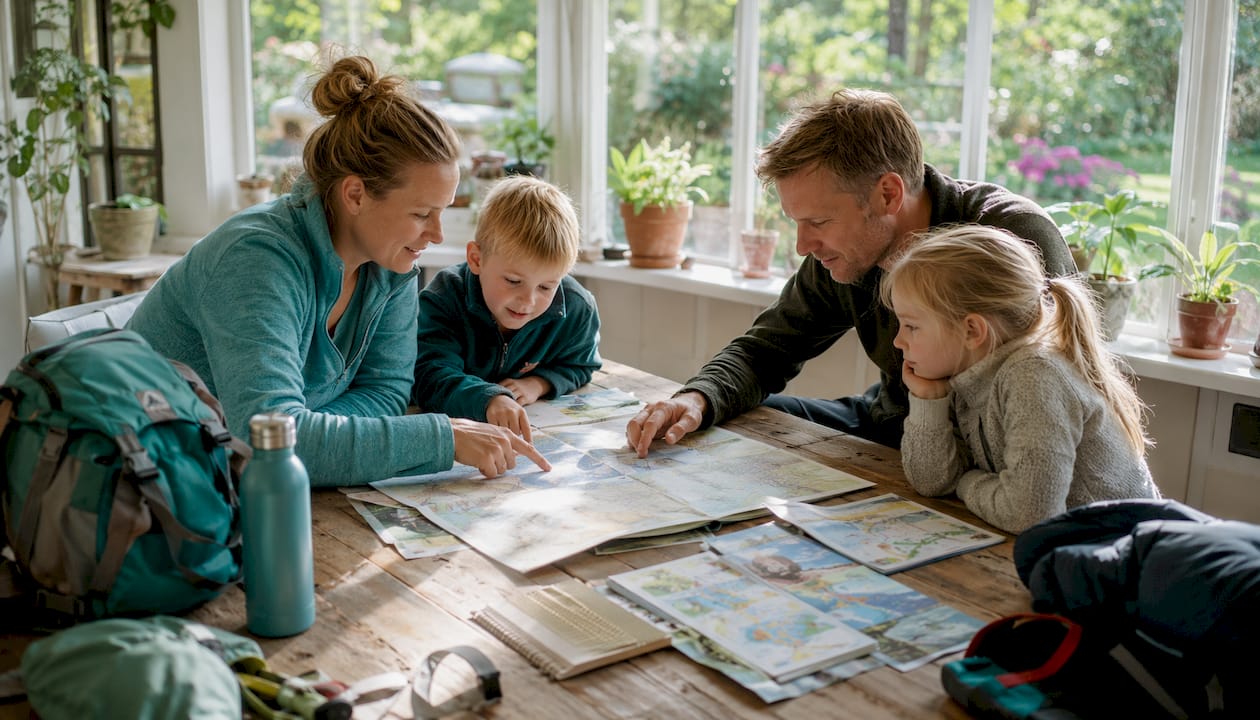
How to plan your nature experience step by step
A good nature experience doesn't start at the parking lot. It starts at home, with a clear picture of what you want to get out of the trip. Follow these steps, and you will avoid the classic pitfalls: too long a route, incorrect equipment, and participants losing interest halfway through.
Step 1: Determine the purpose. Do you want peace, exercise, or play? The answer determines everything else. A family with children under six years old needs short loops with natural goals along the way. An adult group that wants fresh air and movement can easily manage 10 km on a weekday.
Step 2: Choose a natural area and route based on the participants. Check The Danish Environmental Protection Agency for accessible routes with a solid surface, accessible toilets, and barrier-free access. Portals udinaturen.dk Currently displays over 150 routes with facilities and difficulty levels.
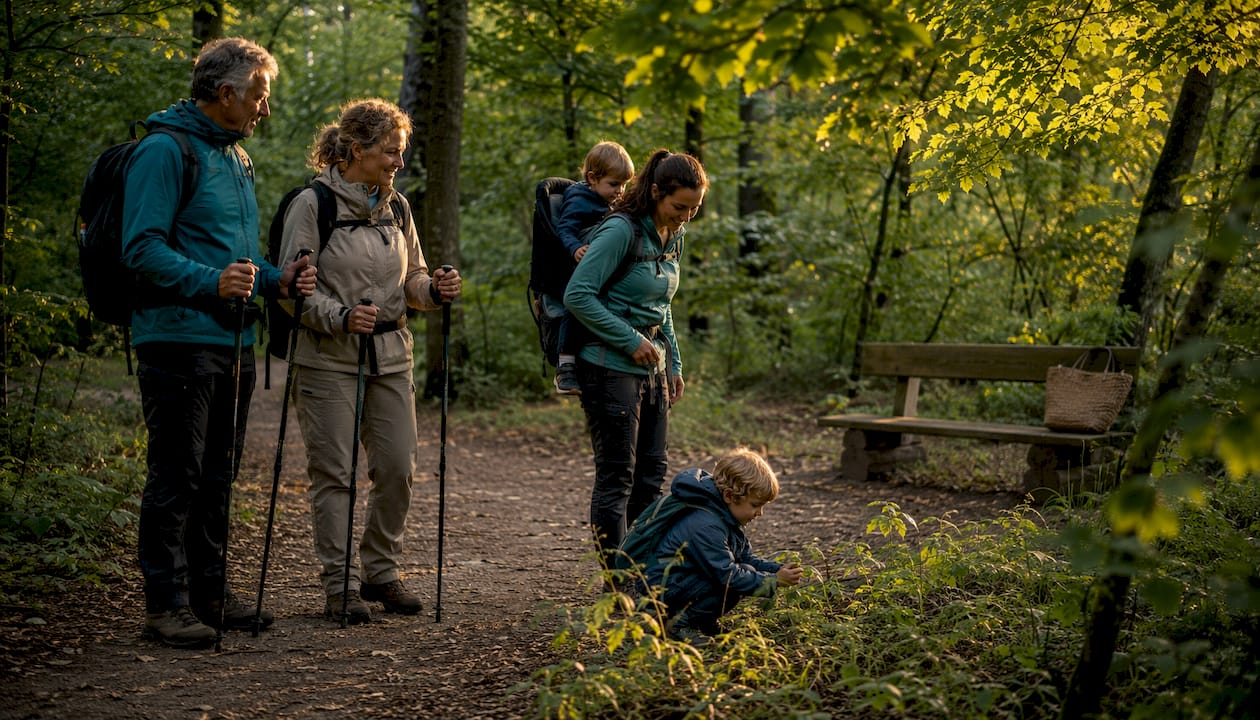
Step 3: Plan the time. Avoid weeks 28–31 and week 42, when summer vacation and autumn vacation fill the popular natural areas. Weekdays in April and September or early mornings provide significantly more calm.
Step 4: Prepare equipment and packaging. Layered clothing, waterproof jacket, hiking boots, water bottle, lunchbox, and a small first aid kit are the basic equipment. Adjust according to the season and activity.
Step 5: Check access and traffic rules. In public forests, you may walk outside the paths. In private forests, it is only allowed on the paths and only during daytime. The Danish Nature Agency has many areas with free camping, where you are allowed to stay overnight once at a time.
Step 6: Make a backup plan. Gem 1–2 alternative campsites or routes within 3–5 km. The weather changes, and a plan B is not pessimism, it is good planning.
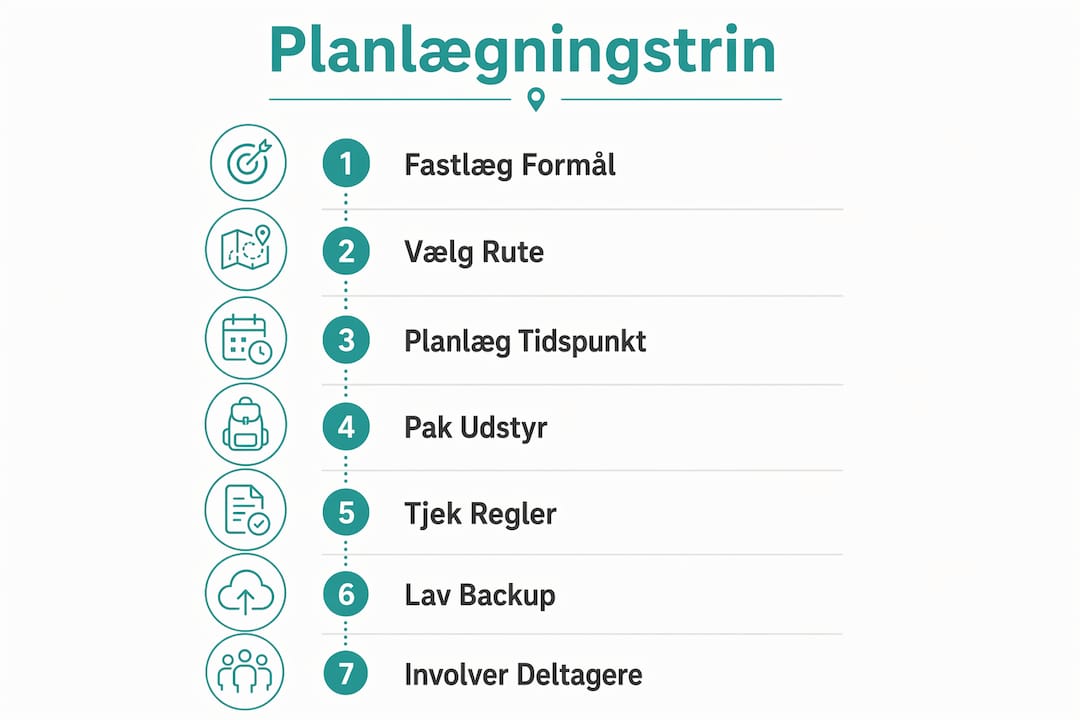
Step 7: Involve all participants. Let children and fellow travelers choose an element of the trip, e.g., which route or where you take a break. It creates ownership and engagement and makes it much easier to keep spirits up if the trip takes longer than expected.
Professional tip: Start with the local area. Planning nature experiences doesn't have to be complicated. Use a logbook to note what worked and what you will do differently next time. It builds confidence faster than any guidebook.
What nature experiences suit your family and your interests?
Denmark's nature is more diverse than many think. Coves, forests, heaths, lakes, and islands offer opportunities for very diverse trips, and the best nature experiences in Denmark Does not necessarily require long preparations or expensive equipment lists.
- Coastal walks Fyn has over 1,100 km of coastline. They Easy hiking trails on Funen It typically stays within 2–7 km with few elevation changes and natural rest spots such as lighthouses, bath piers, and ice kiosks. The best season is April–June and August–October.
- Forest trips and micro-adventures A short walk of 3–5 km in the nearest forest, a night in a shelter with the children, or a morning cup of coffee by the beach are all examples of microadventures that fit an experience into minimal time.
- Birdwatching Helnæs Made on Funen is one of the country's most important resting areas for wading birds. Bornholm's Bastemose has a wheelchair-accessible birdwatching tower with a view of herons, hobby falcons, and bitterns.
- Seasonal experiences Anemone carpets in the beech forest in spring, mushroom hunting in October, migratory birds along the coasts in September. The same natural area can look completely different depending on the season.
- Activities in progress: Nature bingo with sticks as pieces, treasure hunts, photo walks, racing with bark boats in the stream, or geocaching give the trip a concrete goal beyond just the walk.
- Digital card tools The combination of the Nature Agency's map and OpenStreetMap provides the best overview of trails, which Google Maps often overlooks. Local Facebook groups can supplement with current tips from people who know the area.
The adventure must not drown in logistics or large expenses. You use what you have, where you are, and get the maximum experience per. minute
See also 7 inspiring examples on outdoor activities suitable for families and nature lovers throughout Denmark.
Practical preparation: equipment, timing, and access rules
The practical is what most often causes trouble. It's not because it's difficult, but because it's easy to forget when you're excited about the trip itself.
Equipment by season and activity
- Spring and autumn: waterproof jacket, wool mid-layer, hiking boots with ankle support
- Sommer: solcreme, hat, let regnslag og ekstra vand
- Vinter: termotøj i lag, håndvarmere, pandelampe til tidlig hjemtur
- All seasons: first aid kit, trash bag, offline map on the phone
Timing and peace
Weekdays in April and September are the best times for peace in nature. Avoid weeks 28–31 and week 42, which are respectively summer and autumn holidays. Early morning, preferably before 9.00, even gives peace in popular areas.
Access rules
In Denmark, there is great freedom to move in nature, but the rules vary. In public forests, you may walk outside the paths. In private forests, it is only allowed on the paths and only during daytime. Respect the marked access times on private beach land, usually at. 6.00–22.00. The Nature Agency has many shelter sites that can be booked via udinaturen.dk.
Transport and the last mile
Download PDF schedules offline and note contact information for local taxis, especially in remote areas where mobile coverage may be unreliable. PlusTUR and Flextrafik cover many of the places that the regular bus does not reach. Always have 1–2 alternative shelter sites within 3–5 km as a reserve.
Professional tip: Download the area card in Organic Maps or OpenStreetMap before you go. Many natural areas have poor mobile coverage, and an offline map can save you a long detour.
For beach trips specifically, you will find a detailed guide in The step-by-step guide to beach trips.
How do you get children and participants involved all the way?
The most well-planned trip can go wrong if the participants are not involved from the beginning. This particularly applies to children, but actually also to adults who have not had a say in the choice.
- Expectation alignment Tell us what you are going to do, how far you will go, and what you will encounter along the way. Children who know there is a bathing bridge after 2 km maintain their motivation better than children who just know they are "going for a walk."
- Include in the election Let children choose between two routes or decide whether you take the short or long way home. The small choice gives ownership.
- Activities in progress: Nature bingo, treasure hunt, animal guessing game, and "find three things that are red" capture attention. Choose activities suitable for the age.
- Adjust tempo and pauses: A good group considers the slowest participant. Plan breaks every 1–2 km, preferably at a natural landmark such as a bird tower, a bench, or a stream.
- Advantages of roles: Give children and adults concrete tasks. One has the card, one keeps an eye on the birds, one is responsible for snacks. It creates community and gives everyone a function.
- Group safety: Make sure everyone has appropriate footwear and layered clothing. Bring first aid supplies and agree on a meeting place in case the group gets separated.
Professional tip: Active participation in the planning increases the joy of the trip itself. Children who have chosen the route complain less often that it is too long.
Do you need inspiration for family-friendly holiday in DenmarkYou will find a complete step-by-step guide at Rejsidanmark.
Respect for nature: how to behave sustainably
Sustainable outdoor life is not about doing less. It's about doing it right so that nature is there the next time you come.
- Waste: Follow the 3-rule: see it, gather it, take it home. It also applies to food leftovers, fruit peels, and cigarette butts, which take a long time to decompose.
- Access rules Know the difference between public and private forests. Respect for local regulations and landowners' property is the foundation for keeping access to nature free.
- Bonfire and cooking Only light fires in approved fire pits. Always check for fire bans during dry periods. A camping stove or a gas burner is a gentle alternative that is easier to control.
- Wildlife and noise Avoid loud music and keep your voice low, especially in vulnerable areas. The sounds of nature itself are part of the experience, and noise scares animals and disturbs other visitors.
- Dogs: Keep the dog on a leash during the breeding season from the 1st. April to the 30th. September It protects the birds' nests and breeding animals.
- Groups: Go in smaller groups if there are many of you. Walk along the paths to avoid slipping on the vegetation and to create new trampled tracks.
- Leave the place better. Take more trash home than you brought. It is the simplest form of nature care.
How Rejsidanmark helps you find and plan nature experiences
Rejsidanmark gathers information about experiences, routes, and facilities throughout Denmark in one place, so you don't have to spend time searching across municipal websites and tourist portals.
- Interactive map search: Find natural areas and activities filtered by accessibility, season, price, and age group.
- Accommodation options: Overview of shelters, campsites, and natural camping sites near the routes you are planning.
- Transport: Guidance on public transportation to and from natural areas, including train, bus, and ferry.
- Local guides Information about nature centers and guided tours that provide deeper knowledge of flora, fauna, and local history.
- Updated conditions: Current information and user reviews to help you choose the right place at the right time.
| Function | What it gives you |
|---|---|
| Keyword-based search | Overview of natural areas and routes throughout Denmark |
| Accessibility filter | Find routes with a solid surface, level access, and accessible toilets |
| Season filter | See what is best to experience and when |
| Accommodation overview | Shelters, nature campsites, and camping sites with booking information |
| Transport information | Bus, train, and ferry to and from the starting point |
| Guided tour | Local nature guides and nature centers with interpretation |
Rejsidanmark is especially useful for families who want a quick overview without spending an afternoon on research. Find Experiences for nature lovers with concrete suggestions for seven places in Denmark.
Safety in nature: how do you avoid risks and handle emergencies?
Most trips in Danish nature are harmless, but preparation is what distinguishes a good experience from a bad one.
Tell someone where you are going. Share the route with a friend or a family member, and agree on when you expect to be back. It is the simplest safety measure, and it costs nothing.
Bring a physical card. Batteries run out, and mobile coverage disappears in remote areas. A printed card or an offline version in your card app is your backup when the phone fails.
Equipment for unexpected situations
- First aid kit with plasters, wound compresses, and elastic bandages
- Whistle to call for help
- Extra energy bars and water
- Rain poncho in the top compartment of the backpack
- Charge your mobile phone, preferably with a power bank
Weather and flexibility Check the weather forecast the day before via DMI. If thunderstorms or strong winds are forecasted, choose a more sheltered area or postpone the trip. A light rain does not ruin a trip with a raincoat and good humor, but thunder in open terrain is a real risk.
Emergencies: Call 112 in case of serious accidents. Provide precise information about your location, preferably with GPS coordinates from your map app. If you are in an area without signal, move to higher ground or open land for better coverage.
Groups and children: Arrange a fixed meeting place if the group becomes dispersed. Children should always have an adult within sight in unfamiliar terrain.
What lives in Danish nature? A guide to local flora and fauna
Knowing a little about what you see transforms a walk into something more. You don't need to be a biologist to enjoy it.
Bird It's the easiest place to start. Denmark is an important migratory bird country, and spring brings songbirds like the nightingale and the wood warbler back to the forests. Autumn gathers large flocks of wading birds and ducks along the coasts. A cheap binocular and a simple bird guide are all you need. Appen Fugle.dk provides precise locations for rare species.
Planters and mushrooms: Anemone carpets in the beech forest are one of the surest signs of spring. Wild garlic can be picked and eaten from March to May. Mushroom hunting is best in September and October after rain. Learn to identify the three most poisonous mushrooms before you pick: green fly agaric, white fly agaric, and poisonous trumpet mushroom.
Mammal: Roe deer are most often seen at dusk at the edge of the forest. Seals inhabit the coasts, especially on Funen and in the Wadden Sea. Porpoises can be spotted from the coast at Little Belt, especially on calm summer days.
Art purpose: Apps like iNaturalist and PlantNet help identify plants and animals from a photo. They work offline and are free. The Nature Agency's website also has guides to the most common species in Danish forests and coastal areas.
Professional tip: Choose one theme per. tur. Focus on birds once, plants another. It provides depth rather than surface and makes it easier to remember what you saw.
Nature center and guided tours: what do you gain from professional nature interpretation?
A guided tour provides something a map cannot. A local nature guide sees what you overlook and tells the story behind what you see.
Nature Center Found in connection with many of Denmark's state natural areas. They offer exhibitions, dissemination, and often guided tours for both children and adults. Hindsgavl Nature Center near Middelfart is a good example, with access to Hindsgavl Peninsula and herds of fallow deer in open meadows.
What a guide adds:
- Knowledge of the rhythm of the seasons and what is happening right now in the specific area
- The ability to spot animals and plants that most hikers pass by
- Stories about local history, geology, and the development of nature
- Safety in unknown terrain, especially for families with children
Municipal nature guides Organizes free or inexpensive trips in many municipalities. Check the municipality's website or notice boards at local supermarkets for upcoming events. Local hunting associations and fishing associations also know the area intimately and are happy to share knowledge about seasons and protected periods.
Guided tours as a learning experience: For children, a guided tour in nature is often more effective than a school day. Meeting a nature guide who can answer questions about why a raven is smarter than a crow, or what lives under a stone, engages in a different way than text in a book.
Rejsidanmark has collected information about Guided tours and their advantagesso you can easily find the right offer for your group. Also plan transportation to and from the natural areas with it. Comprehensive guide to local transportation, which covers trains, buses, and ferries throughout Denmark.
What I have actually learned from walking in nature with and without a plan
There is one thing that most nature guidebooks do not say directly: the best trip is rarely the most planned. It's the one where you were flexible enough to deviate from the plan when something better came up.
I have seen families who showed up with a detailed schedule and ended up spending an hour and a half watching a beaver because the children refused to move on. It was the best part of the trip. The plan was forgotten before dinner.
It does not mean that preparation is a waste of time. It means that preparation is about creating the framework, not about controlling the experience. Know the route, know the weather, know the participants' limits. Derefter: slip kontrollen.
Another point that is underestimated: bad weather is not a mistake, it is a season. A forest walk in light rain with rubber boots and a thermos is a different experience than the same trip in sunshine. Not worse, just different. Children who have experienced both are rarely the ones complaining about the weather.
And finally: find your local outdoor group. Not to follow them blindly, but to get tips on places that are not on any map. Such knowledge circulates in local hiking groups, nature associations, and on social media, and it is worth its weight in gold when you want to avoid the tourist crowds and find places that still feel like your own discovery.