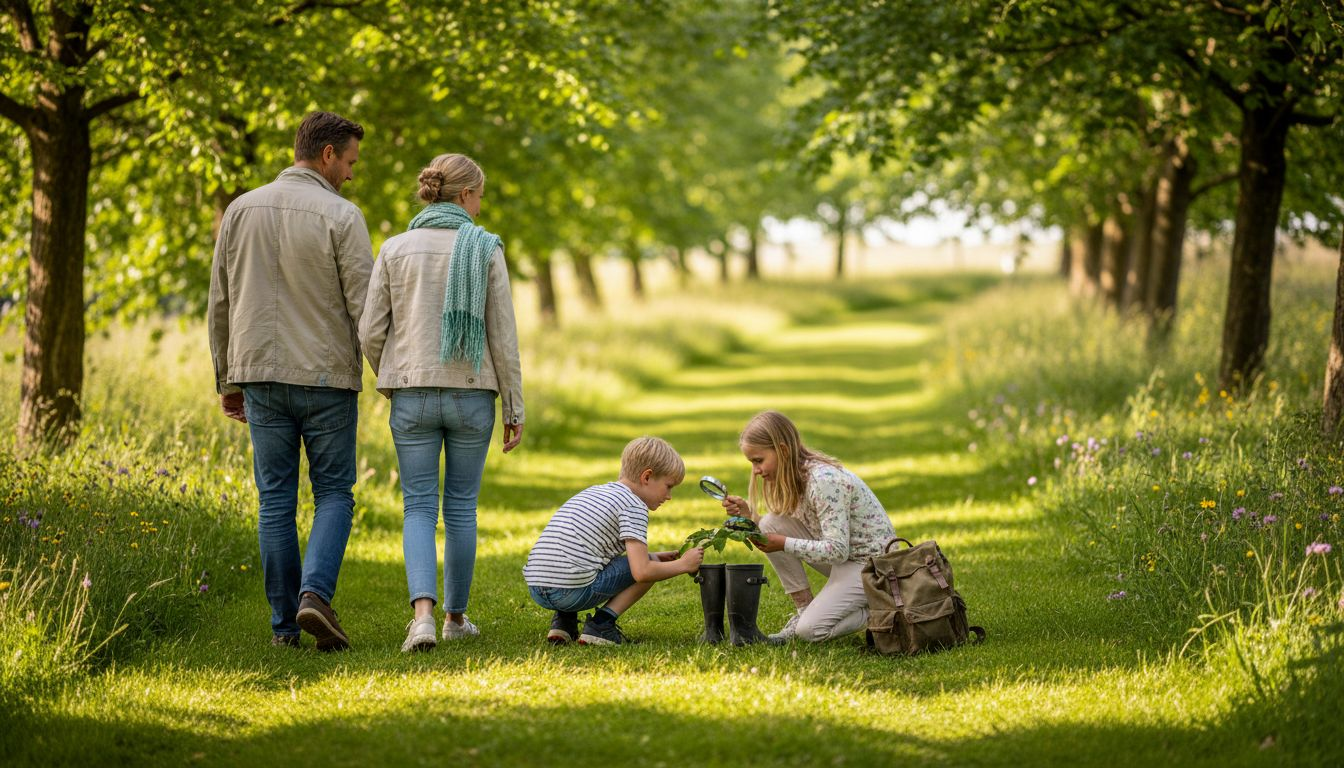
It can be difficult to find experiences where children both have fun and learn something new at the same time. Maybe you've tried going on a family trip, but experienced that the children quickly lose interest or just want to go home again. Fortunately, there are concrete activities that both capture children's curiosity and strengthen their understanding of nature, animals, and culture.
This list gathers well-thought-out methods and experiences based on the knowledge gained from Danish research projects, nature schools, and leading knowledge centers. You get inspiration for everything from outdoor play to creative science centers – each activity is designed to engage children and make learning fun. Look forward to discovering new ideas that activate the senses, imagination, and family togetherness.
Explore nature with discovery games
Exploration play is a fantastic way to get children to experience nature on a whole new level. Instead of just going on a regular walk, the children become detectives, naturalists, and listeners who must find, observe, and feel all the small details that nature hides. This approach ensures that children not only see the trees and flowers but also become active participants in their own learning adventure.
Research in nature-based learning activities shows that when children actively explore their environment through play, they develop both concentration skills and a greater interest in nature. Some of the most effective discovery games include following a rope along the ground to find unusual things, photographing with the eyes (where children must remember and describe what they saw), playing sound card games to hear and identify different natural sounds, as well as smell and touch games that sharpen the senses. Each of these activities is designed to keep children engaged and entertained while simultaneously teaching them weekly about everything from insects to birds to plant growth. You can easily combine several games on the same trip or focus on just one or two, depending on the children's age and interest.
In practice, you start by presenting the "task" to the children in a fun and exciting way. Maybe they will become "nature detectives" who have to find five different shapes or colors, or they will become "sound technicians" who have to recognize and count different natural sounds on their trip. Discovery play designed to develop children's attention and senses It can be implemented almost anywhere there is some nature around you, whether it is in a larger forest, on a beach, in a park, or along a lake. The more children practice being attentive, the more they naturally begin to see the world around them as full of adventures and opportunities.
Danish pro tip Bring a small notebook or drawing pad on the trip so the children can draw or write down what they find. This helps to reinforce their findings and makes it easier to remember the details afterward when you talk about what was discovered.
2. Visit interactive museums for children
Interactive museums are like opening the door to a world where learning and fun meet without limits. Unlike traditional museums where children can only look through glass cases, interactive museums invite children to touch, experiment, and discover on their own. That means that instead of passively hearing stories or scientific principles, children are actively involved in their own learning process, making the information much easier to remember.
The great strength of interactive museums for children lies in their natural combination of entertainment and education. The children learn about everything from physics and chemistry to history and art through hands-on activities that they can control themselves. Some museums have digital facilities where children can use tablets or interactive screens to explore topics more deeply. Andre have construction sections, experiment rooms, or art workshops where children can get their hands busy. This diversity means that even if your child is not interested in one area, there will almost certainly be something that captures their attention. Since children have different learning styles, the interactive elements help ensure that everyone can get something meaningful out of the visit.
When you plan a visit to an interactive museum, it is worth knowing that Tips for Danish museum visits can make the experience even more rewarding for the whole family. Plan to be there for at least 2-3 hours so that the children do not feel pressured and can immerse themselves in the activities that interest them the most. Many museums also offer questionnaires or activity sheets that children can work on during the visit, giving them a purpose to work towards. You can also prepare the children in advance by telling them what to expect, so that they come with an open mind and look forward to learning.
Danish pro tip Visit the museum later in the week instead of the weekend when it is less crowded, so the children have more space to explore and fewer queues at the popular activities.
3. Fun learning experiences in zoos
Zoos and zoological gardens are not just places where children can see exotic animals from near and far. They are actually fantastic learning environments where children learn about the animal world through direct observation and interaction in a way that no textbook can match. When children see a lion team, hear the voices of the birds, and observe how animals move and interact with each other, biology suddenly becomes lively and tangible for them.
The most important learning benefit of visiting zoos is that children develop a deeper understanding of biological diversity and the role of animals in the ecosystem through hands-on experience. Many zoos offer specialized learning activities where children can meet zookeepers, hear fascinating stories about the animals' natural habitats, and even have the opportunity to get closer to some animals. This close contact creates an emotional connection that inspires children to care about nature conservation and preservation. The children also learn to be respectful towards animals by observing how the zookeepers handle and take care of them. When you visit zoos with the children, you can enhance their learning by asking questions like "Why do you think this animal has such long ears?" or "What do you think this animal eats?", which encourages the children to think critically and observe more closely.
From best zoos in Denmark often offers extended learning resources, informational boards about animals' natural habitats and behaviors, as well as guided tours. If the children are particularly interested in specific animal species, you can research in advance which animals are present so you can prepare them with interesting knowledge that they can take into the park. Also remember to give the children time to just sit and observe, because many animals are most active at certain times of the day, and patience is often rewarded with fascinating behavioral learning.
Danish pro tip Bring a notepad so the children can draw the animals and write down what they notice; this doubles their learning and gives you material to talk about at home.
Creative play at the science center
A science center is like stepping into a universe where science becomes play, and play becomes learning. Instead of sitting in the classroom listening to about physics or chemistry, children are allowed to touch, experiment, and discover for themselves how the world works. And Science Center combines the best of both museum and amusement park, where each activity is designed to spark curiosity and encourage children to ask questions about the world around them.
The magic power of science centers lies in making abstract scientific concepts into concrete, tangible experiences. When a child activates a machine themselves, observes how forces work, or builds something entirely new, the information is retained much more deeply than if they simply read about it. Many science centers in Denmark offer specialized exhibitions where creativity and practical experiments go hand in hand, such as exhibitions that combine natural science with imagination and free play. Children learn to think critically, test ideas, and understand cause and effect through hands-on activities. It also means that children with different learning styles and interests all find something that fascinates them, whether they are more interested in biology, physics, technology, or art.
When you plan a visit to a science center, you can Pedagogical activities in nature often inspire additional learning opportunities both before and after the visit. Prepare the children in advance by talking about what they want to explore, and ask questions during the visit such as "What do you think will happen if we press the button?" or "Why do you think it works that way?". Give the children enough time to delve into their interests without it becoming stressful or rushed. Many science centers also offer workshops where children can work more intensively on specific projects.
Danish pro tip Visit the science center's website in advance to see which exhibitions or workshops they offer at the time you visit, so you can prepare the children and give them something to look forward to.
5. Historical tours for the whole family
Historical tours are much more than just walking around and hearing about old stuff. They are a way to bring Denmark's past to life in a concrete and engaging manner, where children not only learn historical facts but also experience the place where the history took place. When children stand by an old castle, on an original road, or near the ruins of former settlements, the history suddenly becomes concrete and relevant to them in a completely different way than when they read about it in a textbook.
The most important value of historical tours for children lies in combining nature education with cultural history into a whole that stimulates both learning and imagination. Children learn to understand the connections between people, nature, and time, and they develop a deeper connection to their own local community and national heritage. A historical tour can be structured around specific themes, such as how people lived 500 years ago, what transportation was like, or how nature was used. You can also actively involve the children by giving them small tasks, such as finding specific landmarks, photographing interesting details, or writing down what they see and notice. This makes the trip an adventurous exploration instead of just a passive guide. Many historical sites in Denmark also have information boards or guide apps that can enrich the experience with deeper context.
When planning a historical tour, it is important to remember that Family experiences strengthen togetherness and learning In a special way. Choose a location that suits the children's age and interests, and prepare them in advance with stories or pictures so they have some expectations to work with. Give plenty of breaks for exploration and play, so that the historical part is alternated with more voluntary activities. Many children remember long after where they went on a special trip and which stories they heard, especially if the trip was turned into an adventurous discovery.
Danish pro tip Take pictures of the children at important points during the trip, and afterwards create a family blog or photo timeline at home that you can discuss and revisit to reinforce and deepen their learning experience.
6. Outdoor activities with environmental learning
Outdoor activities focused on the environment give children the opportunity to learn about nature by being inside it, while simultaneously developing a genuine concern for taking care of our planet. Instead of hearing about climate change and waste problems in the classroom, children can gain practical experience by observing nature's connections, collecting litter in nature, or participating in activities that concretely demonstrate how humans affect the environment. This hands-on approach makes environmental learning something children can feel and become motivated to do something about.
The most important value of environmentally focused outdoor activities lies in creating both knowledge and value foundations in children. When children collect plastic themselves at a beach, plant trees, or observe how different insects and animals depend on each other in nature, they develop an authentic understanding of why the environment matters. Activities can be diverse, such as trash collection in natural areas where children learn about pollution, creating small habitats in the garden where they observe biological diversity, or simple activities like mapping different plant species and their importance for the local ecosystem. Outdoor activities combine physical movement with environmental learning in a way that both strengthens children's health and their environmental awareness. You can also talk to the children about sustainability using concrete examples, such as why it's important to use fresh berries instead of frozen ones, or how to reduce your plastic consumption.
When planning environmentally focused outdoor activities, start with something that children can see and feel directly. A simple waste collection in nature can be very motivating, especially if you turn it into a game where each type of waste counts for points. You can also create small projects at home, such as cultivating native flowers that attract bees and butterflies, or building a small insect hotel. Remember to make it fun and give positive results so that the children see that their efforts matter and it's not just about the problems.
Danish pro tip Encourage the children's environmental learning to action by letting them start a small "family environmental project" at home, which they can report on from time to time, so they see concrete results of their efforts over time.
7. Art and culture with children at local attractions
Art and culture at local attractions give children the opportunity to connect with their own community on a deeper level, while developing artistic skills and cultural understanding. Instead of thinking of art as something distant and abstract, children can experience art and culture in their own area through local artists, cultural events, and cultural-historical sites. This makes cultural education something lively and personally relevant, which children can take pride in and feel ownership of.
The greatest value of engaging children in art and culture at local attractions lies in expanding their horizons and teaching them to appreciate creativity and human expression. When children participate in workshops at a local art museum, view art exhibitions, or engage in traditional crafts such as pottery or woodworking, they learn not only about art itself but also about people and their creative abilities. Many local attractions offer child-friendly activities such as painting, drawing, sculpture, or dance, where children can both experience art and become artists themselves. This practical engagement means that children develop both aesthetic sensitivity and confidence in their own creativity. Cultural activities in Denmark They can be as diverse as children's interests, from crafts to modern art to music and theater.
When planning cultural experiences with children at local places, look for attractions that offer interactive elements or child-friendly programs. In many places, there are specific days or times when children can be more involved, or they offer guided children's tours where an artist or guide speaks at the children's level and asks questions that encourage them to think more deeply about the art. You can also prepare the children in advance by talking about what they will see, or let them look at pictures of the artworks at home. After the visit, you can have the children express their experience by drawing, writing, or talking about what they saw and felt, which helps to reinforce and deepen their learning experience.
Danish pro tip Ask the children what fascinated them the most during the visit, and help them express it at home through drawing, writing, or their own artistic activity so that the experience becomes lasting and meaningful.
NO_TABLE
Family experiences with learning and fun that strengthen togetherness
Finding activities that combine learning with entertainment can be a challenge for many families. The article "7 Family-Friendly Activities Guide with Learning and Fun" highlights the importance of engaging children through discovery play, interactive museums, and outdoor experiences to develop their curiosity and knowledge in a playful way. Many parents want to create meaningful experiences where children are not just passive spectators but active participants in their own learning. However, it may require inspiration and concrete planning to make everyday life work with educational and fun activities.
Hos Travel in Denmark We have made it easy for you to find the experiences and attractions that are perfect for the whole family and support children's development. With our intuitive search function, you can filter by age, price, and type to create a tailored experience. If you want to explore nature with discovery games, visit exciting science centers, or plan cultural trips with the children, you will find plenty of inspiration and practical information gathered in one place. Make the next family outing an unforgettable combination of learning and entertainment that will open the children's eyes to Denmark's many facets.
Make planning more fun and easier. Start your next adventure today by visiting Rejs i Danmark and find the best family-friendly activities for you. Let learning and play go hand in hand on your next outing and create memories that last.
Frequently Asked Questions
How can I involve my children in exploration games in nature?
Exploration games can easily involve children by giving them tasks such as finding specific colors or shapes in nature. Go for a walk in the forest and ask them to find five different leaves or flowers.
What interactive activities do museums offer for children?
Interactive museums often offer hands-on activities where children can experiment with science or art. Plan to be in the museum for 2-3 hours so the children can participate in activities that interest them most.
What do children learn in zoos?
The children learn about animals' lives and their ecosystems by observing them closely and participating in learning activities. Ask questions during the visit, such as "What does this species eat?", to encourage them to think critically.
How can I prepare for a visit to a science center?
Prepare the children by talking about which topics they would like to explore. Visit the science center's website to find current exhibitions, and give them time to engage in activities that capture their interest.
What can children learn from historical tours?
Historical trips give children the opportunity to understand the past through experiences, rather than just reading about it. Engage them by giving small tasks such as finding specific monuments or taking pictures of interesting details.
How can we combine play and environmental learning?
Outdoor activities focused on the environment can include trash collection or planting. Start with fun activities like a waste collection, where you can count how much trash you collect and reward the children for their effort.
Recommendation
- 7 inspiring examples of outdoor activities for families – Travel in Denmark
- 7 useful tips for rainy day activities for the whole family – Travel in Denmark
- 7 family-friendly destinations list for holidays in Denmark – Travel in Denmark
- How to find cheap activities for the family in Jutland – Travel in Denmark
- 7 Family-Friendly Activities in Liverpool for Learning and Fun | Liverpool Cycle Tours