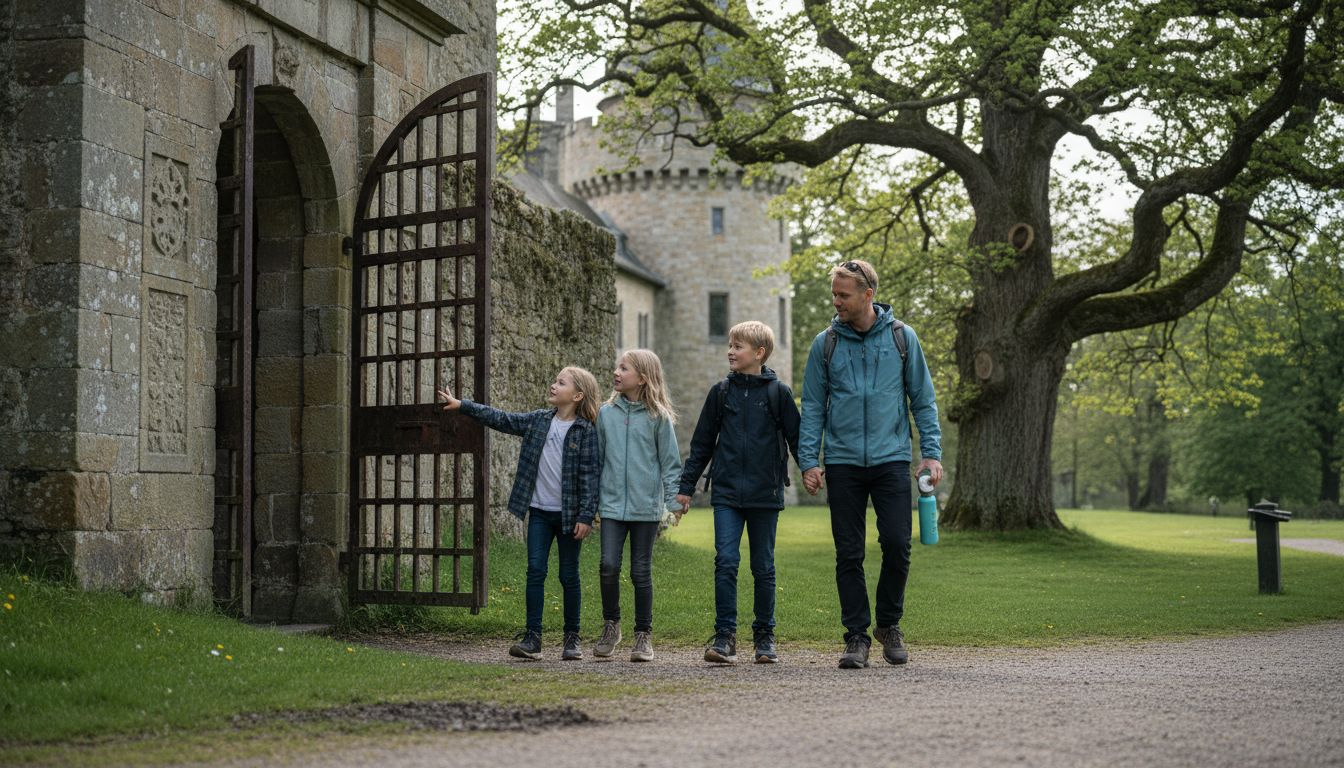
Everyday adventures often hide just around the corner when Danish families look for experiences that both inspire and teach children about the past. Historical attractions in Denmark range from Viking castles to medieval castles, allowing children to step directly into the country's rich history. The wide diversity of these experiences creates a unique opportunity to combine play, learning, and presence.but together they discover places where stories wait in stones and landscapes.
What are the historical sights in Denmark?
Historical sights are buildings, structures, and places that tell Denmark's history through physical memories. It could be a medieval weight castle, a church from the Reformation, an old trading town, or a military fortress from earlier centuries. These places function as time capsules, where architecture, objects, and surroundings preserve history for new generations. They are not just museum collections behind glass – they are living stories that grow around you when you visit them. Therefore, they represent a special category of this cultural heritage, from royal residences to smaller noble estates.
For Danish families, these places mean something very concrete in everyday life. They give children the opportunity to experience how people lived 300, 500, or 800 years ago. Instead of just reading about the Viking Age in the schoolbook, they can actually walk around a shipyard where Viking ships were built or explore a medieval castle where kings made decisions that affected the entire realm. Many of these attractions are scattered throughout Denmark, so most families actually do not live very far from at least one significant historical site. From ancient castle and monastery ruins to preserved trading towns like Ribe or Ærøskøbing, history surrounds us in a way that simply cannot be found anywhere else in the world.
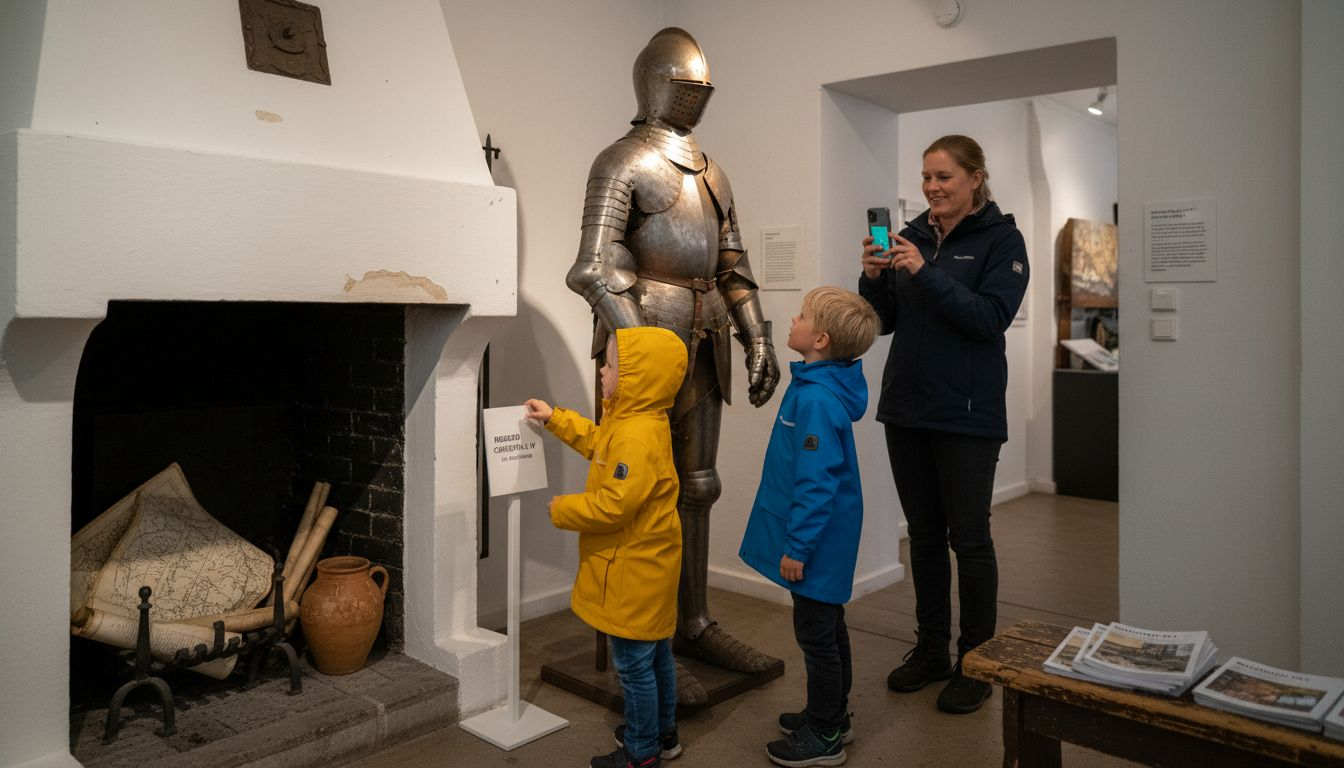
What is special about Denmark is that many historical attractions are fully accessible to families without major barriers. You can often walk freely around the castles, explore the old streets in smaller towns, and visit churches with centuries-old details. Some places cost just a few hundred kroner for a whole family or are completely free – many Danish churches and ruins cost nothing to visit. Children under a certain age often receive a discount, or the whole family can get a day pass that grants access to multiple monuments at once. These experiences not only create knowledge about our past but also pride in what has been built and preserved over the ages. Many free experiences It is hidden among Denmark's historical gems, so it's worth exploring locally around your residence.
Practical advice Visit the historical sights outside of holiday periods or on weekdays when it is less crowded, so children can explore without having to push through large crowds.
Important types of historical attractions
Denmark contains a remarkable diversity of historical sites, each with its own story to tell. The most important types range from medieval castle like Kronborg in Helsingør and Frederiksborg near Hillerød Viking burial mound and fortifications that remind us of Denmark's martial past. Furthermore, one finds monastery ruins spread across the country, where the monks once lived their religious life, as well as preserved trading cities like Ribe and Ærøskøbing, where the merchant life from previous centuries still influences the streets and buildings. This wide range of Danish attractions It helps to create a picture of how the Danes have lived through the ages.
For families with children, the castles are often the most striking starting point. There is something magical about walking through gates that kings and queens have passed through, or hearing stories about the people who have lived within these walls. But the slots are far from the only type. Churches From Romanesque to Gothic, much of Denmark is filled, and many of them are still in use, where you can enter and experience the same space that the villagers have done for centuries. Fortifications Whether Tåsinge Fort or fortifications around Copenhagen shows how the country was protected. Scenic areas With historical significance, such as ancient mounds and runestone fields, it connects us directly to the people of the Iron Age. And then there is the museums, which often serve as gathering places for objects from these periods, even though The role of Danish museums goes far beyond merely preserving – they interpret and explain the history for us.
Each type of attraction offers something unique for families with children. A castle can be fairy-tale-like and allows children to imagine royal parties and intrigues, while an old town like Ribe or Christianshavn lets them experience how merchants and craftsmen lived. A monastery ruin can seem mysterious and make children wonder about the monks' daily life. War castles speak to children's adventure imagination in a different way than a lord's castle does. And when you combine these visits with searching for runestones or exploring ancient mounds, the whole trip becomes a kind of historical hunt, where each site adds new layers to their understanding of Danish history. Many attractions are also within driving distance of each other, so you can plan routes that combine several types in one day.
Here is a quick overview of the most important types of historical attractions in Denmark and what children typically gain from the visit:
| Type sightseeing | Famous examples | Especially fun for children because… |
|---|---|---|
| Medieval castle | Kronborg, Frederiksborg | Fantasy about knights and kings |
| Viking Fortress | Trelleborg, Fyrkat | Experience Viking life and building customs |
| monastery ruin | Esrum Monastery, Øm Monastery | Mystique surrounding monastic life and rituals |
| Old trading town | Ribe, Ærøskøbing | Dive into the life among merchants |
| Fortress | Kastellet, Tåsinge Fort | Explore defenses and secret rooms |
| Church | Roskilde Cathedral, Jelling Church | Learn about religion and history |
| Ancient mound/runestone | The Jelling Stones, Lindholm Høje | Find ancient monuments and runic inscriptions |
Practical advice Create a family experience by letting the children be archaeologists for a day: find the runestones near your home, write them down, or have them search online for the story behind them before you visit the site.
Fun activities for families with children
Historical sights only truly come to life when you do more than just walk around and look at old buildings. Children need to be active, discover, and feel like part of the story, not just spectators of it. There are many ways to turn a visit to a castle, a church, or an old town into a fairy-tale day for the whole family. You can let the children be archaeologists searching for details in the walls or stories hiding behind each stone. Some places offer guided tours especially for children, where a guide tells stories with drama and action-filled accounts of warriors, princes, and mysteries. Other places, you can create fun tasks yourself for the children to solve around the area.
Interactive experiences on site
Many larger castles and museums have now designed activities that make children fall completely in love with history. You often find role-play elementswhere children can become knights, princesses, or warriors for a few hours. Some places have treasure huntswhere the children will solve riddles and find hidden objects around. At several castles, families can try on historical costumes and have pictures taken on the stairs or in the old chambers. Museums often offers workshopswhere children can learn crafts from old times, such as cooking according to ancient recipes, working with ceramics, or learning about medieval weapons and defense. These activities make history tangible for children in a way that ordinary teaching cannot.
Outside on the castles' grounds or around old towns, children can run freely and explore. Outdoor activities for families It can be perfectly combined with historical experiences, so the children get both exercise and learning at the same time. You can create your own historical adventure trail, where each stop tells a new part of the story. If the weather turns bad, it doesn't mean the trip should be canceled – many historical sites have indoor activities, which still makes it fun to be inside.
The most important thing is to get the children to ask questions and be curious. Ask them what they think about what they see, let them draw what they experience, or write stories together about the people who once lived in the place. When children become active participants in their own learning experience, the story is no longer just something that happens to them – it becomes something they help create themselves. And that's where the real magic lies.
Proverap Before you leave, give the children a "mission brief" with specific things they need to find or discover at the site, turning the entire visit into a game instead of a passive tour.
Planning visits and practical arrangements
A successful day at historical sights starts long before you step out the door. Preparing well makes the difference between a day full of small frustrations and a day where everything just goes smoothly. The first thing you need to do is check opening hours og seasonal variationsMany historical sites, especially smaller castles and ruins, have limited opening hours, and some close entirely during the winter. Some major attractions like Kronborg Castle or Frederiksborg can be crowded to capacity in July and August, while May and September are often much more pleasant months to visit. Special events and special activities It can also make it worth planning the trip for a special time of year, so check the websites of the places you want to visit.
Practical preparations before the trip
When you have chosen the place and time, you should think about the practical details that make or break the trip. Investigate access conditions og facilities some toilets, dining places, and whether there is an option to get food and drinks on site. Some castles have toilets on-site, but not all. Some have small cafeterias, while others have nothing at all, so bring packed food if it's likely. Also ask if there are parking options near the entrance, if there is an elevator for the elderly or small children, and if dog walking is allowed if you have pets. Some places have special family days or weekends where children can enter for free or at a reduced price, so it can save money. Many cultural and historical sites also offer annual passes, which may be worth investing in if you plan to visit multiple times.
Bring practical things with you: sunscreen Oh hat, if the weather turns out to be good, rainwear or umbrella, since the weather is unpredictable water bottles or snacks, even though there might be a cafeteria, and comfortable shoes, most of the days are spent walking around. A Rechargeable power bank can be a lifesaver if the children have tablets or phones. Also take pictures and let the children help document the day – it increases their interest and gives you good memories. In small notebook until the children can have fun, so they can draw or write down what they discover.
Opening hours and payment are also important to plan around. Most historical sites cost between 50 and 150 kroner for adults and less for children, but some are free. In many places, both cash and cards are accepted, but not all, so check in advance. If you plan to visit several places on the same day, it might be smart to Create a checklist for your day trip, so you don't forget important preparations. Also inform the children about what you will see so they have something to look forward to and can help with planning.
Practical advice Book tickets online in advance if possible, to avoid queues at the entrance and often get a discount at the same time.
Ticket prices, seasons, and savings
The ticket prices for Danish historical attractions vary greatly depending on what you visit and when. A visit to a smaller castle or church ruin can be free or cost only 50 kroner, while larger museums like the National Museum or special guided tours at larger castles can cost between 150 and 300 kroner per person. The most important thing to know is that Children often get free or heavily discounted admissionIn many places, children under 18 enter for free, which can save a family hundreds of kroner in a single day. Some places offer special family discounts or group packages, which mean that the more children you bring, the cheaper the trip becomes per person. person Museum annual pass with discounts It may also be worth investing in if you plan to visit several times throughout the year.
High season versus low season
The season means a lot for both prices and the experience. July and August are peak season, where both the prices and the crowds are at their highest. Tickets can be more expensive, and the queues at the entrances can be long. May, June, and September are better choices, where the weather is still nice, but it is less crowded and the prices are a bit lower. October to March is low season, and here you get both more money for your money and a much more peaceful experience. Some places offer very special low-season discounts. Vacation in the low season has advantages for families with childrenbecause children can explore without being pushed through crowds, and you can have more time for each attraction without time pressure.
Here you can see a comparison of the experience in high season vs. low season, so you can plan as best as possible:
| Factor | Peak season (July-August) | Lambing season (October-March) |
|---|---|---|
| Prices | Most often higher | Discounted or free tickets |
| Crowds | Crowded places | Good space, fewer guests |
| Special Events | Many children's activities | Fewer events but more freedom |
| Experience quality | Busy and lively | Calm, time for immersion |
At larger museum complexes like the Park Museums in Copenhagen, you can save money by purchasing combination tickets. Joint tickets for multiple museums Kan offers up to 50 percent discount when you purchase access to multiple institutions at once. If you plan to visit multiple places on the same day or weekend, this can be extremely economical. Many places also offer annual passes, which quickly pay for themselves if you visit the place more than twice a year. The annual pass not only provides free admission but also often offers discounts at cafes, on souvenirs, and at special events.
Buying tickets online is almost always cheaper than buying on-site. Many places offer a 10 to 20 percent discount if you book in advance, and you also avoid queues. Some places even require advance booking in the high season, so it might be a good idea to Plan your budget with practical tipsso you get the most out of your money. Many historical sites outside the cities are completely free to visit, such as ruins, cemeteries, and old trading towns, where you can walk around without having to pay an entrance fee. These can be just as fascinating as the paid attractions.
Practical advice Sign up for newsletters from the places you want to visit so you get notified about special discounts, family days, and seasonal campaigns that can save you hundreds of kroner.
Discover Denmark's Historical Pearls Together as a Family
Planning a family trip to Denmark's many historical attractions can be a challenge when you want to make the visit both educational and entertaining for children of all ages. The article points to the importance of creating active and memorable experiences where children are not just spectators but engaged participants in Denmark's rich history. Many families miss clear information about which places suit their needs regarding access conditions, price, activities, and season.
Hos Travel in Denmark You are just getting the help to solve this task. Our platform gathers detailed descriptions of historical attractions with practical information ranging from ticket prices to family-friendly events and interactive experiences. With our user-friendly map and search filters, you can easily find the perfect historical site for your next family outing regardless of the season, price level, or children's ages. Avoid stress and guessing, and let us help you bring the story to life in a fun and exciting way.
Take the next step now, visit Rejs i Danmark, and find inspiration and concrete suggestions for family-friendly historical experiences you can plan today. Discover how history becomes engaging and magical for both adults and children with our comprehensive guide.
Frequently Asked Questions
What are historical sights?
Historical sights are buildings, structures, and sites that carry Denmark's history and cultural heritage, such as castles, churches, old towns, and ruins.
How can I make visits to historical sites more fun for children?
Make the visit interactive by participating in treasure hunts, letting children dress up in historical costumes, or doing creative tasks such as finding details or writing stories.
What types of historical attractions are found in Denmark?
Denmark offers a diversity of historical attractions, including medieval castles, monastery ruins, old trading towns, churches, and Viking forts.
When is the best time to visit historical sites?
The best time to visit historical sites is often outside of holiday periods or on weekdays, when there are fewer crowds and more time to explore.
Recommendation
- Benefits of Family Experiences – Strengthen Togetherness and Learning – Travel in Denmark
- 7 useful tips for rainy day activities for the whole family – Travel in Denmark
- Benefits of family outings for children and adults – Travel in Denmark
- Family outings – Create togetherness and lasting memories – Travel in Denmark