TL;DR:
- Many Danish museums have made experiences more interactive and playful for children. It is important to match the museum with the child's age to have the best experience. Interactive activities such as workshops, treasure hunts, and role-playing engage children the most.
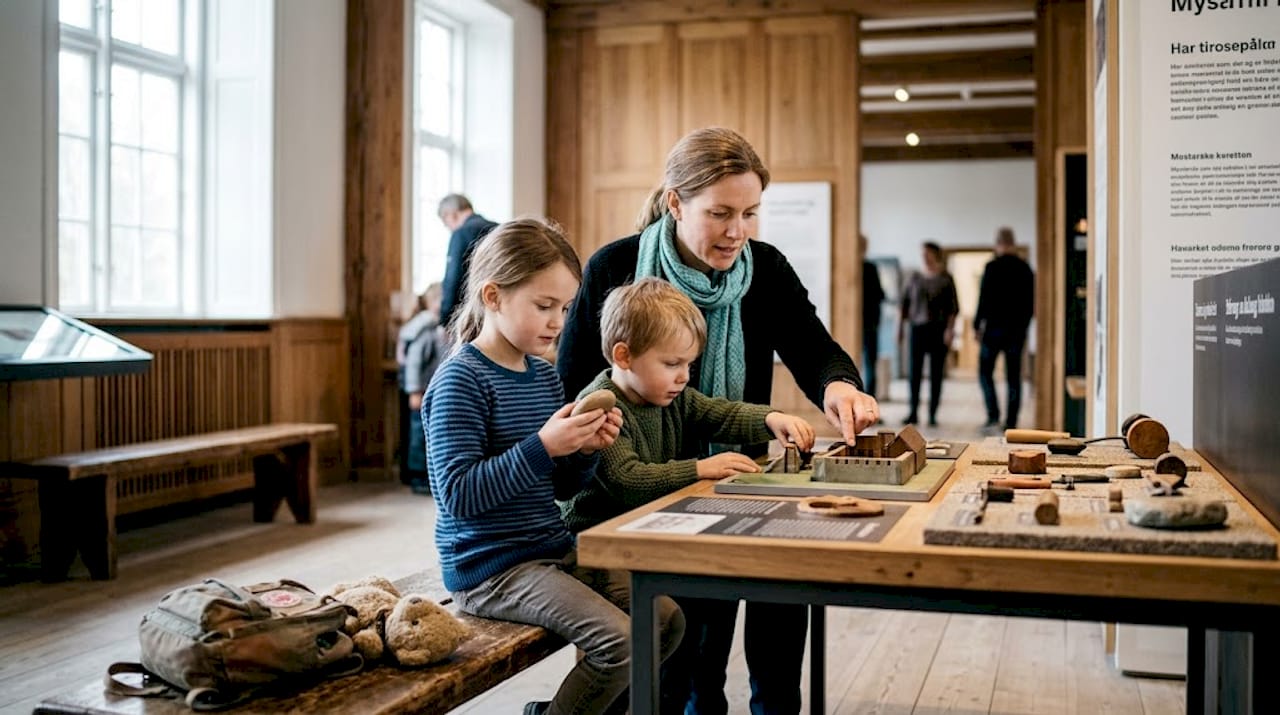
Many parents hesitate when someone suggests a museum visit with children. The picture is familiar: long corridors, a quiet voice, and objects behind glass. But that picture is outdated. Children learn best through play and interactive experiences, not passive observation. A new generation of Danish museums has turned the entire concept upside down and transformed it into adventures, role-playing games, and hands-on experiments. This guide shows you which museums truly engage children, how to choose the right place for your family's age and interests, and how to plan a visit that everyone will remember with joy.
Main Points
| Point | Details |
|---|---|
| Choose age-appropriate museum | Match the museum to the children's age to get the most out of the visit. |
| Interactivity creates joy | Museums with play and hands-on activities engage children best. |
| Short and efficient planning | Set aside 2-4 hours and follow simple tips for a good family experience. |
| Free admission for children | Many museums are free for children under 18, so the whole family can come along. |
How to choose the right museum for your family
The first and most important step is to know your child. Not all museums are suitable for all age groups, and a good match between the museum and the child's age makes all the difference. Matching with elders boosts the experienceYoung children need sensory play, while older children thrive with problem-solving and challenges.
Here is an overview of what typically works best by age group:
- Infants under 4 years old: Sensory serum, soft materials, sounds, and colors. A short visit of 30-60 minutes is enough.
- Children aged 4-8 years Interactive stations, costumes for role-playing, simple experiments, and treasure hunts.
- Children aged 9-12 years Workshops, science shows, historical stories, and technology.
- Teenagers: Deepening of themes, digital installations, and exhibitions with social relevance.
When you know the child's age group, you can compare museums and find the best match:
| Museum | Best for age | Primary experience | Price (adults) |
|---|---|---|---|
| LEGO House | 4-12 years | Creativity and Construction | From 199 kr. |
| Experimentarium | Ages 1-12 | Science and experiments | From 195 kr. |
| The National Museum | 5-15 years | History and Vikings | Free for children |
| Geocenter Møns Klint | Ages 6 to 14 | Geology and Nature | From 145 kr. |
| Moesgaard Museum | 7-15 years | Archaeology and the past | From 175 kr. |
Professional tip: Always visit the museum's website and check the current event calendar before you travel. Many museums offer special family workshops, holiday activities, and themed evenings that are not part of the permanent exhibition. You can find More about child-friendly museums and compare experiences directly. Plan the visit based on what happens on the day you are there. It often provides a much richer experience than just walking around the exhibitions.
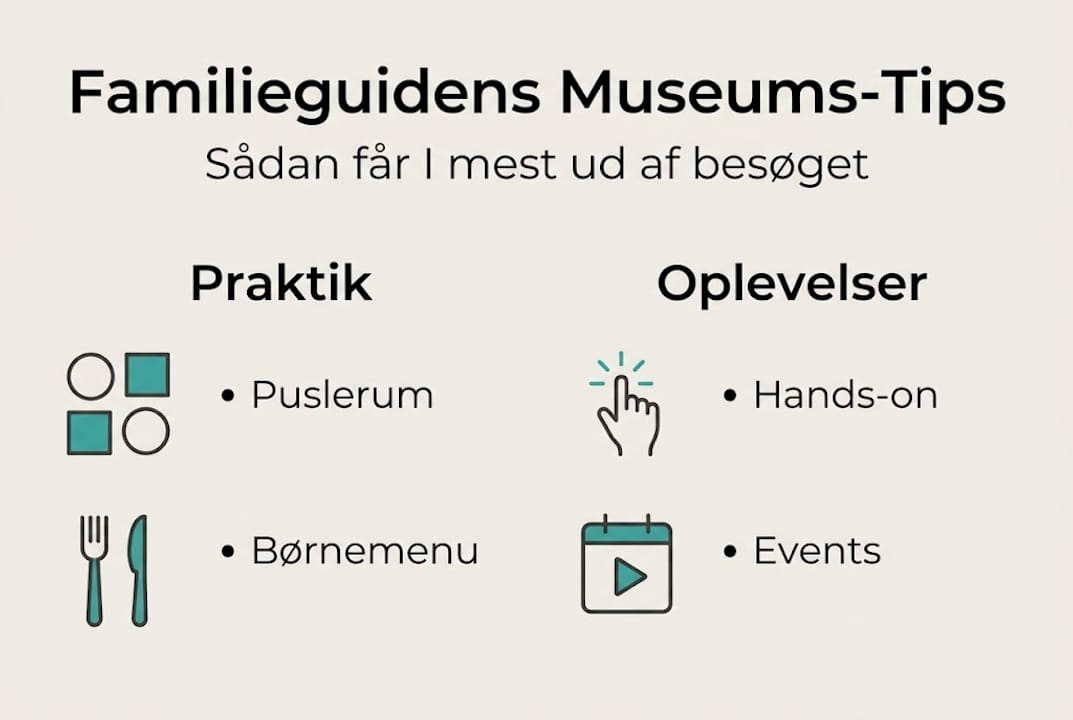
Also consider practical considerations. Is there a changing room? Is there a café with child-friendly food? Is there parking nearby? These details sound boring, but they determine whether the visit will be a good day or a stressful experience. Read more about museum visit with children to gather the best advice in one place.
The best child-friendly museums in Denmark
When you have age matching and interests in place, it's time to choose among the top museums in Denmark, including LEGO House, Experimentarium, the National Museum's Children's Museum, Geocenter Møns Klint, and Moesgaard Museum. Each of these places has something unique to offer.
- LEGO House in Billund It's not just a museum, it's a whole world of experiences. Children can build, experiment, and tell stories with LEGO bricks in themed zones. It is the temple of creativity, and adults become just as excited.
- Experimentarium in Hellerup It is Denmark's largest science center and offers hundreds of interactive experiments. Here children can test the laws of nature, build bridges, and experience the body from the inside.
- The Children's Museum of the National Museum in Copenhagen Gives children the opportunity to try on Viking clothing, live on a medieval farm, and immerse themselves in history in a way no textbook can match.
- Geocenter Møns Klint Combines beautiful nature with fascinating geology. Children can find fossils and learn about Earth's millions of years old history directly in the chalk.
- Moesgaard Museum near Aarhus Contains the world-famous Grauballe Man and impressive archaeological finds. The enormous roof is covered with grass and functions as a natural playground.
The National Museum is free for children under 18 years old. It makes it an obvious choice if you want to give the whole family a historical experience without emptying your pockets. Find more examples of children's attractions and compare them with your own preferences. Do you want the full guide on how to gets the most out of the museum visit, you find concrete advice there.
Check Practical information about the Experimentarium directly on their website before you leave. They continuously update opening hours and special events.
The interactive museum visit: From boredom to adventure
When we look at child-friendly museums, we need to understand what actually engages the children. A traditional exhibition with text and display cases is designed for adults who already have a context and a desire to learn. Children function differently. They want to touch, try, fail, and discover on their own.
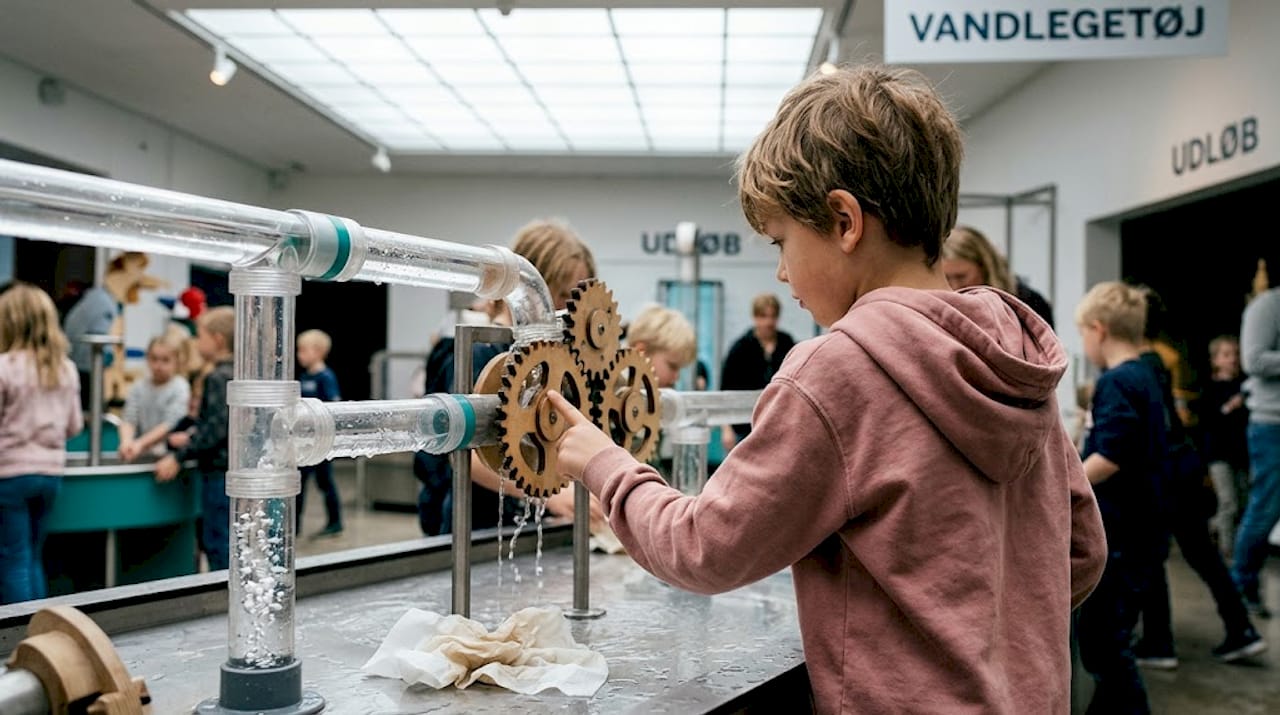
Interactivity is the key to children's learning and enjoyment of museum visits. It's not just an educational theory; it's something you can see with your own eyes when a child suddenly forgets all about the screen at home because they are in the middle of a role-play as a Viking warrior or building a bridge that must hold a certain weight.
The most popular interactive features at child-friendly museums include:
- علم نشان میدهد: Dramatic demonstrations with fire, electricity, or chemistry that children remember for years.
- Workshops: Hands-on activities where children do something with their own hands, from clay modeling to robot programming.
- Treasure hunts and quests: Task sheets or digital games that guide children around the exhibition and give them a goal.
- Costumes and role-playing Trying on clothes and tools from the past provides a bodily understanding that no text can give.
- Experiments: Testing hypotheses and seeing results immediately creates genuine curiosity.
When children use workshops and experiments Actively, something special happens: they stop being spectators and become discoverers.
This transformation from spectator to discoverer is exactly what the best museums in Denmark offer. You find Tips for engaging visits and can read about Family experiences at the National Museum, which is an excellent example of how a classical museum has renewed itself.
Practical guide: How to make the most of your visit
Now that you know the museums and know what children love, here are the most important tips for your visit. Planning tips include booking online, choosing the right visit time, bringing change of clothes and snacks, and not exceeding children's natural attention span.
Here is the optimal procedure in five steps:
- Prepare from home: Look at the museum's website together with the children. Let them choose one thing they are looking forward to. It creates ownership and enthusiasm even before departure.
- Book tickets online: Many museums offer discounts for online booking and help you avoid queues at the entrance, which can drain the energy of the little ones.
- Arrived early: The first hours are the calmest. Children are healthy, and you avoid the busiest periods, typically in the middle of the day on weekends.
- Set a realistic schedule: Choose two or three highlights instead of trying to see everything. Overplanning is the most common mistake and results in tired, unhappy children.
- End with a chat on the way home. Ask the children what they remember best. It enhances the experience and gives you insights for your next visit.
Professional tip: Check the museum's schedule for family events and workshops before you go. Many museums have special holiday activities that do not require extra payment. Advice for Advice for young children Directly from the Experimentarium.
Remember, many museums are free for children. Feel free to tag friends and siblings. The social element makes the experience even stronger. You find help for Planning family outings and can read about The importance of family outings for children's well-being and development.
Perspektiv: Hvorfor børnevenlige museer er fremtidens læring
There is something important to say about how we as parents and society perceive museums. For decades, the museum was an adult space. Children were tolerated, not invited. A piece of paper and some colors in the corner were what awaited them.
It is fundamentally changed now. And it's not just good for children, it's good for the whole family. When a museum is designed for parents and children to discover togetherSomething funny happens: adults start asking questions again. Curiosity is returning.
The most important insight we have gained is this: let go of the plan. A visit where you spend a whole hour on one experiment because the child is completely absorbed is more valuable than a visit where you visit all the rooms. Spontaneity and chaos are not mistakes; they are the very experience itself. Follow the child's curiosity, and let it guide the way. Find inspiration for your next family adventure in Denmark and use it as a starting point, not as a rigid plan.
Child-friendly museums are not just an educational tool. They are places where memories are created, and where children discover that the world is fascinating. It is the learning of the future.
Find more family experiences and easily plan your next trip
You now have a solid foundation to choose the right museum and plan a visit that the whole family is looking forward to. But Denmark's family experiences don't stop at the museum door. On Rejs i Danmark, you will find more child-friendly attractions gathered in one place, filtered by age, price, and season. You can build one Complete travel plan to Denmark and ensure that you get the best out of every single day. And if summer is approaching, you can already start to Plan the family's summer vacation with concrete suggestions and practical advice. Make planning part of the joy.
Frequently Asked Questions
Which museums in Denmark are free for children?
Most state museums, such as the National Museum, are free for children under 18 years old. This also applies to many regional museums, so always check prices before your visit.
How do you best engage children at the museum?
Choose museums with hands-on activities, workshops, and role-playing games where children are active participants. Children learn best through play and interaction rather than passive observation.
Which museum is recommended for children under 6 years old?
Experimentarium has dedicated areas for children from 1 to 6 years old, and LEGO House offers creative zones that are perfect for the youngest visitors.
How much time should a family set aside for a museum visit?
2-4 hours is optimal for most children, depending on the size of the museum and the child's age. Shorter visits with a focus are better than long, exhausting tours.
Why are interactive museums better for children than traditional ones?
Interactivity is the key to learning and joy for children in the museum because it activates curiosity and gives the child control over their own discovery.
Recommendation
- Guide to child-friendly museums: Fun and educational experiences – Travel in Denmark
- Museum visit with the family: guide to success in Denmark 2026 – Travel in Denmark
- Guide to Museum Visits: Everything You Need to Know – Travel in Denmark
- 7 family-friendly activities guide with learning and fun – Travel in Denmark
- Discover 7 Top Highlights of Disneyland Paris for Families