
TL;DR:
- Seasonal activities connect people, nature, and culture throughout the year in Denmark.
- They create economic stability, extend the tourist season, and support local rural areas.
- Plan with a focus on local events and combine culture and nature for authentic experiences.
Denmark is a country that changes with the seasons. Not only in the weather, but in the experiences that await you. Seasonal activities are not just cozy traditions; they are the very backbone of Danish tourism and a crucial factor for local economies across the country. Whether you are a Dane seeking new experiences close to home or an international tourist wanting to experience Denmark in its most authentic way, the changing activities of the seasons are your best guide. This article shows you what seasonal activities really are, why they matter to society, and how you can concretely plan your next trip around Denmark.
Main Points
| Point | Details |
|---|---|
| Seasonal activities create experiences | Denmark has unique cultural and natural activities year-round that provide memorable trips. |
| Supports the local economy | Seasonal activities extend the tourism period and strengthen the economy across the country. |
| Plan for maximum yield | By traveling outside the peak summer season, you get both authentic experiences and better prices. |
| All-year variation | Both spring, summer, autumn, and winter offer exciting activities for everyone. |
What are seasonal activities, and why do they matter?
Seasonal activities are activities, events, and experiences associated with a specific season and typically only take place during a defined period of the year. The concept broadly covers everything from cultural festivals and local markets to nature-based experiences such as mushroom foraging, winter swimming, and spring hikes. Understanding of what seasonal experiences are It is the first step towards planning trips that truly stick in the memory.
Why do they matter? Because they connect people, nature, and culture in a way that a普通 museum visit rarely does. When you participate in Fastelavn with local children in February, or wander through a blooming spring in the Danish forests, you experience Denmark from the inside. They are not tourist traps. It is a living culture.
Seasonal activities such as spring festivals Like Carnival and Pentecost, autumn holidays and winter markets offer a unique blend of natural and cultural experiences that you won't find anywhere else in the world. Carnival is for example an old Danish tradition celebrated in February with costumes, knocking on a barrel, and buns in a bag. It's not just fun for the children. It is a window into Danish folk culture.
Here are some of the most popular seasonal activities spread throughout the year:
- Spring: Carnival parties, pinata flights, nature walks in blooming forests and parks
- Summer: Beach life along Denmark's 7,300 km coastline, music festivals, cycling holidays on Bornholm or along the West Coast
- Autumn: Mushroom hunting in Danish forests, harvest markets, and autumn holiday experiences with the family
- Winter: Christmas markets in Tivoli and other cities, winter swimming in the sea, indoor museums, and cultural events
Seasonal activities are not just entertainment. They are a living connection between people, nature, and the culture that defines a place.
Professional tip: Always check if there are local festivals or markets in the region you are visiting. They are often free or cheap and offer the most authentic experiences you can find.
Seasonal activities also create a natural rhythm in travel planning. Instead of choosing a destination and then finding activities, you can reverse the process: choose an activity and let it guide you to a new part of Denmark that you might never have visited otherwise.
The role of seasonal activities for tourism, economy, and local communities
When talking about tourism in Denmark, it's easy to think of the summer months as the only true season. But that way of thinking actually costs both tourists and local communities a lot. Seasonal activities offset financial vulnerability by extending the tourist season, creating stable jobs, and supporting local economies outside the high summer, especially in areas like the West Coast and the Danish countryside.
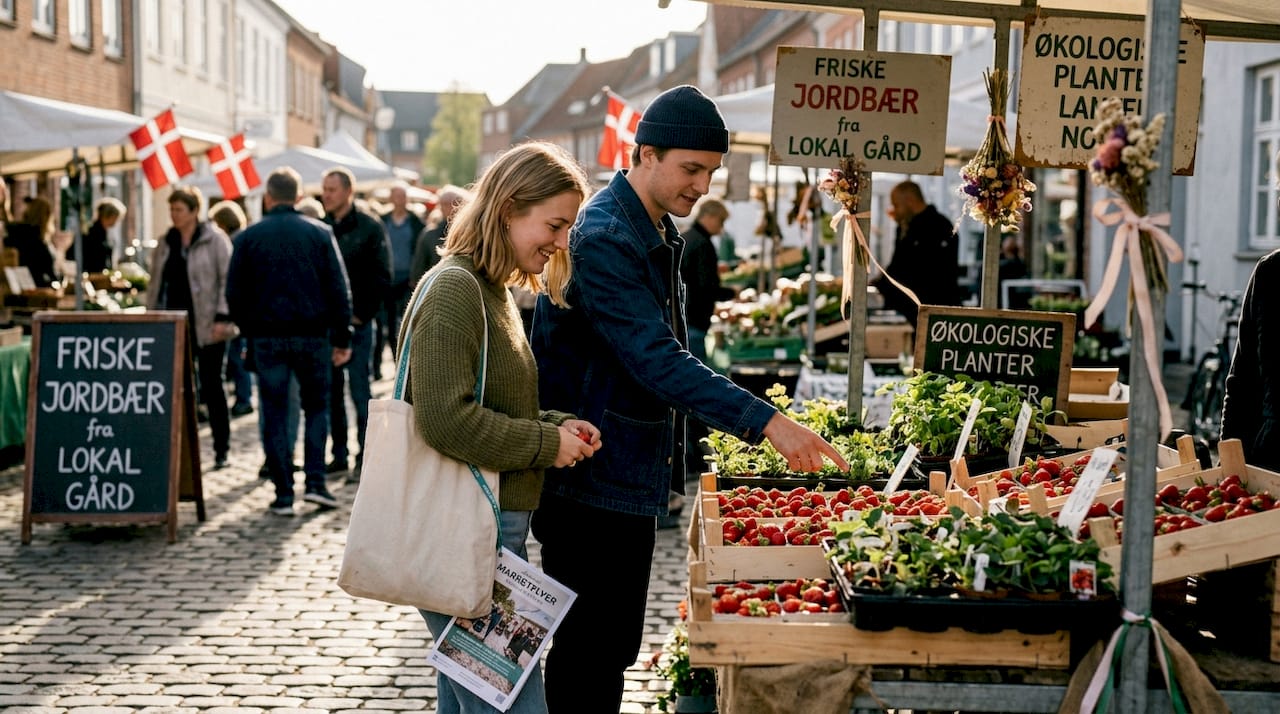
It's about more than money. When tourists visit an area in autumn or winter, they support local restaurants, accommodations, and shops that would otherwise struggle to stay open. The difference is whether a local coffee shop survives the winter or has to close in October.
The effects of seasonal activities on the economy and local communities are many:
- Extended tourist season Tourists spread over several months, which reduces pressure on infrastructure and the environment during the summer months.
- Stable jobs Local guides, craftsmen, and service staff can work all year round instead of only 3 months.
- Strengthening rural areas Coastal communities and villages that would otherwise be forgotten receive visitors and revenue
- Cultural preservation Local traditions and festivals survive because there is interest and participation from visitors.
- Sustainable tourism Fewer tourists at the same time mean less wear on nature and better experiences for everyone
| Season | Tourist activity | Important regions |
|---|---|---|
| Spring | Moderate, rising | Fyn, Zealand, Bornholm |
| Summer | High, concentrated | West Coast, Bornholm, North Zealand |
| Autumn | Make moderate | Jutland, Funen, Lolland-Falster |
| Winter | Lav, men voksende | Big cities, West Coast |
Thinking about experiences all year round It's not just good for your journey. It actively helps ensure that the places you love to visit still exist the next time you come. In seasonal travel it is therefore not just a personal gain, but a contribution to the Denmark you want to experience.
It is also worth noting that many of the most memorable travel experiences happen outside the peak season. Fewer people, more space, and locals who actually have time to talk to you.
Examples of seasonal activities in Denmark: Culture and nature all year round
When understanding the significance, most people choose to plan trips around seasonal activities. Here is concrete inspiration for what you can experience in Denmark throughout the year.
- Carnival (February) Denmark's answer to carnival. Children dress up, hit the pinata, and eat fastelavnsboller. Celebrations throughout the country with local events.
- Pancakes (May/June): One of the most underrated holidays in Denmark. Perfect for nature walks, picnics, and outdoor concerts.
- Roskilde Festival (June/July): One of Europe's largest music festivals with over 130,000 visitors each year.
- Mushroom hunting (September/October) Denmark's forests are filled with chanterelles, king boletus, and other edible mushrooms. A free and rewarding autumn activity.
- Tivoli's Christmas Market (November/December) One of the country's most visited winter attractions with Christmas decorations, mulled wine, and apple slices.
- Winter swimming (the entire winter): An increasing trend in Denmark. Hundreds of bathing associations along the coasts offer cold water and warm community spirit.
Seasonal activities such as spring festivals and winter markets are not just for Danes. International tourists are increasingly discovering that these experiences are far more authentic than the classic tourist attractions.
See here how the four seasons differ in types of experiences:
| Season | Cultural experiences | Nature experiences | Family suitable |
|---|---|---|---|
| Spring | Carnival, Pentecost | Hiking, birdwatching | Yes |
| Summer | Festivals, markets | Beach, cycling | Yes |
| Autumn | Autumn Festivals | Mushroom hunting, forest trips | Yes |
| Winter | Christmas markets, museums | Winter swimming | Partially |
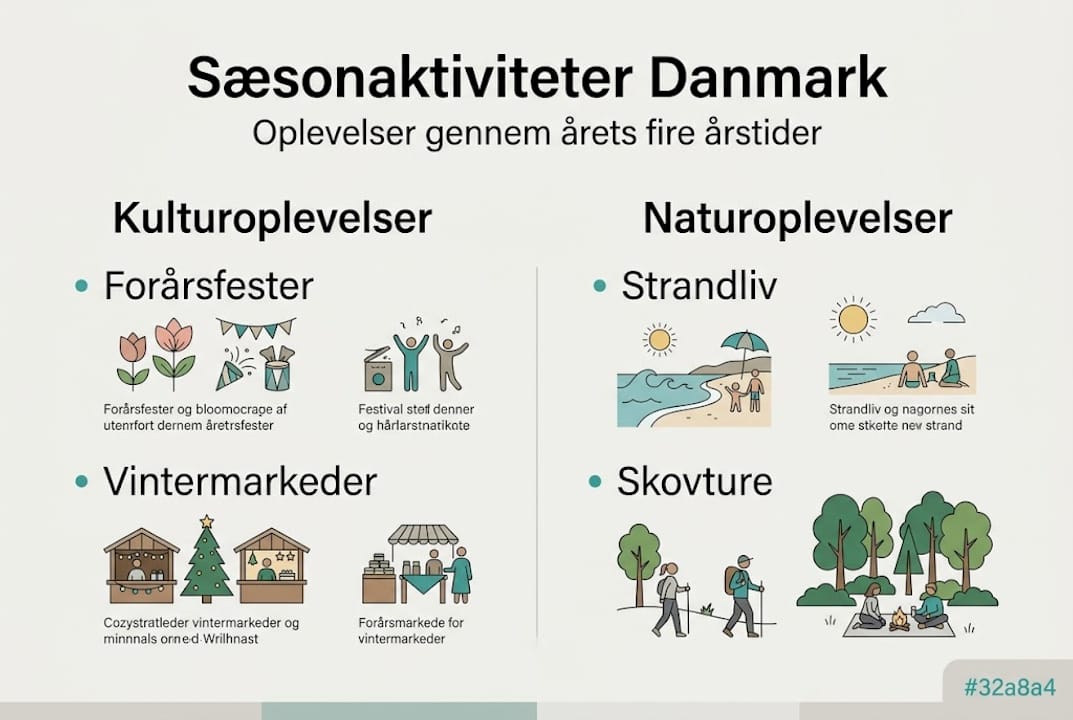
You can find plenty of examples of cultural activities og Outdoor experiences all year round, that suits all ages and interests. The key is to combine the cultural with the natural to get the full experience of what Denmark has to offer.
Professional tip: Always combine at least one cultural activity and one outdoor activity on the same trip. It provides variation and ensures that you get the best of both worlds, regardless of the weather.
How to plan trips with a focus on seasonal activities
Now that you have concrete examples, here is a simple step-by-step guide to planning your own seasonal trip in Denmark.
- Choose your season and region: Start by deciding when you will travel. Do you want to experience the freshness of spring in Funen, the summer festivals in Jutland, or the winter tranquility on Bornholm? The season determines a lot of what is possible.
- Map local events Check municipal websites, tourist portals, and local Facebook groups for events in your chosen period. Many of the best experiences are only announced locally.
- Plan a mixture of nature and culture: A good season trip contains both elements. A morning in the forest for mushroom hunting and an afternoon at a local museum is a perfect combination.
- Book accommodation well in advance Especially during popular seasons like Christmas and Easter, accommodation options are limited in the popular destinations. Book at least 2 months in advance.
- Set aside time for the unexpected: The best experiences are often those that were not planned. Give yourself free time to follow local recommendations and spontaneous discoveries.
- Check transportation options: Some regions are more accessible by car, while others have good train connections. Plan your transportation so that it fits your travel route.
Seasonal activities provide an opportunity to experience local culture and nature in an authentic way, which package holidays rarely can match. It requires a bit more planning, but the reward is a trip you'll remember for years.
In active holiday in Denmark It's not about visiting the most attractions. It's about delving into the places and experiences you choose. And if you're considering a trip during the cold months, there are plenty of Winter break tips to make the trip unforgettable.
Professional tip: Book popular activities such as guided forest tours, winter bathing with local associations, and Christmas marches at least 3 to 4 weeks in advance. The seats are limited and the demand is growing every year.
Therefore, you should reconsider traditional holiday habits
Most Danes and tourists are still planning their trip to Denmark in July. It is understandable. The sun is shining, the beach is calling, and everything feels lighter. But that way of thinking leaves a whole world of experiences untapped.
Imagine walking on a quiet autumn morning in a forest, where you are the only visitor. Or sitting at a Christmas market in a small Jutland town, where the stallholder knows everyone by name. There are experiences that simply do not exist in the high season because there are too many people and too little space for the genuine.
Seasonal activities support stable local jobs and more sustainable tourism. When you consciously choose to travel outside the high season, you are voting with your feet for a Denmark that functions all year round, not just in the summer months.
It is also a personal gain. Cheaper prices, shorter lines, and locals who are happy to see you. The seasonal experiences are not a compromise. They are often the best Denmark has to offer for those willing to venture a little outside the familiar.
This is how we can help you with your next seasonal trip
At Rejs in Denmark, we have gathered most of what you need to plan a trip that makes the most of the seasons. Whether you want to Plan your Denmark trip Whether you're starting from scratch or just looking for inspiration for next weekend, you'll find guides, activity overviews, and practical advice tailored to all seasons. You can also find experiences all year round through our interactive search, which filters by season, region, and age group. If you have children, our collection of seasonal activities for families A good place to start. We help you make your next trip an experience you'll remember.
Frequently Asked Questions about Seasonal Activities in Denmark
What seasonal activities can I experience in Denmark in winter?
Winter markets offer cultural experiences such as Christmas markets, winter swimming, and visits to indoor museums and cultural events. Tivoli's Christmas market in Copenhagen is especially popular and attracts visitors from all over the world.
How do seasonal activities benefit Danish local communities?
Seasonal activities offset economic vulnerability and support local economies by creating stable jobs outside the peak season and extending the tourist season in rural areas and coastal regions.
How do I find local seasonal activities when traveling in Denmark?
Seasonal activities offer natural and cultural experiences throughout the country. Check local tourist portals, cultural centers, and event calendars for updates on festivals, markets, and nature excursions in your chosen region.
Are there any particular advantages to traveling in Denmark outside the peak summer season?
Season activities extend the season and provide unique experiences with fewer visitors, better prices, and more authentic contact with locals and Danish culture throughout the country.
Recommendation
- 7 tips for experiences all year round in Denmark for everyone – Travel in Denmark
- 7 inspiring examples of cultural activities in Denmark – Travel in Denmark
- What are seasonal experiences in Denmark? Guide 2026 – Travel in Denmark
- 7 inspiring activities for culture enthusiasts in Denmark – Travel in Denmark