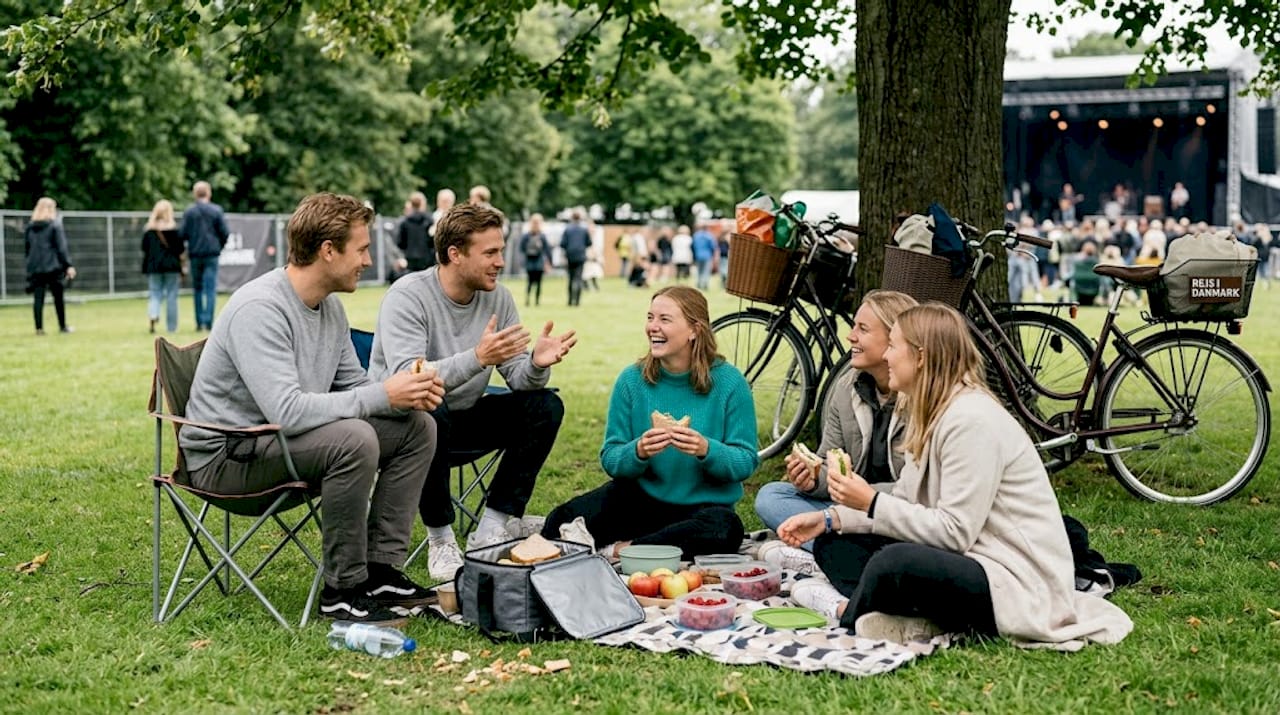
TL;DR:
- Festival selection can easily be confusing, but understanding genre, framework, and target audience helps in making the right choice.
- The three main types are music festivals, culture and art festivals, and nature and outdoor festivals, each with unique characteristics.
- Varying festival types each year can provide a broader understanding of Danish festival culture and create better experiences.
Denmark is full of festivals every year, and the offerings are greater than most expect. The problem arises when you open a guide and discover that one list sorts festivals by music genre, while another sorts them by settings such as camping or city festivals. Suddenly, you're sitting with three open tabs and no clear direction. This guide cuts through the confusion. We review the most important types of festivals, compare them directly, and give you the tools you need to choose exactly the experience that suits you and those you are traveling with.
Main Points
| Point | Details |
|---|---|
| More types of festivals | Danish festivals range from music and culture to outdoor experiences, so there is something for everyone. |
| Choice depends on the frame | Both genre and type (camping, family-friendliness, city festival) should be considered before planning the trip. |
| Annual overviews help | Open updated lists and guides to find the festival type that best matches your wishes. |
| Perspectives improve the experience | Change the festival type every year for new insights and memorable experiences. |
The most important categories: How festivals are grouped
From the broad festival picture of the intro, we zoom in on how festival types are defined in practice.
When you start researching Danish festivals, you quickly encounter a fundamental problem: not all guides use the same categories. Some categorize festivals by music genre, others by the physical setting, and yet others by target audience. It makes the comparison harder than it needs to be.
Danish festivals can be meaningfully categorized by music genre and mood, for example pop/rock, electronic music in city festival or club format, and metal with a heavier sound. This approach is intuitive for music lovers because you can quickly spot whether the festival matches your taste.
But the genre is only one dimension. Some guides typically use genre as the primary typology, while others use frameworks such as families, camping enthusiasts, or city festivals without camping as a starting point. It directly affects which festivals you even discover as relevant. If you choose a guide with a genre focus, you risk overlooking a fantastic camping festival because it didn't fit into the genre category.
The three overarching approaches to categorizing festivals:
- Genre access: Pop/rock, electronic, jazz, metal, classical. Quick to match musical taste.
- Entry access Camping, one-day festival, town festival, indoor. Focuses on the practical experience.
- Target audience access Family-friendly, adult audience, niche enthusiasts. Important when traveling with children.
A good example of overlap is Roskilde Festival. It is both a pop/rock festival with a hugely diverse program and a classical camping festival, where the campsite is part of the experience itself. If you choose to see it as a camping festival, you prioritize accommodation and community. If you choose the genre lens, you primarily look at the names on the poster.
Professional tip: Use both lenses when choosing a festival. Ask yourself: "What is my most important criterion, the genre or the framework?" That answer alone can eliminate half of your options and make the decision much easier.
The overlap is actually a strength. That means Danish festivals are rarely one-dimensional. A metal festival can easily have a camping site and family activities during the daytime, while a pop festival can be held in the city center without a single tent pole in sight. The best approach is to keep both categories in mind and use them as filters in combination, just like you can do with season, price, and age group if you are planning a family adventure in Denmark.
It is also worth mentioning that the framework largely defines your overall experience. Two festivals with identical lineups can feel completely different, depending on whether you sleep in a tent, stay at a hotel nearby, or go home the same evening. Understanding which framework suits you is just as important as knowing the genre.
Musikfestivaler: Fra pop/rock til metal
Once the frameworks and genres are in place, we get closer to the variations of music festivals.
Music festivals form the core of the Danish festival summer. They attract hundreds of thousands of visitors every year and cover a wide range of sounds, moods, and audience types. Understanding the differences helps you choose more accurately.
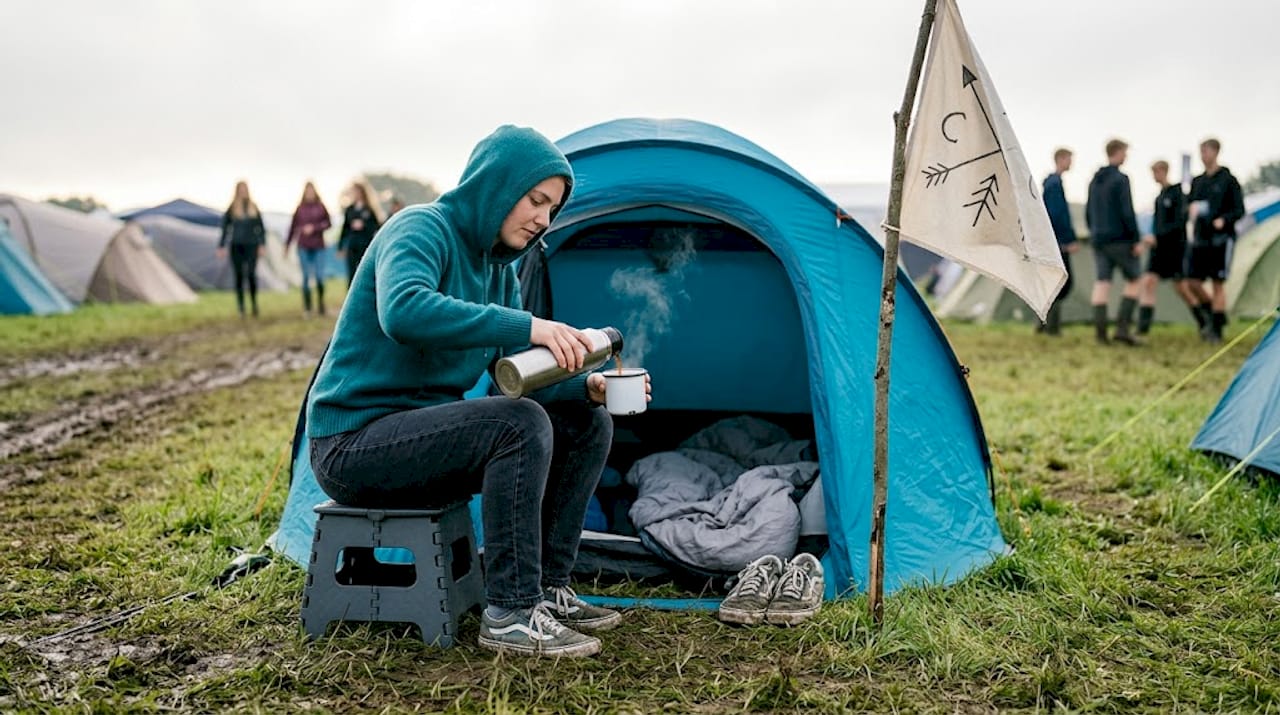
Examples from Danish guides include pop/rock festivals such as Roskilde, Smukfest, Tinderbox, NorthSide, Nibe, Skive, and Vig, the electronic music scene represented by Distortion in Copenhagen, and the metal scene at Copenhell. It is a broad field, and There are ongoing overviews of many types of festivals., which music fans use as a basis for navigating the selection.
The three primary types of music festivals:
- Pop/Rock Festivals Wide apple, varied program, audience from teenagers to middle-aged. A typical camping format with several days.
- Electronic festivals and city parties Focused on urban environments, shorter duration, strong emphasis on nightlife and dance floors. Distortion is the clearest example.
- Metal and harder sound: Niche and loyal fan base, intense sense of community, often combined with camping and merchandise culture.
Below is a direct comparison of the three types:
| Festival type | Typical duration | Frame | Mood | Examples |
|---|---|---|---|---|
| Pop/Rock | 4 to 7 days | Camping or park | Broad, festive | Roskilde, Smukfest, Tinderbox |
| Electronic/Street Festival | 1 to 3 days | Community environment, club | Intense, urban | Distortion |
| Metal/hard sound | 3 to 4 days | Camping or arena | Niche, energetic | Copenhell |
Pop/rock festivals are the most accessible category for first-time visitors. They have a broad program, good infrastructure, and attract an audience that spans a wide range of ages and backgrounds. Roskilde Festival is the most well-known example internationally, but Smukfest in Skanderborg offers a forest setting that provides a completely different atmosphere, even though the music lineup can be just as strong.
Electronic festivals like Distortion fundamentally differ from camping festivals. It's not about setting up camp, but about being present in the urban space. Distortion extends over several days in the streets of Copenhagen with free daytime programs and paid nighttime events, creating a spontaneous, urban energy that camping festivals rarely can replicate.
Metal festivals like Copenhell have a different kind of community. The publication is loyal and knowledgeable, and there is a strong cultural identity linked to the genre. It's not a festival you attend half-heartedly, but precisely that intensity creates unforgettable experiences for those in the target group. Do you want to combine the festival with family activities In the area, it is smart to plan the daily schedule well in advance.
Culture and Art Festivals: Performance and Creativity
From musical diversity, we shift to festivals focused on culture and creativity.
Not all festivals are about music. An increasing part of the Danish festival scene is dedicated to performing arts, performance, visual arts, and experimental formats. These festivals are often smaller than the big music events, but they offer an intimacy and a creative depth that are hard to find elsewhere.
Iscene describes festivals with a focus on performance and stage artincluding events such as Toaster Performance Biennale and SPOR festival. These festivals cater to audiences seeking more than just entertainment. They invite participation, reflection, and creative exchange.
Typical elements of culture and art festivals:
- Performing arts and theater Performances in unconventional spaces, street performances, and immersive shows.
- Visual arts and exhibitions Temporary installations, workshops, and collaborations between artists and the audience.
- Music in context New music, experimental sound, and interdisciplinary projects that combine sound with visual elements.
Cultural and art festivals are not only for art connoisseurs. They are for curious people who want to experience something they've never seen before. This starting point applies to many of the festivals that appear in the spring and summer seasons.
The most distinctive feature of these festivals is the framework. While a large music festival can have 80,000 guests in one day, a performing arts festival might attract 2,000 over several days. It allows for genuine conversations with the artists, time to immerse oneself, and an experience that feels more personal.
In terms of scale, cultural and art festivals are often more affordable than large music festivals. Single tickets, day passes, and in many cases free access to parts of the program make them accessible to a wide audience. It makes them a strong choice for you who want a festival experience without the big festival budget.
This is also where the thematic festivals are located. Film festivals, literature festivals, and food festivals belong to this broader culture category. They gather people with a common interest and create frameworks for immersion rather than pure entertainment. Are you planning a family outingA cultural festival with workshops and creative activities can surprisingly be a good choice, even for children.
An important practical point is that culture and art festivals rarely require the same logistical preparation as large music festivals. You don't need a tent, sleeping bag, or packed lunch for three days. A day trip is often sufficient, and many festivals are held in the cities, which makes transportation and accommodation significantly easier.
Nature and outdoor festivals: Experiences in the open air
Next, we explore the festival types where nature plays the main role.
Nature and outdoor festivals are a category of their own. Here, it's not the stage that is the center. It is the landscape, the weather, and the physical activity. These festivals gather people who want to step out of their comfort zone and into nature, and they offer a festival experience that is fundamentally different from all other types.
Visit Fjordlandet describes the Danish Outdoor Festival as an example of a festival that prioritizes nature and outdoor experiences over a music poster. It is a concept that is growing in popularity because Danes are increasingly seeking experiences that combine community with movement and fresh air.
Practical preparation for a nature and outdoor festival:
- Check the weather forecast carefully Layer gradually, as temperatures can vary significantly, even in the summer months.
- Book early accommodationMany nature festivals take place in areas with limited capacity at campsites and nearby accommodations.
- Ensure suitable footwear, because the terrain is often uneven and can become muddy when it rains.
- Check the transportation options In good time. Many nature festivals are located in rural areas without direct train connections, and parking may be limited.
- Include children's needs in the planningSince many outdoor festivals have activities for all ages, but require children to be ready to move a lot.
Nature festivals appeal to a broad audience. Familiar with active children, experienced hikers, mountain bikers, and people just wanting a break from city life, everyone finds something to take home. The program typically includes guided tours, workshops in outdoor activities, kayaking, climbing, and nature interpretation.
Professional tip: Combine an outdoor festival with a visit to the nearby natural area the day before or after the festival. You're still in the area, and it gives the whole trip an extra dimension that you rarely regret.
The special thing about nature festivals is the sense of community. When everyone has been out in the same elements, worn in the same hills, and shared the same views, conversations and relationships arise that are rarely formed in a tent area at a large music festival. It is a quieter, but often more persistent experience.
Do you find it difficult to decide which activities for the whole family The one that best suits your level is an outdoor festival, which is a good starting point. Activities are usually tailored to many levels, and the organizers are accustomed to helping guests with different experiences.
Our view on festival choice: Make a difference in typology and frameworks
When we have the different festival types and frameworks in place, it's time to contextualize your choice.
It's tempting to believe that choosing a festival is about finding the one with the best lineup or the lowest price. But from our experience of covering Danish festival experiences, it is the framework that determines whether you look back on the weekend with a smile.
Typologies make a real difference: whether you search primarily by genre or framework as a filter, you discover fundamentally different festivals as relevant. That insight is underrated. A person starting their search with "camping festival" may find the perfect experience, while a person searching for "pop/rock" completely overlooks the same festival.
Our stance is clear. You should ask yourself three questions before buying a ticket. What is more important to you: the genre or the framework? Who are you traveling with, and what do they need? Are you ready to try something new, or do you want the familiar?
The best advice we can give is to change the type of festival every year. Camping festival one year, a town festival next year, and maybe a culture festival in the third year will give you a completely different understanding of what Danish festival culture really can be. It also strengthens Gathering and learningif you travel with family because you experience something new together rather than repeating a habit.
Plan your festival experience: Get help with transportation, activities, and family-friendly choices
After the perspective on choosing the type of festival, you now receive concrete resources for your festival planning.
Choosing the right festival type is the first step. The next step is to plan the trip itself, and this is where many festival-goers lose momentum. Traveling in Denmark makes it easier to turn inspiration into action. Use our guide to Travel planning in Denmark to help structure your festival trip from start to finish, whether you're going to Roskilde, Skanderborg, or a natural area in Jutland. Our Transport guide for the festival Helps you find your way without a car and stress. And are you looking for family-friendly festival activitiesYou will find concrete suggestions tailored for children of all ages.
Frequently Asked Questions
How do I find a festival that suits my music taste?
Start by identifying your primary genre and use it as a filter. Pop/rock, electronic, and metal are the three typical main categories in the Danish festival overviews.
Are there festivals for children and families?
Yes, and the supply is larger than many expect. Many festival types including Camping and one-day festivals have family-friendly activities, and outdoor festivals are particularly suitable for families with active children.
When are most festivals held in Denmark?
Most of the festivals are held in spring and summer. Spring and summer festivals dominate the calendar from May to August, but some cultural and indoor festivals are also held in the fall.
Which festivals are best suited for camping?
The classic pop/rock festivals like Roskilde and Smukfest are the most well-known camping festivals in Denmark and have well-functioning camping facilities with a strong festival culture.
Recommendation
- 7 inspiring examples of cultural activities in Denmark – Travel in Denmark
- 7 tips for experiences all year round in Denmark for everyone – Travel in Denmark
- Plan Family Adventure Denmark: Guide to Unforgettable Experiences – Travel in Denmark
- Plan a weekend trip in Denmark – Achieve success with your travel plan – Travel in Denmark