
TL;DR:
- Denmark recognizes gastronomy as art, which enhances travelers' cultural understanding.
- Madoplevelser i Danmark spænder fra fine dining til lokale markeder, alle autentiske og tilgængelige.
- Gastronomy is the key to deeper memories, social contact, and Denmark's cultural storytelling.
Denmark is doing something that no other nation has done: Recognized gastronomy as an art formIn line with music and visual arts. It's not just symbolic. It fundamentally changes what it means to visit Denmark as a tourist. When food is elevated to artistic expression, each meal becomes an experience with layers and meaning far beyond hunger. This article guides you step by step to understand, choose, and plan gastronomic experiences that transform your trip to Denmark from good to unforgettable.
Main Points
| Point | Details |
|---|---|
| Crazy former travel experience | Danish gastronomy elevates your journey and creates strong emotional memories. |
| Width from gourmet to popular | You can choose between world-class fine dining and popular food events – there are experiences for everyone. |
| Authenticity gives depth | Food and markets open up local culture and make your adventures authentic. |
| Plan for optimal yield | Book restaurants and events early and combine with local tips for a unique food theme. |
Why gastronomy is the key to the travel experience in Denmark
Mad is not just fuel. For a traveler, it is a direct way into the soul of the country you visit. In Denmark, it is particularly evident. Her handler et måltid sjældent bare om at spise sig mæt. It's about season, origin, craftsmanship, and community.
Empirical studies Shows that gastronomic experiences enhance tourist satisfaction, destination image, and loyalty through authenticity and emotional connection. In other words: You remember the trip better, you recommend the destination to others, and you are likely to return. It is not a game of coincidences. It is the direct effect of eating food that tells you something true about the place.
Danish food culture is built on a clear philosophy. Seasonal products, local producers, and minimal manipulation. It's not just a trend. There is a deeper understanding that local food experiences carries stories of coastlines, agriculture, and traditional crafts that cannot be copied in other countries.
A genuine gastronomic moment occurs when the food tells you more about the place than a museum ever could.
Here are three key reasons why food experiences are so crucial to your journey in Denmark:
- Authenticity creates deeper memories. When you eat a open-faced sandwich made by a local butcher in Ribe, it is a cultural story you carry home with you.
- Mad makes contact. Hotel hospitality and food They are two sides of the same coin. Many Danes open up when the conversation turns to food.
- Gastronomy enhances the destination's image. Although Geranium has put Denmark on the world map, it pulls in all directions. Even a simple fish dish in Hanstholm benefits from Denmark's gastronomic reputation.
Imagine arriving in Copenhagen without a single meal plan. You eat at random tourist restaurants and skip the local markets. You travel home with souvenirs, but no real memories of taste and atmosphere. That is exactly the scenario that good food experiences prevent.
The mad experiences work as cultural experiences, that binds your journey together. They provide structure, they create narratives, and they give you a body to put on abstract concepts like "Danish lifestyle" and "Nordic identity."
Danish gastronomic experiences: From gourmet to popular
One of the biggest misconceptions about Danish cuisine is that it is reserved for the privileged. Yes, Noma and Geranium require reservations months in advance and prices that match a flight ticket to Tokyo. But Danish food culture is much broader than that.
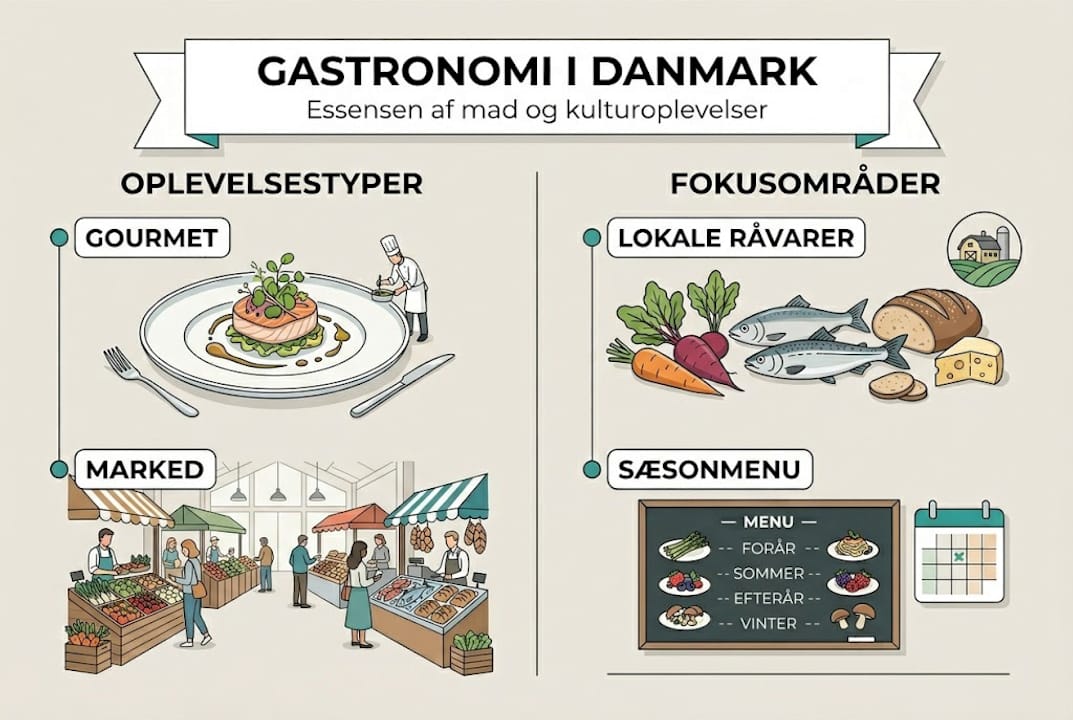
Folk and gourmet experiences covers a wide spectrum, from fine dining to open markets and oyster safaris, and they are accessible to very different tourist segments. The point is that authenticity is not reserved for the expensive end. You can experience just as much authenticity at a fish market in Esbjerg as behind a Michelin table in Copenhagen.
Here is an overview of the primary types of gastronomic experiences in Denmark:
| Experience type | Price level | Switch to | Examples |
|---|---|---|---|
| Fine dining | High (800-2500 kr.) | City enthusiasts, couples, business travelers | Noma, Geranium, AOC |
| Regional restaurants | Middle (200-600 kr.) | Culture enthusiasts, families | The Mill House, Ruth's Hotel |
| Local markets | Low (50-200 kr.) | All segments | Torvehallerne, Aarhus Street Food |
| Oyster safari and nature tours | Low to moderate | Adventurers, families | The Wadden Sea, Limfjord |
| Guided food tours | Middle (300-700 kr.) | Curious first-time visitors | Copenhagen, Odense, Aarhus |
Professional tip: Book fine dining at least three months in advance. Folk markets rarely require booking, but check opening hours and seasons in advance, as many are only active during the summer months.
It's worth considering what you really want to get out of your madhjerteoplevelserDo you want the technical precision and sensory surprise of a Michelin meal? Or would you rather stand with mud on your boots and gather oysters yourself by the Limfjord? Both are valid. Both are genuine.
Here is what you can specifically expect from each type:
- Fine dining gives you the technical masterpiece and a story about Danish raw material quality at the highest level.
- Regional restaurants serves inheritance and tradition, often with proud stories about local suppliers.
- Markets and street food gives you pulse, contact, and the opportunity to taste a wide variety in one day.
- Nature-based experiences An oyster safari combines food with landscape and provides a holistic experience that is hard to forget.
- Guided food tours It is the most effective way to understand a city's food culture in a short time.
Please take a closer look regional specialties from all over Denmark, when you plan the route. It makes a big difference to know what each region is known for before you set off.
This is how gastronomy becomes a gateway to Danish culture
Mother is never politically neutral. It always reflects something about society, history, and identity. This is particularly noticeable in Denmark. The new Nordic wave was not just a culinary uprising. It was a cultural statement about what Denmark wants and can.
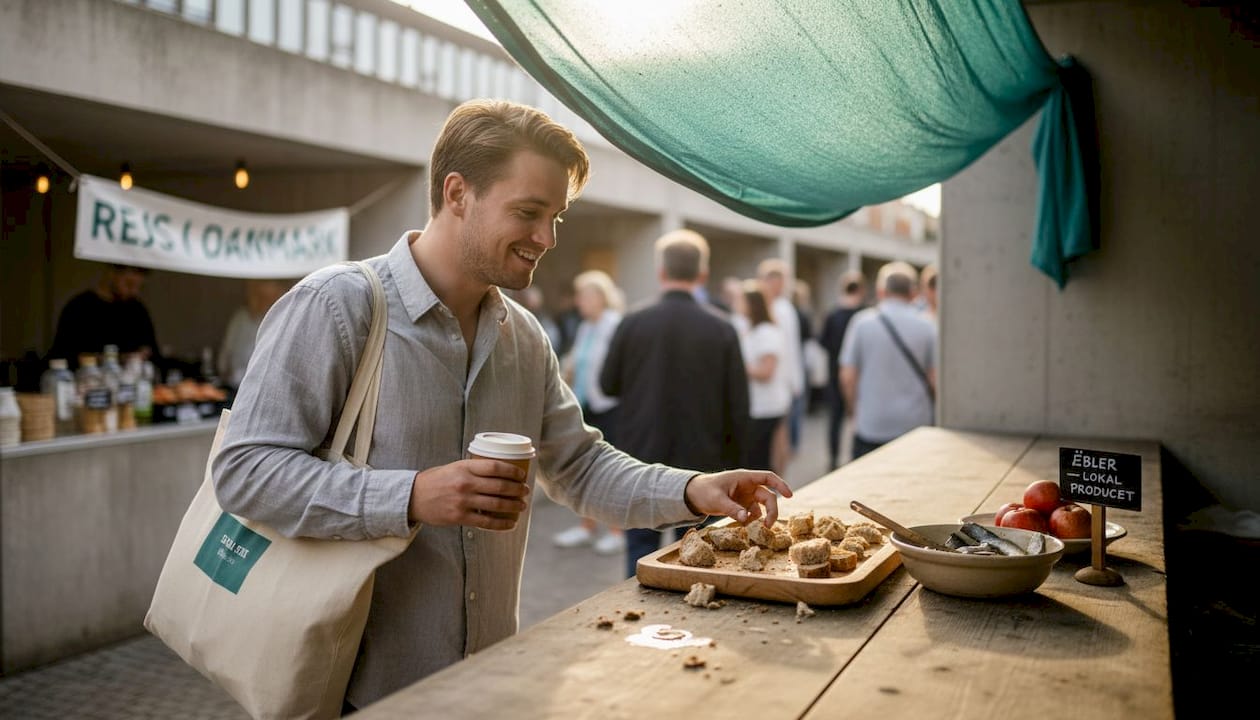
Gastronomy is recognized as central to cultural identity and attracts tourists specifically to food, restaurants, and culinary storytelling. That means when you sit down to a Danish meal, you're not just a hungry tourist. You are part of a cultural story.
Let's make it concrete. Here is an overview of what different food experiences actually open up culturally:
| Mad experience | Cultural insight | What you learn |
|---|---|---|
| Open-faced sandwiches at an old pub | Working class food traditions | Craftsmanship, simplicity, pride |
| Oyster safari in the Wadden Sea | Coastal culture and natural resources | Sustainability, seasons, local business |
| Christmas party experience | Social cohesion | Traditions, community, holiday culture |
| Visit to the local dairy | The role of agriculture in Danish identity | Production, natural conditions, regional pride |
Deep experiences open a dialogue in a way that very few other things do. When you ask a local what people actually eat at a traditional Danish Easter lunch, it's rarely a short answer. You get a story. Maybe about grandma, maybe about the local brewery, maybe about how the fish always came directly from the neighbor.
Professional tip: Always ask locals about their personal favorite foods, not what they recommend to tourists. They are two very different questions, and the first gives you much more genuine insight than any menu.
Eat cultural activities In Denmark, it is actually organized around food and the seasons. Autumn markets, fishing days, cooking classes, and local festivals are all about celebrating an ingredient or a tradition. They are not arranged for tourists. They are organized for the local community, and that is exactly what makes them valuable.
Innovation in guest experiences shows that tourists are increasingly seeking participatory and meaningful experiences rather than passive visits. Food is the perfect medium for this because it involves all the senses and requires a certain degree of openness and curiosity.
Remember, the best culinary experiences occur in the tension between preparation and chance. You can plan a food tour and end up standing in a backyard garden drinking homemade mead with a beekeeper. This is Denmark at its best.
Smart tips to make the most of gastronomic experiences in Denmark
Now you know why food is essential and what types there are. The next step is to translate knowledge into a concrete plan. Here is what actually works.
Step by step to a food-themed Denmark trip:
- Choose your food theme. Do you want to focus on gourmet, street food, nature experiences, or traditional homemade food? A clear focus makes planning much easier.
- Map the season. Danish gastronomy is deeply seasonal. Summer offers strawberries, fresh herbs, and open markets. Winter brings game meat, root vegetables, and Christmas traditions.
- Book in good time. Popular restaurants and guided food tours sell out quickly, especially during the high season from June to August.
- Combine food with other experiences. A visit to a local museum can be combined with lunch at a nearby restaurant with a local profile. One amplifies the other.
- Be open to the unexpected. The best food experiences are rarely the ones you planned most carefully. Leave room for spontaneity.
Denmark's recognition of gastronomy as an art form may in the future open up new support schemes, events, and collaborations that further strengthen gastro-tourism. Already now we see that new events and experiences are emerging with a focus on culinary creativity.
Here is a list of practical things to remember before you leave:
- Season: Check what's in season when you visit. Rescuer made with seasonal ingredients simply tastes better and is more authentic.
- Reservation: Restaurants with Michelin stars typically require reservations two to four months in advance.
- Allergies and dietary habits: Danes are generally good at handling allergies and vegetarian or vegan needs, but please inform us in advance when making a reservation.
- Vegetarian and vegan: The supply has exploded in recent years, especially in the larger cities. Ask specifically for plant-based menus.
- Pricing and budgeting: Set a realistic food budget. Expect that food can account for 25 to 35 percent of the total travel budget if you prioritize gastronomic experiences.
Are you into culinary experiences with the rhythm of the seasons? Then you can Christmas traditions og Easter traditions gives you a very special window into Danish culture. The Christmas lunch's many dishes and Easter's herring traditions are two of the most authentic culinary experiences you can have in Denmark.
Professional tip: Always combine a visit to a local food market with a guided food tour. Markets provide breadth and spontaneity, while the food tour provides context and stories. Together, they give you a complete understanding of the city's food culture in a very short time. Eat holiday parks in Denmark also offers family-friendly dining experiences that combine activity with local food.
Perspektiv: Derfor er madoplevelser Danmarks største skjulte rejseværdi
Here is a truth that most travel guides overlook: Food is not just a theme you can add to your trip. It is the very key to understanding what Denmark is.
We see many travelers who spend days at museums and sights and almost no time sitting down to eat with intention. It is the biggest mistake you can make as a tourist in Denmark. A simple meal at a local fisherman in North Jutland tells you more about Danish mentality and quality of life than a whole day in a cultural-historical museum.
The surprising thing is that it doesn't even require a big budget. It requires curiosity. A chat with a greengrocer at Torvehallerne, a question to the chef at a modest local restaurant, a visit to a farm shop out in the countryside. These moments are free or almost free, and they give you access to more local food experiences and the authentic Danish atmosphere.
Denmark is currently redefining itself gastronomically, and this gives you as a traveler a historic opportunity to experience something that is in transition. It is not a museum of the past. There is a lively, innovative food culture in motion.
Plan your food adventure in Denmark with our expert advice
Now you have the foundation. You know why gastronomy is essential, which types suit you, and how to plan smart. The next step is to translate it into a concrete travel plan.
At Rejs in Denmark, you will find everything you need to organize your food experiences from start to finish. Our Guide for visitors gives you an overview of what awaits you around the country, and our practical checklist Ensures that you don't forget anything important before you leave. Are you ready to make the final plan? Our guide to, how you plan your Denmark trip, guides you step by step through the entire process, from choosing the destination to booking the best food experiences.
Frequently Asked Questions about Gastronomic Experiences in Denmark
How does gastronomy affect tourists' experience of Denmark?
Gastronomic experiences enhance tourist satisfaction and destination image by creating emotional connections and authenticity that tourists remember long after returning home.
What food experiences are best for first-time visitors?
Local markets, street food, and classic restaurants provide easy access to authentic Danish cuisine. Folk experiences such as oyster safaris and local markets are accessible to broader segments than fine dining.
How do you book unique gastronomic events in Denmark?
Most restaurants and guided food tours can be booked directly online, and you should reserve at least two to three months in advance for popular experiences during the high season.
Is Danish gastronomy only for gourmet enthusiasts?
Not at all. Folk-style food experiences such as markets, fishing days, and local events offer rich, authentic impressions for all types of travelers, regardless of budget and culinary experience.