TL;DR:
- Understand the family's needs and wishes, including age, interests, and special needs.
- Use systematic tools to search for, evaluate, and select activities suitable for the whole family.
- Plan practically with booking, transportation, and catering to create a stress-free family outing.
Planning an outing where all family members are happy, secure, and engaged is harder than it sounds. The children have different interests, ages vary widely, and it can quickly become overwhelming to sort through the sea of options Denmark offers. Many amateurs spend hours on research and still end up with an experience that doesn't quite hit the mark. This guide provides you with a step-by-step approach to finding, evaluating, and planning family activities that work for everyone. From needs assessment to evaluation, you will receive concrete advice and avoid the classic pitfalls.
Main Points
| Point | Details |
|---|---|
| Check the family's needs | Activities should match the family's age, interests, and any special requirements. |
| Bridge construction guides and portals | Digital resources make it easier to find and compare family-friendly experiences. |
| Plan practically and inclusively | Book well in advance, consider food and transportation, and ensure everyone can participate – including children with special needs. |
| Evaluate the experience | Learn from your days together so you can avoid mistakes and achieve even better results next time. |
Identify the family's needs and wishes
The first step is to pause and ask the right questions. Which age groups are involved? A four-year-old and a teenager have very different needs, and it is unrealistic to expect that one activity will suit both perfectly without a bit of preparation. Begin by making a short list of what each family member finds funny, and find the overlaps.
Here are the most important factors to map out before you start your search:
- Age group and development stage: Are there young children who need a rest break, or teenagers who want to be physically challenged?
- Interests and preferences Nature, culture, sports, creativity or combinations?
- Special needs: Age limits and accessibility Must be checked for children with special needs so that no one experiences being excluded.
- Budget What is the budget per person and in total? A day trip is cheaper than a whole weekend.
- Outdoor vs. indoor: Weather and seasons play a big role in Denmark, and a plan B is always wise.
- Transport time: How far is the family willing to drive or travel?
When you have answers to these questions, you have a solid foundation to build on. It is much easier to search purposefully than to browse randomly through activity catalogs.
Also consider the scope. A day trip requires much less coordination than a weekend with overnight stays. If the family rarely goes on trips together, it is sensible to start small and build up experiences. From child-friendly attractions In Denmark, it ranges from free nature trips to larger theme parks, and there is something for every taste and budget.
Professional tip: Make a simple chart with the family members' names and write down three things each of them likes. The overlaps are your goldmine and provide you with the starting point to find family activities for all ages, that actually works in practice.
Search for and evaluate activities with a family-friendly focus
When you know the family's needs, you can start looking for activities. It's about using the right tools and systematically comparing options rather than choosing the first and best.
Organizations like FMKB hold events focused on accessibility and family-friendliness, making them a good resource, especially for families with children with special needs. Check local tourist guides, municipal websites, and travel portals that filter by age and price.
How to compare activities effectively:
| Criterion | What you need to check |
|---|---|
| Price | Price per person, possible discounts for children |
| Age limit | Minimum and maximum age |
| Availability | Wheelchair access, toilet facilities, resting areas |
| Duration | How long does the activity take? |
| Season | Is the activity available all year round? |
| Transport | Is public transportation or a car necessary? |
Actively fill in the table. Do not proceed with an activity until you have filled in the most important fields. It takes five minutes and saves you from unpleasant surprises on the day.
Here is a step-by-step guide to sorting and choosing:
- Make a list of 5 to 8 potential activities based on the family's interests.
- Filter by budget and age limits. Cross out those that do not match.
- Check the availability and practical conditions for the remaining ones.
- Prioritize the remaining activities based on the family's preferences.
- Choose the top one and book it. Keep number two as a backup.
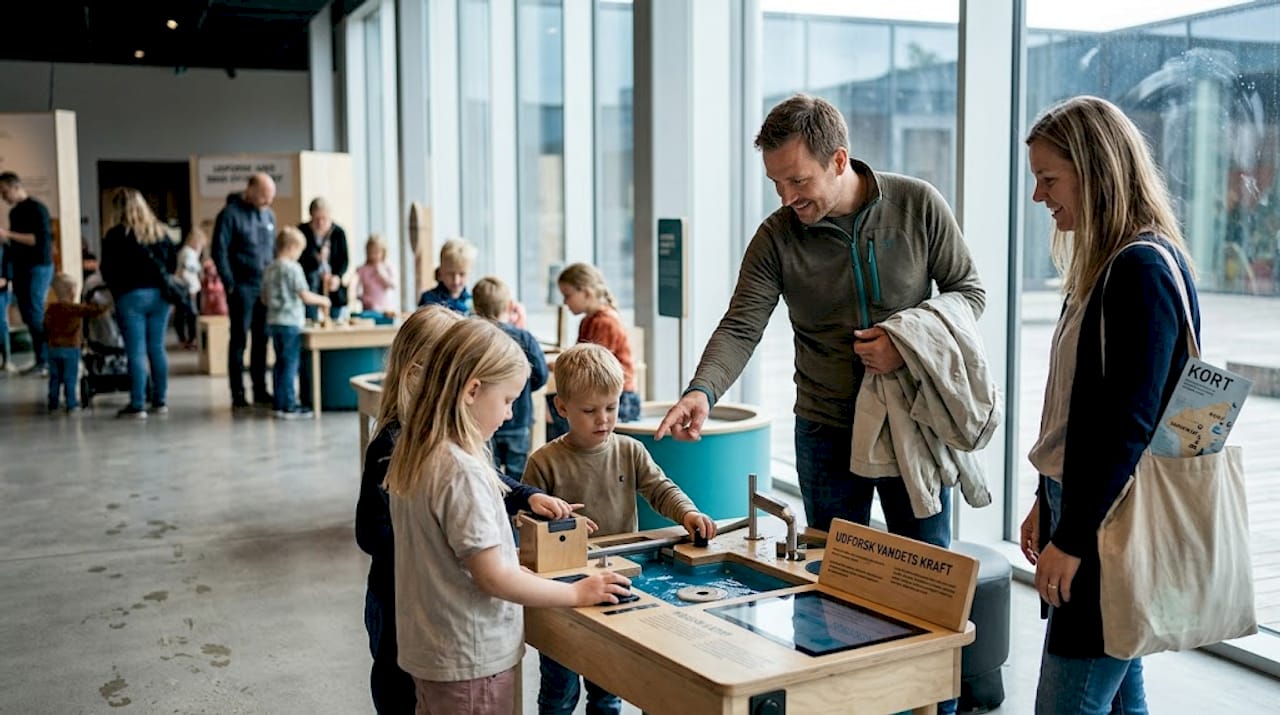
Denmark has many family-friendly destinations, that combines nature, culture, and entertainment. Cities like Odense, Aarhus, and Roskilde have plenty of opportunities, and many of them best museums for children offers interactive exhibitions that engage all ages.
Professional tip: Read reviews from other families instead of general tourist reviews. Furthermore, the parents' experiences with the queue, the facilities, and the children's reactions are far more relevant than a general assessment of the place.
Plan practically: booking, transportation, and food
Once you have found activity(ies), it is time to plan the practical part. Here it is, most families step incorrectly, and it is also here that the stress level rises unnecessarily.
FMKB arrangements may have specific access requirements and recommendations for food and transportation, so always read the practical information carefully before attending.
Here are the most important practical points to keep in mind:
- Book in good time Popular activities and attractions are quickly fully booked, especially during summer holidays and public holidays.
- Check transportation options: Public transportation is often cheaper and more relaxing. Check if there are direct connections.
- Parking: If you are driving, you should find parking conditions in advance. It saves frustrations upon arrival.
- Food and catering A pack with snacks and drinks. In many places, restaurant prices are high, and hungry children create a bad atmosphere.
- Rest breaks: Intentionally plan breaks into the schedule, especially with younger children.
| Practical point | When you do it |
|---|---|
| Booking of tickets | 2 to 4 weeks before |
| Transport planning | 1 week before |
| Dad's lunchbox | The evening before |
| Check the weather forecast | 2 days ago |
| Inform the family about the program | The day before |
Preparing thoroughly is not overdoing it; it is respect for the family's time and energy. A well-planned day allows for spontaneity, while a poorly planned day ends in stress and disappointment.
For those familiar with a tight budget, there are many cheap activities In Denmark, where experiences are not compromised. If you wish to combine activities with overnight stays, there are good options at holiday parks around the country, geared towards families.
Professional tip: Make a simple checklist the evening before the trip. Inkluder: billetter, mad, tøj til vejret, lader til telefonen og eventuelle mediciner. It takes ten minutes and ensures that no one forgets the important thing at home.
Safety, well-being, and evaluation: how to get the best results
Once everything is planned, you should ensure well-being and evaluate the experience. Safety and well-being are not just about physical safety. It's about all family members feeling seen, heard, and included.
First and foremost: Make sure everyone knows what is going to happen. Surprises are fun for birthdays, but not on family outings with children who thrive on predictability.
- Explain the program: Tell the children what is happening, in what order, and when there is a break or meal.
- Set simple rules: Who do you hold in your hand, what do you do if you lose each other, and what do you say to an adult if something is wrong?
- Well-being for children with special needs Accessibility and preparation are crucial for children with special needs to gain the maximum benefit from the activity and not just be on the sidelines.
- Be flexible: The plan is a tool, not a contract. If a child is tired or upset, it's okay to adjust.
- Tag pictures and make memories Document the day in a way that involves the children.
What children remember is rarely the expensive attraction. They remember the atmosphere, the togetherness, and the small unexpected moments. Give space to them.
After the activity, the evaluation is at least as important as the preparation. Ask the family what worked well, what was difficult, and what you would do differently next time. It is a simple habit that makes you better at planning future trips.
Family holiday in Denmark It has many advantages, including short distances, safe environments, and a wide range of activities for all ages. Combine it with one active holiday in Denmark, and you have the ingredients for experiences that the family will talk about for years.
Professional tip: Create a small family log, physical or digital, where you note the activities you've tried and what you thought of them. It provides a fantastic overview when the next holiday is approaching, and the children love to flip back through it.
The challenge experts often forget: detailed planning and inclusion
Many guides focus on the major choices such as destination and activity type. But it is the small details that determine whether a day becomes a success or a disappointment. This is where we see the biggest difference between families that consistently have good experiences and those that struggle.
Inclusion is not a buzzword. It is a practical question of whether all family members can actually participate fully. Children with special needs require special attention to gain optimal benefit from activities, and it is the parents' responsibility to ensure that the activity is truly accessible and not just marketed as family-friendly.
Ask yourself: Are there stairs without alternatives? Are there sensory challenges such as loud music or bright lights? Is the staff trained to handle different needs? These questions are easy to ask in advance and difficult to handle on the day itself.
From child-friendly museums In Denmark, they are generally good at informing about accessibility, but it is still up to you to double-check the specific conditions for your family. A quick call to the attraction can save you from major disappointments.
Find more guides and plan the dream trip
Now you have a solid foundation for planning family activities that actually work for everyone. But there is always more to discover. On Rejs in Denmark, you will find continuously updated guides, concrete checklists, and plenty of inspiration for trips throughout Denmark. If you are new to planning Danish excursions, our Guide to Denmark for first-time visitors A good starting point. Ready to get started right away? Use our Checklist for a day trip or the more detailed Checklist for family outings, so you won't forget a single important point.
Frequently Asked Questions
How do I find activities suitable for children with special needs?
Check age limits and availability for each activity and use organizations with specialized focus. FMKB organizes safe events for children with special needs, where accessibility and inclusion are at the center.
What digital tools can help me find family-friendly activities?
Travel portals, municipal websites, and official tourist guides allow you to filter by age, price, and availability, so you can quickly find relevant experiences.
How can I ensure a safe and stress-free experience for the whole family?
Preparation and planning reduce stress and create security. Book tickets in advance, plan transportation, and ensure that all family members know the day's schedule before you leave.
How do I evaluate whether an activity was a success?
Have a talk with the family after the activity about what worked, and note any areas for improvement so the next trip will be even better.