TL;DR:
- Fishing experiences with children in Denmark are about activities by the water that promote community and learning. It requires preparation, appropriate equipment, and secure fishing spots to create good and safe experiences. Tang safari gives children direct contact with sea creatures and is a popular, safe form of nature study.
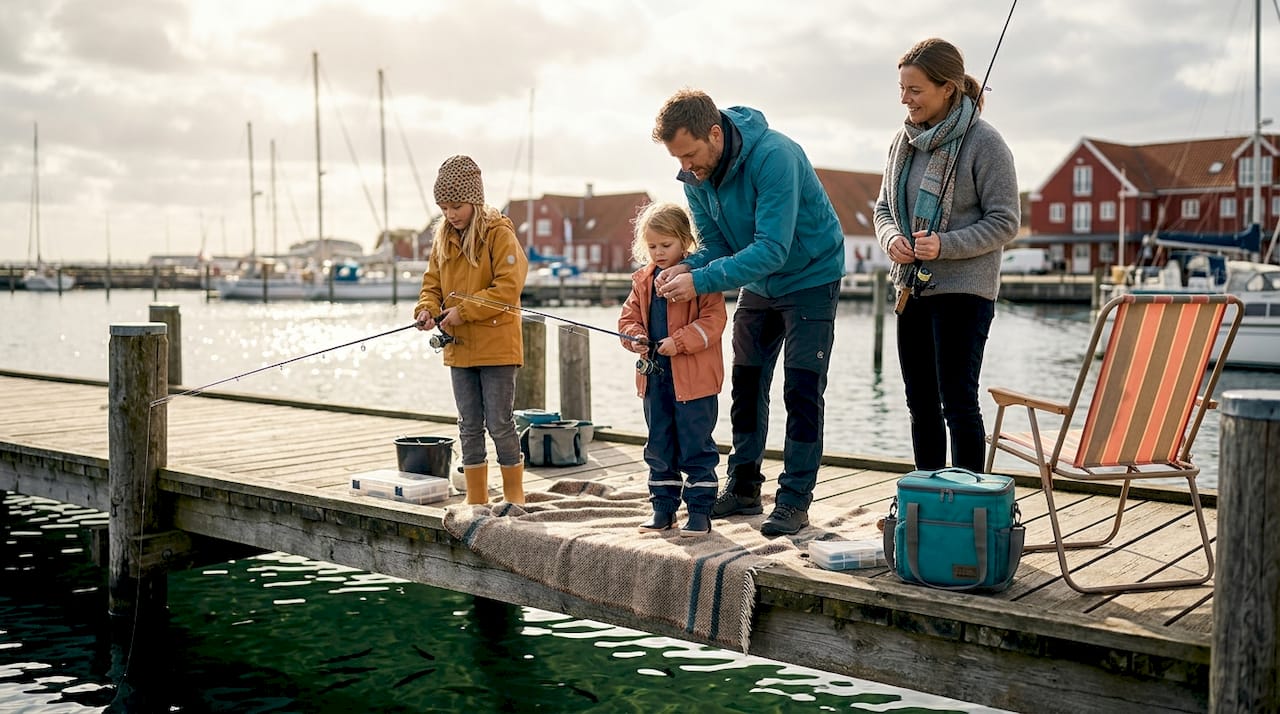
What are fishing experiences with children really? For many families, the image of an adult with a long fishing rod appears, but the reality is much more inviting. Fishing experiences with children is a collective term for all activities that bring children and water, fish, and nature together, whether it's harbor fishing, coastal beaches, or seaweed safaris. Family experiences strengthen togetherness and learning In a way that many other activities cannot match. This guide provides you with practical tips on safety, equipment, and the best places in Denmark, so that the trip is fun and safe for the whole family.
What are fishing experiences with children in Denmark
The concept covers a wide range. It could be morning fishing from a harbor in Kerteminde, an afternoon with herring and flatfish from a pier, or a seaweed safari along a shallow beach on Funen. The important thing is not catching big fish. The important thing is that children are active, curious, and confident by the water.
Recreational fishing is the recognized technical term for leisure fishing, and it precisely covers the activities that families typically seek. Fun fishing trips are about combining fresh air, movement, nature understanding, and community in one package. Children as young as 2-3 years old can participate in simple fishing activities when the equipment is adapted to their age and motor skills.
What distinguishes a good family fishing trip from a frustrating one is rarely the luck of the fish. It's about the atmosphere, the preparation, and the expectations. When you set realistic goals and pack the right backpack, the foundation for a good experience is laid.
Safety and preparation by the water
No fishing trip starts without a plan. And with children, it counts double. Child-friendly fishing spots are places with calm water, a shallow edge, and plenty of space to move around. Inner basins in harbors are ideal because the waves are minimal and the surface is manageable.
Here are the most important safety points to be aware of before you set off:
- Life jacket For all children under 12 years old. KID Universe recommends life jackets Maintain a safe distance from the edge as a minimum.
- Clear zones: Agree with the children exactly where they may stand and walk. A designated zone provides safety for everyone.
- Time: Choose morning or forenoon, when water and wind are typically calmer and fishing is active.
- Læser: Find a mole or a harbor wall that shields against the wind. The roe is more important than the perfect fishing position.
- Packing list: Wet wipes, extra clothes, a bucket with a lid, and a small cooler box. Good logistics by the water is what keeps children engaged instead of hungry and cold.
Professional tip: Never tag only one pole. Do you have two children and one fishing rod, the conflict arises before the first worm is on the hook. Let each child have their own simple equipment.
New rules for saltwater fishing from 2026
If you are looking for deep-sea fishing, there is an important update to know. From January 2026 Should recreational anglers register and report catches of selected species via Fisketegn.dk og RecFishing app. The rules apply whether the fish is released or kept. As an adult on a trip with children, it is your responsibility to have the registration under control before you cast the line. It takes a few minutes and does not disturb the experience itself.
Tools and methods for children of all ages
The choice of equipment is what most often determines whether children's fishing activities are a success or a long struggle against tangled lines and broken rods. Here is a clear procedure:
- For the youngest (2-4 years): Start with a simple bamboo stick or a short telescopic pole of two meters. No throwing mechanics. Just a tavern, a snake, and an eye on the fleet.
- For children aged 5-8 years Insert a 6-7 foot spinning rod with a reel size 2000-2500. Reel with line brake gives the child control over the line without spooling out of control.
- For children aged 9 and above: Now you can start learning basic knots like the bowline and the sheet bend. Practice them at home by the kitchen table before you are by the water.
- Street fishing for all ages Streetfishing is fishing in urban environments such as harbors and canals with minimal equipment. It is ideal for children because the throws are short, the fish are accessible, and the social element is significant.
- Orme vs. artificial lure: Always start with live bait. Trees are cheap, easily accessible, and work. Artificial bait requires more technique and is best for slightly older children.
Professional tip: Let the child put the worm on the hook himself, regardless of the grimaces. It is precisely these kinds of sensory experiences that make the fishing trip unforgettable and create pride.
The gadget choice is not about buying the most expensive one. It's about matching the equipment to the child's strength and attention span. A heavy wheel or a stiff rod makes fishing hard work, and that is exactly the opposite of what you are after.
Fish species and good family locations
Denmark has a rich coastal life, and this is reflected in the types of fish children can realistically catch. Here is an overview of the most accessible species and the best types of sites:
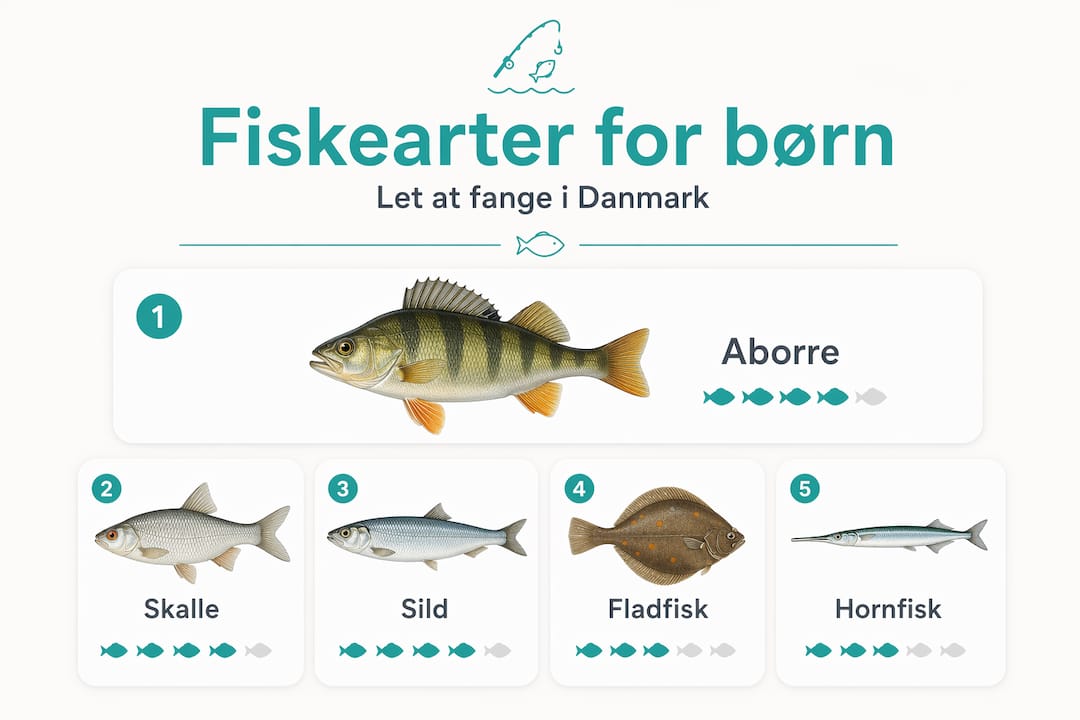
| Fish species | Difficulty level | Best location | Season |
|---|---|---|---|
| Perch | Very easy | Sea, canal, harbor | All year round |
| Skull | Let | Sound and river | Spring and Summer |
| Herring | Let | Harbor and pier | Spring and Autumn |
| Flatfish | Let to the middle | Beach and shallow water | Summer |
| Herring | Middle | Port and coast | Spring and early summer |
| Mackerel | Let | Mole and harbor | Summer and autumn |
At Kerteminde Harbour, families can experience herring, flatfish, and Atlantic herring in a safe environment with a short cast from the pier. It is a concrete example of a child-friendly fishing spot that combines safe environments with good catching opportunities.
Helnæs Bay and shallow beaches
Helnæs Bay on Funen is an excellent example of where children can fish and experience nature at the same time. The shallow, calm waters allow children to wade out and experience life beneath the surface up close. Instead of standing still and waiting, they are active and curious.
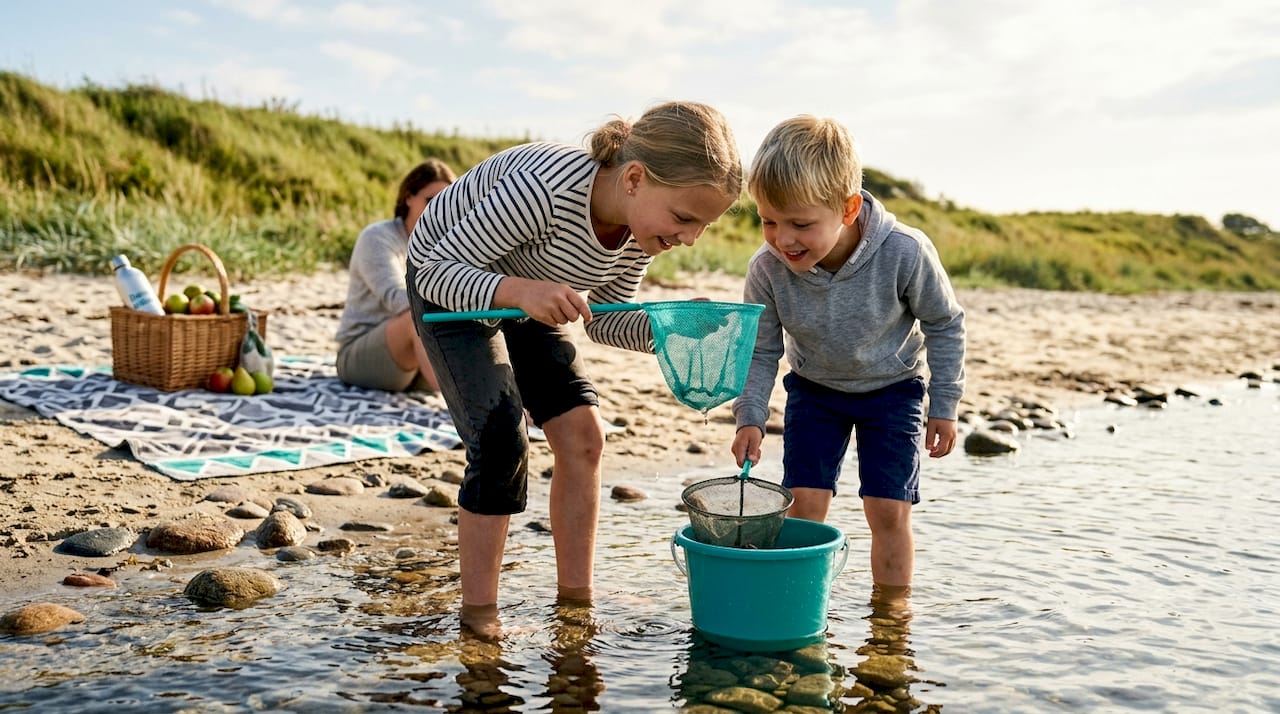
Shallow areas have a special advantage: children can see the fish move. It's much more engaging than staring at a float in dark harbor water. Combine the fishing trip with looking for crabs, snails, and small fish in the kelp belt, and you've created a nature interpretation experience that will be remembered for a long time.
A safari as a different fishing experience
The safari might be the most underrated children's activity by the Danish sea. The concept covers guided or self-organized walks along the shoreline, where you examine seaweed, crabs, shrimp, and small fish in the shallow water. It's not recreational fishing in the traditional sense, but it is one of the most effective ways to give children a deep understanding of marine life.
Tangsafari is best for children aged 4 to 12 years. and combines sensory experiences, understanding of nature, and collaboration. It requires no fishing license and almost no equipment.
Practical points for a successful crab safari:
- Choose a day with wind under 5 m/s and low tide, so the water level is stable and safe.
- The water level should be at most knee-high for the smallest children.
- Bring rubber boots, a children's net, a bucket of water, and sunscreen with a minimum SPF of 30.
- Avoid wildfires (golden fires) in July and August, as they are common along the Danish coasts during the summer months.
- A well-planned seaweed safari stays in one place rather than moving with changing wind and water conditions, which can diminish the experience.
Tangsafari gives children something that traditional fishing rarely does: direct, physical contact with sea creatures. Holding a crab larva in your hand or seeing a small shrimp shoot out in the net are moments that stick in the memory. It's nature experiences with kids and fish in their most present form.
My experience: what really matters
I have followed many families by the water and seen what distinguishes the good trips from the frustrating ones. It's rarely the weather or the fishing luck. It's the logistics and patience.
A father who spends ten minutes unwinding his son's fishing line while the daughter wants to see crabs and the baby shell has fallen into the water is a scene I have seen many times. The solution is not better technology. It is better preparation. All the other stuff the night before. Practice opening and closing the wheel's clasp while sitting on the sofa. And accept that the fishing trip can easily end up as a beach picnic with net and bucket.
What I have learned is that successful fishing trips with children depend much more on the atmosphere than on the catch. Three fish and a smile are better than twelve fish and a cry. Set low expectations for the catch and high for the experience.
My best advice: always combine the fishing trip with something else. En is afterwards, a look at the boats in the harbor, or a little chat about what you saw in the water. Make it a whole day, not just a fishing trip. That's where experiences become memories.
— Tommy
Plan your next family fishing trip with Rejsidanmark
Rejsidanmark has gathered a large selection of guides and inspiration for families who want to experience the best of Denmark. Whether you are looking for child-friendly attractions in Denmark As a supplement to the fishing trip, or if you want to get your packing list in order before you leave, you will find everything on Rejsidanmark. Use our Practical checklist for day trips to ensure that nothing is forgotten at home If you are looking for the great holiday experience, our Guide to Denmark Get an overall overview of the best family destinations from north to south.
FAQ
What are fishing experiences with children?
Fishing experiences with children are recreational fishing and nature activities by the water, adapted to children's age and motor skills. It includes port fishing, beach fishing, and seaweed safaris and is just as much about natural feeding and companionship as it is about the catch itself.
When can children start fishing?
Children can participate in simple fishing activities from the age of 2-3 years old when the equipment is adapted to them. A short stick, a snake, and a float are enough to give the youngest a positive experience by the water.
Does children's fishing in Denmark require special permits?
Children under 18 years old are exempt from fishing licenses for most types of fishing. From January 2026, new rules will apply regarding the registration and reporting of saltwater catches for adults. Fisketegn.dk og RecFishing app.
Which fish species are easiest for children to catch?
Pollock, skull, herring, and flatfish are the most accessible species for children. They can be found at many child-friendly fishing spots such as harbors, piers, and shallow coasts and require minimal equipment to catch.
What is a seaweed safari, and is it safe for young children?
A kelp forest safari is a guided or self-organized tour in shallow water, where you explore kelp, crabs, and small fish. It is safe for children from approximately 4 years old, when the wind is under 5 m/s, the water is at most knee-deep, and the children are equipped with rubber boots and life jackets.
Recommendation
- Benefits of Family Experiences – Strengthen Togetherness and Learning – Travel in Denmark
- 7 family-friendly activities guide with learning and fun – Travel in Denmark
- Familieguide: Byvandringer til sjov og læring for børn – Rejs i Danmark
- Why Choose Family Vacation – Togetherness and Experiences – Travel in Denmark