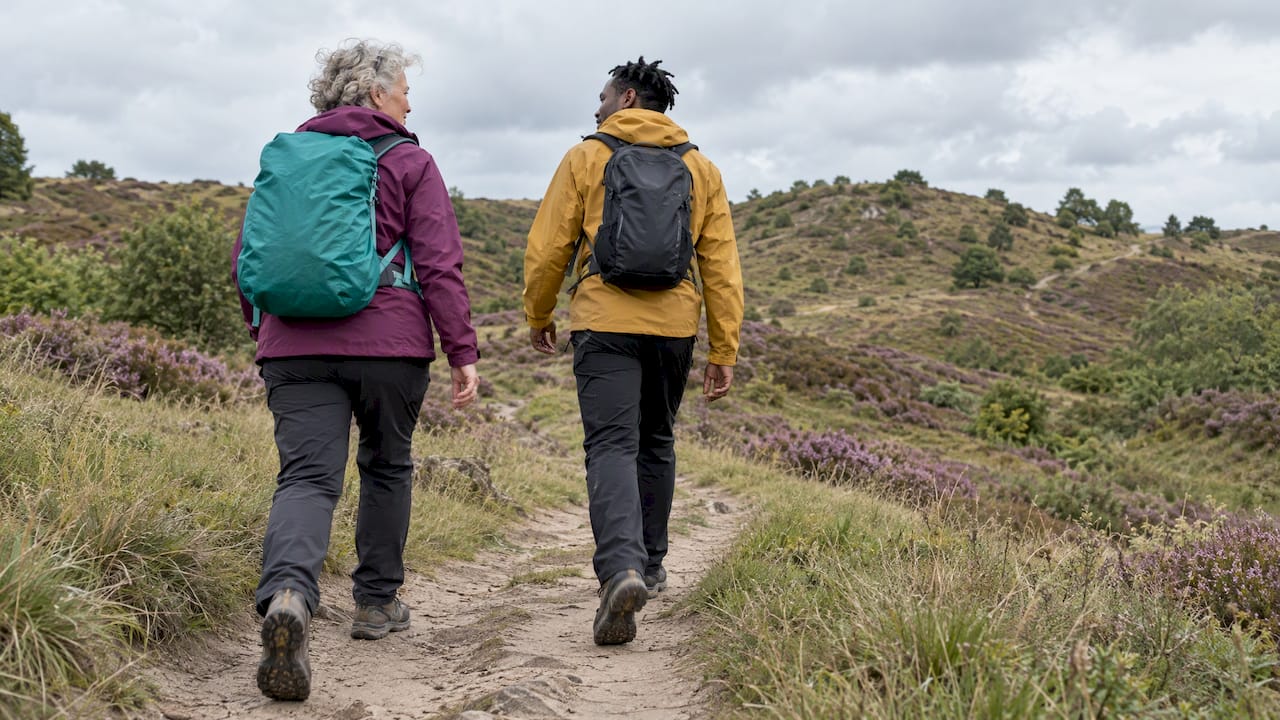
Nature walking gives you exercise that is gentle on the body. It lowers your stress level, lifts your mood, and provides time together with others without screens. Research points to several things: Spending time in nature is associated with a lower risk of a range of lifestyle diseases, nature-based activities help against depression and anxiety, and even a single hour's walk in the forest can reduce activity in the brain's stress centers. Often, all it takes is a good pair of shoes and a nearby trail. Below, we review what a hike does for the body and mind, why it is a good way to experience nature, how long you should walk, and where in Denmark you can get started.
Kroppen: motion, der ikke føles som træning
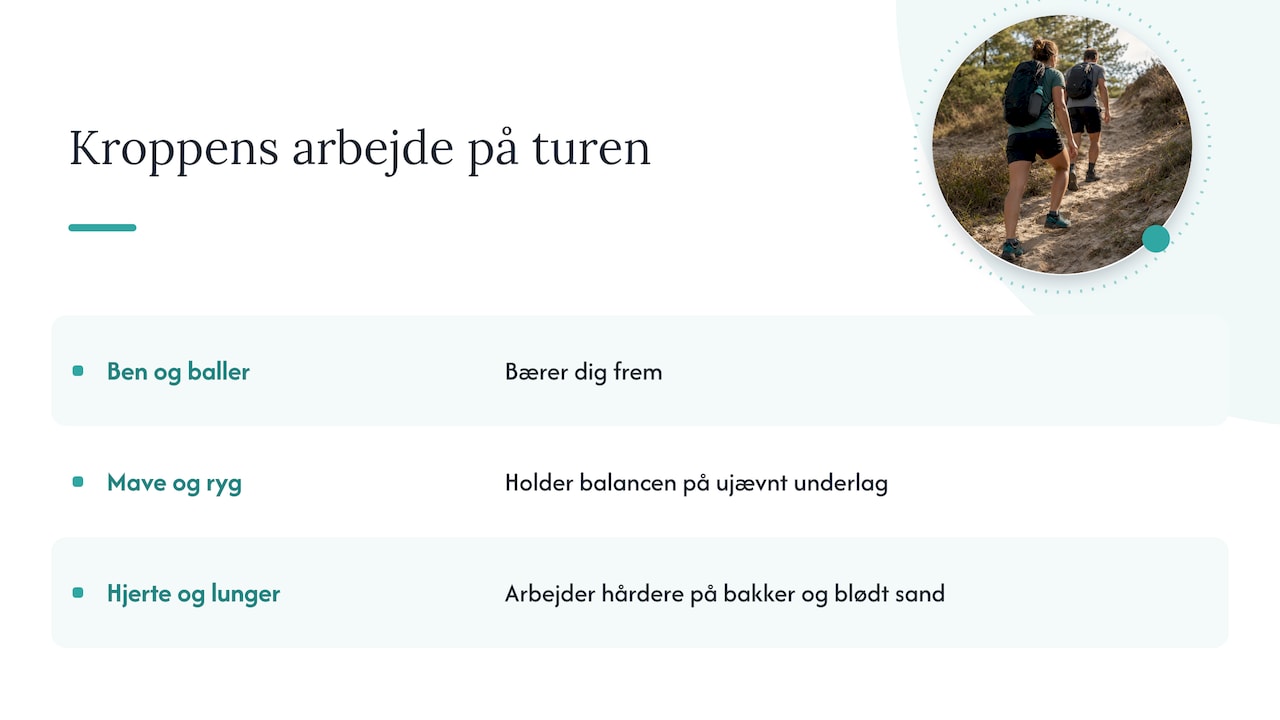
Hiking works with the whole body. The legs and buttocks carry you forward, the stomach and back maintain balance on uneven ground, and the heart and lungs work harder when the path goes uphill or through soft sand. It is endurance training at a pace where you can still talk with those you are walking with.
Research also shows that nature does more than just serve as a backdrop. A review of nature-based health effects emphasizes that spending time in nature is associated with a lower risk of diseases such as diabetes, asthma, and coronary heart disease. That does not mean that a picnic cures anything. But it shows that time outdoors is associated with a healthier life.
You also don't need to be young or in good shape to get something out of the trip. In a study from South Korea, previously inactive people between the ages of 66 and 78 who started hiking, more muscle mass and better fitness as well as fewer inflammation markers and a group that continued as before. The same review explains that regular exercise gives the muscles more small blood vessels and better oxygen transport, so they tire more slowly. You can feel it after a few weeks: The hill that made you pant at the beginning becomes easier.
Unlike running on asphalt, hiking is gentle on joints and knees because you always have one foot on the ground, and because forest floor, grass, and gravel give a little underfoot. If you have problems with your heart, lungs, or joints, talk to your doctor about how much you can tolerate before increasing the duration or intensity significantly. This way you can set the level correctly from the start.
Hovedet: mindre stress og bedre humør
Most people know the feeling after a good walk: the mind calms down, and the problems seem a little smaller. Research has gradually mapped that feeling quite thoroughly.
The Outdoor Council's Handbook Healthy in nature describes how stays and activities in nature have a stress-relieving effect, can reduce symptoms of depression, and promote calmness, presence, and self-confidence. One of the explanations is that nature captures your attention effortlessly. Birdsong, wind in the treetops, and the light between the trunks do not require concentration, and therefore the part of the brain that works hard all day gets a break. According to the same handbook, three out of four adult Danes experience that outdoor life gives them a higher quality of life, and 84 percent notice a positive effect on their mental well-being and mood.
The numbers from the larger studies point in the same direction:
- Less anxiety, better mood: Meta-analyses of randomized trials show that Nature-based activities improve depressed mood, reduces anxiety and provides more positive feelings in adults.
- Lower pulse and blood pressure: A meta-analysis from 2018, which Nature Guidance Denmark reproduces in its knowledge sheet on nature and health, shows that spending time in nature can lower blood pressure, pulse, and the amount of the stress hormone cortisol.
- Calmer brain: In an attempt, muffled An hour's walk in nature activity in stress-related brain areas, while the same walk in a busy shopping street did not change the stress level.
- Forest hiking specifically: And systematic review of activities in the forest generally found positive health effects of forest walking, and some of the studies measured beneficial effects on stress hormones.
It is also worth mentioning an English study of group walks in nature. Here was the positive connections with well-being stronger including the negative associations with stressful life events. The researchers describe it as a kind of counterbalance: Trips in nature can help soften what life otherwise burdens you with.
It also applies to children. Danish research, referenced by Nature Guidance Denmark, suggests that children who grow up in the least green environments have up to a 55 percent higher risk of a mental disorder, even when accounting for the family's financial situation and mental disorders in the family. There is a good reason to take the children out on the trail from an early age.
If you follow the research, you will see that the results vary from study to study. The Outdoor Council's research overview on outdoor life and health indicates that the studies use very different target groups and methods. Therefore, one should be cautious about transferring one result directly to all others. The direction is clear, however: Time in nature is good for most people.
Closer to nature and what you pass by
When you walk, you see much more than when you drive or cycle past. You discover the trail of a roe deer in the mud, the transition from beech forest to coniferous forest, the color of the heather in late summer, and the birds taking flight from the meadow. The slow pace makes hiking one of the best ways to get to know a landscape.
Knowledge comes entirely on its own if you give it space. For example, you can:
- take an app or a small field guide along and find the name of three plants or birds on each trip
- take the same route in different seasons and see how the forest changes from the anemones in spring to the mushrooms in autumn
- participate in a guided tour with a nature guide, which many municipalities, national parks, and nature centers offer
- Have the children collect cones, feathers, and leaves, which you can later identify names for at home.
Denmark is a small country with many types of nature close to each other: dunes and dune plantations by the North Sea, hills and heaths on Mols, large forests in Himmerland, and chalk cliffs on Møn. If you want to see more types of nature, our guide to Nature experiences in Denmark An overview of the landscapes and what you can experience in them.
Why choose the hike over other nature experiences
There are many ways to be in nature, and hiking has some advantages that are hard to find elsewhere.
It feels lighter than it is. And review of nature-based health effects States that more time outdoors and contact with nature are associated with exercise being perceived as less strenuous, and that people exercise more often and for longer. So you get more movement without it feeling like an obligation.
You set the pace. You can stop whenever you want, sit on a bench by the lake, or speed up in the last kilometer.
It requires almost no equipment. Good shoes, weather-appropriate clothing, and a water bottle go a long way on a day trip. Many trails and forests are free to roam in.
It is suitable for a vacation. A hike can be a couple of hours between two attractions or the actual goal of the trip, where you walk from place to place for several days. If you want to know more about the longer version, we have compiled the advantages of one. hiking holiday for body and mind.
| What you get | What the hike gives you |
|---|---|
| Movement | Endurance and strength at a gentle pace |
| Mental raw | Lower stress levels and better mood |
| Nature contact | Time to see, hear, and learn about the landscape |
| Community | Conversations and togetherness without screens |
| Flexibility | From a short trip to a hiking holiday over several days |
A trip for the whole family and all levels
One of the biggest advantages of hiking is that almost everyone can participate. Grandparents, teenagers, and children in strollers can take the same walk, as long as the route is chosen thoughtfully.
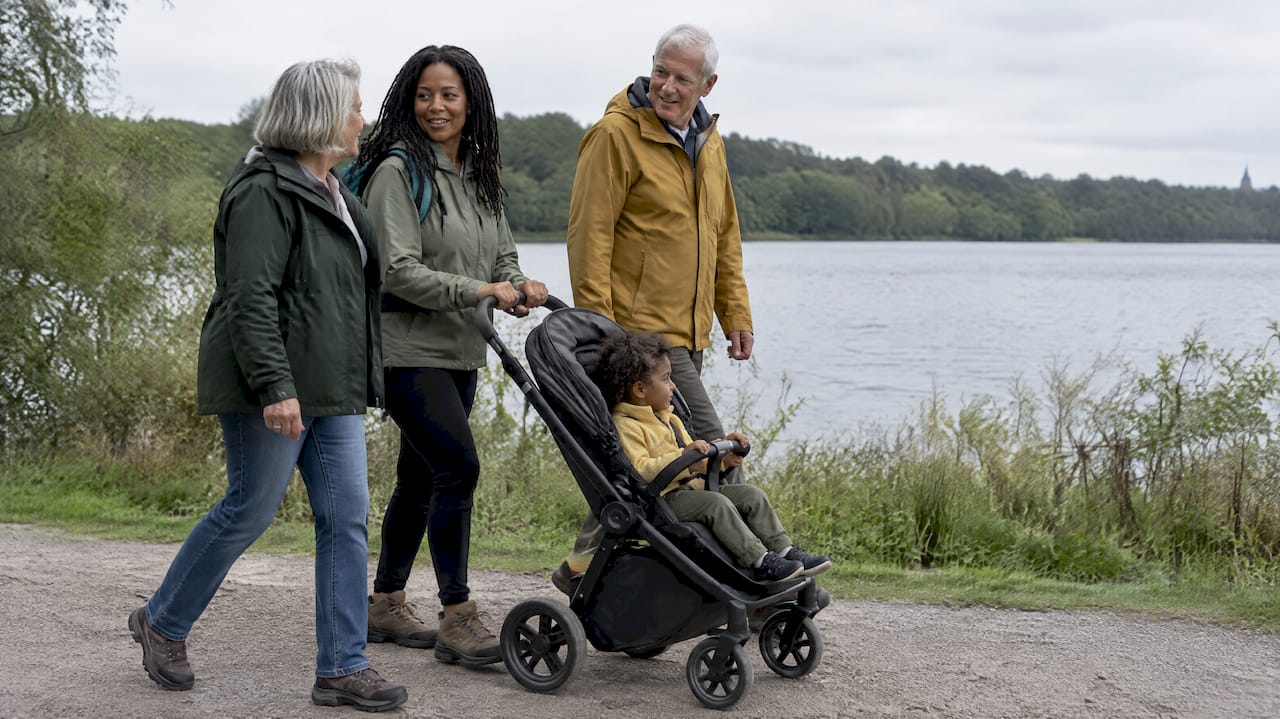
The Outdoor Council emphasizes that nature is a special space for community, where a playful approach to activity shifts the focus away from performance and instead brings people together. You can feel it on a family trip: The children play, the adults talk, and no one counts steps. We have written more about, what family activities mean for your togetherness.
How to make the trip suit everyone:
- For beginners: Choose a marked route of 3 to 5 kilometers on flat ground, preferably a circular route, so you end up back at the car.
- For children: Make the trip an adventure with a treasure hunt, a packed lunch by a lake, or a climbing tree along the way. Plan according to the child's legs and not according to the map.
- For the experienced: Walk longer distances, choose hilly terrain like in Mols Bjerge, or take a stage on one of the long routes such as Hærvejen or Camønoen.
- For the mobility impaired: Many forests and natural areas have gravel paths that can also be used with a walker or wheelchair. Check the surface on the area's own page before you set off.
How to get the most out of your nature walk
If you want the benefits, the most important thing is to go regularly. The meta-analysis of nature-based activitiesAs we mentioned earlier, found that the most effective courses lasted 8 to 12 weeks with 20 to 90 minutes per session. gang It provides a simple plan:
- Find a route near you. The best trip is the one you actually take. A forest or beach within half an hour's travel makes it easy to get out weekly.
- Set aside 20 to 90 minutes. Start at the short end and build up. Even a short walk during the lunch break counts.
- Walk stuck for 8 to 12 weeks. Put the trip in the calendar on the same day each week, so it becomes a habit rather than a project.
- Put away the phone. Use it for the map, but let the notifications wait. It is the break from the screen that gives the mind peace.
- Use the senses. Stop a couple of times and listen, smell, and look up. This is where the calm attention, as described by the Outdoor Council, finds its place.
- Go together with someone once in a while. A steady hiking partner or a group trip provides both community and motivation.
- Dress according to the weather. Layer upon layer, rainwear in the bag, and footwear with good grip make a Danish autumn trip much more comfortable.
When you have a routine in everyday life, it is natural to take the trip on vacation. Our guide to hiking in Denmark helps you choose route, difficulty level, and equipment.
Where in Denmark can you start?
Denmark has hikes for all tastes, and the distances are short. Here are some obvious places to start:
- Thy National Park Dunes, dune heaths, and the wild coast of the North Sea. Good for you, who want space and horizon.
- Mols Hills: Baker, meadow, and view over the Kattegat. It is some of the most rugged terrain in the country.
- Rold Forest: One of Denmark's largest forests with springs, lakes, and trails of all lengths.
- Møns Cliff: Forest on the top and chalk cliffs down to the water. The traps give the legs something to work with.
- The Hærvejen and the Camønoen: Two long routes that can be walked in stages if you want a hiking holiday with overnight stays along the way.
You can find more ideas in our list of Experiences for nature lovers, and if you don't want to spend money, we also show the way to free experiences Throughout the country.
Plan your next trip with Travel in Denmark
Once you have found the desire, all you need is the place. On Travel in Denmark You can search for experiences on our interactive map and filter by season, price, and participants' age. This is how you quickly find natural areas, attractions, and family-friendly excursions near where you live or are vacationing, with price estimates per. person and references to booking. If the trip is to be part of a larger journey, you can use our guide to, how you plan your Denmark trip.
Our view on nature hiking
We created Travel in Denmark to make it easy to get out and experience the country, and nature hiking is perhaps the best way to do that. It doesn't require much, it suits all ages, and it opens up landscapes you never see from the car.
We often see that the hardest part is not the journey itself, but choosing where to go. Therefore, we gather both the well-known places and the hidden gems on one map, where you can filter by season, price, and age. A family with small children needs something different than a couple who want to spend a whole day in hilly terrain, and both must be able to find their route within a few minutes.
Our advice is simple: Start close by, go regularly, and then take the trip out to the rest of the country. Denmark has more nature to explore than most people think.
Tommy
Frequently Asked Questions
How long should a nature walk be to make a difference?
Research indicates 20 to 90 minutes per. once as the most effective, repeated regularly over 8 to 12 weeks. Just one hour of walking in nature can reduce activity in the brain's stress areas. The most important thing is that you go regularly.
Is it better to walk in nature than in the city?
Walks in both environments provide exercise, but nature gives something extra for the mind. In an experiment, a one-hour walk in nature reduced activity in stress-related brain areas, while the same walk in a busy city street did not. If you have the opportunity, choose the forest, the beach, or the park.
Can children benefit from nature walks?
Yes. Danish research suggests that children who grow up close to green areas have a lower risk of mental disorders, and the trip provides both exercise and play. Choose a short route with something to discover along the way, and let the child's pace determine it.
What should I bring on a short hike?
On a day trip in Denmark, you manage with good shoes, layered clothing, rainwear, water, and a packed lunch. Take the phone with you for cards and emergencies. For longer trips, you need to plan accommodation and meals in advance.
Sources
A Scoping Review of the Health Benefits of Nature-Based Activities What Are the Health Benefits of Hiking? – Outside Healthy in nature – The Outdoor Council Nature-based outdoor activities for mental and physical health Nature and Health – Nature Guidance Denmark A one-hour walk in nature reduces stress – NHI.no Hvilke aktiviteter i skove er gavnlige for menneskers sundhed? Growing Resilience through Interaction with Nature Research Overview on Outdoor Life and Health – The Outdoor Council