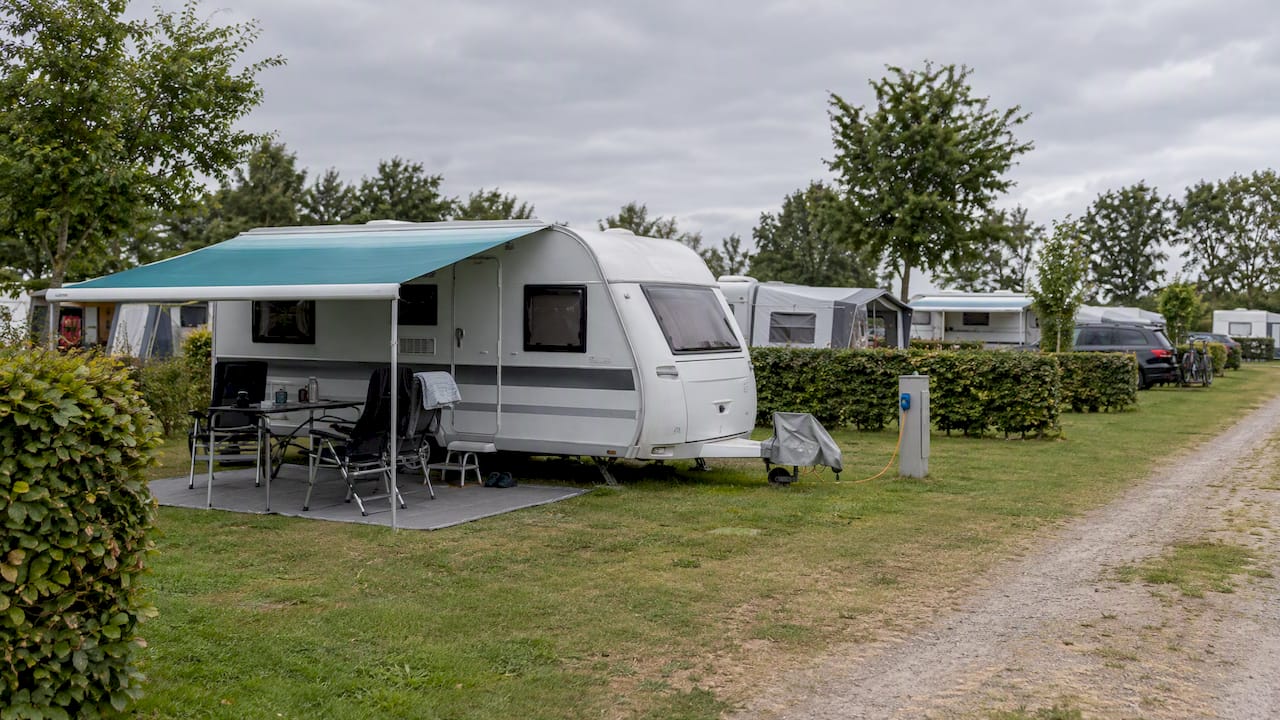
A stay at a Danish campsite typically costs between 95 and 395 kroner per night for an adult, depending on the site's standard and the season. During the high season, a family of two adults and one child pays on average around 51 euros per nightThe price increases significantly with more stars, better location, and additional facilities, and often extra charges for electricity, bathing, and pets.
Price overview by space standard and guest type
Camping sites in Denmark are typically divided into three levels, and the difference is clearly felt in the price. A natural site or simply classified site is on the cheaper end, while a three-star site costs more and a four or five-star site with a pool, play area, and rental cabins is at the top.
- Natural site or basic level: often the cheapest solution, without major facilities.
- Three-needle standard position around 95 kroner per adult According to VisitDenmark, with children at between half and two-thirds price.
- Fire to five-star places Significantly more expensive due to swimming pools, entertainment, and rental cabins.
A family of two adults and one child typically pays more overall than two adults alone, but many places offer child discounts, so the additional cost is limited. PiNCAMP's price analysis for 2026 uses this family type as a benchmark when comparing Danish prices with the rest of Europe, and here Denmark falls into the European mid-range, cheaper than several coastal destinations.
Concrete price examples from Danish venues and price lists
Some price lists give a good sense of what you can actually expect to pay.
- An example price list from a Danish site shows 104 kroner per adult per night, 69 kroner per child, and 22 kroner for a dog.
- Electricity is charged at some locations as a fixed daily rate, for example 39 kroner per day, while others are billed according to actual consumption in kilowatt-hours.
- ADAC has previously calculated an average for a three-person family in Denmark to be around 45,50 euros in the peak season, which aligns well with PiNCAMP's more recent figures.
The difference between a fixed fee and consumption-based billing for electricity often depends on how good the measurement infrastructure of the space is. Spaces with individual electricity meters at each spot can bill accurately according to consumption, while spots without meters typically add a fixed surcharge on top of the parking fee. Prices change from season to season and from year to year, so it's always worth checking the site's current price list before booking, rather than relying on old figures.
Typical additional costs you should expect
The rent is rarely the only thing you pay. Most Danish campsites add several surcharges on top of the base price, and they can collectively make a big difference to the holiday budget.
- Electricity: from about 20 to 30 kroner per day according to VisitDenmark, some places up to 39 kroner or billed per kilowatt-hour.
- Bath and shower Some sites charge a separate fee, while others include it in the site rent.
- Dog fee Typically between 3 and 30 kroner per night.
- Wi-Fi: Often free in the basic version, but a faster connection may cost extra.
- Waste and environmental fee a fixed surcharge covering the operation and renovation of the site
Statistics: VisitDenmark states that it typically costs between 20 and 30 kroner per day for a standard pitch, which can add a noticeable amount to the price over a week's stay.
The crucial point is whether a benefit is "included" in the rent or billed "according to consumption". Two places with the same base price can therefore end up very differently in the total bill, depending on how the electricity and shower are organized.
Seasonal variations: when prices rise, and when you can save
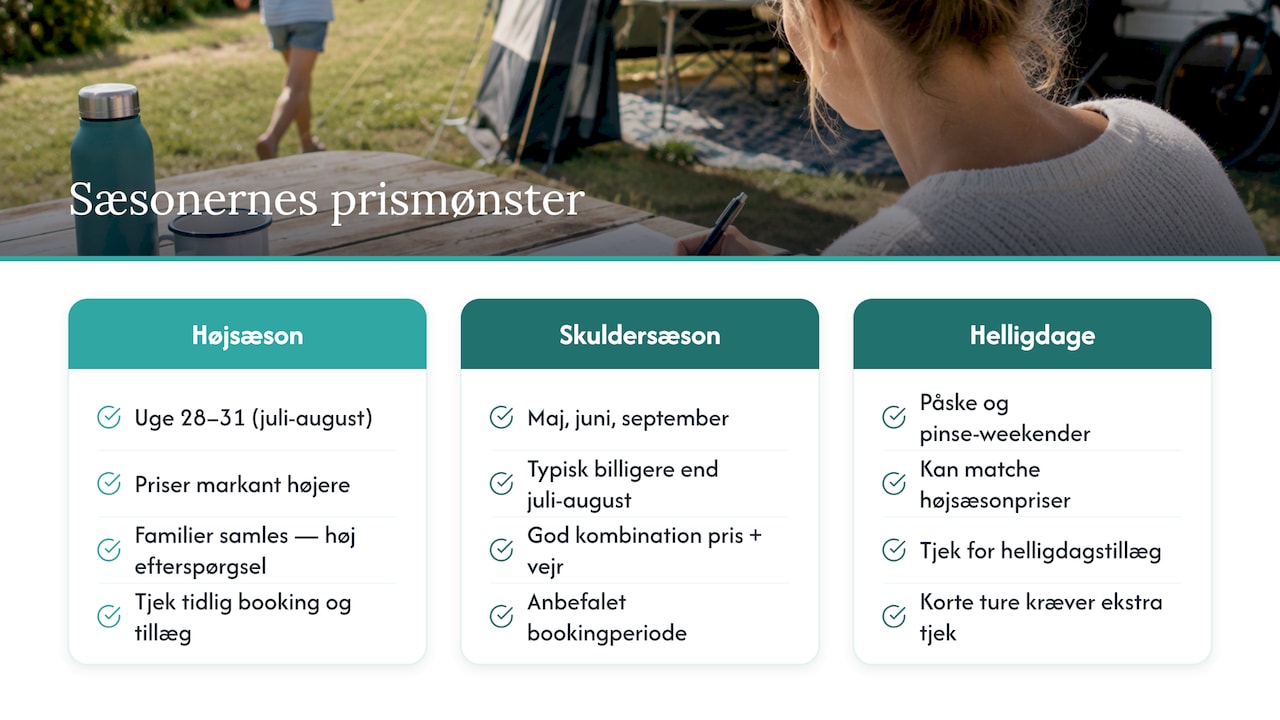
The high season at Danish campsites typically runs from week 28 to 31, when school holidays peak across the country. During this period, prices are significantly higher than in the pre- and post-season, and PiNCAMP's seasonal analysis It points out that July and August create the most noticeable price increase throughout the year, precisely because families gather during the same weeks.
Holiday weekend outside of summer, such as Easter and Pentecost, can also affect prices at a level similar to the high season, even if it is not immediately obvious from all price lists. That's why it's worth checking whether the place has a separate holiday allowance before booking a short trip on a weekend with a day off.
Conversely, the shoulder season often offers the best combination of price and weather. May, June, and September are typically cheaper than July and August, without having to compromise on good temperatures.
Professional tip: Book in May, June, or September if you want to avoid the peak season surcharge and still have good chances for good weather.
How to find and compare prices before booking
A good price comparison requires you to check the right details, not just the initial price the place presents.
- Always check the date-specific price list, as prices may vary from week to week throughout the summer.
- Ask specifically about electricity and bathing prices so you know whether they are included or added on top.
- Compare the total price including fees, not just the advertised space rent.
- Use a short bridge and filters to find spots a little away from the most expensive "first row" positions by the beach, where the price is often higher for the same standard.
- Read the cancellation policy and any deposit or administration fees before confirming the booking.
Our Guide to booking accommodation for families goes into more depth on how to compare specific offers step by step.
Travel in Denmark: how our tools help with price estimates
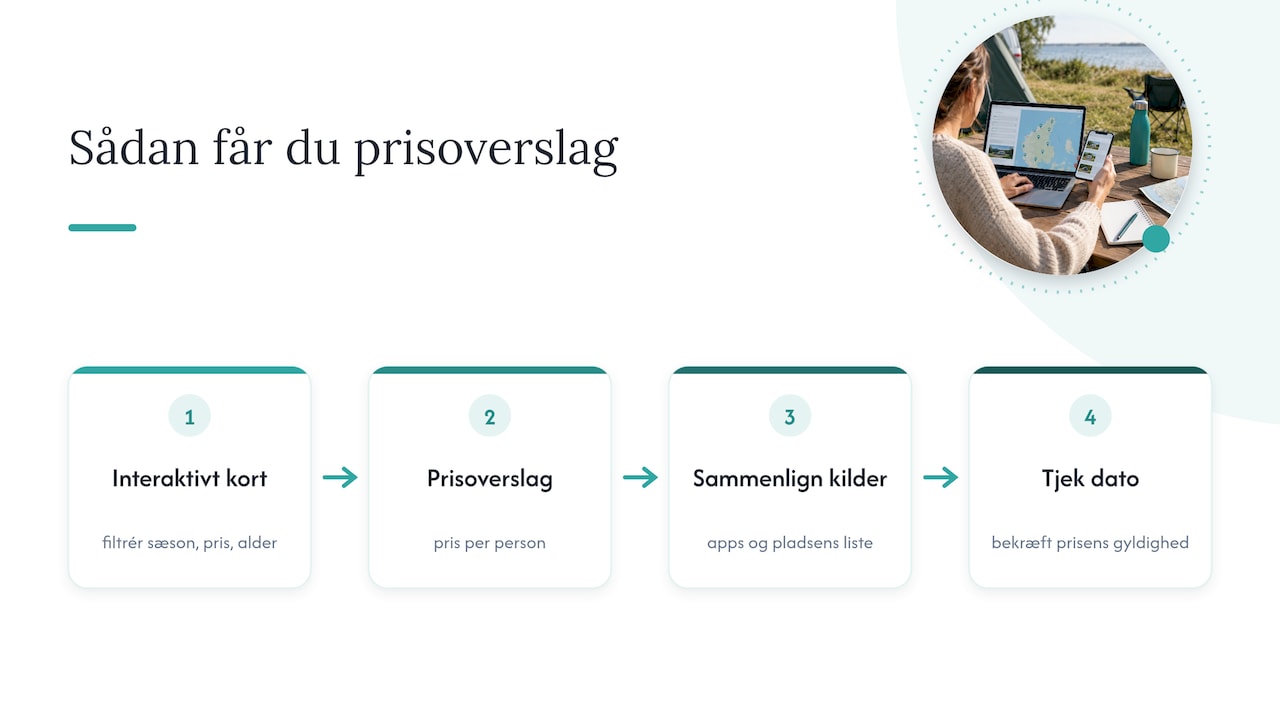
We collect experiences and accommodation options throughout Denmark on a single interactive map, where you can filter by season, price, and age group. When you are looking for a campsite, you can use the filters to quickly narrow down the options to your budget and see price estimates per person before moving on to the site's own price list for the exact figures, for example with Useful camping apps for route planning and searchingWe always recommend cross-referencing multiple sources and checking the date on the price list before booking, as prices change throughout the season.
My recommendations when budgeting for a camping trip
I almost always choose a cheaper spot without a pool over an expensive five-star spot if the children mostly spend their time at the beach anyway. Ask about the electricity price, avoid weeks 28 to 31, and consider smaller, less known places where the price is typically lower for the same standard.
— Tommy
Bridge Travel in Denmark to collect prices and plan the trip
Once you have control of the price level, the rest is about translating it into a concrete plan. Our Practical travel tips for Denmark Gathering preparation and local considerations, while our Guide to budget travel in Denmark Proceeding with concrete cost-saving strategies for the entire holiday, not just the accommodation. Also look at holiday parks in Denmark, if you are considering an alternative to traditional camping with similar family-friendly facilities.
Frequently Asked Questions
What is the average cost of an overnight stay at a Danish campsite?
An adult typically pays around 95 kroner per night for a three-star standard site, while a family of two adults and one child in the high season pays an average of about 51 euros per night. The price depends on the star level of the space and the season.
How much does electricity cost at a campsite?
The fee typically ranges between 20 and 30 kroner per day for a standard space, but some spaces charge up to 39 kroner as a fixed daily rate or settle based on actual usage. Always check the venue's own price list to see which model applies.
When is it cheapest to camp in Denmark?
The shoulder seasons in May, June, and September are typically cheaper than the peak season from week 28 to 31, when demand and prices are at their highest. Planning outside the busiest school holiday weeks often yields the greatest savings.
Do I need to pay extra for my dog at the campsite?
Yes, most Danish campsites charge a separate dog fee, typically between 3 and 30 kroner per night. The amount varies from place to place, so it's worth checking before you book.
How do I compare prices between different campsites?
Always compare the date-specific price list and the total price including electricity, shower, and other fees, not just the advertised site rent. Use short brackets and filters to find places with good standards without extra charges for a location close to the water.