
In short:
- It is important to choose attractions based on your interests, budget, and logistics for a successful experience. A thorough planning focusing on interest profiles and the placement of accommodations helps to create a cohesive trip. It also requires you to prioritize your experiences and use transportation and tickets strategically to make the most of your time in Denmark.
The best attractions in Denmark are those that match your personal interests, fit your budget, and are logistically connected to the rest of your travel plan. It sounds simple, but most travelers choose attractions based on random recommendations rather than a clear method. The result is often too many activities, too little time, and too much money spent on experiences that did not deliver the expected benefits. Rejsidanmark has compiled the most effective methods so you can choose the best attractions in Denmark with peace of mind and full control over your experience.
How do you choose the best attractions based on your interests?
The first step is to define your interest profile. A traveler who loves medieval history gets more out of Kronborg Castle and Ribe than from an amusement park. A family with children under ten prioritizes differently than a couple on a cultural trip. Be honest about what actually gives you energy, not what looks impressive in photos.
The interest profiles typically fall into these categories:
- Culture and art: Museums, art galleries, and historic buildings such as ARoS in Aarhus or the National Museum in Copenhagen.
- Nature and outdoor activities Cliffs, forests, fjords, and coastlines, especially on Bornholm, in Thy, and along the West Coast.
- Family friendliness: Attractions with activities for children of all ages, including child-friendly attractions with low price levels and short waiting times.
- Food and local experiences Mad markets, local restaurants, and food tours, where local food culture is an integral part of the travel experience.
- Historical sites Viking burial mounds, medieval churches, and ancient monuments scattered across the entire country.
- Active experiences Bicycle routes, kayaking, hiking, and seasonal activities such as seasonal experiences for the whole family
Once you have identified two or three primary areas of interest, it becomes much easier to sort through the many options. You avoid wasting time evaluating attractions that don't suit you at all. A realistic assessment of one's own preferences is the shortest way to top experiences in Denmark.
Professional tip: Write down your three main areas of interest before you start searching for attractions. It works like a filter and saves you many hours of research.
How do you plan attraction visits based on your budget?
Budget is the factor most people underestimate. It's not just about entrance fees, but about the overall distribution of expenses. According to the 2026 recommendations for travel planning Should you allocate your travel budget into these categories to maintain overview:

| Category | Recommended share of the budget |
|---|---|
| Transport | 20–30% |
| Accommodation | 30–40% |
| angry | 15–25% |
| Activities and attractions | 5–10% |
| Buffer for unforeseen expenses | 10–20% |
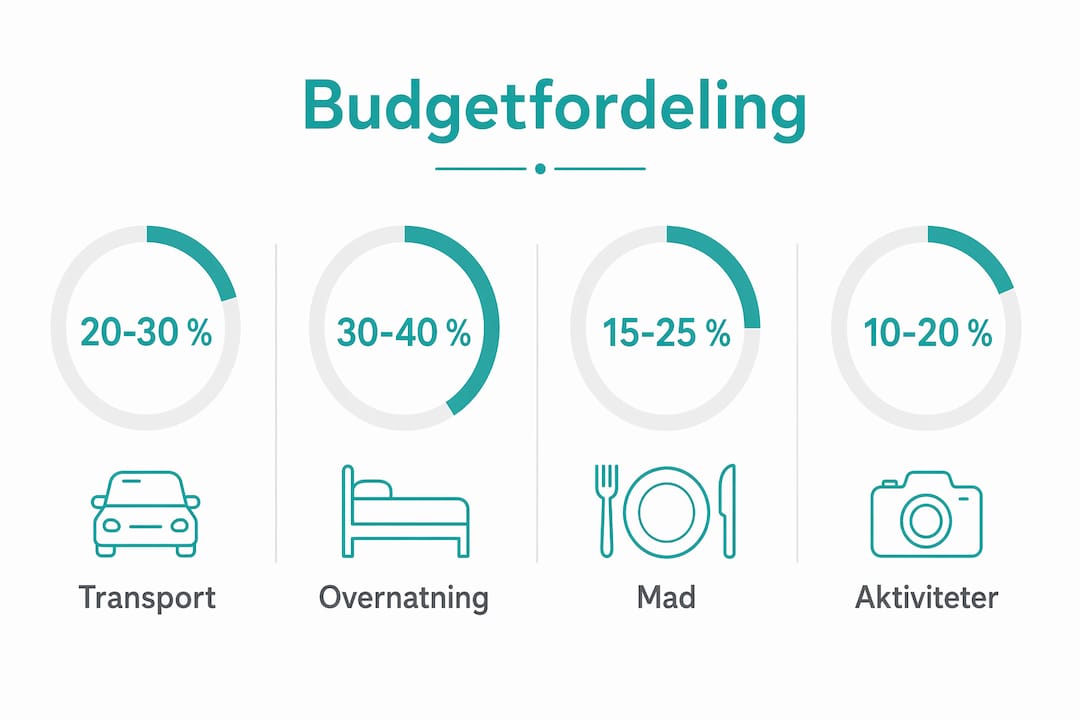
Activities and attractions therefore only constitute a small part of the total budget. That means you need to choose carefully and prioritize the experiences that offer the most value for money.
Selection of accommodation has a direct influence on which attractions you can reach. A hotel centrally located in Copenhagen provides access to many attractions on foot, while a summer house in North Jutland requires a car or bicycle for most destinations. The location of the accommodation is not just a matter of comfort. It is a logistical decision that affects your entire travel plan.
Early booking 2–4 months in advance at popular attractions and transportation offer significant savings. If you travel outside the peak season, typically outside July and August, the prices for accommodation and many attractions decrease. It is not a compromise on the quality of the experience. It's an advantage because you avoid the long lines and the heavy crowds at the most popular spots.
Professional tip: Set a fixed amount for activities before you start booking. Once the amount is spent, it is spent. It prevents impulsive purchases of expensive experiences that were not planned.
What is the basecamp strategy, and when do combined tickets pay off?
The basecamp strategy is a planning method where you choose one fixed accommodation and make day trips from there. By choosing a fixed base, you reduce daily transportation costs and don't waste time packing and moving luggage. It frees up time and money for the experiences themselves.
The method works best when you travel to an area with many attractions within a radius of 50–80 km. Examples of good basecamp cities in Denmark:
- Copenhagen Provides access to the National Museum, Tivoli, ExperimentariumKronborg and Louisiana within an hour's transport.
- Aarhus Serves as the base for ARoS, The Old Town, Moesgaard Museum, and Djursland.
- Odense Covers H.C. Andersen's hometown, Egeskov Castle, and Fyn in general.
- Rønne on Bornholm Provides access to the island's many natural attractions, cliffs, and smokehouses.
Combo letters and City Passes are another tool, but they require thorough analysis. Many pay for convenience Without achieving real savings. Calculate it concretely before you buy.
| Situation | Kombibillet is recommended | Kombibillet is not recommended |
|---|---|---|
| You visit 4+ attractions in 2 days | Yes | |
| You visit a total of 1–2 attractions | No | |
| The attractions are geographically clustered. | Yes | |
| You are flexible and spontaneous in planning. | No | |
| Are you traveling with children and want to avoid queues? | Yes |
The rule of thumb is simple: calculate the price of single tickets for the attractions you actually plan to visit, and compare it with the price of the combo ticket. If the combo ticket is only cheaper because it includes attractions you didn't plan to see, it is not a savings. It is an expense disguised as an offer.
Professional tip: Write a list of the specific attractions you want to visit, and look up the individual prices. Then compare it with the City Pass price. Do it in 10 minutes before you buy.
How do you create a seamless travel experience?
Attractions function as The pillars of tourismThey attract visitors to an area and lay the foundation for the entire community to thrive. It means that a well-chosen attraction is not just a single experience. It opens a door to a whole neighborhood with restaurants, nature, markets, and culture.
The strongest travel experience occurs when you connect a central attraction with nearby experiences. Concrete examples:
- Visit Ribe Cathedral and combine it with a trip to the Wadden Sea and a meal at a local inn.
- Take a ride Copenhagen Zoo and end the day with a walk along Frederiksberg Gardens.
- Visit IKONO Immersive Experience In Copenhagen and combine it with a trip to the Nørreport district and Torvehallerne.
- Experience Skagen Grenen and then along the coast to Råbjerg Mile and Hirtshals Harbour.
Success with experiences requires easy access, simple booking, and logistical connection between the selected attractions. It's not enough for an attraction to be good in isolation. It should fit into the overall daily and travel plan.
Local events further enhance the experience. Music festivals, food markets, and cultural events often fall during periods when the attractions are still open. Check the websites of the municipalities and tourist offices for current events during the period you are traveling. It costs nothing and can elevate a good trip to a memorable one.
Transport is the link that holds it all together. A good Guide to local transportation Helps you choose between train, bus, bike, and car depending on which attractions you have selected. The choice of transportation directly affects how many attractions you can reach in a day and what it costs.
Tommy's thoughts: planning is not the opposite of spontaneity
Many believe that thorough planning stifles spontaneity. It is a misunderstanding. Planning is what gives you the freedom to be spontaneous because you don't spend energy solving problems along the way.
I have traveled in Denmark for many years and made the mistake of booking too many attractions in too few days. The result was stress, not experiences. What works is choosing two or three anchor points per day and leaving the rest open. The anchor points are the attractions you have booked and paid for. The rest of the day is free.
The Basecamp method changed the way I travel. I stay at one accommodation for three to four days and do day trips. It saves money on transportation and gives a sense of knowing a place rather than just passing through it. Local knowledge does not develop in one day. It requires you to return to the same café, the same beach, and the same neighborhood.
The most underrated advice is to Choose activities carefully More than choosing many. An experience you remember for the rest of your life is worth more than ten experiences you have forgotten before the return home. Quality always beats quantity when it comes to memories.
— Tommy
Rejsidanmark helps you plan your next trip
Rejsidanmark gathers Denmark's best attractions, activities, and experiences in one place with filters for season, price, and age group. You can search on the map and see which attractions are close to each other, so you can plan logistics from the start. The platform provides you with detailed descriptions and price estimates so you can compare attractions before booking. Use it Complete travel planning guide to build your travel plan step by step, and read the step-by-step transportation guide to choose the cheapest and fastest route between your selected attractions.
Frequently Asked Questions
What is the best method for choosing attractions?
The best method is to start with your areas of interest and then filter attractions based on budget and logistics. Define two to three primary interests, allocate a fixed amount to activities, and choose attractions that are geographically close to each other.
When is a combo ticket a good investment?
Combo tickets pay off when you visit four or more attractions within two days, and the included attractions are the ones you actually planned to see. Always calculate the unit prices and compare before you buy.
What is the basecamp strategy?
The basecamp strategy means that you choose one fixed accommodation and make day trips from there. It reduces transportation costs and wasted time, giving you more time and budget for the experiences themselves.
When should you book attractions in advance?
Book popular attractions 2–4 months in advance to secure the best prices and avoid sold-out tickets. If you travel outside the peak season, the need for early booking is less, but prices are generally lower.
How does the accommodation influence the choice of attractions?
The location of the accommodation determines which attractions you can reach on foot or with short transportation. A centrally located accommodation reduces transportation costs and provides access to more attractions per day.