
In short:
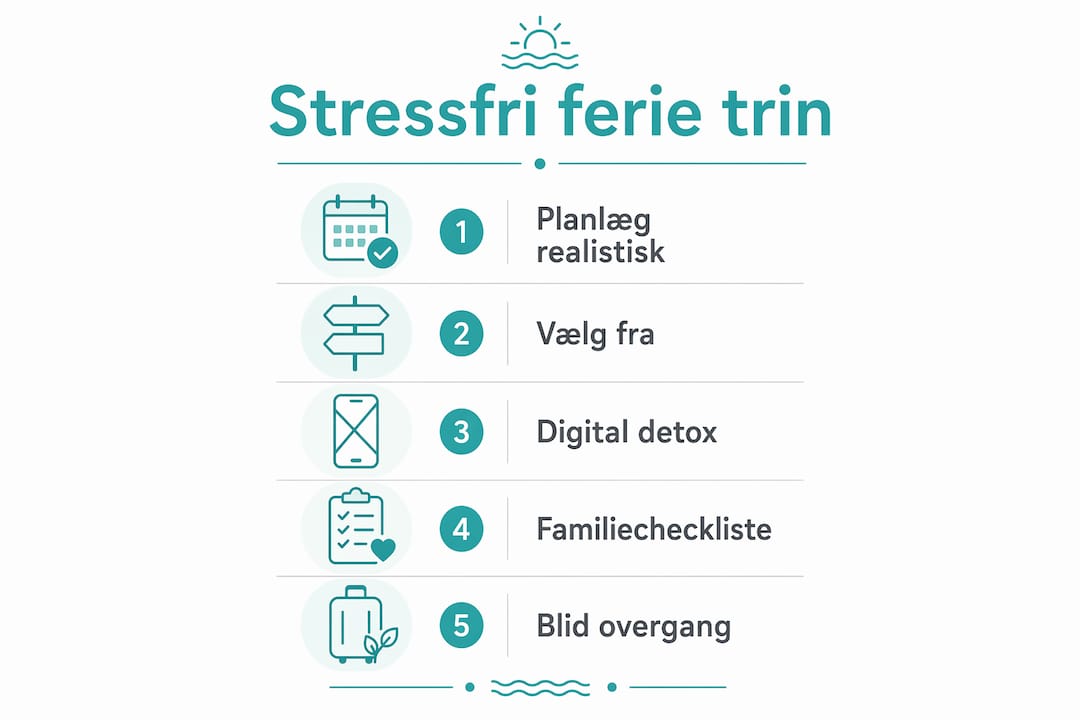
- Holiday stress is often caused by the holiday not providing sufficient rest and can be avoided through realistic planning. It is important to limit daily activities, build in buffer zones, and avoid digital overstimulation to create mental balance. Setting boundaries, sharing responsibility, and having buffer days after the holiday help prevent both mental and physical exhaustion.
Holiday stress is the mental and physical strain that occurs when the holiday does not provide the rest you need. Danish Social Workers' Association recommends at least three weeks of continuous vacation to achieve real mental downregulation. It's not a luxury requirement. It is a physiological necessity. Nevertheless, many experience the holiday starting with chaos and ending with exhaustion. How to avoid holiday stress essentially comes down to three things: realistic planning, conscious breaks, and self-care that is actually prioritized.
How to avoid holiday stress with realistic planning
Decision fatigue is one of the biggest hidden stress factors during the holiday. When you plan too many activities, the brain constantly uses energy to choose, coordinate, and adjust. The result is that you are tired before the day is halfway through.
Experts recommend 1-2 core activities per day as the most effective tool against decision fatigue. That doesn't mean you can't do more. It means that you only commit to one or two things, and let the rest happen naturally.
Concrete advice for realistic holiday planning:
- Limit planned activities up to 1-2 times a day and leave the rest of the day open.
- Build buffer zones 1-3 hours daily for unforeseen events such as weather changes, fatigue, or spontaneous experiences.
- Set aside extra money for unforeseen expenses. A 10% budget buffer It reduces panic from the total holiday budget if something goes wrong.
- Avoid traveling on the first day of the holiday. Starting vacation with a long trip increases the stress level from the first minute and gives the body no time to shift gears.
- Hold fast in the everyday rhythm for sleep and meals A stable daily rhythm is one of the most effective stress buffers available to you.
Professional tip: Make a vacation plan that looks half-empty. If you think there is too little on the schedule, you are probably on the right track. The void is not wasted. There is room for restitution.
Stress-free holiday planning requires you to actively choose to exclude. It's harder than choosing to add, but that's what makes the difference.
How does digital detox help prevent holiday stress?
The biggest misconception about vacation is that changing surroundings is enough. Moving from the office to a beach doesn't change the load if the phone still buzzes with notifications. It only changes the scenery.
Clear digital agreements made before departure are the most effective tool against digital overload during the holiday. It's about deciding in advance when and whether you even check your phone, and communicating that to colleagues and family.
Do not open or reply to work emails during the holiday. Leaders should lead by example and demonstrate that genuine disconnection is possible and desirable.
Danish Social Workers' Association
Practical measures that work:
- Turn off notifications for mail, work apps, and news media from the first day of vacation.
- Set fixed times Check your phone, for example once a day, and stick to it.
- Engage with nature actively. Time in nature lowers cortisol levels and promotes mental restoration in a way no screen can imitate.
- Inform colleagues well in advance Regarding your availability, so you don't feel obligated to respond.
Digital detox and clear agreements about online presence significantly improve the quality of mental recovery. It is not a luxury for the few. It is a prerequisite for the holiday actually to be worthwhile.
Many people today consciously choose slower vacations with fewer activities and more time in nature. It's not laziness. It is an evidence-based strategy to come home with more energy than you traveled with. Are you traveling there Calm Water Nests, the framework has already been created for you.

How do you plan a stress-free family vacation?
Family vacations are particularly vulnerable to stress because they involve many people with different needs, energy levels, and expectations. Vacation stress often stems from mental strain, and early expectation alignment Prevents most conflicts before they arise.
Concrete steps to a peaceful family vacation:
- Agree on responsibilities in good time. Who is planning what? Who handles food, transportation, and activities? Clear rollers reduce friction.
- Choose core activities together. Let each family member point to one thing they want to experience. Build the program around these wishes and let the rest be flexible.
- Plan rest days. A day without plans in the middle of the holiday allows everyone to recharge. It's not a waste of vacation time. It is an investment for the rest of the holiday.
- Set a budget buffer. An extra amount equivalent to at least 10% of the holiday budget for unforeseen expenses removes the financial anxiety that could otherwise ruin the mood.
- Respect the children's rhythm. Fatigue and hunger are the two quickest ways to conflicts with children. Keep meal and sleep times roughly stable, even on vacation.
Professional tip: Use a Checklist for family outings as a basis for the planning. It saves time and ensures that you don't forget the practicalities in the excitement of the trip itself.
Alignment of expectations regarding vacation responsibility in the weeks before the vacation is crucial. A short conversation about who does what can save many frustrating hours along the way.
How do you create a smooth transition to and from vacation?
The sudden shift from a busy everyday life to vacation and back again is one of the most underestimated stress factors. The nervous system needs time to shift gears. It cannot be done in an afternoon.
Buffering is the solution. 1-2 days of transition without planned demands, both before and after the holiday, allow the body and mind to gradually adapt. They are not days you waste. There are days that make the rest of the holiday more effective.
Practical advice for a gentle transition:
- The day before the holiday: Avoid big tasks and meetings. Take the day to pack calmly, eat well, and sleep early.
- First day of vacation: Don't sail. Take the day to land, feel the surroundings, and let the body understand that it is free.
- The day before returning home: Start mentally preparing yourself for everyday life. Make a short list of the most important tasks ahead. It removes the diffuse anxiety about the unknown.
- First day back at work: Plan a light day. Avoid important meetings and major decisions. Give yourself time to get back into the rhythm.
Work pressure often peaks after the summer holidays because the sudden transition is too overwhelming. A cheerful re-entry into working life is not a weakness. It is a strategy that yields better results in the long run.
Healthy daily routines Having regular sleep times and meals acts as a stress buffer, keeping the nervous system stable even when the environment changes. Keep them, as much as possible, even during the holiday itself.
No one tells you about holiday stress
I have spoken to many people who come home from vacation and say that they are more tired than when they left. It is not uncommon. It is actually very common. And it almost always boils down to the same thing: they take everyday performance culture on vacation.
The holiday will become a new arena for performance. Most sights, best pictures, most relaxed. It's a trap I fell into myself. People plan their vacations like a project that must deliver results, forgetting that the purpose is the opposite.
Psychologists point out that self-care as a parent is central to a successful holiday. Treat yourself with the same care you would give a small child. It sounds simple. That's not it. Most adults are much better at taking care of others' needs than their own.
The advice that has made the biggest difference for me is this: let others help. The responsibility for planning and practice. Say yes to help when it is offered. Set mental boundaries for what the holiday should include. A holiday that includes three really good days is better than seven days filled with mediocre experiences and constant fatigue.
Happiness in vacation is not something that just happens. It's something you actively choose and protect.
— Tommy
Plan your next vacation in Denmark without stress
Rejsidanmark gathers the best experiences, sights, and practical tips for holidays in Denmark in one place. Whether you are planning a Denmark trip for the first time or looking for concrete ideas for a relaxing family trip, you will find clear guides and practical travel tips, which makes planning easier. Use Rejsidanmark Checklist for a day trip As a concrete starting point, and let the structure take some of the work off you. A good holiday begins with a good plan.
Frequently Asked Questions
How long should the vacation be to avoid stress?
The Danish Social Workers' Association recommends at least three consecutive weeks of vacation to achieve real mental downregulation. Shorter vacations can provide rest, but are rarely enough for full recovery.
What is the most important rule for stress-free holiday planning?
Limit yourself to 1-2 planned activities per. Add and build daily buffer zones of 1-3 hours. It reduces decision fatigue and makes room for spontaneity and rest.
Should you check work emails during vacation?
No. Responding to work emails during vacation increases stress and hampers mental relaxation. Clear agreements with colleagues before departure are the most effective solution.
How to avoid stress upon returning home after the holiday?
Plan 1-2 buffer days after the holiday without major demands or important meetings. A gradual reintroduction into working life prevents the stress bottleneck that typically occurs during the first week back.
What is the best advice for a stress-free family vacation?
Agree on responsibilities and expectations well before the holiday, and set aside a budget buffer of at least 10% for unforeseen expenses. Clear roles and financial security are the two factors that prevent the most conflicts.