
TL;DR:
- Danish gardens are living spaces that offer tranquility, biodiversity, and cultural heritage, but are often overlooked in favor of museums. They promote mental relaxation and social cohesion through design, community, and nature experiences. Biodiverse habitats with natural elements support ecosystems and provide unique experiences throughout the year.
Danish gardens are not only beautiful to look at. They are living spaces that contain stories, biodiversity, and a special kind of mental calm that you rarely find elsewhere. Nevertheless, many travelers overlook them in favor of museums and city attractions. If you ask why visit Danish gardens, the answer is more nuanced than you might think. It's about culture, community, natural science, and the tranquility of slowing down in a pace that is unique to these green oases. This article guides you through the strongest reasons to prioritize gardens on your travel list.
Why visit Danish gardens for peace and presence
There is a reason why people keep returning to gardens again and again. It's not just about flowers. It's about breathing again.
Calmness and presence are emphasized from all visitors as the greatest advantage of staying in a Danish garden. This is not a random statistic. It reflects something fundamental in the way gardens are designed and cultivated in Denmark. Bull, snorting between flower beds and benches placed in the shelter of trees, and the sound of insects and birds replacing the noise of the city.
Mental relaxation in green surroundings
Research repeatedly shows that spending time in nature lowers cortisol levels, reduces stress impact, and improves concentration. Haver offers it in a controlled, aesthetic form. You avoid the unpredictable elements of wild nature and instead gain access to nature's calming effect within safe boundaries.
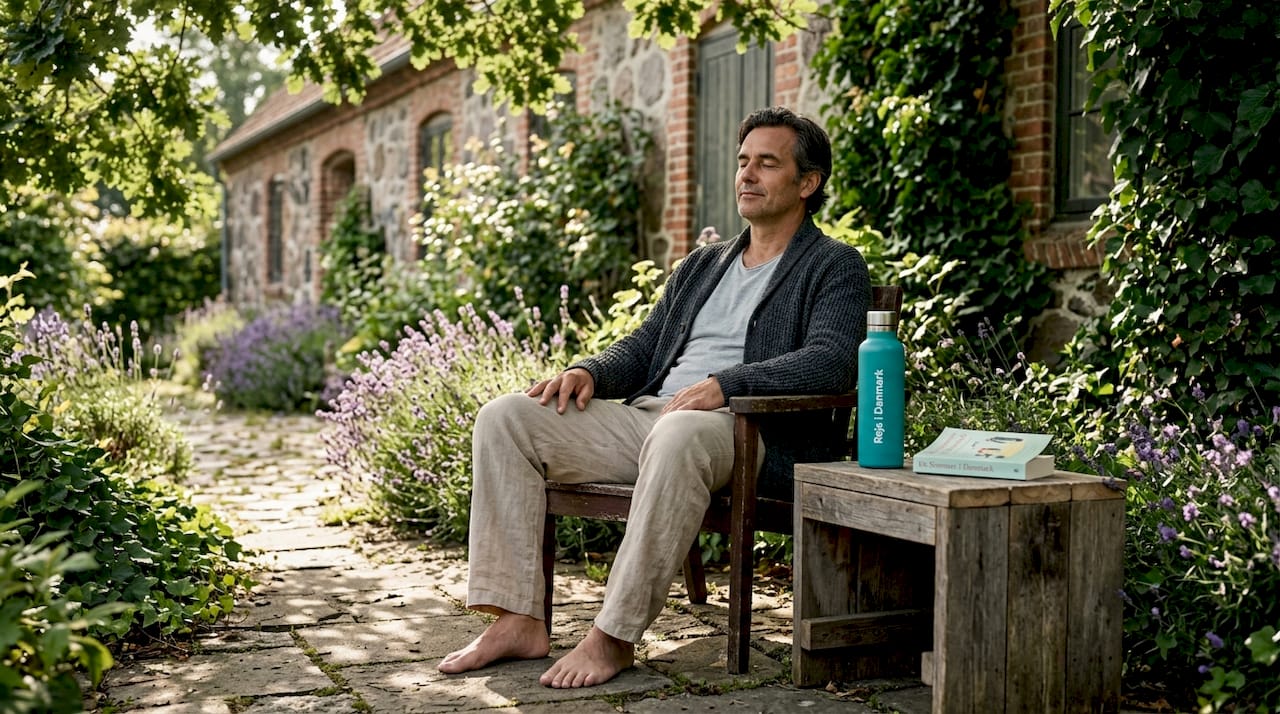
Denmark's garden culture reflects this. Mental peace in gardens is specifically about connecting to nature in a direct, tangible way. Havernes design, scents, and visual rhythm actively work to slow down your pace. It is not a side effect. It is the intention behind many of the most beautiful gardens in Denmark.
Examples of gardens with a particular focus on a peaceful experience include:
- Birkegårdens Gardens In North Zealand, offering sculpture parks and natural gardens with space for immersion
- The monastery lake near Maribo on Lolland, where monastery tradition combines with garden art
- The Open-Air Museum's gardens North of Copenhagen, offering insight into Danish cultural heritage in green surroundings
Professional tip: Visit a Danish garden early in the morning, preferably before ten o'clock. You avoid most of the other visitors, the light is soft, and the scent of morning dew in the flower beds is an experience that is hard to put into words.
Botanical Gardens: Biodiversity and Learning
Botanical gardens are perhaps the most underrated category of Danish garden attractions. They are not just gardens. They are living libraries about the world of plants.
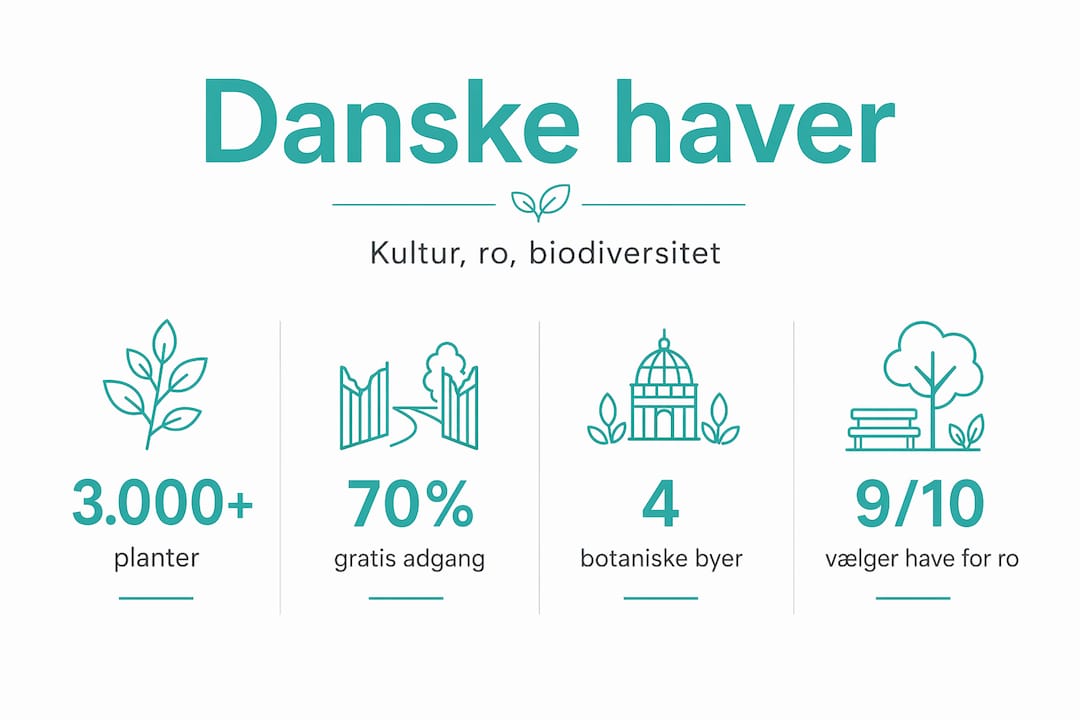
Thousands of species under one roof
Denmark's Botanical Gardens house plant species from all the world's climate zones, from tropical rainforest plants to Arctic herbs. They function as scientific institutions, natural history museums, and recreational spaces at the same time.
| Have | Placement | Unique | Entrance (outdoor) |
|---|---|---|---|
| Botanical Garden, Copenhagen | Copenhagen | Historical greenhouses, 13,000 species | Free |
| Botanical Garden, Aarhus | Aarhus | Climate zones, Travelers’ Choice 2024 | Free |
| Haveselskabet's garden, Valbyparken | Copenhagen | Demonstrator for inspiration | Free |
| Birkegårdens Gardens | North Zealand | Sculpture Park and Nature Garden | Approximately 130 DKK |
Botanical Garden in Aarhus Received the Travelers’ Choice Award in 2024 and is inducted into the Hall of Fame for its consistently high quality. It is an acknowledgment that emphasizes that these gardens are not just local attractions. They compete with international attractions.
Many visitors are surprised to discover that most botanical gardens in Denmark have free access to the outdoor areas. Exhibitions, café, and educational programs are offered seasonally. You can spend an entire afternoon without paying a dime and go home with a completely different perspective on the world of plants.
Cultural and scientific significance
Botanical gardens in Denmark originated as part of scientific research and education. The connection still exists. Many gardens actively run research projects, seed banks, and conservation programs for endangered plant species. When you visit a botanical garden, you are participating in something greater than a walk. You support the conservation of global biological diversity.
Professional tip: Ask the staff about current special exhibitions or guided tours. Many botanical gardens offer free seasonal walks that are not clearly advertised at the entrance.
Private and open gardens as social meeting places
There is a special category of experiences in Danish gardens that many international travelers are not aware of: private gardens that open their doors to the public.
It is not a commercial attraction in the traditional sense. It is an invitation. Open gardens in Denmark It is rooted in the desire to create social cohesion and shared experiences across generations. Haveejere wish that you feel like part of something shared, not like a tourist passing through.
A good example is tulip gardens like Iver Pedersen's garden, which every spring attracts families with three generations to a blooming paradise. The purpose is not primarily to have a viewing. It is companionship. Coffee, cake, chatting over flower beds, and a shared experience that connects people across ages and backgrounds.
How to prepare for a visit to a private garden
- Research opening hours in advance. Private gardens have limited opening hours, often only on weekends or specific weeks during the flowering season.
- Check payment methods. Many private homeowners do not use payment terminals. Bring cash or MobilePay to avoid disappointment at the entrance.
- Plan the visit in May. May is often ideal with temperatures of 15 to 20 degrees and full bloom in most gardens. If Experience tips for the whole year to plan your trip optimally.
- Come early. Popular open gardens can attract many visitors on weekends, and parking may be limited.
- Talk to the owner. It's not just allowed, it's the whole point. Owners gladly share stories about the plants, the garden, and the family behind them.
The cultural value of these gardens lies in the sharing. A person has spent years cultivating something beautiful and chooses to share it with strangers. Generosity is a characteristic of Danish garden culture that you won't find in many other places in the world.
If you visit Denmark and want to understand Danish culture more deeply, cultural heritage and social experiences I have one of the most authentic entrances you can find.
Biodiversity and the living marine ecosystem
Here is something that surprises most people: the most biodiverse garden is not necessarily the most well-manicured.
He would have made a conscious choice
Wild and imperfect gardens are a conscious choice for increased biodiversity. It is not neglect. When you see a garden with tall herbs at the edge, a pile of branches in the corner, and "weeds" between the stones, you are probably looking at a garden that actively supports natural ecosystems. Insects, birds, and small animals thrive in the disorder that humans instinctively want to tidy up.
Comparison of garden maintenance styles and their effect on biodiversity
| Havetype | Biodiversity | Insect life | Bird | Maintenance |
|---|---|---|---|---|
| Traditional well-maintained garden | Lav | Limited | Few species | High effort |
| Mixed garden with natural zones | Middle | Moderate | Several species | Moderate effort |
| Wildflower garden with native plants | High | Right | Many species | Great effort |
Plants such as blue hat, thyme, and St. John's wort are native Danish species with long flowering period great attraction for bees, butterflies, and birds. When Danish gardens intentionally use such plants, they not only create a beautiful experience for visitors. They function as concrete contributions to the local ecosystem.
Seasonal flowering from March to November
A well-planned Danish garden blooms almost all year round. Blooming from March to November requires deliberate combination of early, mid, and late flowering plants. It ensures a continuous supply of food for insects and creates a garden that changes character and color throughout the seasons. As a visitor, you experience a completely different expression in April than in September.
The specific benefits for biodiversity include:
- Continuous nectar sources for pollinators throughout the season
- Eggs and berries for birds in the fall
- Overwintering opportunities for insects in dry stems and leaves
- Natural soil structure is preserved when plants are not removed during winter.
If you are interested in understanding what botanical gardens specifically do to preserve these processes, botanical gardens in Denmark a good starting point for deeper reading.
My experience with Danish gardens
I have visited many types of gardens in Denmark, from the large botanical institutions in Copenhagen and Aarhus to the small private gardens that open their gates for a single weekend in the spring. And the experience I consistently return to is the surprise.
The surprise that a garden is not what I thought. In my experience, most visitors completely overlook the social dimension. They focus on the flowers and forget the people behind them. The private garden owners who open up to the public do not do it for the sake of money. They do it because they want to share something they care about. The difference can be felt, and it transforms a sightseeing visit into a real experience.
What I have learned over the years is to accept the wild. The first time I visited a garden with tall herbs and seemingly roots, I didn't understand it. Now I see it differently. The grass is more alive than any mowed lawn. The insects know it. The birds know it. And when you sit down and wait for five minutes, you start to feel it yourself.
Havers can easily inspire a sustainable lifestyle, not through finger-wagging, but through observation. When you see what a wild planting does for the life in the garden, you naturally start to think differently about your own garden or your balcony. It is one of the quiet but effective things Danish gardens do well.
— Tommy
Plan your visit to a Danish garden with Rejsidanmark
Finding the best gardens in Denmark is one thing. Getting there without trouble is something else. Rejsidanmark offers practical guides to all aspects of a trip to Denmark, from transportation to specific visit tips.
Start with local transport in Denmark, which is crucial if you want to visit gardens outside the big cities. Many of Denmark's most beautiful garden destinations are in the countryside, and a good transportation plan makes the difference. If you want to get the most out of your visit, you can Guides in travel planning Open doors to experiences you won't find in a standard travel guide. At Rejsidanmark, you will find everything you need to make your garden visit a memorable experience.
FAQ
What are the main reasons to visit Danish gardens?
Danish gardens offer mental peace, cultural experiences, and insights into biodiversity. They function as social meeting places and lively natural spaces that offer something that museums and attractions rarely can match.
Is it free to visit gardens in Denmark?
Many botanical gardens have free access to outdoor areas, including the Botanical Garden in Aarhus and Copenhagen. A private harbor typically has a smaller entrance fee of around 130 DKK for adults.
When is the best time to visit a Danish garden?
May is ideal with temperatures of 15 to 20 degrees and full bloom. Many gardens do have experiences from March to November, depending on the plant choice.
What are open gardens, and how do they work?
Open gardens are private gardens whose owners invite the public in for a limited period. They are social and cultural experiences rather than commercial attractions, and they require prior research on opening hours and payment methods.
Which Danish gardens are best for biodiversity?
Having native plants and natural zones supports the most life. Botanical gardens and naturally designed private gardens are the best examples of biodiversity-friendly garden spaces in Denmark.
Recommendation
- Why visit botanical gardens in Denmark – Travel in Denmark
- 7 inspiring activities for culture enthusiasts in Denmark – Travel in Denmark
- 7 inspiring examples of cultural activities in Denmark – Travel in Denmark
- Cultural Heritage Sites in Denmark: Your Guide to Historical Experiences – Travel in Denmark