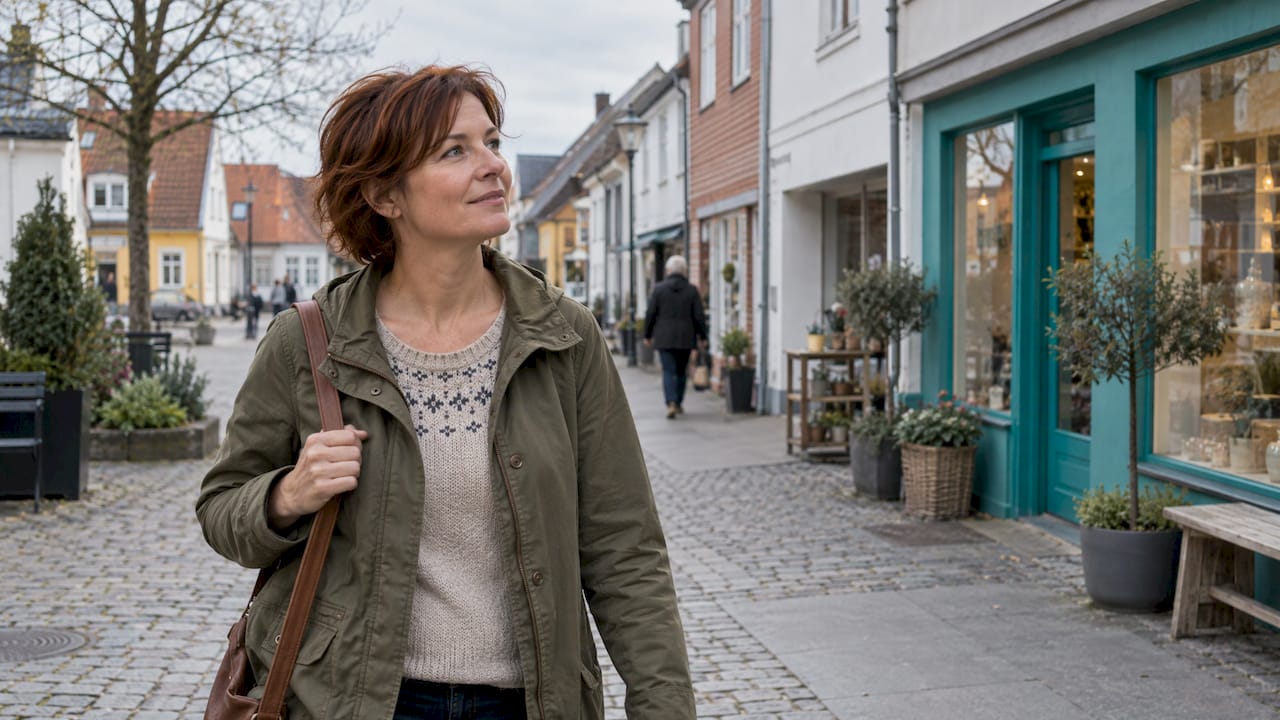
Small towns are worth exploring because they give you more of what you travel for: you can see the history directly in the streets, nature begins at the town sign, and local life is close enough to feel. In the big city, you are one among many tourists. In the small town, you become a guest who can see how a place truly lives. However, it requires a bit more planning, as the experiences are spread out and are rarely gathered in one place. Therefore, we have built Travel in Denmark with an interactive map, filters for season, price and age, and price estimates per. person, so you can find the pearls without spending your vacation searching.
Here you get the reasons to choose the small town, what you can specifically experience there, and how to plan a trip that works for couples, adventurers, and families with children.
The quality of life is highest outside the big cities.
It is not just a romantic notion that life feels better in smaller communities. A report from the think tank Prospekt shows that smaller Danish communities score high on quality of life, especially in West Jutland. The government points to the same in its rural district proposal from 2024: Danes in rural areas score the highest in measurements of quality of life and happiness.
What does it mean for you as a visitor? You come to places where the pace is slower, where people have time to answer a question, and where there is space around you. Those are exactly the settings most of us try to find when we go on vacation. In the big city, you often pay for the peace. In the small town, it follows along.
For many travelers, it is precisely the contrast that makes the journey valuable. A weekend in a small coastal town or railway town offers a different kind of rest than a weekend filled with queues, traffic, and crowded cafés.
The history lies in the streets, not just in the museum.
The history educators Henrik Ottosen and Trine Hyllested call the cultural landscape and urban space Denmark's largest archiveThe road network, street names, the shape of the fields, the dairies, the churches, and the memorial stones together tell how a region has developed and how people have lived there.
In small towns, the traces are not covered by newer buildings to the same extent as in the big city. You can still see them with the naked eye if you know what to look for:
- The station building and the straight streets around itMany smaller towns grew up around the railway, and the shape of the town still shows it.
- The Cooperative DairyThe old dairy building tells the story of the cooperative movement that shaped agricultural Denmark.
- The Village Churchoften the city's oldest building and the center of centuries of life.
- At least one: in the square or by the church marks events that meant something for that particular area.
- The fields and roads outside the townTheir form can tell about the great agricultural reforms.
Ottosen and Hyllested describe the local environment as a goldmine of cultural history because the small history can be connected to the big history and to what we live off today. When you stand in front of a closed-down dairy, you suddenly understand an entire period of Danish history in a way that no display case can give you.
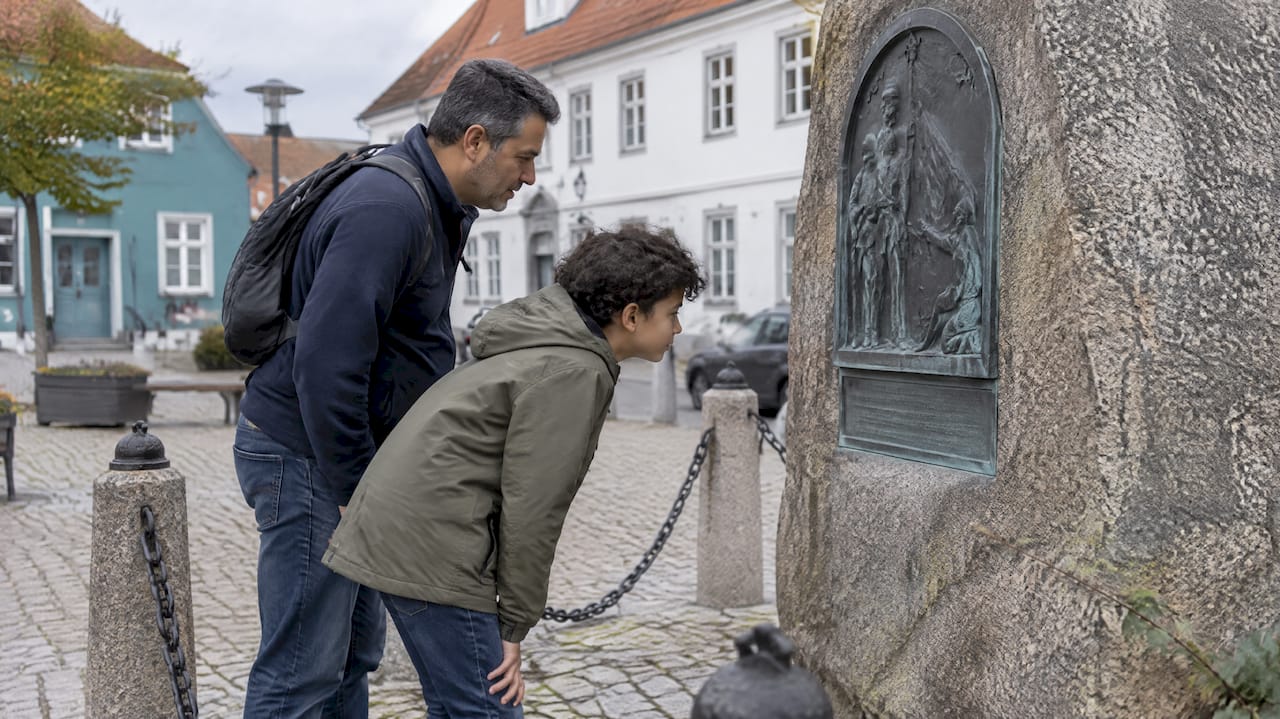
It also works on children. Folkeskolen.dk has reported about a teacher who uses the students' own town as a stage for local history, including a memorial stone from the Reunification in 1920 and old legends presented as small performances. The point is that even the smallest town can arouse curiosity. You can use the same method on vacation: find the town's memorial stone, read the inscription aloud, and let the children guess what happened.
If you want more ideas on where the story is clearest, you can start with ours examples of historical sites in Denmark and use our guide to get the most out of your city walk.
Community and traditions you won't find in the big city
What distinguishes the countryside from the big city, according to the government's rural district proposal, includes proximity to nature, close communities, a strong civil society, and the opportunity to shape the local community oneself. As a guest, you feel it in the events organized by the city itself.
TV 2 Echo has described how in Gjerlev, a town with approximately 500 residents, celebrates in its own unique way, with Tyrolean parties and Christmas lunches in the community hall. Such events can be found in hundreds of smaller towns: town festivals, harvest markets, flea markets in the parsonage garden, Midsummer bonfires on the beach, and concerts in the local church.
For you as a traveler, it is an entrance into a place. A flea market or a town festival gives you conversations with people who have lived in the town their whole lives, and they usually have good advice about where the trail to the viewpoint starts, or which farm shop has the best strawberries.
The community is also the reason why so many small places have activities you wouldn't expect: local history archives, small museums run by enthusiasts, and nature playgrounds built by the citizens' association. Ottosen and Hyllested mention that all municipalities have local history archives with pictures, letters, and protocols, and many of them gladly welcome visitors who want to learn more about the area.
Nature begins at the city sign.
In a big city, you have to travel out to find nature. In a small town, you live in it. Forest, fjord, heath, coast, and stream are often within walking or cycling distance of the square, making it easy to combine a morning in town with an afternoon on the trail.
It opens up for all levels of adventure:
- Calm walks along the fjord or through the plantation, where you can bring children and grandparents along.
- Longer hikes on marked routes, where the small town becomes your starting point and your accommodation.
- Bike trips on the smaller roads between the villages, where traffic is light and distances are short.
- Kayaking, fishing, and swimming by coasts and lakes, where there is rarely any crowding.
- Star gaze in the evening, because there is much less light pollution than in the big city.
If you are unsure about what you gain from going into nature, we have gathered the benefits of nature hiking, and our list with 10 hiking trails in Denmark gives you concrete routes to start with. If you are looking for more varied experiences, then see our 7 examples of nature experiences.
The same combination of small town and vast nature is found throughout the Nordic countries. On the Norwegian west coast, the island of Bømlo is a good example, where activities in Bømlo and surrounding areas ranges from fishing and boat trips to birdwatching. The idea is the same as in Denmark: when you live close to the water and the forest, nature becomes a part of everyday life on vacation, not an excursion you have to plan separately.
Small towns with children: more space, less stress
For families, the small town has some very practical advantages. There are shorter distances, fewer cars, and more space for the children to run ahead. You spend less time on transportation and queues and more time on what you actually came for.
Typical family experiences in and around small towns are:
- Natural playgrounds and forest playgrounds, often freely available.
- Farm shops and open farms, where the children can see the animals and taste what is grown.
- Beach and crab fishing from cliffs and bridges.
- Small museums and open-air museums, where history is tangible.
- Local markets and city festivals with stalls, music, and activities for children.
Many of the best family experiences in small towns cost nothing. That makes them a good choice if you want to keep the budget down without compromising on experiences. We have gathered free experiences in Denmark a place, and our guide to child-friendly attractions helps you combine the free days with a single major attraction.
If you have children of different ages, it is a good idea to plan a mix: a morning with something physical, an afternoon with something calm. See you later family activities for all ages for ideas that work for both the little and the big.
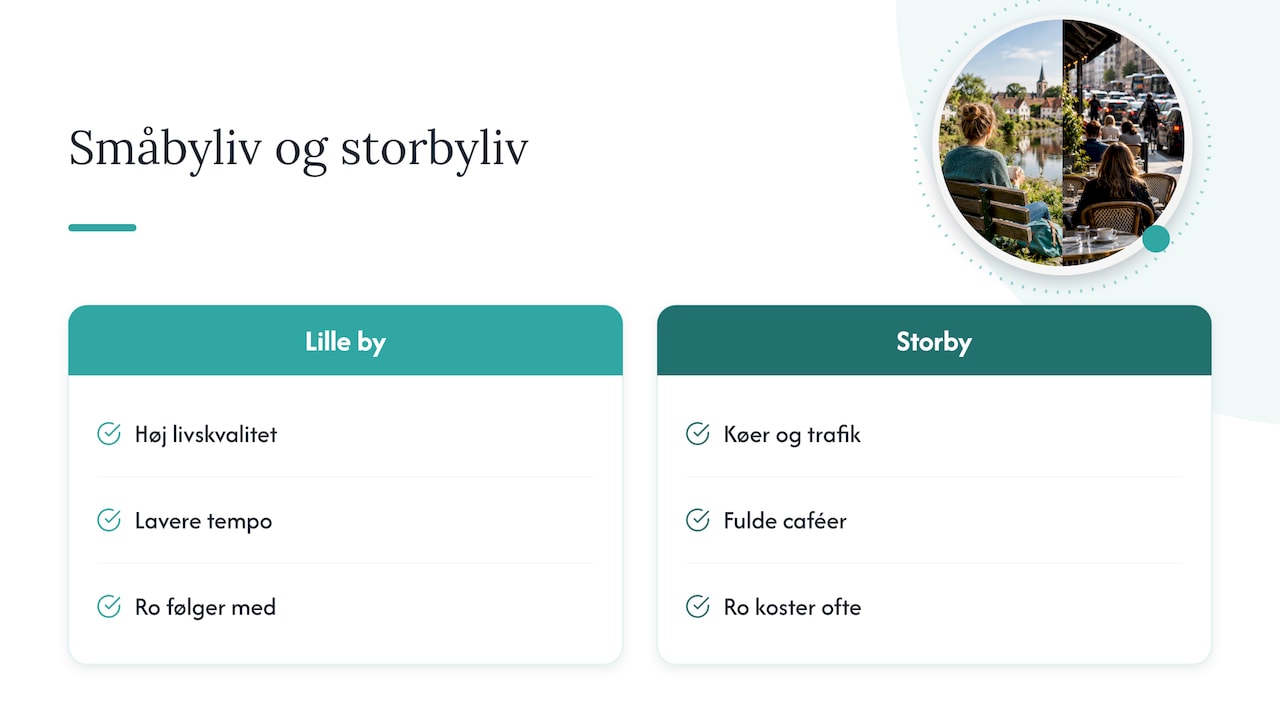
Small town or big city: what do you get?
The big city has its qualities, but the small town offers a different kind of journey. Here is the difference summarized:
| What you are looking for | In the small town | In the big city |
|---|---|---|
| Tempo | Fun, room to stall | Loud, many people |
| Nature | Right outside the door | Requires an outing |
| History | Visible in streets, churches, and dairies | Collected at major museums |
| Local life | Town squares, markets, community centers | Mostly aimed at tourists |
| Contact with locals | Natural and easy | Less often |
| With children | Short distances, little traffic | Long distances, more congestion |
| Planning | The experiences are scattered. | All gathered closely |
The last line is the only one where the big city has an advantage, and that is precisely what good planning solves.
How to plan the trip to a small town
The biggest challenge with small towns is that the experiences are rarely gathered on one website. The museum has its own page, the town festival is on the citizens' association's Facebook, and the hiking trail is located elsewhere. Here's how to approach it:
1. Choose the area based on what you want to experience
Start with what you want to get out of the trip: coast, forest, history, or a mix. Then use a map to see which cities are close to that exact location. On Rejs i Danmark, you can use our interactive map to see experiences in an area grouped together, so you can choose the city that has the most of what you are looking for. See our guide to quick search for experiencesif you want to get started right away.
2. Filter by season, price, and age
Many experiences in small towns are seasonal. The mistake most people make is planning a trip to a coastal town in November and discovering that half of the places are closed. With us, you can filter by season, price, and the participants' age, so you only see what suits your trip and your children.
3. Make a budget with a price estimate
Small towns are often cheaper, but expenses can add up when there are more of you. We show price estimates per. person on the experiences we describe, so you can calculate the trip before you set off.
4. Check the local events
Town festivals, markets, and concerts are what make a trip to a small town special. Look for recurring events in the season you are traveling, and always check the organizer's own page for the current date.
5. Plan less, experience more
In a small town, it is a mistake to fill the day. Put one or two fixed experiences on the schedule and leave the rest open for the path, the café, or the conversation you didn't know existed.
How to Make a Difference as a Guest
Small towns thrive on community. Altinget has reported research showing that more work voluntarily in rural municipalities and in rural municipalities, and that both citizens and associations in rural areas are much more willing to engage in initiatives that benefit the local community. Many of the experiences you encounter are therefore driven by volunteers.
You can support them in simple ways:
- Buy locallyAt the farm shop, at the baker's, and at the market.
- Participate in the eventsA ticket to the town festival or the church concert keeps the tradition alive.
- Eat at the inn or the caféThe small eateries thrive on both locals and guests.
- Respect nature and the trailsTake the waste home and stay on the marked trails.
- Tell about the placeA good review means more to a small business than to a large one.
Our view on small towns
We have built Rejs in Denmark because we believe that the best travel experiences are often found where few people look. The major attractions deserve their place, but a holiday only becomes truly memorable when you also find the small town with the old dairy, the path down to the fjord, and the town festival where everyone is welcome.
The problem has never been that the small towns lack experiences. The problem is that the experiences are hard to find. Therefore, we gather both the well-known places and the hidden gems on one map, with filters for season, price, and age, and an estimated price per. person This way, you can see in a few minutes what a city has to offer and whether it suits you.
Our advice is simple: choose the small town as your base, and use the big attraction as a day trip. This way you get the peace, nature, and local life without missing out on anything.
Tommy
Find your next small town with us
If you want to get started right away, then start with our selection of small towns you must experience in DenmarkFrom there, you can proceed to experiences throughout Denmark, where you can use maps and filters to find what suits your trip, and follow our recommendations when you are ready to book.
Frequently Asked Questions
What is the biggest advantage of visiting a small town instead of a big city?
You get more peace, easier access to nature, and a genuine connection with the local life. The history is visible in the streets, and the events are organized by the locals themselves. It provides a trip that feels more personal than a city visit.
Are small towns good to visit with children?
Yes, short distances, less traffic, and many free nature experiences make them suitable for families. Playgrounds, beaches, farm shops, and small museums are often located close to each other. Use an age filter when planning so the experiences suit your children.
When is the best time of year to explore small towns?
Summer offers the most open attractions and city festivals, while spring and autumn provide tranquility and beautiful nature. In winter, some places are closed, but Christmas markets and events in community halls can make the trip worthwhile. Filter by season so you only see what is open when you travel.
How do I find experiences in a small town I don't know?
Start with a map of the area, so you see the experiences gathered instead of spread across many websites. With us, you can search on the map and filter by season, price, and age. Then check the local organizer's page for current dates.
Is it cheaper to vacation in a small town?
Many of the best experiences in small towns are free, such as nature, city walks, and playgrounds. It makes it easy to keep expenses down. See the price estimate per. person for the paid experiences, so you can set a realistic budget.
Sources
- Politiken: Quality of life is highest in smaller Danish cities
- Regeringen: Sammenhæng og balance, landdistriktsudspil
- RADAR: Ottosen og Hyllested om lokalhistorie og kulturlandskab
- Folkeskolen.dk: Even in the smallest town, local history can inspire the students
- TV 2 Echo: Life is cheaper, and you can party in a very special way
- Altinget: Frivillige holder liv i landsbyerne