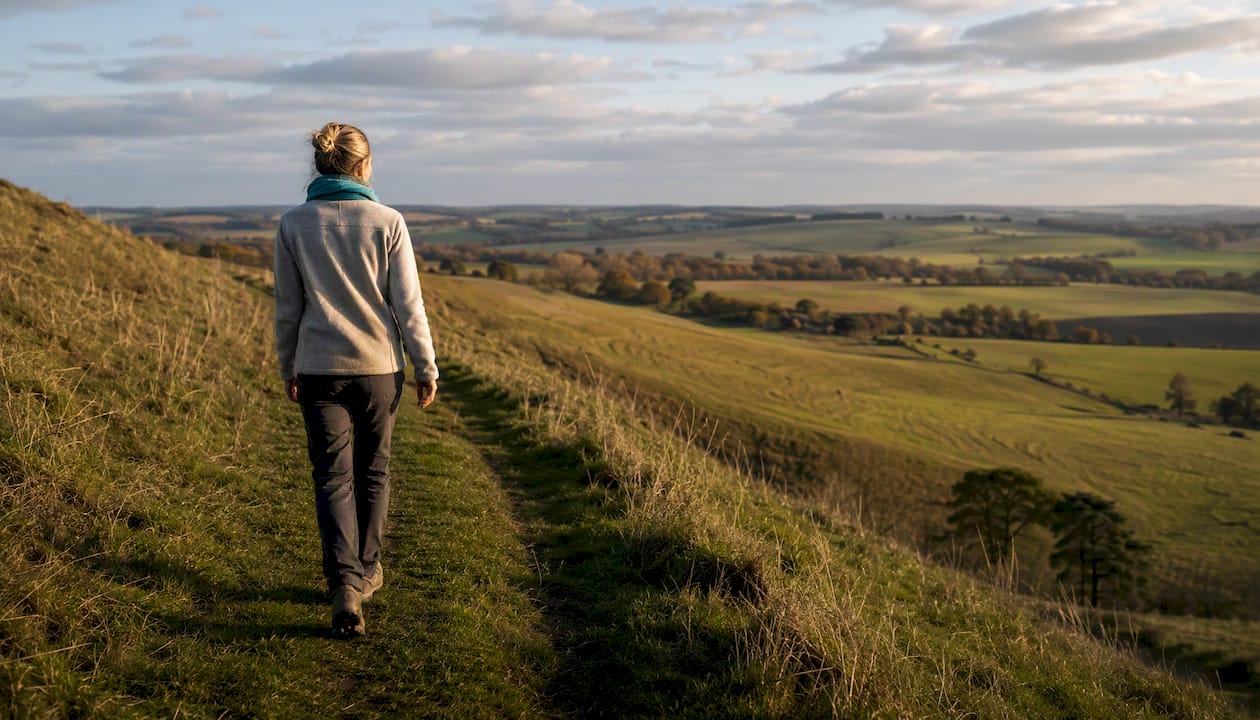
Choose outdoor activities because they provide measurable physical, mental, and social benefits that are difficult to achieve indoors in the same way. And Danish study from the University of Copenhagen in 2025 And reports from WHO and EEA point consistently in that direction. With Danish nature right outside the door, the benefits are easy to translate into everyday life.
Physical benefits of being active outdoors
The body reacts differently when you train in nature instead of on a treadmill. The phenomenon is often called "green exercise," and it's not just about fresh air. Natural environments reduce the perceived effort under the same physical exertion, making it easier to maintain motivation over time, according to CORDIS' review of research in training environmentsIt is an important detail: many give up on training, not because the body can't handle it, but because it feels too hard. Nature changes the experience.
The effects are also evident in concrete figures. Long-term access to green spaces is associated with lower blood pressure and a reduced risk of cardiovascular diseases in adults, according to PHENOTYPE research cited by CORDIS. It's not about individual trips, but about regular contact with nature close to everyday life.
If you want lasting effect, frequency should come before intensity. Some simple principles work best in practice:
- Walk or cycle in nature at least three times a week, even if the trips are short.
- Choose routes close to home rather than rare excursions to distant nature.
- Combine moderate intensity with longer duration rather than short, intense intervals.
- Let the weather be secondary. Rain and wind do not drain the effect; they only sharpen the choice of equipment.
Mental benefits and recovery: stress, mood, and cognition
Nature directly affects the nervous system, and the effect can be measured after a few hours.
A quick walk in green surroundings lowers cortisol levels and improves mood more than the same activity in the city or gym. The Danish study from the University of Copenhagen measured lower heart rate and higher heart rate variability in participants who spent time in nature compared to participants who moved in urban environments or at a fitness center. Higher heart rate variability is a sign that the body is recovering better and is less stressed.
WHO's European review of green and blue spaces finds a generally positive association with mental health but emphasizes that the effect depends on the type and quality of nature. It's not just that it existsA busy park strip does not provide the same tranquility as a forest or coastal area.
The practical question is therefore: which environment suits your needs right now? If you are going to fall after a stressful day, you choose quiet forest or water. The body's health design can actually be targeted according to research from the University of Copenhagen: therapy gardens for stress, more open natural types for energy and social stimulation. If you want to shift gears and have energy, open, varied landscapes with hills or trails work better than a flat, quiet path.
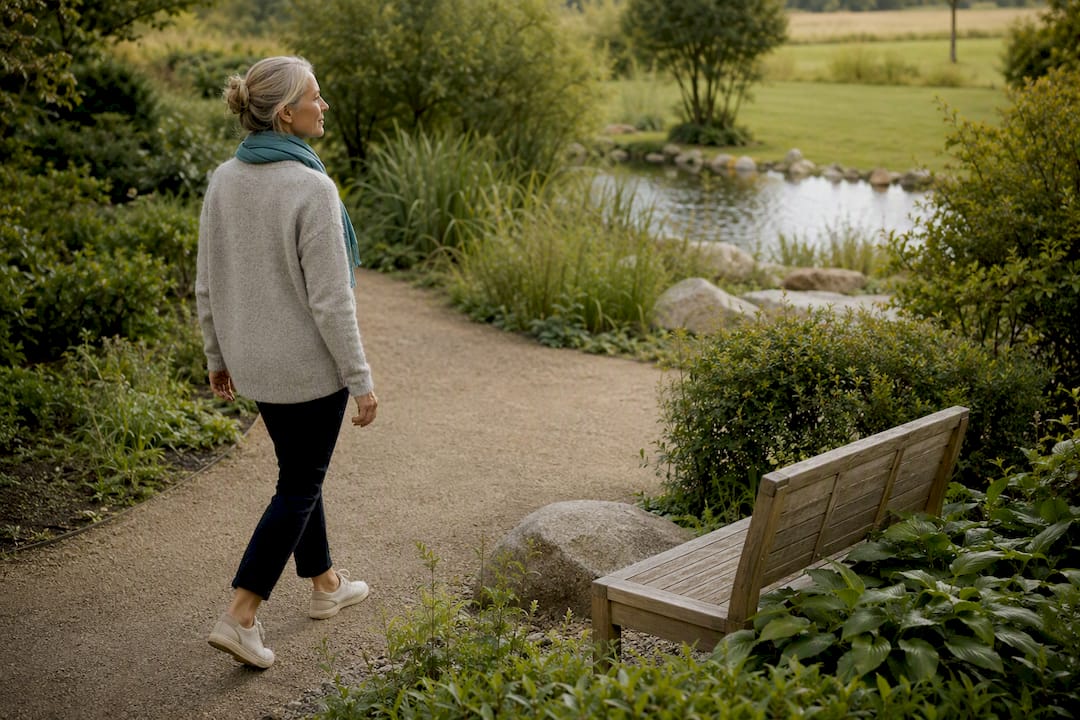
Social benefits and community through outdoor activities
Nature is rarely just a backdrop for individual achievement. It is also a framework for relationships, and that function is often underestimated.
For children, joint outdoor activities strengthen both motor skills and social skills because play in nature requires cooperation and improvisation in a way that structured indoor activities do not. For the elderly, green and blue areas are according to WHO and EEA's joint guidance An important source of social contact and mental restitution, especially during a period in life when social networks often shrink.
Organized activities such as hiking groups or cycling clubs provide structure and familiar faces, making it easier to maintain a habit. Unorganized trips with family or friends, on the other hand, provide more freedom and fewer barriers to get started.
Some tricks make it easier to keep outdoor activities social.
- Set a fixed day in the calendar so that the trip does not compete with other plans.
- Invite someone who has never tried the activity, instead of only experienced friends.
- Choose routes with breaks and viewpoints where the conversation can flow.
- Switch roles along the way so that children or new participants also take responsibility for direction or pace.
Examples of outdoor activities in Denmark: what, who, and how
Danish nature is rarely extreme, but it is varied enough to meet most needs and levels.
- Walks in the forest or by the coast. Suitable for all ages. Best from spring to fall, but works all year with proper footwear. Only requires good hiking shoes and layered clothing.
- Cycling on local trails. Suitable for families and commuters who want to combine exercise and transportation. Safety mainly concerns helmet and visibility during the dark months.
- Kayaking on fjords and lakes. God for par eller grupper, der søger en anderledes vinkel på naturen. Requires swimming skills and always a life vest.
- Shelter accommodation. Popular among families and scout groups during the summer months. Requires an insulated sleeping pad, even on warm nights.
- Nature safari for wildlife. Fits well for family children during the twilight hours in spring and autumn. Requires calm, distance from the animals, and patience.
- Outdoor yoga in parks or on beaches. Ideal for those who want to combine calm with activity. Only a meadow and a windless place are necessary.
- Mountain biking in hilly terrain. Suitable for experienced exercisers seeking a challenge. A helmet and a brake check are not up for negotiation.
You can find specific routes and family-friendly suggestions in The guide to nature experiences in Denmark and I Inspiration listen for outdoor family activities.
Evidence and how we know it: what the studies actually show
| Source | What was investigated | Main result |
|---|---|---|
| University of Copenhagen, 2025 | Physiological goals during walking in nature, city, and fitness center | Lower cortisol, lower heart rate, and higher heart rate variability during walking in nature |
| WHO Europe | Systematic review of green/blue areas and mental health | Positive correlation, but the effect depends on the type and quality of nature |
| EEA | Social inequality in access to green spaces in Europe | Lower socio-economic groups often gain the greatest health benefits from improved access. |
| CORDIS / PHENOTYPE | Long-term effects of daily contact with nature | Access near home has a greater effect than rare visits to distant nature |
The study from the University of Copenhagen is the most direct Danish evidence that the environment itself, not just the movement, makes a difference. WHO and EEA's reports add a European perspective: the health effect of nature is real, but it is not evenly distributed. Additionally, there is a concrete Danish response to the inequality problem: the Move Green project at the University of Copenhagen tests accessible paths and design solutions so that people with mobility impairments can also benefit from nature, not just in theory.
How Rejs in Denmark helps you plan outdoor experiences
Travel in Denmark gathers routes, attractions, and nature experiences in an interactive map with filters for season, price, and participant age. It makes it possible to go from "I want to go out into nature" to a concrete plan in a few minutes, without browsing ten different sites. Price estimate per. Person and age recommendations help you choose activities that actually suit your family or group, instead of guessing.
Long-term effects and prevention of lifestyle diseases
The great benefit of outdoor activities does not come from a single trip, but from the habit over the years. Regular physical activity in nature is associated with a lower risk of cardiovascular diseases and better regulated blood pressure over time, according to PHENOTYPE research. It is not a one-time gain, but an accumulated effect of many small choices.
Public health data confirms that more countries are taking this insight seriously. WHO Europe's follow-up from 2024 shows that the average implementation of indicators for physical activity in EU countries increased from 64.7% in 2015 to 81.8% in 2024. It reflects a broader political recognition that prevention through movement is cheaper and more effective than treatment after a lifestyle disease has taken hold.
For the individual, it means that outdoor activities should not be seen as an extra item on the list, but as an investment that pays off over decades. Type 2 diabetes, high blood pressure, and certain cardiovascular diseases are all conditions where lifestyle plays a significant role, and regular movement in nature is one of the most accessible countermeasures that most people can implement themselves.
The point is not that you should train hard every day. It's about making contact with nature a regular part of your week, just like brushing your teeth or taking a shower. Such small gains that accumulate over years are harder to measure in a single study, but they are the ones that ultimately determine whether you avoid a chronic diagnosis or not.
How outdoor activities can enhance children's development and learning
Children who move freely in nature develop motor skills in a different way than children who primarily move within structured, indoor environments. Uneven terrain, branches, sand, and water force the body to constantly adjust balance and coordination, which is difficult to replicate on a gym mat.
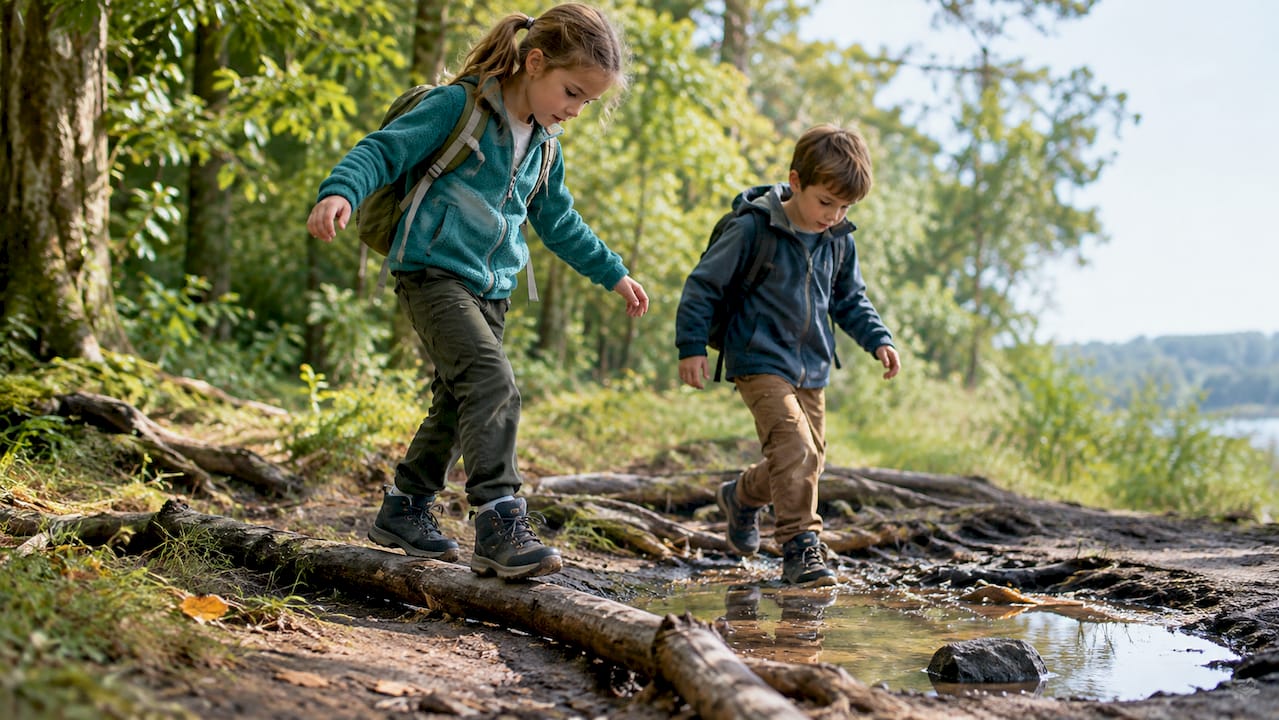
From a learning perspective, nature also offers something that the classroom cannot. Children who explore wildlife, plants, and weather on their own develop curiosity and problem-solving skills through direct experience rather than through explanations. Unorganized play in nature requires children to come up with rules, negotiate roles, and resolve conflicts, which enhances social skills in a way that adult-led activities rarely do to the same extent.
There is also an emotional side. Natural environments give children space to be loud, messy, and exploratory without the same social norms that apply indoors. It creates space for independence, which is difficult to achieve in more controlled environments.
For parents, the practical point is simple: you don't need a perfect nature experience. A forest edge, a beach, or a local park is enough for children to benefit from the free, unpredictable movement that nature offers. What matters most is that it happens regularly, not that it happens in an exotic place.
Environmental benefits of using and protecting nature through activities
There is a healthy circle in outdoor activities that is often overlooked: when more people actively use nature, the interest in protecting it also increases. People who walk, cycle, or sail through a landscape typically place more importance on preserving that landscape than people who never visit it.
EU data shows an increasing recreational use of forest ecosystems, where the economic and experiential value of daily visits is documented. In a report from the EU Commission's research centerThe bridge creates an economic argument for preserving forests and natural areas, not just an emotional one.
At the same time, the increasing use demands responsibility. Cattle become worn out, wildlife is disturbed, and trash is left behind if visitors do not be considerate. This is especially true in popular, easily accessible natural areas, where the number of visitors is increasing the fastest. Responsible behavior, such as staying on the trails, taking trash home, and keeping distance from wildlife during breeding season, is not bureaucracy. That is the price that ensures nature will still be there to use in ten years.
Therefore, the best approach is to see usage and protection as two sides of the same coin. You can find inspiration on how families combine experiences with responsible behavior, in The guide to sustainable family routes.
Motivations and barriers for choosing outdoor activities
Most Danes have no doubt that nature is good for them. The problem is rarely conviction, but friction in everyday life.
Weather is the most mentioned barrier, but it is often overrated as a problem and underrated as a solution. Proper gear, layered clothing, and waterproof boots eliminate most of the discomfort caused by rain and cold. Time is another barrier: many people feel that a "real" nature experience requires a whole day, when 20 minutes in the nearest forest actually provides measurable benefits.
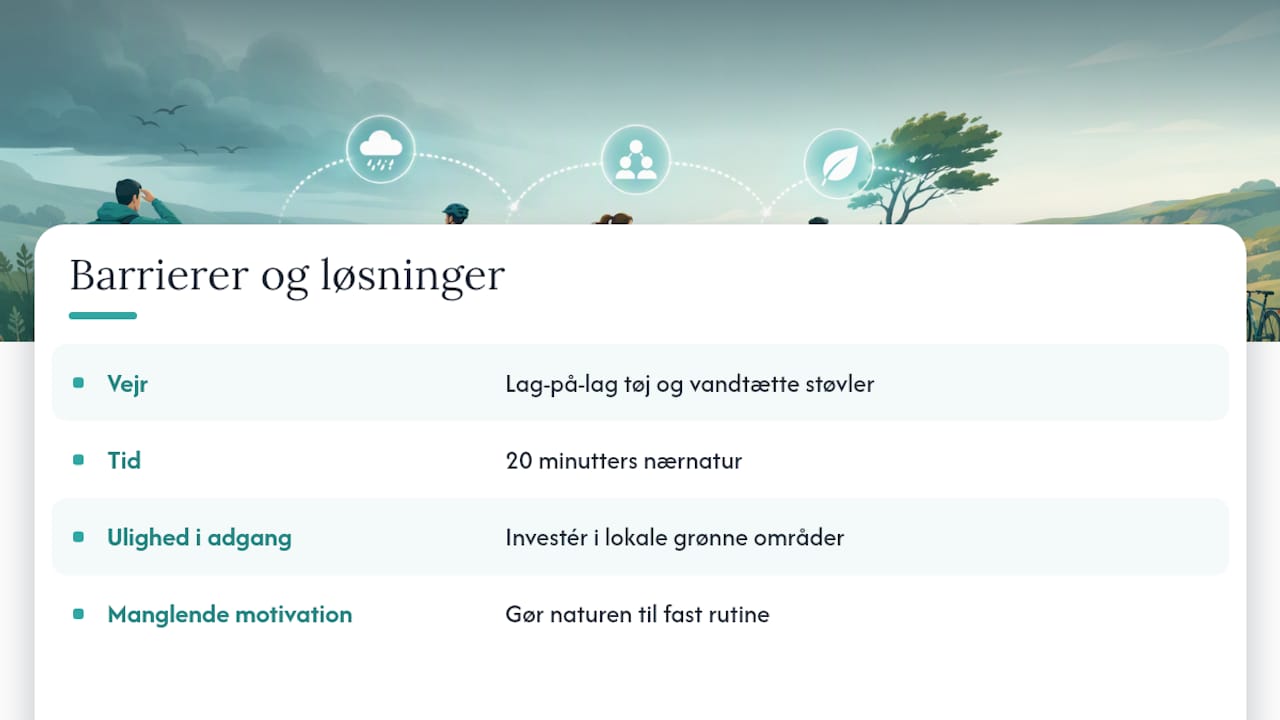
Inequality of access is a more structural barrier. EEA's analysis of green spaces in Europe shows that the quality and proximity of nature are not evenly distributed, and that it is often the groups that would benefit the most from nature that have the greatest difficulty accessing it. It is not an individual motivation problem, but a matter of urban planning and investment in local green spaces.
The most sustainable motivation is rarely a big decision to "live healthier". On the other hand, it is about making nature a standard choice: a regular walk after work, a bike ride on the weekend, a fixed bench by the water that you visit without thinking. When access is easy, the need for motivation almost disappears on its own.
A final word on getting started
A regular afternoon walk along a Danish coast or through a beech forest often shows more than numbers can: the pulse drops, the conversation becomes easier, and the walk never feels like a duty. Don't wait for perfect weather or the perfect route. Choose an activity from the list above and schedule it for this week; that's the whole difference between good intentions and a habit that sticks.
— Tommy
Find routes and plan your next outdoor experience on Travel in Denmark
Rejs i Danmark is the place where you can avoid gathering research from ten different sites when planning an outdoor trip. The portal's interactive map and filters for season, price, and age make it possible to go from idea to concrete plan without spending a whole evening on research. Start with The practical travel tips for Denmarkif you want to get a handle on the basics, or look directly at activity holidays in Denmarkif you already know that it will be a longer outdoor stay. If you combine the trip with a dining experience or an overnight stay along the way, it can This guide to accommodation and gastronomy give you ideas on how to put it together. Use the search function on Rejs i Danmark to filter by your region and age group, so you have a concrete plan, not just inspiration, already tonight.
Sources
Do you want to dig deeper, do these sources document the main points in the article? The study from the University of Copenhagen shows the physiological effects of nature training. WHO's report on green and blue spaces covers mental health broadly in Europe. EEA's analysis documents inequality in access to nature. The Move Green project describes the work on accessible nature for people with mobility impairments.
- The motion in nature is superior to the city and fitness center (KU 2025)
- Green and blue spaces and mental health (WHO Europe)
- Who benefits from nature in cities? (EEA)
Frequently Asked Questions
Why choose outdoor activities over indoor training?
Outdoor activities provide lower cortisol, better mood, and higher heart rate variability than the same exercise in the city or at the gym, according to a Danish study from the University of Copenhagen. Nature also makes the activity more enjoyable, increasing the likelihood that you will maintain the habit.
What exactly are outdoor activities?
Outdoor activities are all forms of physical or recreational movement performed outdoors, from walking and cycling to kayaking, shelter camping, and outdoor yoga. What they have in common is that nature itself is an active part of the experience, not just a backdrop.
What outdoor activities are best suited for children?
Free play in the forest or by the water, walks, cycling, and nature safaris are suitable because they combine motor development with curiosity and social play. Unorganized play in natural terrain strengthens balance and problem-solving in a way that indoor activities rarely do.
What are the biggest challenges of outdoor sports in Denmark?
Weather, limited time, and unequal access to good green spaces are the most common barriers, according to the EEA's analysis of Europe. Proper equipment and choosing nearby nature over distant destinations solve most of the challenges in practice.
How do I find the best outdoor leisure activities in my area?
Use a filter card for season, price, and age to find activities near you, as offered by Rejs i Danmark, instead of searching randomly. Proximity matters more for long-term effect than finding the most spectacular but distant experience.