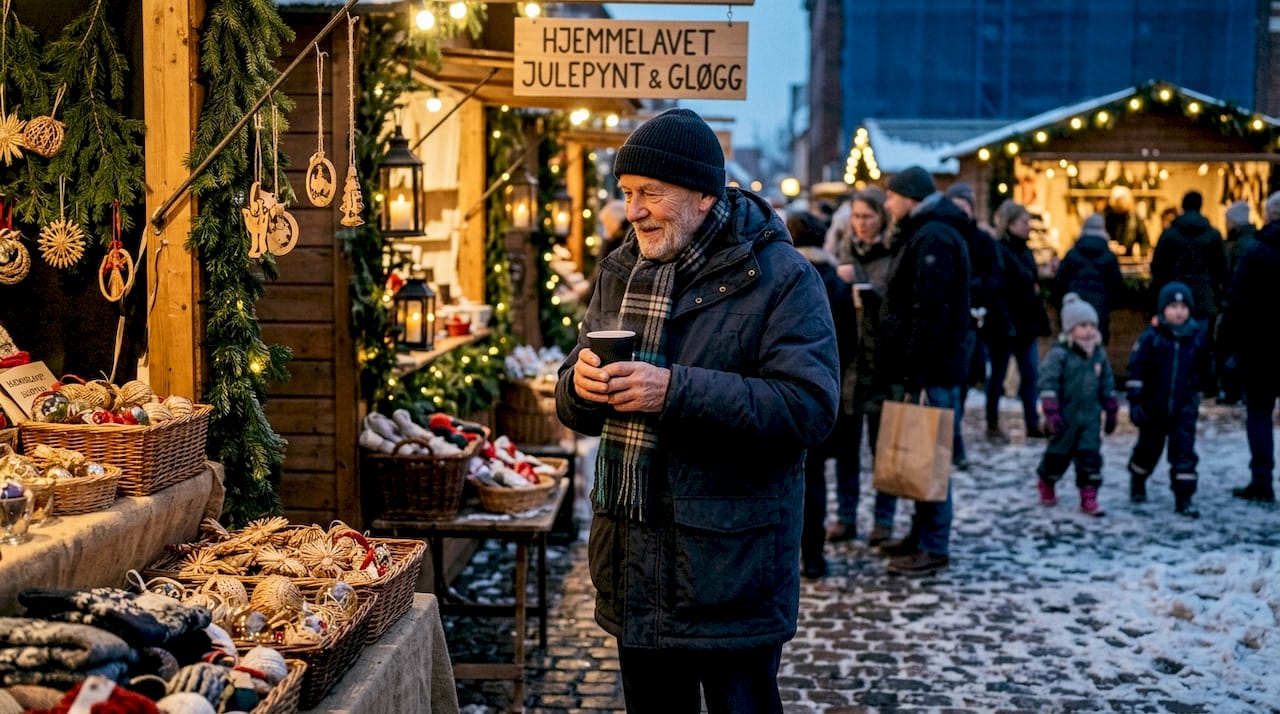
TL;DR:
- Danish Christmas markets range from small, traditional stalls to large, modern events. They connect culture, craftsmanship, food, and community with Christmas spirit. Choosing a market depends on whether you prefer classic coziness or modern design experiences.
Many travelers imagine that all Danish Christmas markets look the same: a handful of stalls, some mulled wine, and maybe a Christmas ornament or two. But the reality is much more nuanced. Denmark offers hundreds of markets Spread across the entire country, ranging from intimate, traditional markets in small provincial towns to large, modern experiential events in the country's big cities. This article gives you an overview of what a Danish Christmas market really is, which traditions are still alive and well, and how you as a traveler can make the most of your Christmas experience in Denmark.
Main Points
| Point | Details |
|---|---|
| Many kinds of Christmas markets | Danish Christmas markets range from classic to modern and can be found all over the country. |
| Popular Christmas markets | Places like Tivoli, The Old Town, and the H.C. Andersen Christmas Market attract thousands of visitors. |
| Planning is crucial | God preparation ensures the best return on your Christmas market visit and good Christmas spirit. |
| Local traditions | The small markets often offer cozy and unique local Christmas experiences. |
What is a Danish Christmas market?
To understand why Christmas markets attract so many, we first need to look at what they actually consist of. A Danish Christmas market is not just a collection of stalls with Christmas decorations. It is a cultural event that connects Danes with a long tradition of community, craftsmanship, and seasonal joys. The concept of the market itself has roots in medieval European markets, but in Denmark it has developed into something quite special, characterized by the typically Danish understanding of coziness.
You can read more about What are Christmas markets and their origin, but the core is always the same: a place where people meet, trade, and enjoy the season's atmosphere. Most markets open from mid-November and run up to Christmas Eve, and the atmosphere gradually builds as December approaches.
Typical elements at a Danish Christmas market include:
- Madboder with apple pancakes, roasted almonds, sausage, and hot mulled wine
- Craftsmen's booths with homemade Christmas decorations, ceramics, textiles, and wooden figures
- Entertainment some Christmas concerts, elf parades, and live music
- Christmas trees and decorations he creates the classic atmosphere
- Activities for children a carousel, an ice skating rink, and a meeting with Santa Claus
The scent is a big part of the experience. When you step into a Christmas market, you are greeted by a mixture of pine, cinnamon, roasted almonds, and mulled wine, which is almost impossible to describe precisely but instantly recognizable. It is a sensory experience that puts the body in the Christmas spirit long before you've seen a single stall item.
Christmas markets are not just shopping. They are a window into Danish culture and community spirit, wrapped in lights and scent.
The large markets in the cities can have hundreds of stalls and attract thousands of visitors daily. On the other hand, the small markets in villages and smaller towns are often more personal, with local producers and a more intimate atmosphere. Both types have their charm, and it entirely depends on what you're looking for. Learn more about Christmas traditions in Denmark to understand the cultural context behind the markets.
Professional tip: Visit a Christmas market on weekdays instead of weekends if you want to avoid the biggest crowds and have plenty of time to talk with local artisans.
Popular Danish Christmas markets and special experiences
Once you understand the basic idea of Christmas markets, it's time to discover where the most popular and authentic experiences are. Denmark has a rich selection, and the list of Christmas markets grows every year with new additions and revived traditions.
Here is an overview of some of the most well-known. Christmas markets in Denmark:
| Marked | By | Unique | Typical opening |
|---|---|---|---|
| Tivoli Christmas Market | Copenhagen | Amusements and lights | Mid-November |
| Nyhavn Christmas Market | Copenhagen | Historical channel, coziness | Mid-November |
| Højbro Square | Copenhagen | Central, large selection | Mid-November |
| H.C. Andersen Christmas Market | Odense | Magical atmosphere | Mid-November |
| Christmas in The Old Town | Aarhus | Historical authenticity | Mid-November |
| Christmas market in Aalborg | Aalborg | The heart of the city, local character | Mid-November |
Tivoli in Copenhagen is probably the most famous Christmas market in Denmark, and for good reason. The amusement park is transformed into a glowing winter wonderland every year with hundreds of Christmas trees, specially designed decorations, and an impressive selection of stalls. It is grand, it is festive, and it is an experience that appeals to all age groups.
In Odense, you will find H.C. Andersen Christmas Market, who draws on the city's strong connection to the adventure poet. The atmosphere here is more narrative, with references to H.C. Andersen's universe, and the market has a special charm that sets it apart from the more commercial alternatives.
Aarhus offers The Old Town Christmas Market, which is a unique experience because it takes place in a living open-air museum. Here you can experience how Danes celebrated Christmas a hundred years ago, with costumed guides, historical stalls, and authentic Christmas decorations from bygone eras.
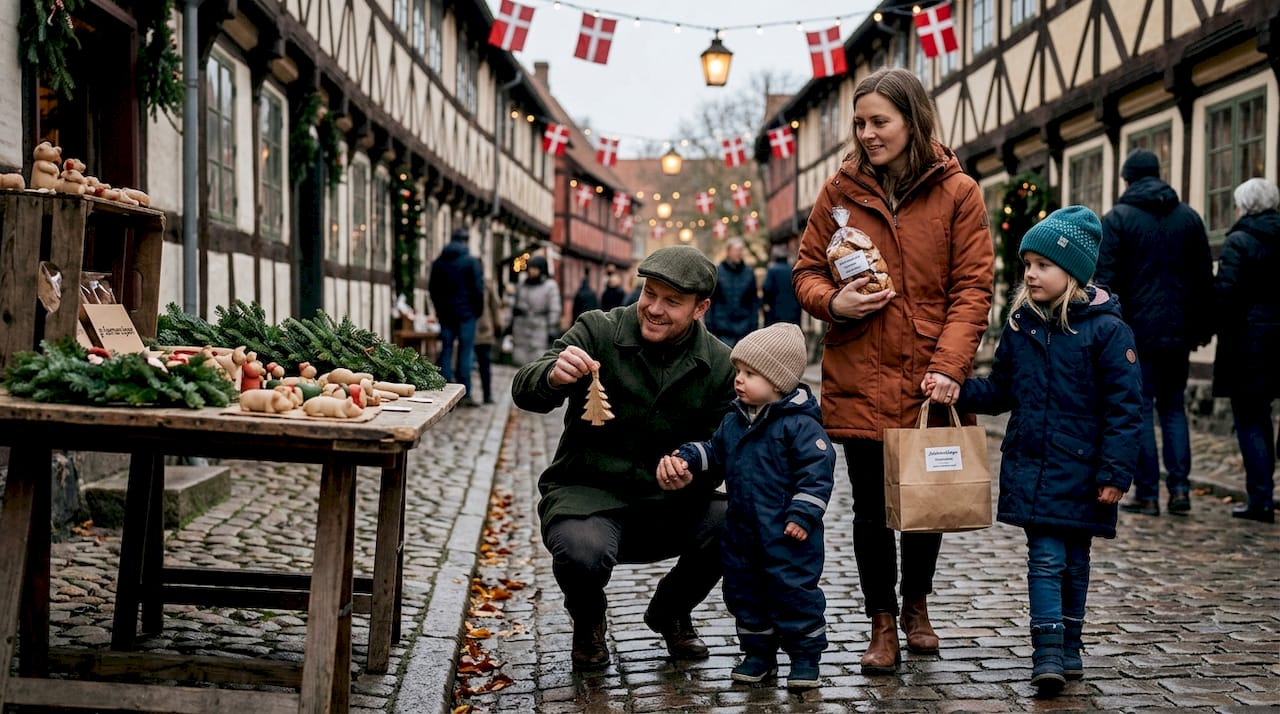
You will find in Aalborg Christmas market in Aalborg, which is deeply rooted in the city's identity and attracts visitors from all over North Jutland. The market is known for its lively atmosphere and its strong focus on local producers and specialties.
Special experiences to look for across markets:
- Santa parades and Christmas meetings for children
- Live music and Christmas concerts
- Ice rinks at selected markets
- Local dishes such as apple pancakes with jam and whipped cream
- Handmade decoration that you won't find in the supermarket
The difference between traditional and modern Christmas markets
But not all Christmas markets are the same, and modern and traditional markets are presented side by side in Denmark. It is important to understand the difference so that you choose the market that suits your expectations and interests.
A traditional Christmas market emphasizes heritage and continuity. Here you will find booths with homemade products, recipes that have been passed down through generations, and an atmosphere intentionally reminiscent of the past. The decorations are typically made of natural materials such as spruce, straw, and wood. The mine is classic Danish: apple slices, mulled wine, roasted almonds, and gingerbread cookies.
A modern Christmas market has a different focus. Here, Danish Christmas traditions are often viewed in a new light, with design, art, and innovation at the center. The borders perhaps sell Scandinavian design decorations, handmade jewelry, or gourmet food with a twist. The atmosphere is more urban and curated, and the target audience is often younger city dwellers with an interest in aesthetics and sustainability.
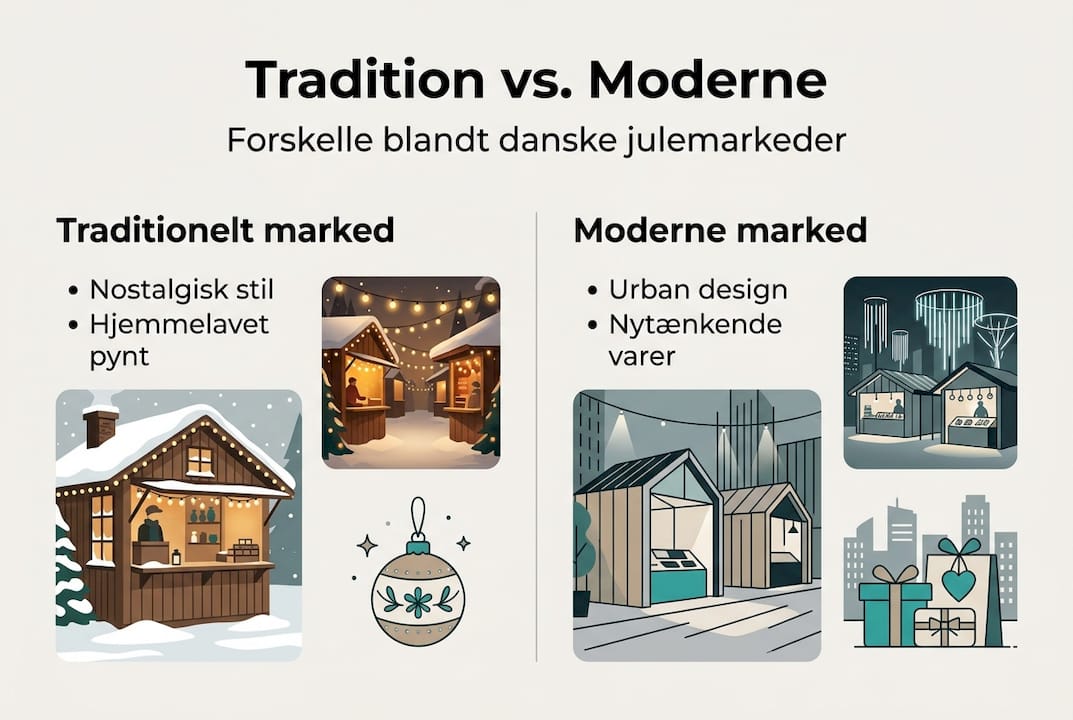
Here is a comparison of the two types:
| Category | Traditional market | Modern market |
|---|---|---|
| Mood | Nostalgic, warm, folksy | Urban, curated, aesthetic |
| Products | Homemade, classic decoration | Design, art, gourmet |
| Target audience | Familiar, all ages | Young adults, interested in design |
| Examples | Christmas in The Old Town | Design markets in Copenhagen |
| Price level | Varied, often low | Often higher price level |
When should you choose what? If you are traveling with children or seeking the classic Christmas feeling, a traditional market is the right choice. However, if you want inspiration for home decor, unique gifts, or to experience Danish design culture, a modern market is more relevant. Many travelers visit both types during their Christmas holiday in Denmark to get the full picture.
The best reasons to choose a traditional market:
- You will experience authentic Danish Christmas spirit and culture
- You are looking for handmade, personalized gifts
- You travel with children who love the classic Santa Claus and elf atmosphere
- You will taste traditional Danish Christmas dishes
The best reasons to choose a modern market:
- You are interested in Scandinavian design and crafts.
- You are looking for unique, contemporary gifts
- You will experience how Denmark interprets Christmas in the present day.
- You prefer a calmer and more curated atmosphere
How to get the most out of your Christmas market visit
Once you have chosen the market, the next step is to get the full experience. Here are our best tips for planning and navigating the Danish Christmas markets.
First and foremost: plan well in advance. Traditions begin in mid-November and gradually build the atmosphere towards Christmas, so you actually have plenty of time to choose the right moment. The first weeks of November are often calmer, while December is the busiest period.
- Check opening hours in advance. Many markets have varying opening hours on weekdays and weekends, and some close earlier than expected.
- Come early or late in the day. Midday and weekends are the busiest times. Mornings on weekdays are ideal for those who want peace.
- Dress properly. Christmas markets take place outdoors in cold weather. Layer upon layer, waterproof boots and gloves are not an exaggeration.
- Use public transportation. Parking at the large markets can be challenging. Taking the bus is often the easiest solution, especially in Copenhagen and Aarhus.
- Tag cash with. Fewer stalls still prefer cash, even though MobilePay is widespread in Denmark.
- Set aside time to taste. Don't just pass by the food stalls. Sit down with a cup of mulled wine and an apple slice and enjoy the atmosphere.
- Ask the locals. The innkeepers and craftsmen are often the best sources for recommendations about other markets and local experiences.
Professional tip: Many markets offer special activities at certain times, such as Santa parades or Christmas concerts. Check the program on the market's website before you leave so you don't miss the highlights.
For families with children, it is worth investigating which markets have special children's activities. In many places, you will find carousel rides, Santa meetings, and creative workshops that keep the little ones entertained while the adults shop. Find Practical advice for Christmas markets and inspiration for Christmas celebration in Denmark on our platform.
Why Christmas markets are more than just market nonsense
With all the practical tips in place, we can take a closer look at what Christmas markets mean for Danish culture and for you as a visitor. Our experience shows that the travelers who remember their Christmas market visits best are not the ones who buy the most things. They are the ones who stop, breathe, and let the atmosphere sink in.
It is the moment when you hold a warm cup of mulled wine with both hands in the cold. The conversation with a craftsman who talks about his work with pride. The sound of a Christmas bell ringing in the background while the children run around the Christmas tree. It's the memories that stay fixed.
Christmas markets also strengthen the local city identity in a way few other events do. It brings the local community together, provides local producers with a platform, and creates a shared experience across generations. It is not a coincidence that many cities invest heavily in their Christmas markets as part of their cultural profile.
Our point is this: don't go to the Christmas market with a shopping list. Walk with open senses and time to let yourself be surprised. The best experiences are often found in the unexpected, the small market in a side street, or the vendor who insists on giving you a tasting. Experience the markets as a cultural experience and let them tell you something about Denmark that you didn't know before.
Plan your magical Christmas trip in Denmark
When you're ready to go out, you can use these resources to plan your perfect Christmas experience. Rejs i Danmark has gathered more Christmas market experiences and winter activities on one platform, so you can easily find the market or experience that suits you and your travel group. Whether you're looking for the classic Christmas atmosphere, modern design markets, or family-friendly activities, you'll find inspiration and practical information here. Start with ours Complete guide to Denmark or use ours Checklist for a day trip to ensure that you don't forget anything important. Your next magical Christmas journey begins here.
Frequently Asked Questions
When do Christmas markets usually start in Denmark?
Most markets open in mid-November and run until Christmas or New Year's, with the busiest periods in December.
Are all Danish Christmas markets traditional?
No, some Christmas markets focus on modern design and crafts rather than traditional Christmas customs, and both types have their own qualities.
Where can I find the biggest Christmas markets in Denmark?
Copenhagen, Odense, Aarhus, and Aalborg have the country's most popular Christmas markets, including Tivoli, H.C. Andersen Christmas Market, and Christmas in the Old Town.
Can I find authentic local Christmas traditions at Christmas markets?
Yes, especially smaller markets outside the cities often focus on local Christmas traditions, homemade products, and regional specialties.
Recommendation
- Christmas markets in Denmark – experience the magical Christmas atmosphere – Travel in Denmark
- How to Celebrate Christmas in Denmark: Everything You Need to Know – Travel in Denmark
- What are Christmas markets – Tradition and experiences – Travel in Denmark
- H.C. Andersen Christmas Market – Travel in Denmark