TL;DR:
- More than two-thirds of Danes visited a museum in 2024 with high satisfaction. Art museums play important roles in cultural heritage, society, and local tourism. Contributes to the economy, social cohesion, and year-round tourism, especially in the provinces.
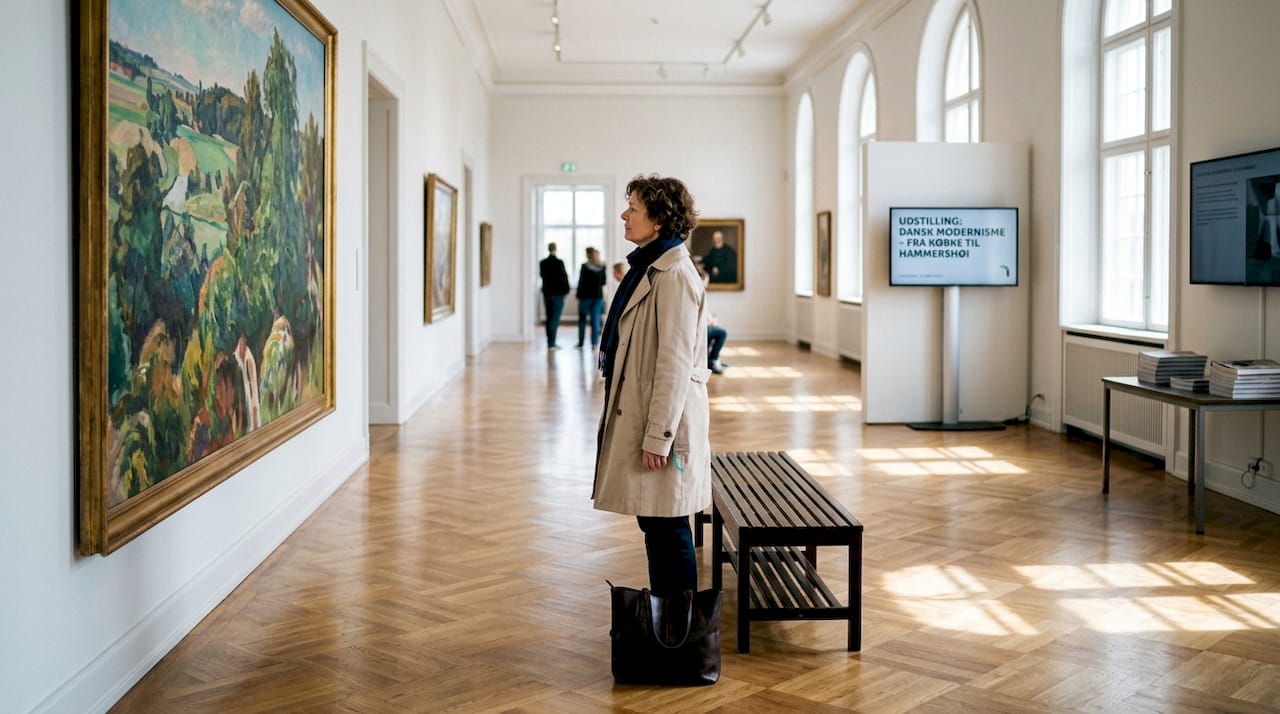
More than two-thirds of Danes visited a museum in 2024, and 66% of Danes Chose to do it voluntarily and with high satisfaction. It's not a coincidence. Art museums in Denmark are not just places where people seek shelter from the rain. They are living centers of cultural heritage, social cohesion, and tourist magnets that attract visitors from all over the world. This article explains what art museums really mean for Danish society, why they are crucial for local tourism, and how you as a traveler can make the most of your next visit.
Main Points
| Point | Details |
|---|---|
| Art museums collect and educate | They function as cultural heritage bearers with a focus on communication, research, and diversity. |
| Supports local tourism | Art museums attract both Danish and international visitors and promote year-round tourism. |
| Motivating societal development | They create economic activity, life, and community in local areas and serve as drivers of growth. |
| Plan for the best yield | Combine museum visits with nature and culture routes, and use practical planning tools. |
Art museums as cultural heritage and community centers
An art museum is not just a space filled with paintings. It is a place where the past and the present meet, and where society's values become visible. But what actually distinguishes an art museum from a natural history museum or a local history archive? The answer lies in focus and function.
Art museums focus on visual arts and visual culture. The collector, preserves, and disseminates works that reflect human creativity and societal development. Do you want to understand what Danish art museums are In a broader sense, it is about institutions that actively work to make art accessible to everyone. It is not a passive archiving function. It is an active social role.
The Danish Museum Organization describes it clearly: The art museums serve society through research, collection, preservation, dissemination, and exhibition of cultural heritage There are five functions that together make the museums something much more than exhibition houses.
The central societal tasks for art museums include:
- Conservation a cultural heritage for future generations
- Research In art history and visual culture
- Dissemination to schools, families, and tourists
- Inclusion from marginalized groups and new voices
- Sustainability I drift and procurement policy
The many museums in Denmark ranging from large nationally recognized institutions like Louisiana and SMK to smaller regional art museums, each playing an important role in the local community.
Museums are not just repositories of the past. They are active co-creators of the cultural identity of the future.
This perspective is important to remember when planning your trip. A visit to an art museum is not just an experience for you. It is an investment in an institution that works for the entire society.
Art museums and their impact on local tourism
Tal taler deres eget tydelige sprog. Danish museums had 17.5 million visits in 2024, and art museums accounted for 16% of the total visitor numbers. That corresponds to nearly 2.8 million visits to art museums in just one year.
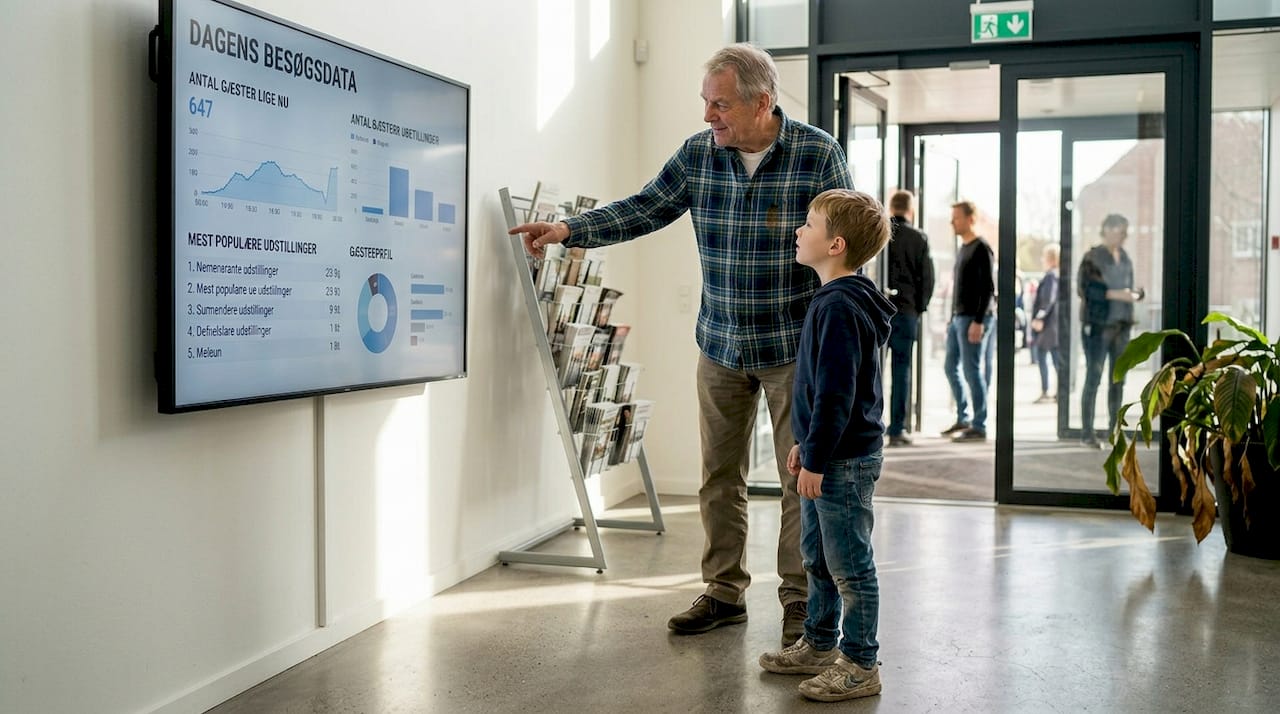
These words do not just reflect popularity. They show that art museums function as independent destinations that attract people from near and far. Actually is 31% of museum visitors International tourists, and 56% of all visitors are first-time visitors. It means that the museums constantly attract new eyes and new money to the local economy.
Visit statistics for Danish museums 2024
| Category | Tal |
|---|---|
| Total museum visits | 17.5 million |
| Angel at art museums | 16% (ca. 2.8 million) |
| International tourists | 31% of users |
| First-time visitor | 56% of users |
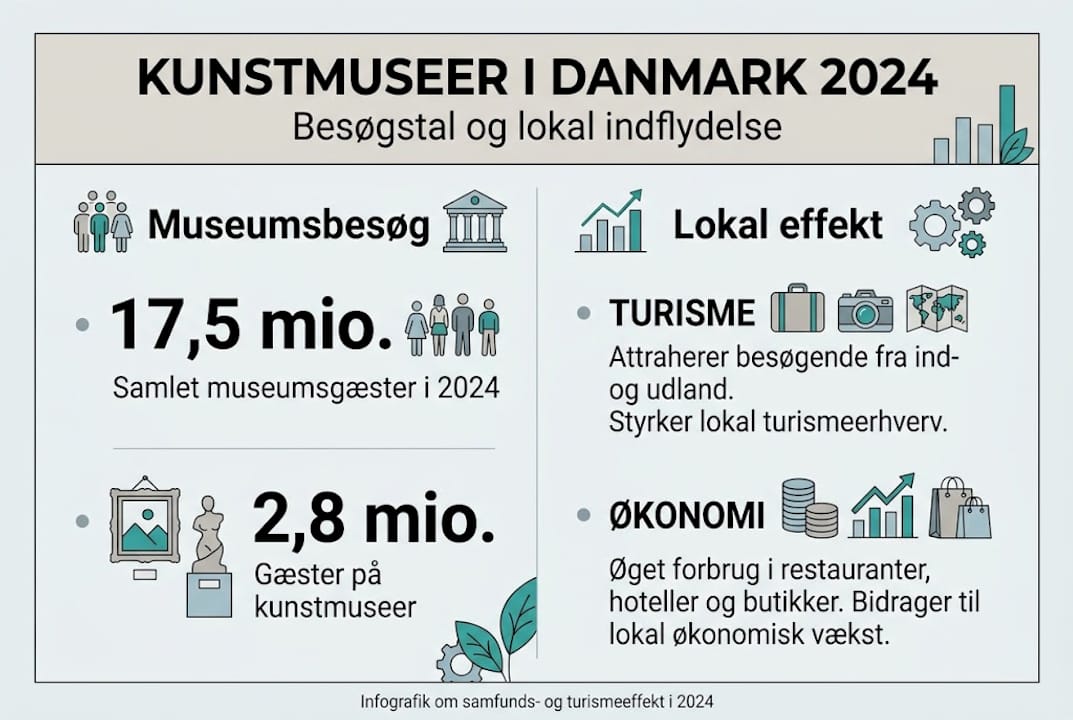
Art museums function as anchor points for tourists who choose destinations based on cultural experiences. German and American tourists are particularly active in the Danish museum landscape, and many plan entire trips around a specific museum.
A good example is the Thy project in North West Jutland, where the interplay between art, nature, and local cultural institutions has laid the foundation for year-round tourism in an area that otherwise struggles with seasonal fluctuations. Art museums can therefore elevate entire regions, not just the big cities.
When you comparing Danish museums Across the country, you quickly see that the smallest institutions often have the greatest local impact relative to their size. A provincial museum with 50,000 visitors a year can mean more for its municipality than a city museum with ten times as many visitors.
The most important tourist segments at Danish art museums are:
- Couples and families from Northern Europe interested in culture
- American tourists focused on Scandinavian design and art
- Danish day-trippers combining nature and culture
- School students and learners on learning journeys
Are you researching in The benefits of visiting museumsYou quickly realize that it's not just about personal enrichment. It's about contributing to a larger cultural and economic cycle.
The economic and social impact of art museums
Art museums do not only create cultural experiences. They create jobs, fill hotels, and run restaurants. When a tourist visits a museum, they on average spend money on transportation, accommodation, and food in the local area. The total effect is much greater than the ticket revenue alone.
The Danes' attitude towards this is clear. 75% see culture as an investment in the community, and as much as 88% believe that museums create life and activity in their area. It's not just nice words. There is broad popular support for the existence and funding of the museums.
Comparison of effects: city vs. provincial museum
| Effect | City Museum | Provincial Museum |
|---|---|---|
| Visitor numbers | High (500,000+) | Low to medium (20,000-100,000) |
| Local economic impact | Spread over many actors | Concentrated and visible |
| Sense of community | Broad, anonymous | Strong and personal |
| Year-round tourism | Stable | Potentially transformative |
Museums are not luxury goods. They are infrastructure for the good life in the community.
But the picture is not just rosy. Louisiana has experienced both impressive growth in visitor numbers and an increasing economic pressure that requires new financing models. It is a pattern that many Danish art museums recognize. Growth and scarcity coexist.
You can contribute yourself to strengthening The relationship between art and tourism in concrete ways
- Buy a membership instead of a single ticket when you visit often
- Have breakfast at the museum's café instead of bringing food.
- Buy locally produced souvenirs in the museum shop
- Share your experiences on social media and recommend the museum to others
Professional tip: Many Danish art museums offer free experiences on specific days or for specific groups. Check this before your visit so you can plan your budget and maybe visit two museums in one day.
How to get the most out of your museum visit
A good museum visit starts long before you step through the door. Preparation makes a significant difference in what you get out of the experience. Here is a step-by-step approach:
- Choose a theme before the visit Focus on one period, one artist, or one medium rather than trying to see everything.
- Read about current exhibitions on the museum's website Many museums offer free digital material that introduces the works.
- Book tickets online to avoid queues and ensure access to popular exhibitions.
- Plan the route In the museum. Start with what you are most curious about while your energy is high.
- Combine with local nature or gastronomy for a complete experience.
- Use the museum's app or audio guide for a deeper understanding of the works.
The Expert Committee for Cultural Tourism recommends Combine marketing, experiential contexts, and knowledge to create stronger cultural tourism. In practice, this means that the best visit is not the isolated museum visit, but the one woven into a larger experience of the place.
You can find a good one Practical Museum Visit Guide to help you plan, whether you are an experienced museum visitor or completely new.
Professional tip: Take children to art museums early and often. Many museums have special children's activities and workshops. Start with a short visit of 45 minutes instead of a whole day. It creates positive associations and curiosity that last a lifetime.
For first-time visitors, it's worth remembering that you don't need to understand everything. Art is about reaction and feeling. Stand in front of a work for three minutes without reading the text. What do you see? What do you feel? Then you can read and let knowledge enrich your first intuitive experience. You can read more about The benefits of visiting museums or find inspiration for your next trip.
What many overlook about the role of art museums in Denmark
There is a widespread tendency to associate the major art museums with the big cities. Louisiana north of Copenhagen, ARoS in Aarhus and SMK in the heart of the capital. It is understandable, because these institutions are world-famous and well-visited. But there is also a blind spot.
The most transformative effects of art museums often occur in the provinces. A small museum in Thy or Bornholm can be the only cultural anchor in a local community and the primary reason why tourists choose to visit the area at all. When we only focus on the city museums, we overlook the institutions that have the greatest relative significance.
The barriers are real. Lack of marketing, limited resources, and conventional thinking among both tourists and local decision-makers keep the provincial museums down. But the potential is enormous. An art museum in a small town can be a driving force for year-round tourism, local pride, and influx of residents.
Next time you plan a cultural trip, consider that choose Danish museums outside the known routes You might discover something that surprises you much more than you expected.
Plan your next cultural experience in Denmark
Now you have gained insight into what art museums really mean for society, the economy, and tourism. The next step is to translate that knowledge into a concrete experience. On Rejs in Denmark, you will find everything you need to plan your next museum visit, whether you are First-time visitor in Denmark or experienced cultural traveler.
Use our Travel checklist to ensure that you don't forget anything important, and let yourself be inspired by everything from city museums to hidden gems in the provinces. If you want to start with something concrete, you can explore ARoS Art Museum as an excellent example of what Danish art museum culture can offer. We help you find routes that combine art, nature, and local gastronomy for the best possible experience.
Frequently Asked Questions
What distinguishes an art museum from other museums?
An art museum focuses on collecting, preserving, and presenting visual art and visual culture, while other museums may focus on history, nature, or technology. The art museums serve society through research, collection, preservation, dissemination, and exhibition of cultural heritage.
Why do so many tourists visit Danish art museums?
31% of museum visitors are international tourists because the museums offer unique experiences and genuine insights into local Danish culture and identity.
What effect do art museums have on the local area?
Art museums create life and community in the local area and contribute to economic development. 75% see culture as an investment in the community, and 88% believe that museums create activity and social interaction.
How do you plan the best museum visit?
Start by researching themes and current exhibitions, combine with local nature and culture, and use digital guides to enhance the experience. The Expert Committee for Cultural Tourism recommends combining marketing, experiential contexts, and knowledge for the best results.
Recommendation
- Art in Denmark: Significance for Culture and Tourism – Travel in Denmark
- Why Visit Museums – Culture, Learning, and Community – Travel in Denmark
- Danish Art Museums: Everything You Need to Know as a Visitor – Travel in Denmark
- Why choose Danish museums – Cultural enrichment and insight – Travel in Denmark