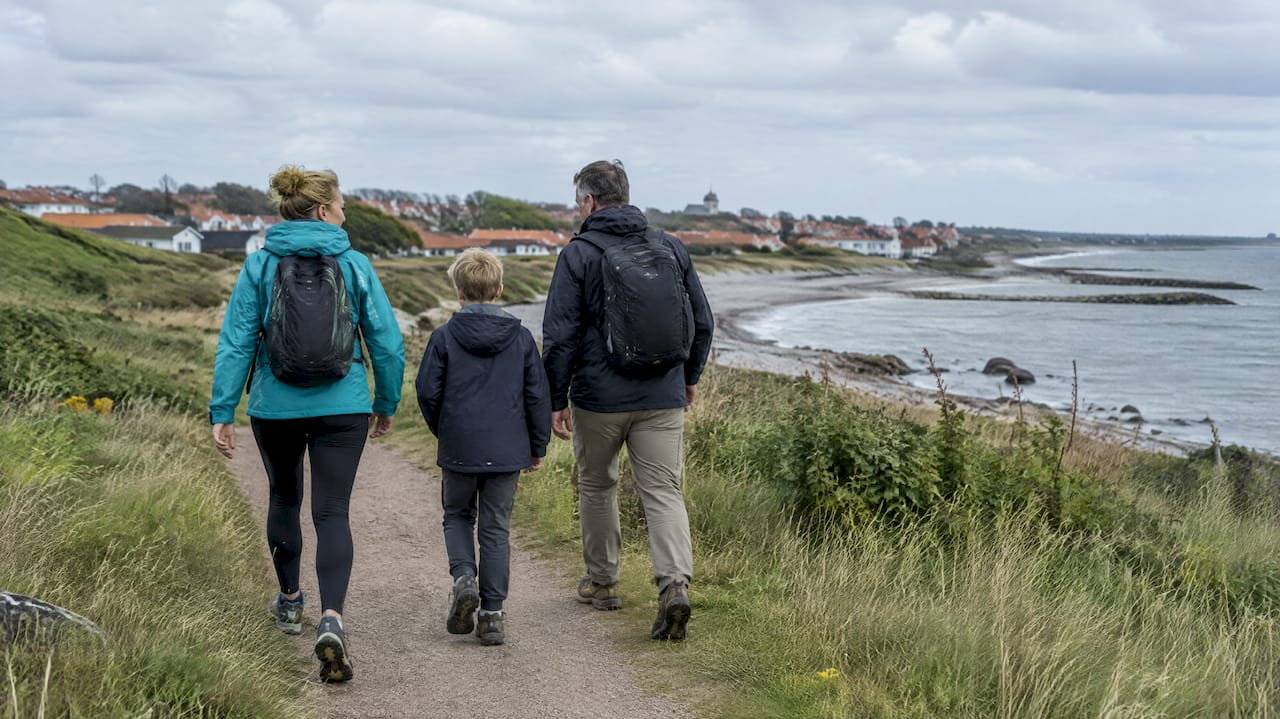
Day trips are a low-threshold health initiative that also supports the local experience economy in Denmark. Research from University of Exeter Points to 120 minutes of nature contact per week as a threshold for better well-being, while Danish studies from SDU and Idan shows that walks are already a widespread part of Danes' leisure time. Projects like Grøn Tur/Retur demonstrate how the same habit can be turned into sustainable tourism.
Health, well-being, and social benefits of day trips
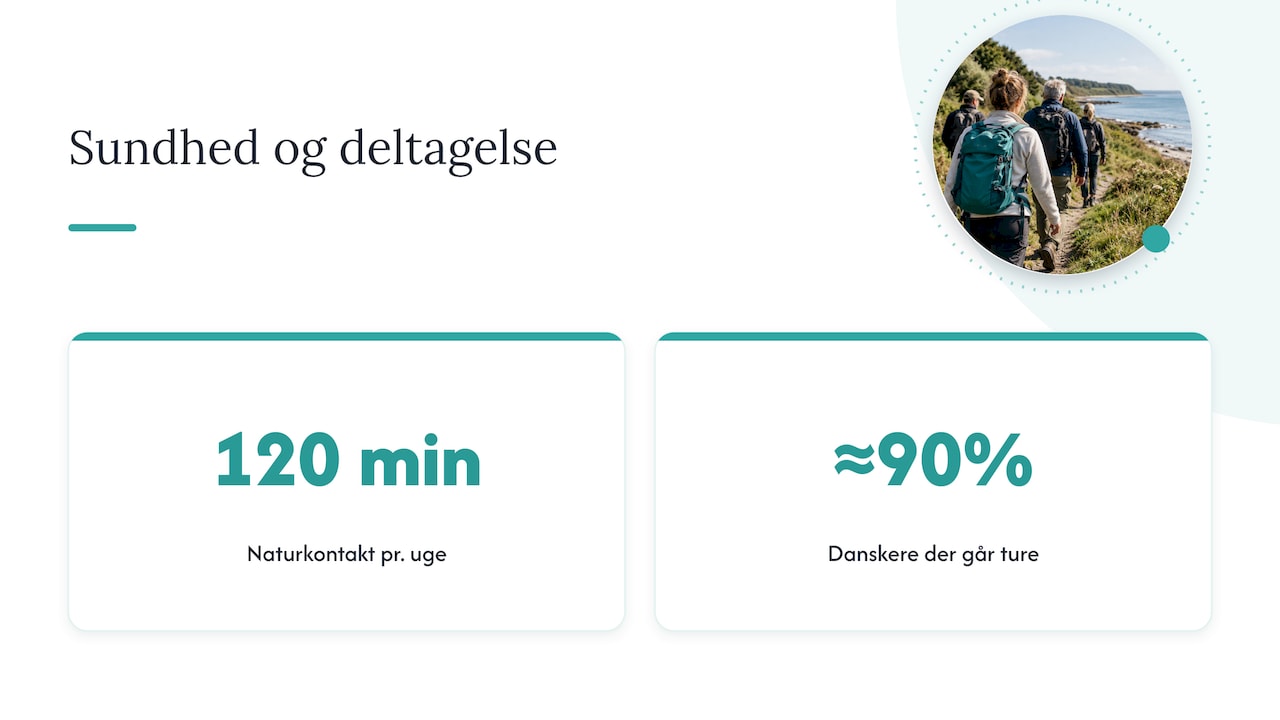
The English Exeter study from 2019 surveyed nearly 20,000 respondents and found that at least 120 minutes of nature contact per week was associated with better self-reported health and increased well-being. The threshold applied regardless of age, income, or health condition, making nature-based day trips one of the most accessible health interventions we know. The practical advice is simple: a single longer day trip into nature on the weekend can cover a large part of the week's needs if everyday life doesn't allow for daily walks.
The habit is already widespread at home. According to a survey conveyed by Idan, based on SDU data from the project "Denmark in Motion," up to 90 percent of Danes go for walks in their free time. It makes walking one of the most popular leisure activities in Denmark, and it provides a strong foundation for turning the habit into actual day trips with a specific goal or an experience along the way.
The social element should not be underestimated either. A day trip does not require membership, equipment, or special skills, and it works just as well alone, in pairs, or as a family activity. Many choose day trips precisely because they combine activity with companionship, without making the access barrier high. The low threshold is one of the reasons why day trips appeal broadly across age groups.
The role of day trips in tourism, economy, and sustainability
Day trips spread economic value beyond the major attractions. When visitors stop at a farm shop, a café, or a smaller attraction along the way, part of the spending stays local instead of solely with the largest players. It makes mini attractions an overlooked but important part of destinations' earnings.
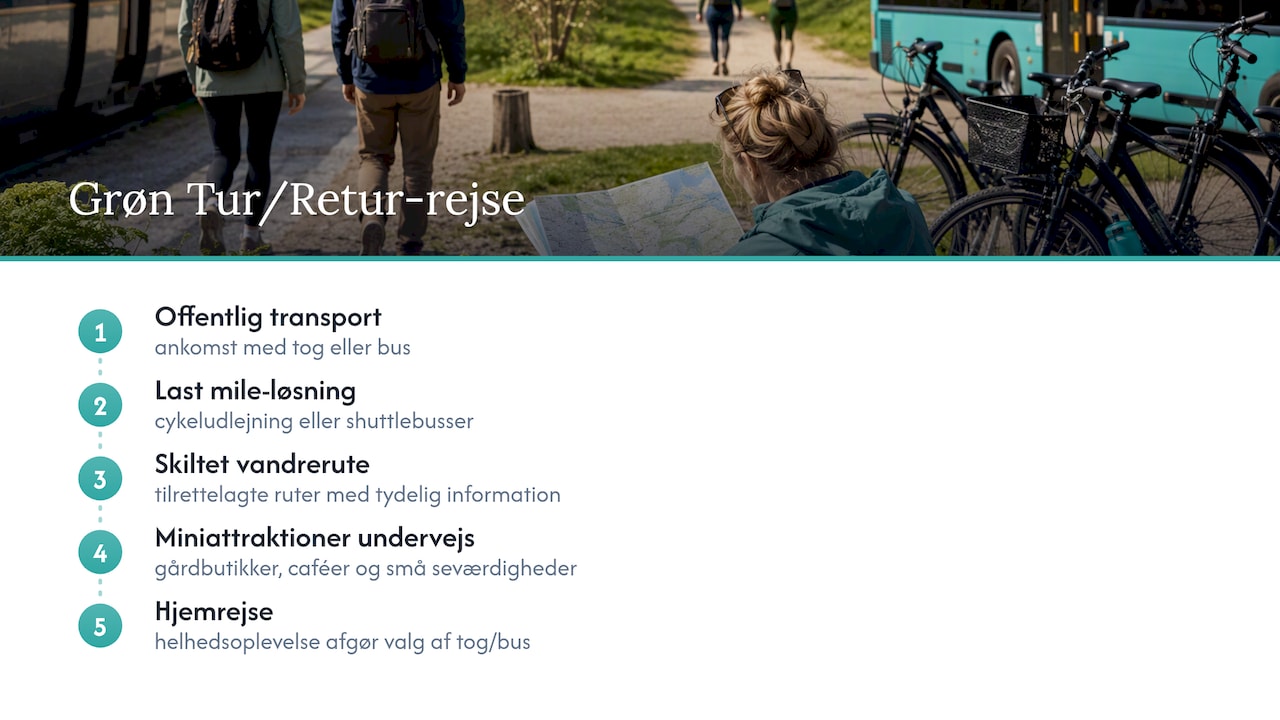
The practical challenge is often the so-called last mile, that is, the final part of the journey from public transportation to the actual experience. Danish Coastal and Nature Tourism has tested solutions in the Green Tour/Round Trip project and found that bike rentals, shuttle buses, and adapted hiking trails make sustainable transportation attractive when combined with clear route information and mini attractions along the way. The project leader behind the initiative, Claudia Rota Andersen, has pointed out that the overall experience from departure to return home is crucial in whether tourists choose the train or bus instead of the car.
That kind of insight also requires better data. Endagsturisme report from Danish Destinations recommends that destinations use teledata and sensor data to measure the relative volumes of day-trippers rather than chasing precise total numbers, and the report finds that an average day-tripper stays about 3.9 hours at a destination. That knowledge makes it possible to plan distribution and capacity more precisely.
How to plan a day trip that offers the most value
A good day trip is less about achieving a lot and more about choosing correctly. Well-chosen stops bring more joy than a crowded schedule, and it's easier to adjust along the way if the plan has room.
Use this order when you plan the route:
- Determine the purpose: nature, culture, family time, or a combination.
- Check the distance and travel time so the day doesn't become a transport marathon.
- Check opening hours and any requirements for advance booking.
- Choose one or two main stops and spice it up with a mini attraction along the way.
- Build in flexibility so that weather or fatigue can change the plan.
Also consider who the trip should work for:
- Families with children need breaks, playgrounds, and shorter distances between stops.
- The elderly or those with walking difficulties need information about surfaces and seating options.
- Groups without a car need realistic connections and a plan for the final stretch.
Professional tip: Plan a fixed nature day trip every week and note the duration so you can track whether you are approaching the 120 minutes of nature contact that the Exeter study suggests.
When you choose transportation, you can be inspired by the experiences from Green Tour/Return: a bike ride or walk as the final part of the journey becomes much more attractive if the route is clearly marked and offers a break along the way.
Who goes on day trips, and what holds others back?
Participation in walks and day trips is high overall in Denmark, but it is not evenly distributed. National health data from The national health profile Collected from approximately 180,000 participants and used, among other things, to map differences in health behavior across age, residence, and social groups, making them relevant when trying to understand who actually goes out for a walk.
The typical barriers are well known: lack of transportation without a car, limited time in a busy everyday life, physical limitations, and simply not knowing the nearby opportunities. The solutions do not need to be complicated. A card with a clear difficulty level, suggestions tailored to different family structures, and better information about accessibility for those with walking disabilities can significantly lower the threshold and encourage more people to go on their first day trip.
Travel in Denmark: practical help to plan your day trip
We offer a comprehensive guide to experiences across the country, with an interactive map and filters for season, price, and age group, as well as price estimates per. person, whom you can also find at Vacations in Denmark with Paradise TravelIt makes it easy to put together a day trip that suits your household, whether the goal is nature, culture, or a mix. You can use the map function to find mini attractions near your route and thus create the overall experience that research and Danish projects point to as essential.
Where is the day trip heading?
Future day trips will be increasingly shaped by data: teledata and sensors can show where visitors actually move and help destinations distribute traffic more effectively. Destinations should test last mile solutions locally, consider the entire experience, and prioritize small, local attractions over only the major highlights. Try planning a day trip with a clear purpose yourself and see how it changes the experience.
— Tommy
Plan your next day trip with us
We have gathered practical guides and checklists that make it easier to turn all of this into a concrete day trip, whether you live in Denmark or are visiting the country. You can:
- Find experiences by season, price, and age group on our interactive map
- Use a template to organize departure, stop, and return.
- Get inspiration for mini attractions that fit into your route
Start with Our checklist for Denmark tripSo you have control over time, transportation, and opening hours before you start.
Frequently Asked Questions
How much contact with nature should one have per week?
Research from the University of Exeter points to at least 120 minutes per week as the amount associated with better self-reported health and well-being. It can be achieved through a single longer day trip or several shorter trips spread over the week.
How many Danes go for walks in their free time?
According to a survey conveyed by Idan, based on SDU data, up to 90 percent of Danes go for walks in their free time. Walking has become one of the most popular leisure activities here at home.
What is a last mile solution on a day trip?
It is the final part of the journey from public transportation to the actual destination, for example by bike, shuttle bus, or a guided walk. Danish Coastal and Nature Tourism has shown in the Green Tour/Return project that such solutions become more attractive when combined with route information and mini-attractions.
How can destinations measure the value of day tourism?
The One-Day Tourism Report from Danish Destinations recommends using teledata and sensor data to assess relative volumes rather than precise total numbers, and finds an average stay duration of approximately 3.9 hours for one-day tourists.
How do I find inspiration for a day trip in Denmark?
You can use the interactive map and filters on Travel in Denmark to find experiences by season, price, and age group. It makes it easy to put together a route with both main attractions and smaller stops along the way.
Sources
- University of Exeter: Nature and mental health study (June 2019)
- Danish Coastal and Nature Tourism: How to Make It Easier for Tourists to Take Sustainable Day Trips
- Endagsturisme: Bæredygtige destinationer i praksis (Danske Destinationer)
- Idan: Ny undersøgelse: 90 pct. af danskerne går tur i fritiden