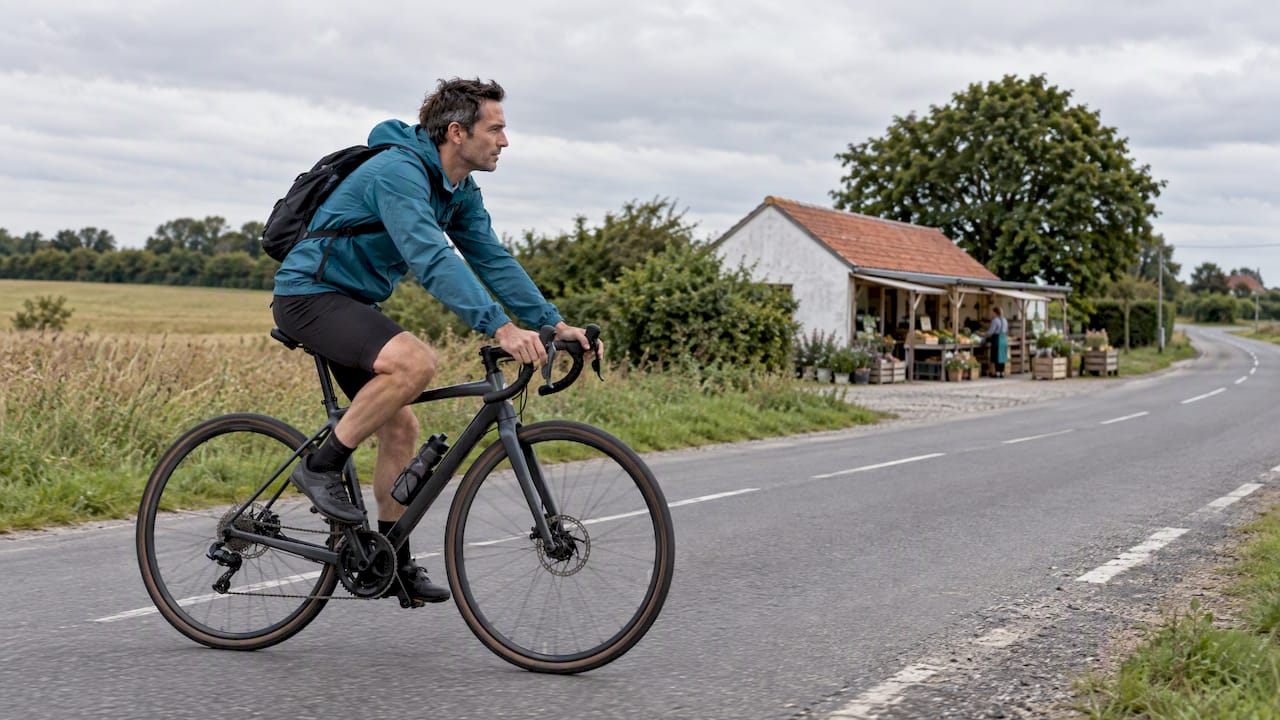
Cycling holidays give you a closer nature experience, better health, and a tangible way to support local communities. Cycling prevents approximately 18,110 premature deaths annually in EGU-28, and Rad tourism creates measurable regional value for the places you visit. Below you will find both the motivation and the practical plan that make your first trip easy to undertake.
The main advantages of a cycling holiday
What distinguishes a cycling holiday from an ordinary trip is the pace. When you move on two wheels instead of in a car, you notice details: a small farm shop, a stone bridge, the scent of freshly cut hay. The slower pace is not a limitation, it is the experience itself, because it allows time to notice the surroundings instead of rushing past them.
The health benefit is just as tangible as the experience. Regular cycling prevents lifestyle diseases and increases daily activity without feeling like exercise, and the effect lasts both during and after the holiday.
The environmental account also speaks in favor of the bicycle. A bicycle trip uses far fewer resources than a car holiday or a flight. The combination of train and bicycle further reduces the carbon footprint..
The most important gains combined:
- Experiences at a pace where you actually see the place you are visiting.
- Movement and health naturally integrated into holiday days.
- Lower carbon footprint than car or plane holidays.
- Money that often stays in the local communities you pass through.
Cycling prevents a significant number of premature deaths annually in the EU-28 according to calculations.according to An overview from the European Cyclists’ FederationThe figure illustrates how much an active form of travel can mean, even when it is only practiced during vacation days.
Who is cycling holiday suitable for?
Bike holidays are not reserved for the superfit. The shape and the route should only match the group that is going out to pedal.
- Beginner It best manages with flat, short stages and good road connections close to the accommodation.
- Familiar should choose routes with breaks, playgrounds, and a realistic daily distance for the smallest legs. You can find more ideas for, Why a cycling holiday with family works well as an active holiday.
- Seniors Achieves a significantly extended range with an electric bike because hills and headwinds no longer limit the day's kilometers.
- For and solo traveler can choose more ambitious stages and let spontaneity more strongly guide the route.
The e-bike has really changed who can go on a cycling holiday. E-bikes increase range and accessibility for more groups, but require you to plan charging options along the way so that the battery does not run out in the middle of a stage.
Practical planning and must-have equipment
A good cycling holiday starts with three decisions: bike type, packing list, and accommodation type. The rest will fall into place once these three are clarified.
The type of bicycle depends on the terrain. A trekking bike is versatile and suitable for mixed routes with asphalt and gravel. A gravel bike provides more freedom on forest roads and gravel paths. The e-bike is the right solution if the daily stages are long or if the group has different physical conditions.
The packaging should be kept minimal, but some things are non-negotiable.
- Repair kit with patches, pump, and extra hose.
- Power bank for phone, navigation, and possibly e-bike battery.
- Rainwear that can be packed small but put on quickly.
- Cycling shorts or other comfortable clothing that prevents chafing on long days in the saddle.
- A physical grid card as a backup in case the phone runs out of battery.
Practical tip: Store tools and repair kit in a saddlebag that you can reach without unpacking the rest of the luggage, so a flat tire doesn't become a half-hour affair.
Navigation is easiest with a combination of digital route apps and the official EuroVelo maps, which cover large parts of Europe. Many cycling holidays also use trains to get to and from the starting point, but bike spaces on trains are often limited and require advance planning.
Accommodation can take place at hostels, bike-friendly B&Bs, or campsites, and several providers offer luggage transport so you don't have to cycle with all your gear. Our Guide to planning a cycling holiday in Denmark goes into more detail about route choices and facilities, and our Checklist for bike rides It's a good starting point when you need to pack.
Inspiration: ruteideer og typer af cykelferie
The choice of route depends mostly on how much time you have and what kind of experience you are looking for.
- Day trips and weekend trips They are ideal for testing equipment and shape before committing to a longer journey.
- Multi-day routes in Denmark Provides the opportunity to combine coastal landscapes, forests, and small towns without having to travel far from home.
- EuroVelo route Opens up to international connections if you want to extend the trip across multiple countries and experience changing landscapes and cultures.
- Temaruter Focusing on food, history, or nature provides a clear direction when planning stops along the way.
If you are looking for specific destinations to cycle between, our collection of Nature experiences in Denmark Give me ideas for what the route can be built around.
Sustainability and local economic impact
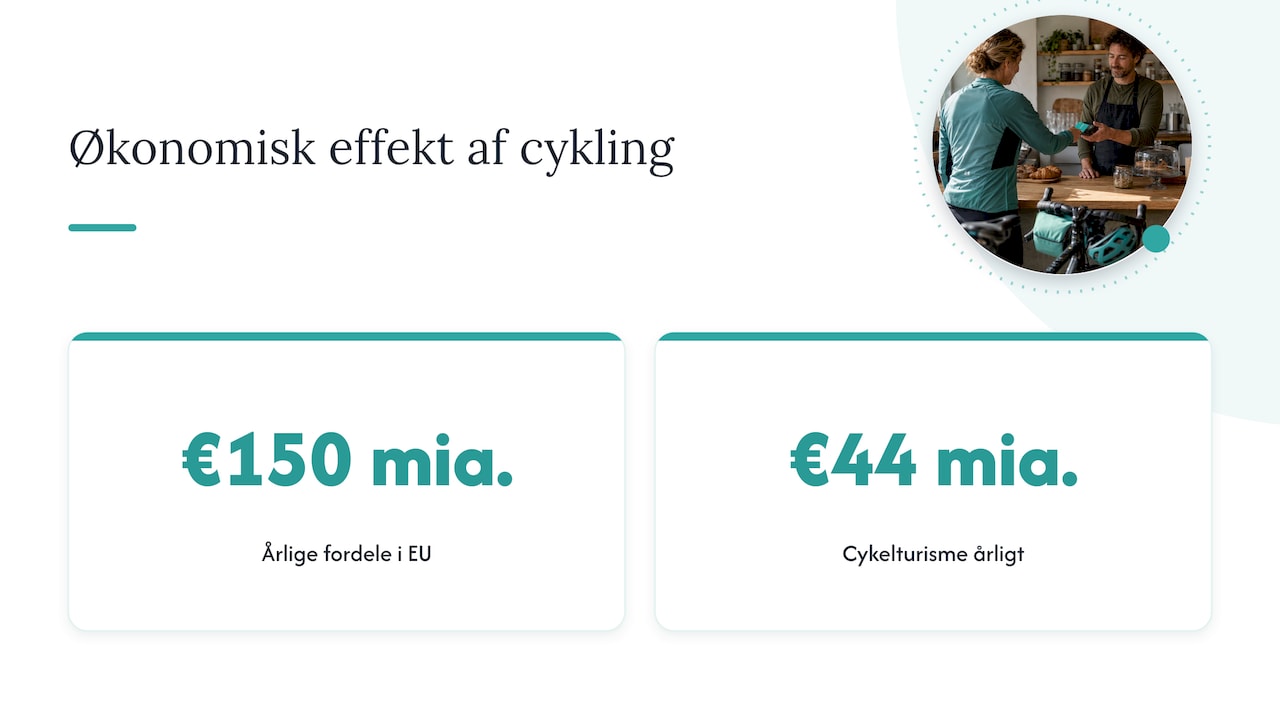
Bike holidays are one of the most climate-friendly ways to travel, and the effect extends beyond your own CO2 footprint. According to ECF's report on cycling in Europe, cycling generates approximately 150 billion euros in annual benefits in the EU, of which cycling tourism alone contributes around 44 billion euros.
Cycle tourism contributes approximately 44 billion euros annually in the EUAccording to ECF, and the money often ends up locally rather than with large travel companies.
When you choose local accommodations, cafes, and bike rental services, the money stays within the local economy, as described by ADFC in its analysis of cycle tourism. The increasing use of electric bikes also demands infrastructure: more charging stations and more bike parking are necessary if more groups are to participate in cycle tourism.
A personal look at cycling holidays
I have seen again and again how a slow bike ride gives more than the quick holiday you had actually planned. It's not the distance that makes the trip good, it's what you notice along the way.
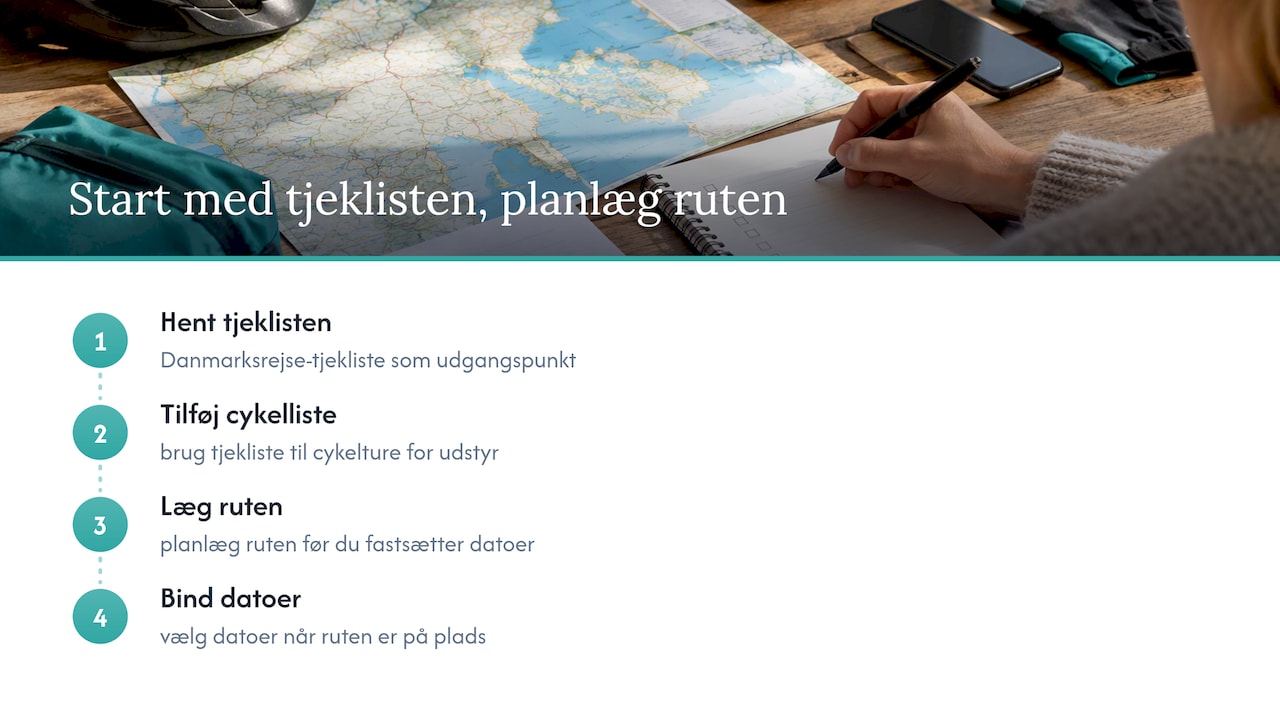
When planning your own trip, a checklist and a realistic route choice are the best start, which can also be assisted through Plan Your Galway Tour | Pedal Power GalwayTry a short test trip before committing to a multi-day journey, and let the experiences from that trip shape the next one.
— Tommy
Proceed with your planning
We gather practical inspiration and planning help for trips in Denmark, and cycling holidays are one of the areas where the right tools save you a lot of guesswork. Our Checklist for Denmark trip Helps you pack and plan without forgetting the most important things, and you can combine it with our checklist for bike trips if you want a list specifically focused on cycling gear. Start by fetching the checklist, then you're ready to plan the route before committing to dates.
Frequently Asked Questions
Why is a cycling holiday better than a regular holiday?
Cycling holidays give you a slower pace that allows you to discover places, food, and culture in detail, instead of rushing past them in a car. At the same time, you get exercise integrated into your holiday and a lower carbon footprint than by car or plane travel.
Can you go on a cycling holiday without being in good shape?
Yes, many beginners and families choose flat, short stages, and an e-bike can significantly extend the range for both seniors and less trained individuals. E-bikes make longer trips accessible to more groups, but require planning for charging along the way.
What should you bring on a cycling holiday?
You should bring at least a repair kit, a power bank, compressed rain gear, and comfortable cycling clothes. Our checklist for bike rides provides a more detailed overview of what you need to pack.
Is cycling holidays good for the community and the environment?
Yes, cycle tourism contributes around 44 billion euros annually in the EU, according to ECF, and the money often ends up locally at accommodation places and cafes. Cycling is also one of the most climate-friendly modes of travel, especially when combined with train travel.
How do you choose the right route for your cycling holiday?
Choose a route based on the group's condition and the experience you're seeking: flat coastal routes for beginners and families, EuroVelo connections for longer international trips, or themed routes focused on nature and food. A short test ride will determine if the pace and distance suit you before committing to a multi-day trip.
Sources
- The benefits of cycling (ECF)
- Bike tourism in the bicycle country-plus (ADFC)
- Sustainable travel (Energy Switzerland)