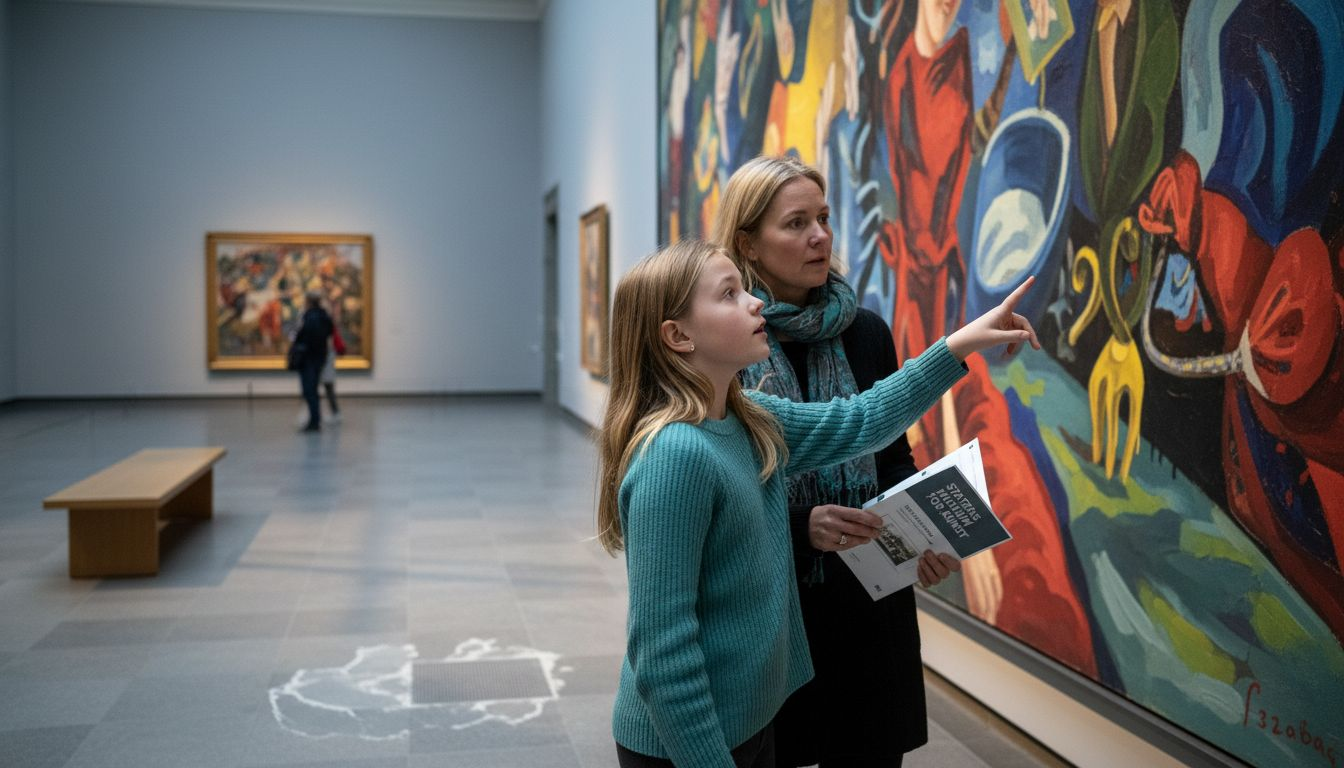
Standing in front of a colorful artwork created by a Danish artist can feel like stepping into a world where imagination and society meet. Art in Denmark is not only beautiful to the eye but also serves as a platform for critical thinking, democratic dialogue, and cultural identity. For both international visitors and Danish families, the Danish art scene opens the door to meaningful experiences and a unique insight into the country's creative soul.
What does art mean for Denmark?
Art constitutes a fundamental part of Danish cultural identity and represents more than just aesthetic expression. Den challenges and enriches our society by creating space for critical thinking and dialogue
In modern Denmark, art functions as a powerful means of communication that transcends traditional language and cultural backgrounds. Artists explore complex social themes through visual, performative, and conceptual expressions, creating opportunities for broad societal reflection.
The central meanings of art in Denmark include:
- Cultural identity creation
- Critical societal reflection
- Stimulating creative thinking
- International cultural exchange
- Democratic dialogue platform
Historically, Danish art has evolved from having more functional and cultic purposes to becoming an autonomous field that Provides new perspectives on human experienceContemporary artists today work to challenge established notions and create meaningful experiences that go far beyond the purely visual.
Pro-tip: Visit local art museums and exhibitions to experience the vibrant Danish art scene up close.
The most important art forms and trends
The Danish art scene is characterized by its dynamic and experimental nature, where Artists explore cross-media expressions through innovative approaches to creative production
Historically, has billedkunsten Denmark has undergone a significant transformation. From traditional painting and sculpture forms, artists have gradually moved towards more complex and interactive expressions that challenge the audience's understanding of art.
The central art forms in Danish contemporary art include:
- Photography
- Video art
- Installation art
- Performance
- Digital media art
- Hybrid artistic expression
Danish visual artists experiment extensively with media and techniques., which creates a unique and dynamic artistic landscape. Artists often work across traditional genre boundaries, resulting in complex and thought-provoking works.
Pro-tip: Visit local art galleries and exhibitions to experience the latest Danish contemporary art up close.
Here is an overview of the differences between traditional and modern art forms in Denmark:
| Art form | Traditional approach | Modern approach |
|---|---|---|
| Painting | Naturalistic, story-telling | Abstract, conceptual |
| Sculpture | Classical, figurative | Installation, experimental material bridge |
| Photography | Documentary, portrait | Manipulated, digital, social comment |
| Performance | Ceremonial, theater-based | Interactive, audience engagement |
Art institutions and public spaces
Danish art institutions constitute a dynamic ecosystem that actively works with diversity and representation In the national art scene. They function as central platforms for cultural dialogue and artistic expression.
art galleries plays a particularly important role in the dissemination of contemporary art. They offer exhibition space for both established and young artists, thereby creating a lively and inclusive art environment where new creative voices can be expressed.
The central functions of Danish art institutions include:
- Exhibition of contemporary art
- Promotion of artistic diversity
- Audience education
- Creation of social meeting places
- Documentation of artistic trends
- Support for young artists
The art halls function as dynamic platforms It reflects social and cultural dynamics in society. Actively contributes to developing the art scene through innovative exhibition programs and communication strategies.
Pro-tip: Visit local art institutions during free admission times to experience the Danish art scene without extra costs.
Here is a reference to central roles for Danish art institutions:
| Type of institution | Primary function | Social significance |
|---|---|---|
| Art Museum | Preservation and exhibition of works | Promotes and transmits cultural heritage |
| Art Hall | Presenting contemporary art | Creates innovation and dialogue |
| Gallery | Commercial sales and exhibitions | Supports local artists and networks |
| Public space | Accessible art for everyone | Strengthens community and inclusion |
The role of art in the community and tourism
Art has a crucial significance for the dynamics of the local community and the experiential economy of tourism in Denmark. Art projects strengthen local communities through strategic collaborations between municipalities, artists, and cultural institutions.
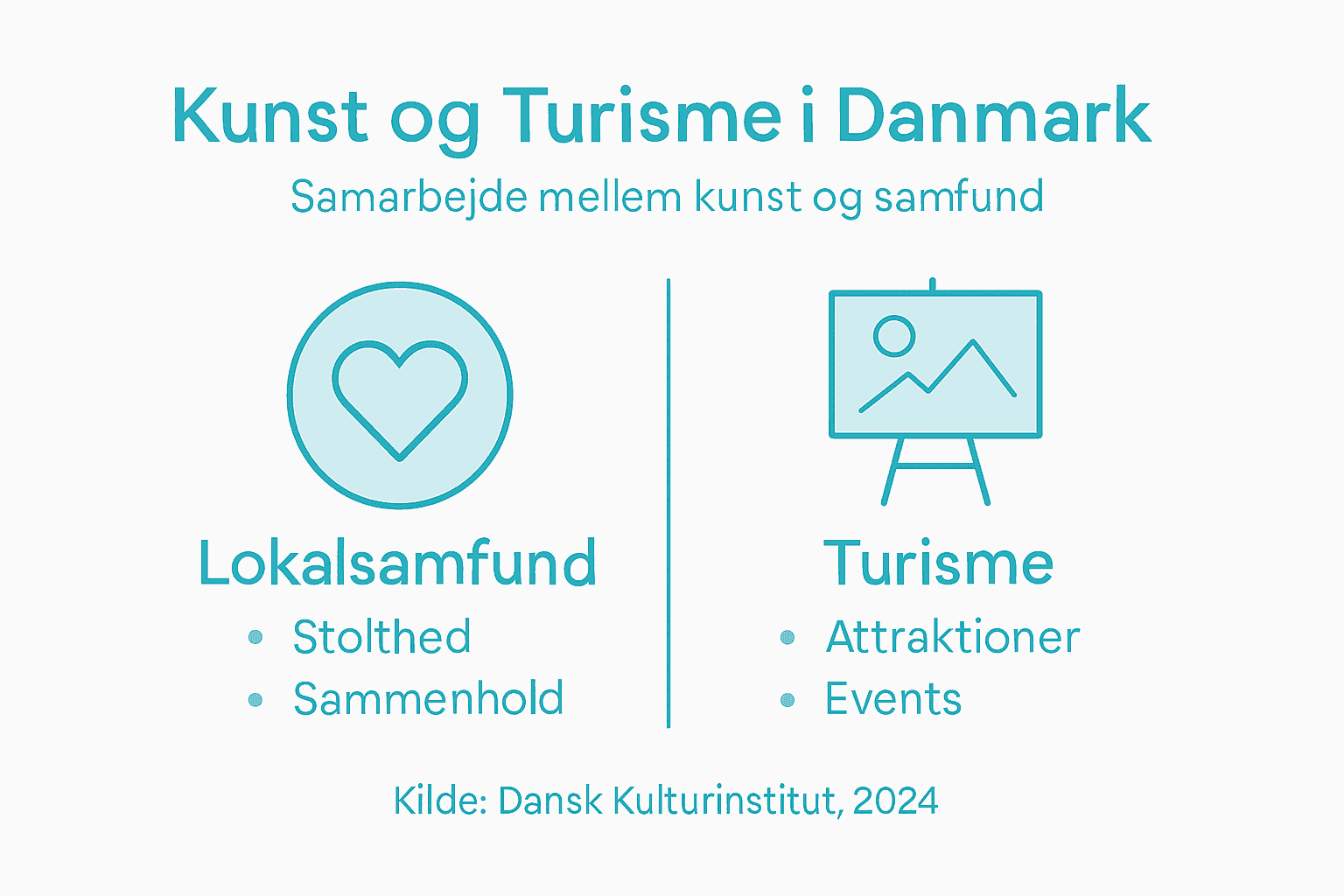
These artistic initiatives not only create aesthetic experiences but also serve as important social and economic catalysts. They attract tourists, create local pride, and contribute to the places' identity and storytelling.
Central aspects of the role of art in communities and tourism include:
- Creation of site-specific art experiences
- Strengthening of local cultural identity
- Attracting national and international tourists
- Economic growth through culture-based tourism
- Promotion of social cohesion
- Highlighting local creative resources
The potential of art extends far beyond the purely visual, as it functions as a dynamic bridge builder between local residents and visitors. It creates dialogue, promotes understanding, and contributes to the authenticity and uniqueness of the places.
Pro-tip: Search for free art events and exhibitions in smaller towns to experience the local art scene.
The biggest challenges and opportunities for the art scene
The Danish art scene is at a critical crossroads with complex challenges and promising prospects. Artists face financial insecurity and the need for better support schemes, which places great demands on the creative sector.
The current situation calls for rethinking and strategic adjustments. The art environment is characterized by a growing awareness of the need for inclusion, diversity, and sustainable frameworks for artistic expression.
Main challenges for the art scene include:
- Economic instability for artists
- Unequal gender and diversity representation
- Lack of payable working and housing conditions
- Limited political support
- Competition from digital entertainment forms
- Need for new communication strategies
Artistic communities require new sustainable models, who actively supports diversity and creates dynamic spaces for creative expression. These challenges also open up opportunities for innovative solutions and alternative approaches to art production and dissemination.
Pro-tip: Participate in local art networks and support schemes to expand your professional opportunities.
Discover Denmark's artistic diversity through travels and experiences
The role of art in Denmark is not only an aesthetic phenomenon but also a window into culture, local communities, and tourism. If you want to experience how art creates meaning and life in Danish cities and public spaces, you should take the opportunity to explore the country's many museums, art halls, and unique art projects. It can be a challenge to find the richest cultural experiences that simultaneously strengthen local communities and tourism. Therefore, it is worth spending time planning your visits with a focus on authentic art experiences that also contribute to supporting the artistic community and the local environment.
On Travel in Denmark Find a comprehensive platform with an overview of art museums, galleries, and artistic events across the country. We help you filter and find the experiences that match your interests and plans so you can easily dive into the many facets of Danish art. Don't miss the chance to combine culture, history, and exciting city experiences in a collaboration between art and tourism.
Begin your journey towards unforgettable art experiences and discover how art shapes Denmark's culture and society at Travel in Denmark. Find inspiration for your next cultural adventures throughout Denmark here and join a journey beyond the ordinary.
Frequently Asked Questions
What does the role of art mean in Denmark?
Art plays a significant role in Danish culture by fostering critical reflection and dialogue in society, as well as contributing to the national cultural identity.
How does art affect local communities and tourism?
Art projects strengthen local pride and attract tourists, contributing to economic growth and creating social bonds in the community.
Which art forms are most prominent in Denmark?
The most prominent art forms include photography, video art, installation art, performance, as well as digital media art and hybrid expressions.
What are the biggest challenges for the art scene in Denmark?
The biggest challenges include financial instability for artists, unequal representation, lack of payable working conditions, and the need for better political support.
Recommendation
- Understanding Cultural Experiences in Denmark – Travel in Denmark
- Understanding the role of museums in Denmark – Travel in Denmark
- Why Visit Museums – Culture, Learning, and Community – Travel in Denmark
- 7 inspiring examples of cultural activities in Denmark – Travel in Denmark
- The role of art in Provence travel – elevating luxury escapes – The House in Provence blog