TL;DR:
- Regional experiences directly contribute to job creation and local economic growth through permanent positions and guest spending. Store events like the Climate People's Meeting generate millions in revenue and strengthen the regions' national and international profile. Local friendliness and year-round open attractions are essential for guest satisfaction, repeat visits, and long-term prosperity.
The role of regional experiences is defined as the direct impact that local cultural, natural, and event activities have on economic growth, community, and tourism development in Denmark. Places like Skagen, Middelfart, and Bork Viking Harbour show that experiences rooted in a region not only attract visitors but also create jobs, strengthen local pride, and keep tourism going all year round. 48% of Danes Will spend the holiday on local cultural experiences in 2026. The number indicates that the demand is real and growing. Rejsidanmark documents here what actually drives this development and what you can use it for.
What is the role of regional experiences for the local economy?
Regional experiences are not just entertainment. They are a direct engine for job creation and turnover in local communities that might otherwise have difficulty attracting investments. When an attraction opens year-round, fixed positions come with it, and the resulting jobs in restaurants, shops, and accommodations are added on top.
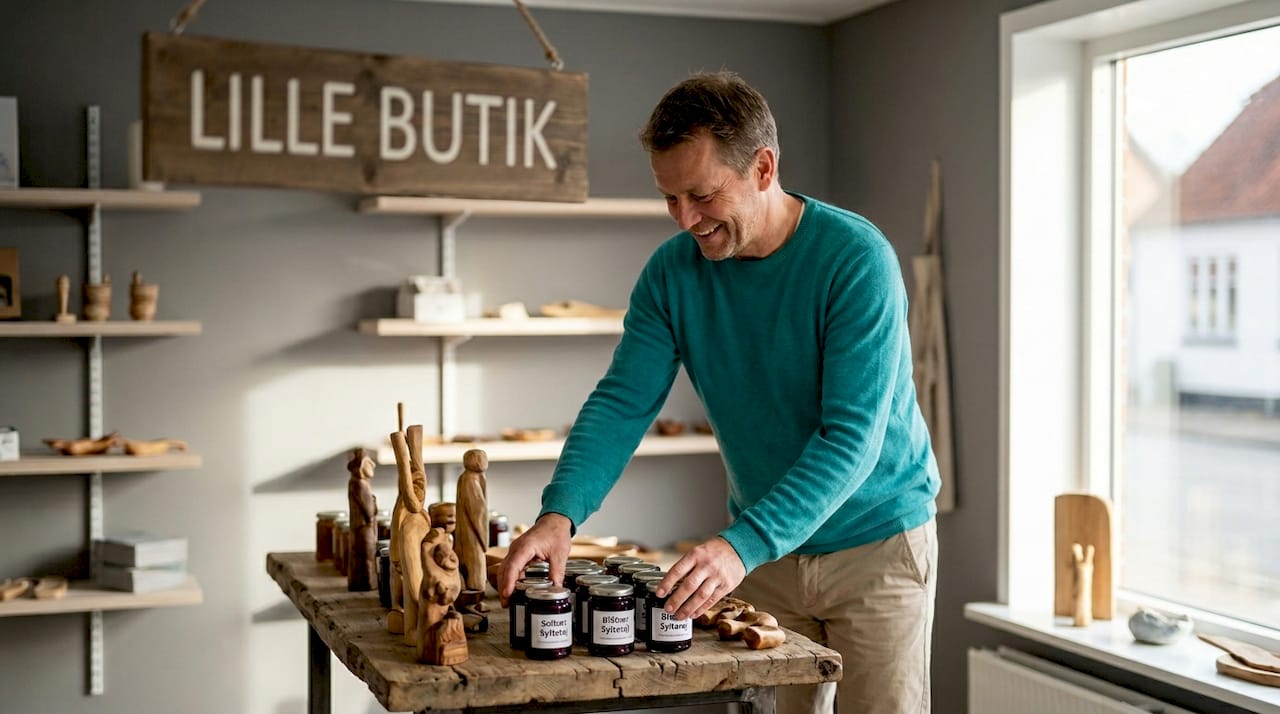
Year-round open attractions can create a few handfuls of permanent jobs locally. It sounds modest, but in a small town with limited business activity, even five to ten permanent positions make a noticeable difference for the entire local community's economy. This includes the seasonal workers and the indirect jobs generated by the guests' spending.
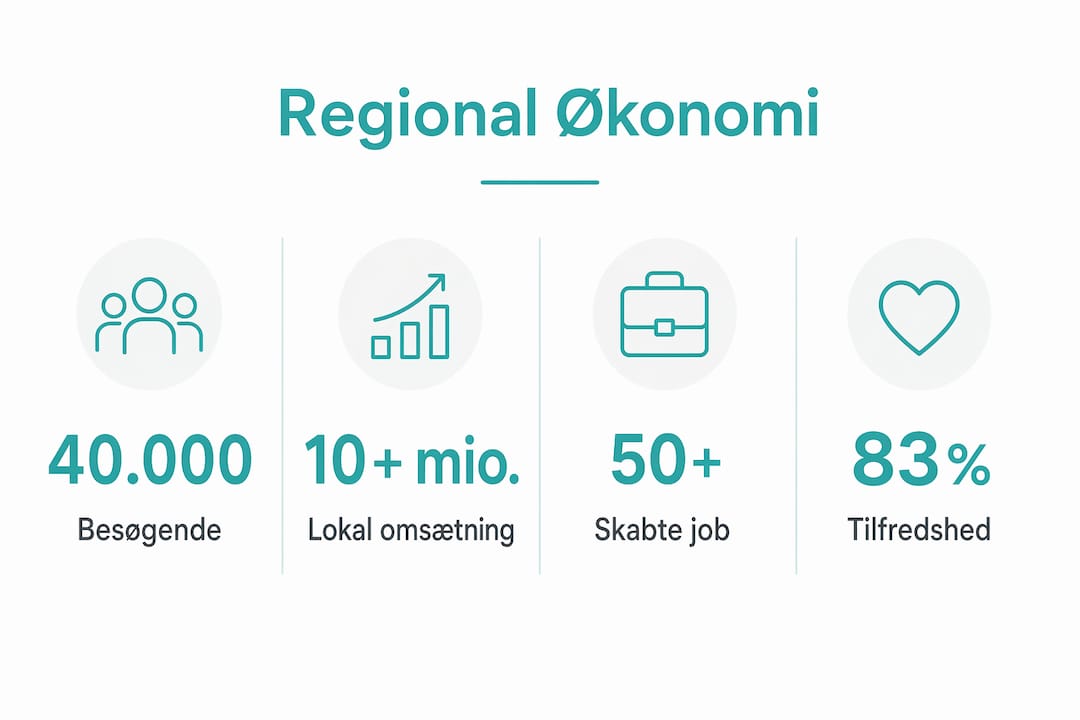
The Climate People's Meeting in Middelfart is a concrete example of what a regional event can trigger. Over 40,000 visitors Generated a local consumption of 21.3 million. kr. and a branding value of 5 million kr. In 2024. It corresponds to each visitor spending an average of over 500 DKK. In the local economy, beyond the event itself.
| Event | Visitors | Local consumption | Brand value |
|---|---|---|---|
| Climate People's Meeting, Middelfart 2024 | 40.000+ | 21.3 million kr. | 5 million kr. |
| European Men's Handball Championship 2026, Kristianstad | Not calculated | 25.35 million kr. | Part of 111 million DKK (Skåne) |
The figures show that even a well-organized event can generate a double-digit million amount in a single city. For municipalities considering investing in regional events, it is a strong argument to prioritize the experience economy.
Professional tip: Map the derived jobs at a regional attraction by asking local restaurants and shops if they notice a difference in sales on event days. That data is often more convincing to politicians than abstract tourism statistics.
What does local friendliness mean for returning guests?
Local friendliness is an underrated factor in the experience economy. It cannot be bought with a marketing budget, but it determines whether a guest recommends the place to others or never returns.
An analysis of cruise passengers in Skagen shows that 95% are very satisfied or satisfied with the visit, and 83% would recommend the place to others. There are unusually high figures in an industry where 70% satisfaction is usually considered a good result. The analysis points directly to local friendliness and hospitality as a decisive reason.
Tourism trends confirm this pattern. Travelers' preferences Shifting towards authentic, locally rooted experiences rather than traditional package solutions. It means that the human encounter between guest and local population has become a competitive factor, not just a cozy bonus.
Here are the factors that specifically strengthen the local welcome and increase the likelihood of repeat visits:
- Visible and accessible information about local offers so that guests do not miss out on experiences they were not aware of
- Engaged local ambassadors, FX boutique owners and restaurateurs who actively recommend attractions
- Coordinated welcome programs at arrival points such as ports and stations
- Local guides and stories, which gives the place a personal voice rather than generic tourist information
- Availability all year roundso that guests do not encounter closed doors and empty streets outside the high season
Professional tip: Guests often lack knowledge of local offers. According to Experiences from Thyborøn They would like to stay longer if they knew what they could experience. A simple welcome folder or digital guide at the accommodation can double the guests' stay.
How do large regional events strengthen local communities and branding?
Store events do more than just fill hotels. They put a region on the national and international map, create local pride, and give the municipality a concrete argument for future investments.
The Climate People's Meeting in Middelfart is the clearest Danish example. The event combines political debate, popular participation, and the business community in a format that is uniquely rooted in a medium-sized Danish town. Brand value of 5 million. kr. From the 2024 edition, it's not just a number. It represents media coverage, social media mentions, and the reputational impact that Middelfart could not have purchased with a traditional marketing budget.
From Scandinavia, the Handball European Championship 2026 in Kristianstad shows what a sporting event can trigger. Tourist economic turnover at 25.35 million kr. In the city itself and 111 million. kr. Throughout the Skåne region, it is documented that the effect spreads far beyond the immediate location of the event. It's a lesson for Danish municipalities: regional events create ripples.
How a region maximizes the benefits of large events:
- Involve the whole city early By involving local businesses, associations, and volunteers in the planning, so that everyone feels a sense of ownership
- Target the effect systematically with local consumption study, media monitoring, and guest surveys, so that the next event can be argued politically
- Create the year-round story By using the event's reputation to promote the region for the rest of the year
- Coordinate accommodation and transportation across municipal boundaries so that the capacity matches the demand
- Build on local strengths Instead of copying events from other regions, authenticity is what creates recognition and loyalty.
Larger events require targeted project management focused on location, duration, financing, and organization to create maximum local value.
The local sense of belonging and pride created by a successful event is hard to measure but easy to feel. When citizens of Middelfart tell friends about the Climate People's Meeting, or when Kristianstad residents follow handball matches with pride, it is a form of social capital that strengthens the region's cohesion in the long term.
How are successful regional experience initiatives planned?
Successful regional experiences do not happen by chance. It requires a collaborative ecosystem where municipalities, businesses, associations, and volunteers pull in the same direction with clear roles and common goals.
Collaboration between local actors Creates a value chain effect, where guests' use of local offerings increases significantly when all parties coordinate. A guest who attends a music event, eats at a local restaurant, stays overnight at a local bed and breakfast, and buys souvenirs at a local shop generates three to four times more revenue than a guest who only attends the event itself. It assumes that the actors communicate and package the offers together.
Year-round open attractions are another key element. Guests who encounter open doors all year round spend more time and money in the local area than guests arriving in a half-empty town outside the season. It lowers the barrier for visits and increases the likelihood of spontaneous trips.
The distribution of roles between volunteers and the municipality is often the factor that determines whether an initiative survives the first years. Clear role clarification The relationship between the municipality and volunteers is crucial for stability in local experience projects, which otherwise risk losing momentum. Experiences from the Meeting Place show that projects without municipal anchoring and clear division of responsibilities often burn out after two to three years, when the first enthusiastic volunteers lose their energy.
| Element | The role of the municipality | Volunteer's role |
|---|---|---|
| Funding | Basic budget and application support | Fundraising and sponsorships |
| Drift | Coordination and administration | Practical implementation |
| Marketing | Official channels and press relations | Social media and word of mouth |
| Quality assurance | Evaluation and Reporting | Feedback and ongoing adjustment |
| Network | Political contacts and cooperation agreements | Local relations and volunteer recruitment |
The tables illustrate that the two parties do not compete but complement each other. The municipality provides stability and legitimacy. Volunteers provide energy and local anchoring. When both are present with clear expectations, the initiatives last much longer.
Professional tip: Begin with a written collaboration agreement that defines who decides what, who has budget responsibility, and what happens if key personnel leave the project. It sounds bureaucratic, but it saves the project when reality shows up.
Visibility is the third leg of the planning. Guests who are not aware of local offers do not use them. A coordinated digital presence, where the municipality, attractions, and businesses share each other's content, is cheaper than paid advertising and much more credible. Rejsidanmark offers a platform that gathers cultural activities in Denmark In one place, so guests can easily discover what is happening in a region.
What I have learned about the true potential of regional experiences
I have closely followed the development of Danish regional tourism for many years, and there is one thing that consistently surprises me: how much potential remains untapped, not because it isn't there, but because no one tells the guests about it.
I have seen fantastic local initiatives fighting with half-empty parking lots while tourists 20 kilometers away pay over the odds for generic experiences. The problem is rarely the quality. It is the visibility. An attraction that does not communicate clearly about opening hours, prices, and access loses guests who are not willing to guess.
The other pattern I see again and again is the power of collaboration. Regions that succeed are those where the mayor, the local hotel owner, and the volunteer organization sit at the same table and coordinate. It's not romance. It is business. When a guest arrives at an event and finds a coordinated welcome with local offers, accommodation, and transportation, consumption increases significantly. When they arrive at chaos and closed shops, they go home early and do not recommend the place further.
I am also convinced that the regions that invest in year-round experiences rather than betting everything on the summer season will fare much better in the long run. Seasonal dependence is a vulnerability. Year-round attractions like Bork Viking Village and well-established cultural institutions demonstrate that it is possible to maintain activity throughout the year if you plan for it from the beginning.
What I find most interesting about the current development is that guests' preferences are moving in the direction that the best regional experiences already offer: authenticity, human contact, and local anchoring. It's not a trend that requires large investments. It takes willpower to prioritize the human encounter over the polished package solution.
— Tommy
Plan your next trip with a focus on regional experiences
Rejsidanmark is built to help you discover the best of Denmark, whether you're looking for cultural events, nature experiences, or family-friendly activities in the local area. The platform gathers attractions, events, and practical information across all Danish regions so you can plan your trip without missing out on the local gems.
Start with Guide to Denmark, which gives you a complete overview of what the country has to offer, from Skagen in the north to Møns Klint in the south. If you want concrete tips on what you need to know before you leave, you will find all the practical information gathered in Travel tips for DenmarkRejsidanmark continuously updates with new experiences and seasonal recommendations, so you always have access to current information about Advantages of traveling locally in Denmark.
FAQ
What is the significance of regional experiences for Danish tourism?
Regional experiences are a direct growth driver for Danish tourism by creating local jobs, increasing guests' spending, and strengthening the regions' branding. The Climate People's Meeting in Middelfart alone generated 21.3 million. kr. Local consumption in 2024.
How does local friendliness affect guests' behavior?
Local friendliness significantly increases the likelihood of repeat visits and recommendations. An analysis from Skagen shows that 95% of cruise guests are satisfied, and 83% would recommend the place, primarily due to the local welcome.
What characterizes successful regional events in Denmark?
Successful regional events clearly combine cooperation between the municipality, businesses, and volunteers with measurable impact assessment and year-round marketing. A clear division of roles between the parties is crucial for the initiatives to be sustainable in the long term.
What activities in the local area are Danes most in demand for?
48% of Danes will spend their holiday on local cultural experiences, 42.8% on nature experiences, and 39.6% on concerts and events in 2026. Cultural experiences are thus the most sought-after category of regional activities.
How can year-round open attractions strengthen the local economy?
Year-round open attractions lower visitors' barriers to visiting and increase the likelihood of longer stays and greater spending in the local area. They also create stable jobs that are not dependent on the fluctuations of the summer season.