In short:
- The seasons in Denmark greatly affect the weather, nature, and activity opportunities. Climate change makes seasonal patterns more unpredictable, with warmer and wetter weather. Travelers should be flexible and follow DMI's weather forecasts to have the best experiences.
The seasons are the most important factor that governs the weather, nature, and activity opportunities in Denmark. The role of seasons in Denmark is not just about temperature and precipitation. It's about what experiences are possible, when nature is the most beautiful, and how to best plan your trip. The Danish Meteorological Institute, DMI, continuously monitors and documents the development of the seasons. Climate change makes the picture more complex in 2026, and travelers can expect a weather pattern that is warmer, wetter, and more unpredictable than previous generations knew.
What is the role of seasons in Denmark?
The four seasons in Denmark are winter, spring, summer, and autumn. Each season has its own weather, temperature, and natural characteristics, which directly shape the activities and experiences available. The significance of the seasons in Denmark is greater than in many Southern European countries because the change between the seasons is striking and noticeable.
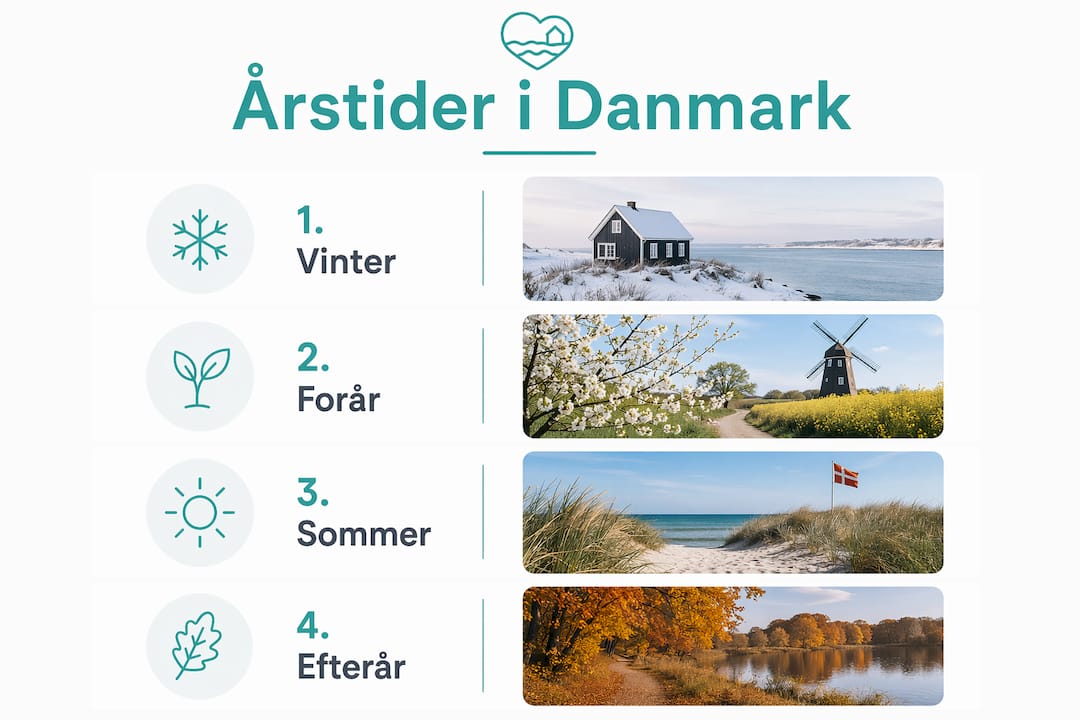
Vinter: december til februar
Winter is Denmark's coldest season with temperatures that typically stay close to freezing. Snow occurs, but is not guaranteed in all parts of the country. The north wind brings Typically mild, rainy fronts move across the country, while easterly winds bring more continental weather with sharp cold. Winter offers cozy indoor experiences, the Christmas market at Tivoli, and cultural attractions without large crowds.
Spring: March to May
Spring is a season with great weather changes. The calendar spring begins on March 1stBut the first two weeks can feel colder than many winter days. Nature gradually awakens with blooming cherry trees in April and light green forests in May. Spring is a good time to visit Denmark if you want to avoid the busy summer season.
Sommer: juni til august
Summer is the high season for tourism in Denmark. Temperatures of 20–25 °C are typical, and the days are long with up to 17 hours of daylight in June. Beaches along the West Coast and Bornholm attract thousands of visitors. Fires can occur quickly, especially in the eastern part of the country.
Autumn: September to November
Autumn brings colorful forests, cooler temperatures, and more rainfall. September is still mild and suitable for hiking and cycling. October and November are characterized by wind and rain, but also by cultural events and museum visits. Autumn is an underrated season for travelers seeking tranquility and authentic experiences.
Practical overview of the seasons:
- Winter: Cold, possibility of snow, Christmas market in Tivoli, few tourists
- Spring: Unstable weather, blooming nature, lower prices than summer
- Summer: Warm, long day, beaches and outdoor activities, peak season
- Autumn: Colorful nature, cool, cultural experiences, calm atmosphere
How do climate changes affect the seasons in Denmark?
Climate changes significantly alter the typical Danish seasonal patterns. The temperature has increased by about 1.5 °C. since the 1870s, and the annual precipitation has increased by approximately 100 mm in the same period. That means the seasons you experience today are not identical to those your grandparents knew.
The number of heatwave days is expected to increase from 2 to 5 days per year. At the same time, frost days are expected to decrease from approximately 80 to approximately 50 days annually. It means shorter and milder winters, but warmer and more intense summers.
Winter changes particularly noticeably. The winter precipitation is expected to increase by approximately. 12%, but more of it falls like rain rather than snow. White winters are becoming rarer, and travelers dreaming of snow in Denmark should not take it for granted.
The growing season has been extended to up to 10 months, which means that nature is green and lush for a longer period than before. It benefits travelers who wish to experience Danish nature outside the traditional summer season.
Professional tip: Check DMI’s weather forecast daily during your stay. Climate change makes the weather more unpredictable, and a good rain jacket is useful in all seasons, not just in autumn.
Floods are another consequence of climate change. Floods that previously occurred every 20 years Year, may occur every other year in the future. Travelers to coastal areas should be aware of this, especially in autumn and winter.
How do the seasons affect travel experiences in different parts of Denmark?
The influence of the seasons on Denmark varies from region to region. Jutland, Funen, and Zealand have different weather patterns, and this directly affects which experiences are possible and when.
The north wind dominates in Denmark and brings windy, rainy fronts across the country. The west coast of Jutland is therefore characterized by strong winds and waves, making it ideal for kitesurfing and beach walking in spring and autumn. The east coast is more sheltered and suitable for sailing and swimming in the summer.
Kattegat city creates local, intense snow showers in northeastern Denmark with northeast wind. Travelers in North Zealand and Djursland can experience dramatic weather changes over very short distances. It is a phenomenon that most foreign tourists do not know about in advance.
Seasonal activities distributed across regions
- Jutland, summer: Hiking in Rebild Bakker, swimming at Skagen, bike rides along Hærvejen
- Fine, spring: Blooming fruit orchards, visit to Egeskov Castle, peaceful cycling routes
- Zealand, autumn: Cultural experiences in Copenhagen, forest walks in Dyrehaven, museum visits
- Bornholm, summer: Cliff coast, smokehouses, handicrafts, and long sunny days
- The West Coast, autumn: Stormy weather and dramatic waves, surfing, nature walks
Professional tip: If you are planning a visit to northeastern Denmark in winter, you should always check the weather forecast for the Kattegat winds. They form quickly and can produce 10–20 cm of snow within a few hours, even when the rest of the country is dry.
Seasonal traditions in Denmark are closely linked to nature. Midsummer on the 23rd. June is celebrated with a bonfire on the beach. Autumn festivals in September and October are widespread in the countryside. Christmas in December fills the streets with lights and markets. These traditions are part of the Danish travel experience and add an extra dimension to your visit, no matter when you travel.
You can find seasonal experiences in Denmark Collected at Rejsidanmark, sorted by season and region.
How to plan your trip to Denmark according to the season
A good trip to Denmark starts with choosing the right time. The season determines the weather, prices, and which activities are open. Here is a step-by-step approach to planning your trip:
-
Decide what type of experience you want. Beach and outdoor activities point to summer. Cultural experiences and tranquility point to spring or autumn. Christmas coziness and the Christmas market point towards December.
-
Check the weather conditions for your chosen season. DMI offers historical climate data and seasonal forecasts. Remember, climate change makes the weather more unpredictable than before.
-
After the season. Summer requires sunscreen, swimwear, and light layers. Spring and fall require a waterproof jacket, layering, and sturdy shoes. Winter requires a warm coat, hat, and gloves. In Complete packing list for Denmark trip Helps you forget as little as possible.
-
Book accommodation well in advance for the summer season. The high season from June to August is the busiest period. Prices are rising, and popular destinations like Skagen and Bornholm are quickly sold out.
-
Consider the shoulder seasons. May and September are often the best months for travelers who want good weather, fewer tourists, and lower prices. Nature is beautiful, and most attractions are open.
-
Be flexible with your plans. Climate change means that the weather can surprise. A rainy day in July is not unusual, and a mild day in November is also not. Incorporate alternatives into your plan so that a rainy day doesn't ruin the entire stay.
Historical climate data are crucial for understanding, What shapes the Danish seasons, and DMI's climate archive provides a good basis for understanding what you can expect.
The changing of the seasons is not what it was 20 years ago
I have closely followed the Danish weather for many years, and one thing is clearer than ever: the seasons have become more fluid. Winter is shorter and milder. Spring starts earlier on paper, but the weather doesn't always follow suit. Summer can bring intense heatwaves that we rarely experienced a generation ago.
What I see among many travelers is an expectation that the seasons behave predictably. They no longer do that. I always recommend packing for two seasons, regardless of when you travel. A light rain jacket and an extra layer are never wasted space in the suitcase.
What makes me happy is that the changing seasons also create new opportunities. A milder autumn means that you can hike in Danish forests well into November with dry weather. A longer growing season means that nature is lush and green during periods when it was previously barren. Denmark has actually become an even more interesting travel destination precisely because the seasons are no longer as predictable.
My best advice is to use Denmark's seasonal activities as a basis for your planning, but always have a plan B ready. Flexibility is the most important trait for a traveler in Denmark in 2026.
— Tommy
Rejsidanmark helps you plan seasonal experiences
Rejsidanmark gathers the best experiences, sights, and activities in Denmark in one place, filtered by season, price, and age group. Whether you're planning a summer holiday by the sea, an autumn trip to Copenhagen's museums, or a winter weekend with Christmas coziness, you'll find specific suggestions tailored to your season. The platform also offers a Trinvis guide to local transportationso you can easily get around between Denmark's regions. If you want the full overview of what awaits you in Denmark, Rejse Danmarks comprehensive experience guide The best place to start your planning.
Frequently Asked Questions
What is the best season to visit Denmark?
May and September are the best months for most travelers. The weather is mild, the tourist crowds are smaller than in the high season, and most attractions are open.
How do climate changes affect the Danish seasons?
The temperatures in Denmark have increased by approximately. Since the 1870s, it has warmed by 1.5 °C, and the winters have become milder with more rain and less snow. The summer is warmer with more heatwave days than before.
When is the best chance for snow in Denmark?
Sne most often occurs in January and February, but is not guaranteed. Climate change makes white winters less common, and winter precipitation increasingly falls as rain.
What are Kattegat breezes, and what do they mean for travelers?
Kattegat gusts are intense, local snow showers that occur in northeastern Denmark with northeast wind. They can cause strong weather changes over short distances and surprise travelers who are not familiar with the phenomenon.
What activities are typical for the different seasons in Denmark?
Summer offers beaches, sailing, and outdoor festivals. Spring is suitable for bike rides and nature walks. Autumn offers colorful forests and cultural experiences. Winter is the season for Christmas markets, museums, and indoor coziness.