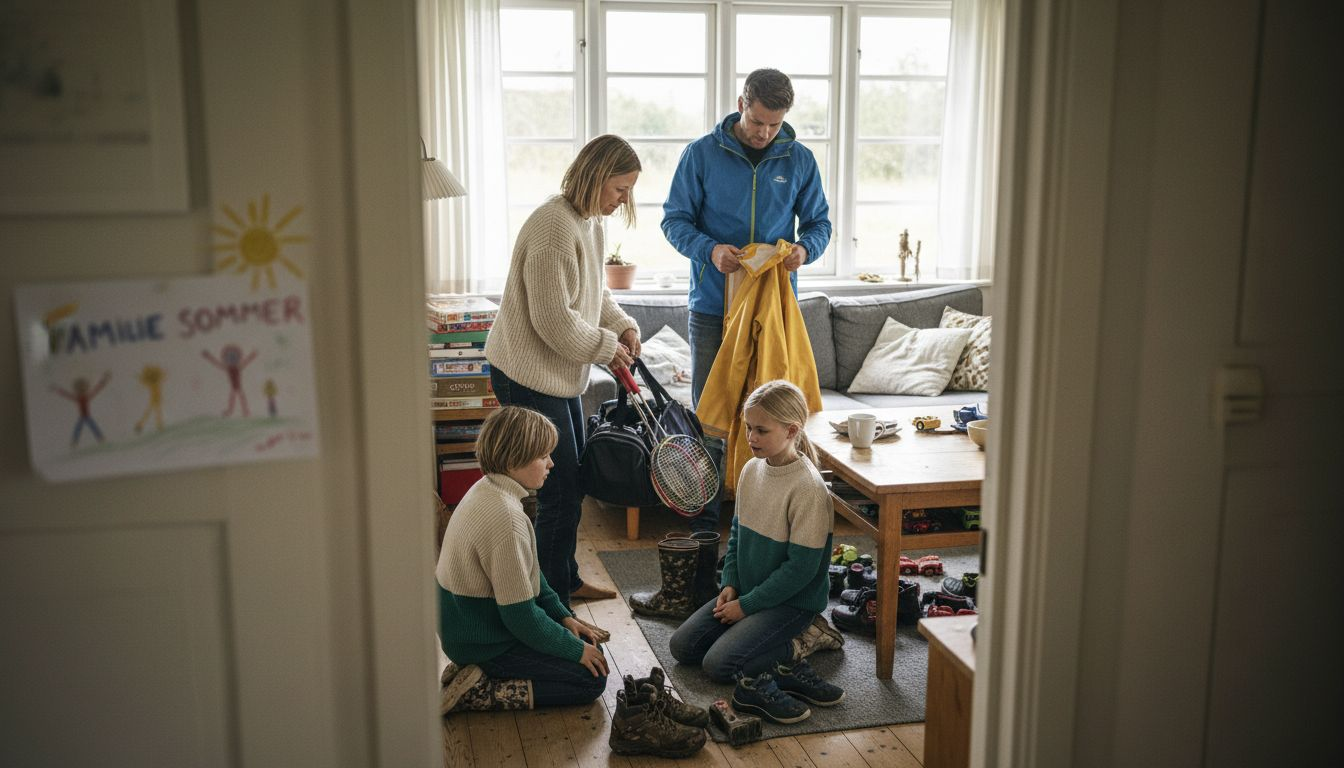
More than half of Danish parents underestimate the importance of active learning experiences for children's well-being. Many believe that child-friendliness is only about fun and play, but in fact the greatest development occurs when children are engaged in safe, creative, and educational environments. Here, the family finds inspiration for experiences in Denmark, where curiosity, community, and joy go hand in hand during both summer and winter holidays.
What are child-friendly experiences and misunderstandings
Child-friendly experiences are about more than just entertainment. These are complex activities that create positive developmental opportunities for children, supporting their emotional, social, and cognitive growth. These experiences focus on creating safe, inclusive, and stimulating environments where children can explore, learn, and grow.
An widespread misconception is that child-friendly experiences are only about passive entertainment. In reality, it is about active participation, where children have the opportunity to challenge themselves, develop new skills, and build self-confidence. UNICEF's approach to child-friendly environments emphasizes the importance of creating frameworks that respect children's rights and support their holistic development.
The best child-friendly experiences have some central characteristics: they are age-appropriate, safe, inclusive, and have learning potential. It's not about passively entertaining children, but about actively engaging them in meaningful activities that stimulate their curiosity and promote personal growth. These experiences can range from creative workshops and nature exploration to interactive museum visits and family-oriented cultural events.
Pro-tip: Choose experiences that actively involve children and give them the opportunity to explore, experiment, and learn through hands-on activities, rather than just passive entertainment.
Types of experiences: entertainment, learning, and nature
Child-friendly experiences in Denmark span three central dimensions: entertainment, learning, and nature exploration. Outdoor activities stimulate children's physical and mental health by combining play, education, and exploration in a way that promotes children's holistic development
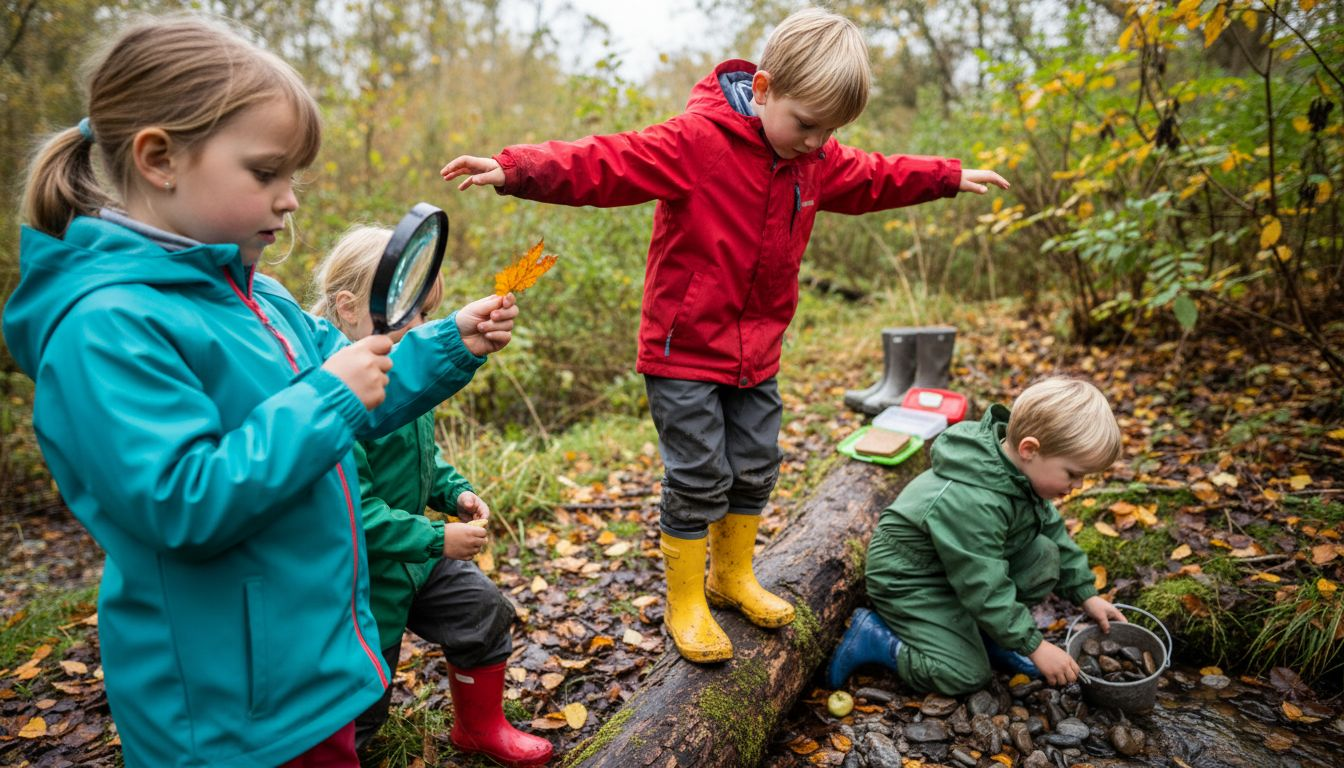
In the entertainment category, we find activities that create joy and excitement. It can range from interactive playgrounds and amusement parks to theater performances and child-friendly museum exhibitions. Learning through creative activities Integrates entertainment with educational elements, where children unconsciously acquire new knowledge through play and experimentation.
Nature-based experiences constitute a third important category, where children have the opportunity to explore the Danish landscape. From hikes in forests and beaches to interactive nature centers, children learn about ecosystems, wildlife, and sustainability through direct contact with the environment. These experiences not only strengthen children's understanding of nature but also develop their motor and social skills.
Pro-tip: Choose experiences that blend different types of activities so children have the opportunity to play, learn, and explore simultaneously.
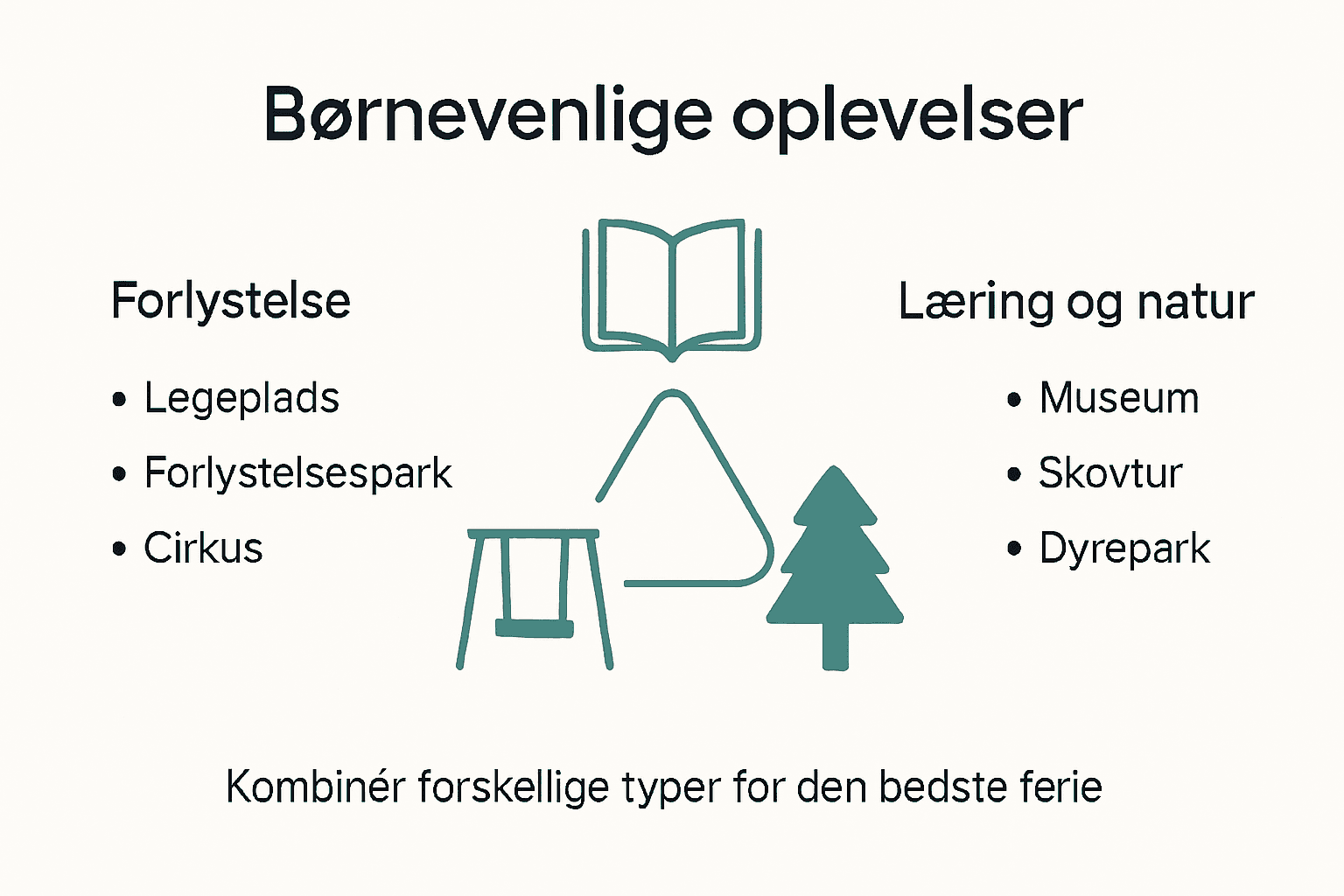
Here is an overview of different types of child-friendly experiences and their unique contributions to development:
| Type experience | Development Focus | Examples |
|---|---|---|
| Entertainment | Emotional joy | Playgrounds, theater |
| Learning | Cognition and Creativity | Workshops, museum |
| Nature Exploration | Motor skills and curiosity | Forest tour, nature center |
Important requirements for family-friendly activities
Family-friendly activities impose a number of key requirements to ensure children's well-being, safety, and positive experiences. European guidelines emphasize the importance of protecting children's rights Through careful planning and implementation of activities that consider children's individual needs and developmental stages.
The most important requirements include several dimensions: safety, inclusivity, age relevance, and pedagogical value. Activities should be physically safe, but also create a psychologically secure environment where children feel respected and motivated to explore. Family-friendly practices require a multidimensional collaboration between families, professionals, and the local community., which ensures a holistic approach to children's experiences.
Furthermore, it is crucial that activities are adapted to the needs of different children, including children with special prerequisites or challenges. This involves flexible frameworks, adaptive facilities, and inclusive design that enable all children to participate actively and feel meaningful. Cultural sensitivity and respect for diversity are also central elements in modern family-friendly activities.
Pro-tip: Choose activities that offer multiple levels of participation so that children with different abilities and interests can feel included and engaged.
Here, the central requirements for family-friendly activities are compared:
| Requirements | Purpose | Example of a measure |
|---|---|---|
| Security | Prevent accidents | First aid trained personnel |
| Inclusion | Accessibility for all children | Customized facilities |
| Alder relevance | Targeted experiences | Activities for different grade levels |
| Educational value | Support learning | Hands-on learning stations |
Safety and legal requirements for children's experiences
Safety forms the foundation of all children's experiences in Denmark. New EU regulations are increasingly strict in demanding children's safety, with a particular focus on preventing potential risks associated with activities and toys. These regulations ensure that children can explore and play under optimal and protected conditions.
Complex security protocols cover all aspects of children's activities, from physical infrastructure to staff training and preparedness. It's not just about removing immediate dangers, but about creating inclusive environments that support children's natural curiosity while safeguarding their well-being.
Legislatively, requirements are set for thorough risk assessment, ongoing safety checks, and training of staff in first aid and child psychology. These requirements vary from institution to institution, but all aim to create a safe environment that promotes learning, play, and personal development. Particularly important is consideration for children with special needs, who require even more attention and specially adapted safety measures.
Pro-tip: Always conduct a thorough safety review before any children's activity and be aware of the individual children's specific needs and limitations.
Costs and economic benefits for families
Family trips and experiences in Denmark represent a significant financial investment, where costs should be balanced with the long-term educational and well-being benefits. Modern families are not only looking for affordable solutions but also experiences that provide real value for money and support children's personal development.
Economic benefits are not only about immediate savings but about creating meaningful experiences with optimal resource use. Central and Eastern European travel destinations offer, for example, attractive price structures., where families can get the maximum benefit without having to compromise the quality of their experiences. This involves strategic planning focused on inclusive activities that cater to the interests of all family members.
There are numerous strategies to optimize the family's travel budget. These include choosing travel periods in the low season, taking advantage of family discounts, seeking package deals, and prioritizing activities with high educational value over merely costly attractions. Central considerations revolve around finding the right balance between price, learning, and enjoyment, so that every invested krone is turned into unforgettable family moments.
Pro-tip: Use digital budget planning tools to compare and optimize your family trip budget, and be open to alternative accommodation and activity options.
Development of children and the family community
Family experiences are far more than just temporary activities; they are crucial for children's social and emotional development. A holistic family support system focuses on strengthening the family's social structure and relationships, creating a solid foundation for children's personal growth.
When families participate in shared activities, unique opportunities for mutual learning and emotional bonding arise. Children develop important social skills through direct interaction with parents and siblings, where communication, trust, and mutual respect are nurtured through shared experiences. These moments not only promote children's individual development but also strengthen the overall cohesion of the family.
Researchers point out that children who experience consistent engagement from their family develop better emotional intelligence, self-confidence, and conflict resolution skills. Shared activities create a safe space where children can experiment, ask questions, and challenge themselves under loving guidance. These experiences form the foundation for children's future social and emotional skills.
Pro-tip: Create regular family routines with shared activities where all members have the opportunity to contribute and share their perspectives.
Create unforgettable child-friendly experiences and strengthen the family's togetherness
Finding child-friendly experiences that are safe, inclusive, and developmental can be a challenge. The article emphasizes how important it is to combine learning, play, and nature to promote children's social and cognitive development. It can feel overwhelming to plan holidays or activities that meet all these requirements while also bringing joy and security to the family.
Hos Travel in Denmark We understand your need for experiences that involve children actively in a safe and meaningful way. Our guide offers a wide range of family-friendly destinations and activities, so you can find the perfect experiences that challenge children's curiosity and strengthen family bonds. Whether you want to explore nature, visit museums with educational value, or enjoy fun rides, we help you plan a holiday that creates lasting memories.
Take the first step towards a holiday that both delights and develops the whole family by visiting Rejs i Danmark now. Discover the many possibilities and find activities that match your needs and desires. Make your holiday dreams come true with experiences that give children courage, confidence, and joy every single day.
Frequently Asked Questions
What are child-friendly experiences, and why are they important?
Child-friendly experiences focus on creating safe, inclusive, and stimulating environments for children, supporting their emotional, social, and cognitive growth. These activities promote active participation and learning through play.
How can one find suitable child-friendly activities for the holiday?
Search for experiences that combine play, learning, and exploration. Choose activities that are suitable for children's age and needs, and that promote safety and inclusion.
What are the benefits of participating in nature-based activities with children?
Nature-based activities stimulate children's physical and mental health, give them the opportunity to explore ecosystems, and promote the development of motor skills and social competencies.
How can families optimize their budget for child-friendly experiences?
Families can save money by traveling in the low season, taking advantage of family discounts, and prioritizing activities that offer educational value. Digital budget planning can also help find the best options.
Recommendation
- Benefits of Family Experiences – Strengthen Togetherness and Learning – Travel in Denmark
- Why Experience Children's Denmark – Memorable Family Time – Travel in Denmark
- Benefits of family outings for children and adults – Travel in Denmark
- 7 useful tips for weekend trips for Danish families – Travel in Denmark
- Meditation Retreat, State of Presence, and Joy