
Every spring, Danish gardens and parks transform into exciting hunting grounds where children and adults gather decorated Easter eggs as a cozy tradition. For many families, it is surprising that up to 30 percent of the Easter eggs are destroyed due to improper storageTherefore, it is especially important to choose and store the eggs correctly so that children can enjoy their Easter treasures all year round. Here you will find inspiration and tips to prolong the life of your finest Easter eggs.
Step 1: Choose the right packaging for storage
When you want to safely hide Easter eggs all year round, the process begins with choosing the perfect eggs. The choice of eggs is crucial for how long they can be kept as decorative Easter decorations. It is important to choose eggs that are completely without damage or cracksso they can stay as well as possible.
Choose fresh eggs from hens or geese that are whole and without visible damage. Thoroughly check each egg for cracks or fragility before starting the process of preparing them for storage. Eggs with even small scratches or unevenness can quickly become damaged or lose their decorative value. Pay particular attention to the surface and shape of the eggs.
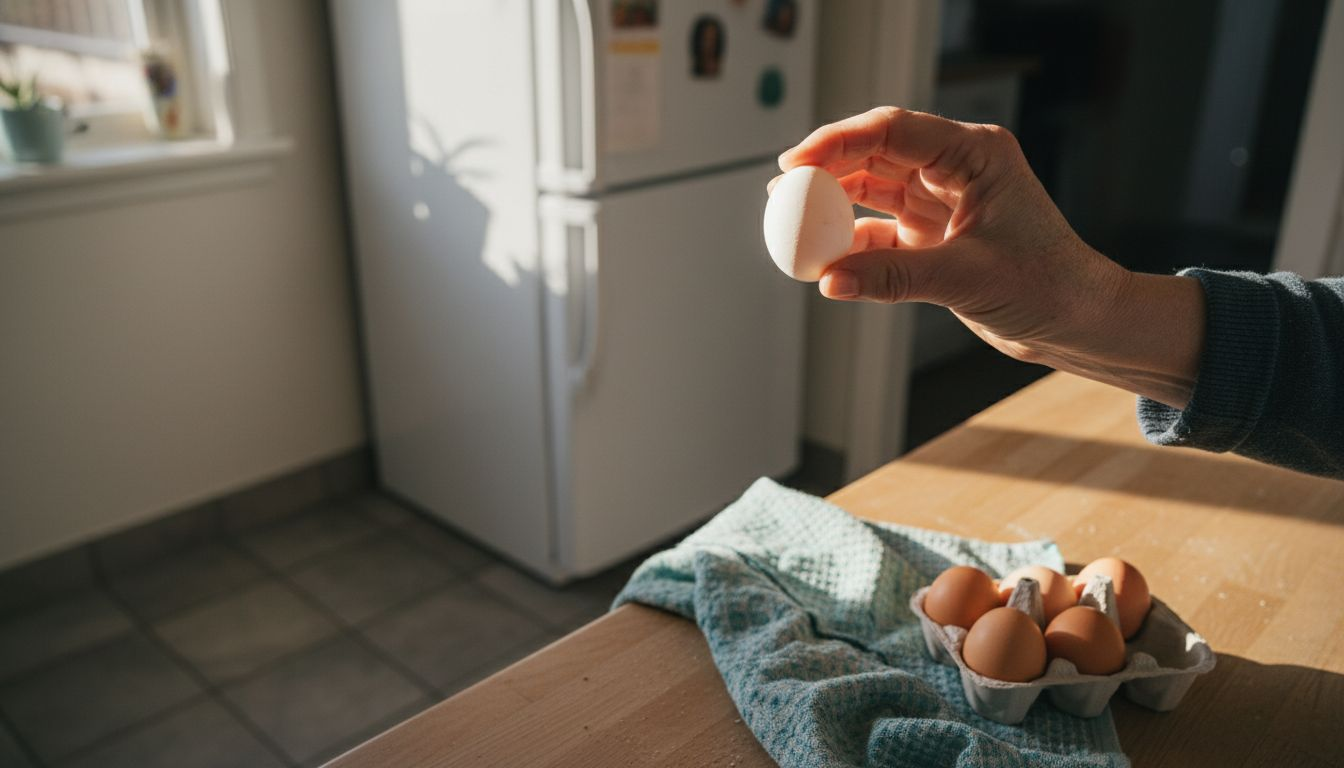
Professional tip: Wash your eggs gently with a soft cloth and let them dry completely before starting the preparation for storage.
Step 2: Prepare the eggs correctly for long-term storage
When you want to preserve your Easter eggs for a long time, the correct preparation is crucial. The storage temperature plays a central role to ensure the quality and durability of the eggs. It's not just about putting them in the refrigerator, but about doing it the right way.
Start by placing the eggs in their original packaging at a temperature below 12 degrees, preferably around 5 degrees. Be careful not to wash the eggs, as their natural protective coating will be removed. Handle the eggs carefully to avoid cracks, and place them with the pointed end down to preserve their structure and quality as best as possible.
Professional tip: Regularly check your stored eggs for small cracks or signs of damage to ensure their long-term freshness.
Step 3: Carefully place the eggs in suitable containers
When storing your Easter eggs, the choice of container and placement are crucial for their durability. The central shelves of the refrigerator provide optimal protection Modulates temperature fluctuations and ensures the eggs' freshness.
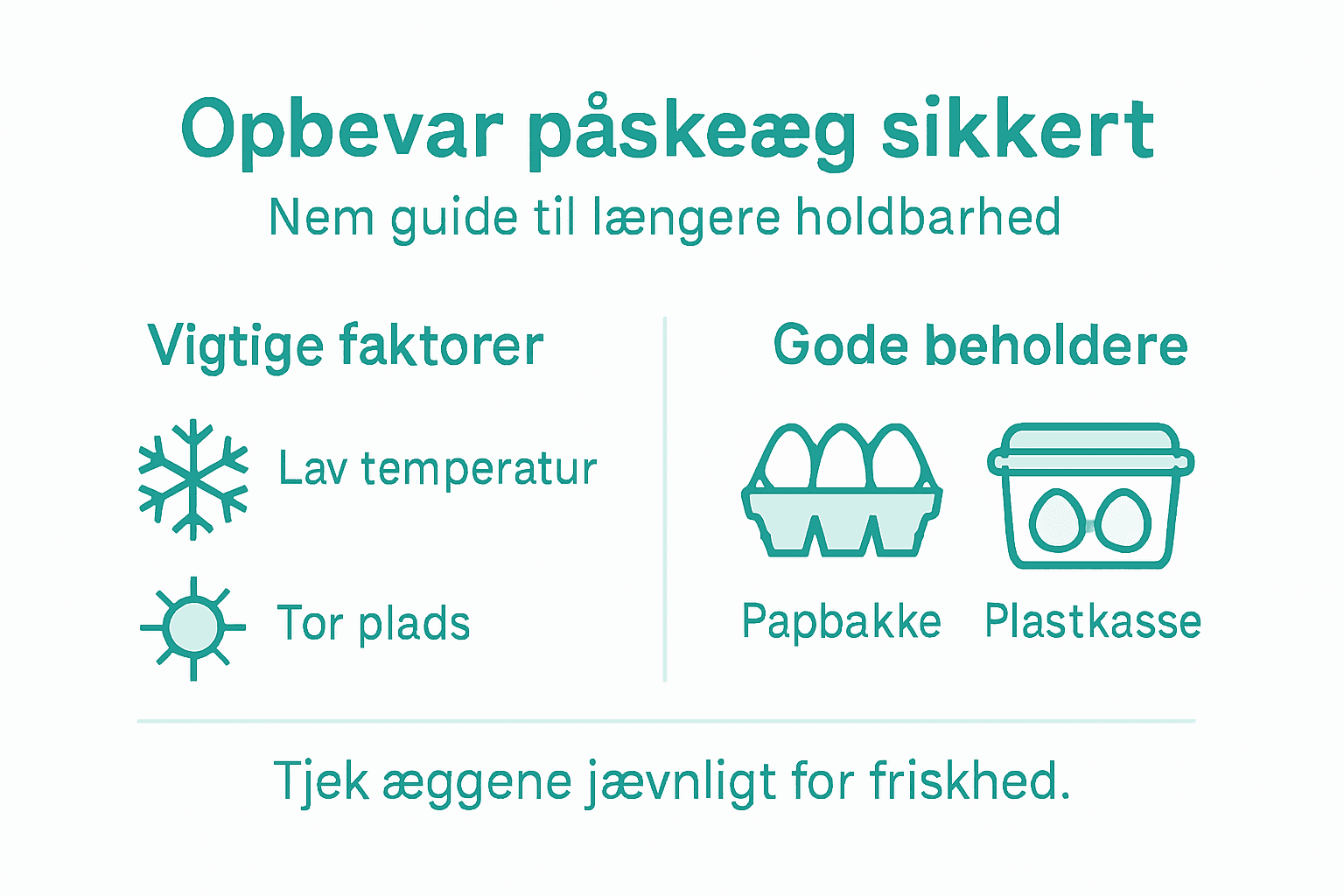
Use the original cardboard tray for the eggs, as it provides the best protection against shocks and scratches. Place the tray in the middle of the refrigerator shelf where the temperature is most stable. Avoid placing the eggs in the refrigerator door, where temperature fluctuations are more frequent. Gently place the eggs with the pointed end down to preserve their internal quality and structure.
Here is a comparison of the advantages and disadvantages of common storage locations:
| Storage place | Advantages | Disadvantages |
|---|---|---|
| Refrigerator middle shelf | Stable temperature, safety | Requires space |
| Refrigerator door | Let access | Exposed to temperature fluctuations |
| kitchen table | Visible and easy | Risk of rapid deterioration |
Professional tip: Label your eggs with the storage date and check them regularly to ensure none are damaged or starting to spoil.
Step 4: Keep the eggs dry and safe
Storing Easter eggs requires careful attention to moisture and temperature. Eggs should be kept at a low temperature around 5 degrees Celsius to prevent bacterial growth and ensure their freshness.
Moisture is your greatest enemy. Keep the eggs in their original packaging, protected from other foods with strong odors. Make sure to avoid condensation by placing them in a dry place in the refrigerator. Avoid washing the eggs in advance, as this removes their natural protective membrane and increases the risk of bacterial growth.
Here is an overview of the most important factors for optimal storage of Easter eggs:
| Factor | Why is it important? | Recommended solution |
|---|---|---|
| Temperature | Low temperature prevents bacteria | Store at approximately 5°C |
| Packaging | Protects against shocks and odors | Bridge original paper tray |
| Moisture | Prevents condensation and bacterial growth | Keep in a dry and cool place |
| The placement of the eggs | Ensures stable temperature | In the middle of the refrigerator |
Professional tip: Regularly check your eggs for signs of moisture or condensation and gently wipe them dry with a clean, soft cloth if necessary.
Step 5: Regularly check the condition of the eggs
To ensure the quality and safety of your Easter eggs, regular inspection is essential. Freshness tests can reveal the health condition of the eggs quickly and efficiently through simple methods such as visual inspection and smell tests.
Perform a thorough inspection by cracking each egg into a bowl and assessing its appearance. Fresh eggs are characterized by a clear, thick, and viscous white and a shiny, firm yolk without any bad odor. Check for cracks or irregularities in the shell, and pay special attention to any abnormal color or texture. Discard eggs that show signs of decay to avoid health risks.
Professional tip: Perform a simple float test by placing the eggs in cold water. Fresh eggs sink and lie flat, while old eggs will float and should be discarded.
Turn your Easter eggs into lasting memories with experiences in Denmark
Storing Easter eggs safely and securely all year round requires carefulness and the right methods, such as keeping the eggs dry, cool, and crack-free. If you also wish to preserve the joy and tradition symbolized by Easter eggs, you can simultaneously create lasting experiences for yourself and your loved ones by exploring Denmark's diverse culture and nature.
On Travel in Denmark Find inspiration for destinations and activities that make every holiday and festive occasion even more memorable. Experience everything from historic sites to cozy family outings that suit all generations and needs. Visit Travel in Denmark today and let yourself be guided to the best experiences, so you can both keep your Easter eggs and create wonderful memories all year round.
Frequently Asked Questions
How do I choose the right Easter eggs for storage?
It is important to select whole and undamaged eggs to ensure long shelf life. Check each egg for cracks or damage, and select fresh eggs from hens or geese.
What is the best temperature for storing Easter eggs?
The ideal storage temperatures are below 12 degrees, preferably around 5 degrees Celsius. Make sure to place the eggs in their original packaging for optimal protection.
How should I prepare the eggs for long-term storage?
Do not wash the eggs, as this removes the natural protective coating and can negatively affect shelf life. Handle them carefully and place them with the pointed end down in the storage device.
What should I be aware of when storing Easter eggs in the refrigerator?
Place the eggs in the middle of the refrigerator shelf to avoid temperature fluctuations. Use the original cardboard tray to protect them from shocks and scratches.
How do I check the quality of my stored Easter eggs?
Perform a visual inspection and odor test regularly. Crack each egg into a bowl to assess its freshness and consistency, and discard eggs that show signs of spoilage.
What factors are important for optimal storage of Easter eggs?
Some of the most important factors include temperature, packaging, and humidity. Make sure to keep the eggs dry and at around 5 degrees Celsius to prevent bacterial growth.
Recommendation
- How to make a Christmas duck from start to finish – Travel in Denmark
- Danish holidays and opening hours – plan your trip without surprises – Travel in Denmark
- Danish Easter lunch – Traditions and food for families – Travel in Denmark
- Easter holiday in Denmark – Spring experiences for the whole family – Travel in Denmark