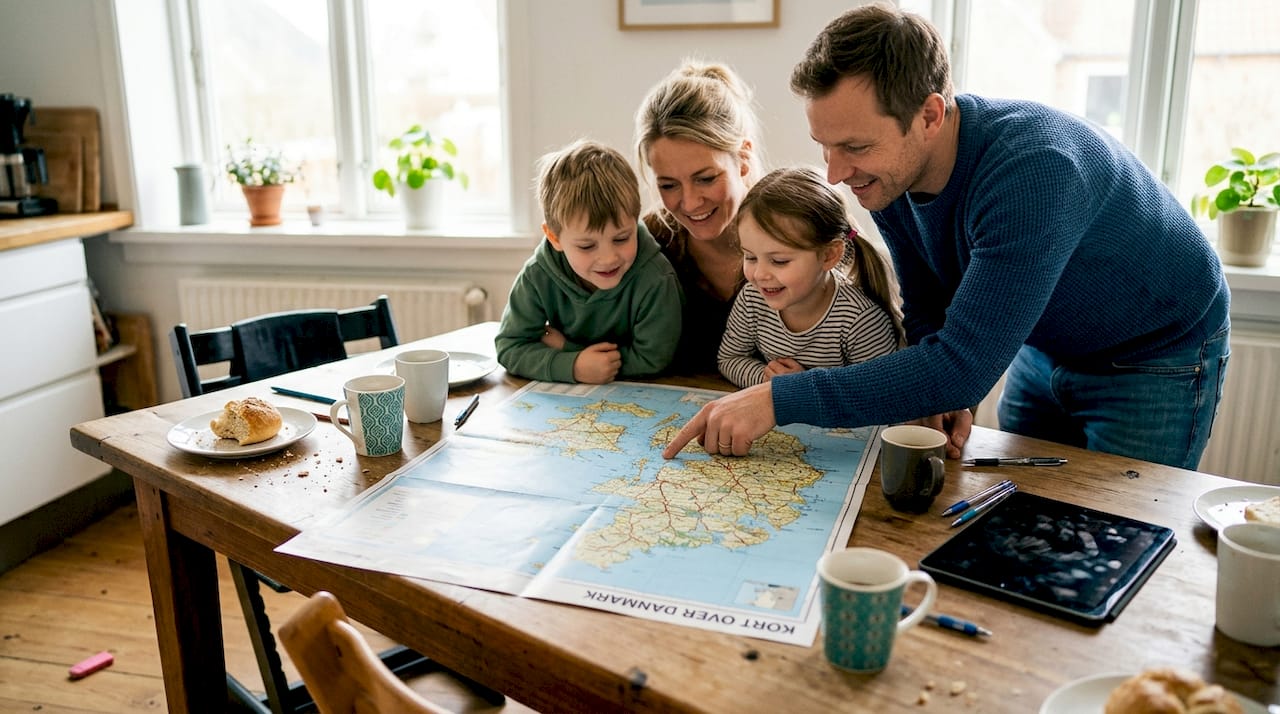
TL;DR:
- Define your interests and purposes to choose the best experiences.
- Gather and assess attractions based on relevance, practical considerations, and geographical location.
- Plan with buffer time and limit the number of attractions for a relaxed day.
Denmark is full of experiences, but that can make it difficult to choose. Are you going to visit an old castle, walk along the dunes in Thy, or take the children to an interactive nature park? Without a clear plan, many travelers end up spending time in places that don't really suit them and miss out on experiences that would actually make the trip memorable. This guide takes you step by step through the process: from figuring out what you really want to experience to building a plan that lasts all day. You get concrete tools, smart filters, and honest advice that save you time.
Main Points
| Point | Details |
|---|---|
| Clarification of interests | It is crucial to understand your own goals and desires before choosing sights. |
| Practical filtering | Evaluate logistics, opening hours, and budget to find the most suitable attractions. |
| Flexible planning | A good plan allows space for both structure and spontaneous experiences. |
| Bridge expert resources | Guided articles and checklists on rejsidanmark.dk Strengthens your experience plan. |
Define your interests and purpose of the trip
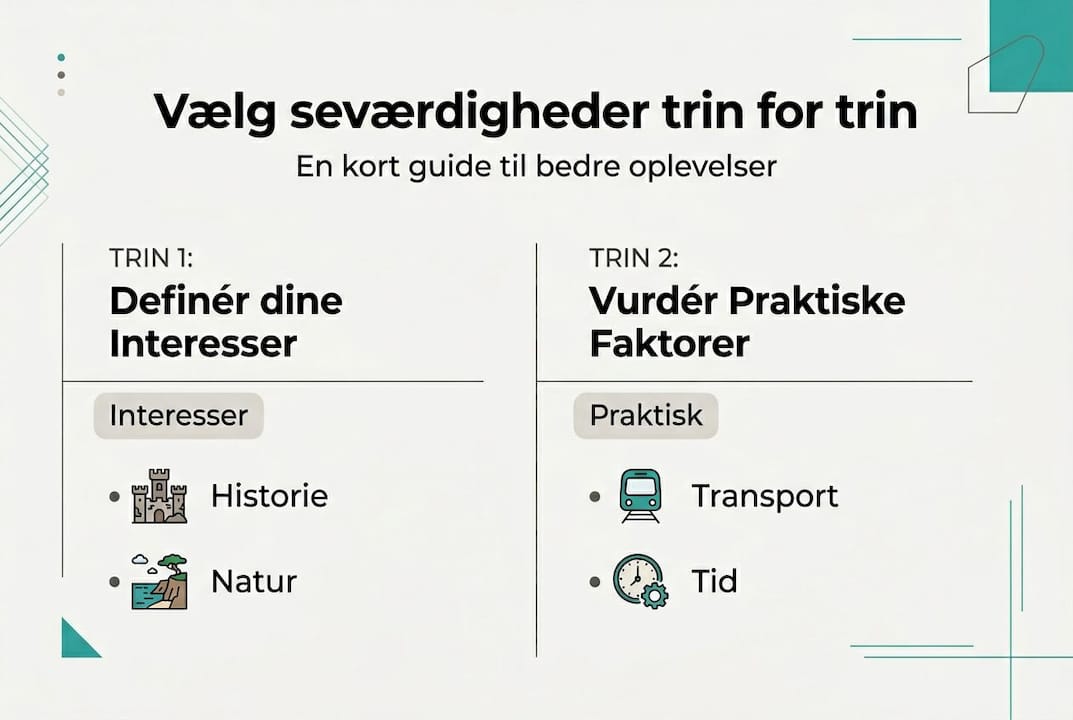
The first step sounds simple, but many skip it. Before you start googling attractions, you need to know what you're actually looking for. Is the purpose of the trip relaxation, cultural enrichment, family experiences, or something entirely different? The answer to that question determines all your future choices.
Som meaning of sights Viser, the term covers everything from museums and historic buildings to nature parks and active outdoor experiences. That means two people with very different interests can have an equally good trip in Denmark, just with completely different programs.
It is important that Clarify purpose and interests Before you start choosing attractions, so you avoid ending up with a list that doesn't make sense. Take a few minutes to honestly answer these questions:
- Do you mainly want to experience nature, culture or active activities?
- Are you traveling alone, as a couple, with friends, or with children?
- What is your energy profile: do you prefer calm experiences or action?
- Are there any particular interests in the group, e.g., history, art, food culture or sports?
- What is your budget per day?
When you have the answers, you can start combining interests. One day can easily include both a historical museum in the morning and a nature walk in the afternoon, if both suit the group.
Professional tip: Write a list of your top five interests and assess which ones can be combined in one day without feeling stressful. It gives you a natural filter before you even start searching.
Also remember to consider the company. Children have different needs than adult culture enthusiasts, and a 70-year-old grandmother may have different boundaries than an active 30-year-old. A good travel plan considers everyone from the beginning.
Seek inspiration and gather opportunities
Once your interests are defined, the next step is to gather a selection of relevant options. The key is to cast a wide net before you start sorting.
You can find attractions By using guided articles and relevant destinations that have already sorted the experiences for you. But it is worth supplementing with other sources to find what the big guides do not always mention.
Use this procedure step by step:
- Search broadly through travel guides, tourist sites, and social media such as Instagram and YouTube.
- Note all the options In a document or a note app without sorting yet.
- Sorter by categorynature, culture, family-friendly, gastronomic, etc.
- Compare the remaining options based on relevance to your interests
- Ask locals or check reviews from travelers with similar preferences.
To make the comparison easier, you can use a simple table:
| Sightseeing spot | Type | Family-friendly | Cultural value | Nature experience |
|---|---|---|---|---|
| Kronborg Castle | Culture | Yes | High | Lav |
| Møns Klint | Nature | Yes | Middle | High |
| Experimentarium | Activity | Yes | Middle | Lav |
| Ribe Cathedral | Culture | Partially | High | Lav |
| Thy National Park | Nature | Partially | Lav | High |
The table quickly gives you an overview of which places match your priorities. Look at guided sights and family-friendly destinations to supplement your list with concrete suggestions.
Professional tip: The most interesting experiences are often hidden in niche blogs and the recommendations of local tourist offices. Call or write to the local tourist office in the city you are visiting. You know the hidden gems that don't appear on the first page of Google.
Assess practical considerations and filter the choices
Once the inspiration is gathered, it's important to make the choices practical and relevant to your journey. A sightseeing spot that sounds fantastic online can quickly lose its appeal if it's two hours away and only open three hours a day.
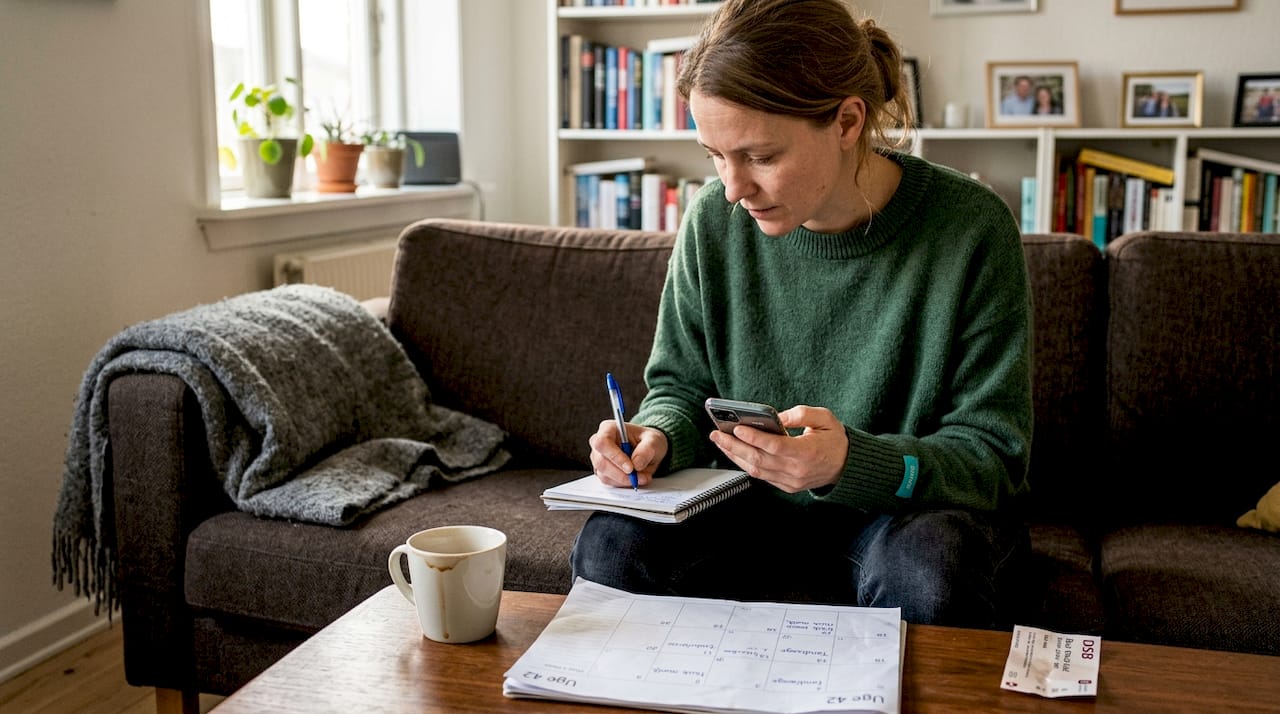
Practical considerations A certain distance and price can help you filter your choices so that you end up with a realistic and coherent plan. Use a data table to create an overview:
| Sightseeing spot | Distance from base | Price per person | Time consumption | Opening hours |
|---|---|---|---|---|
| Kronborg Castle | 45 km | 160 kr. | 2-3 hours | 10-17 |
| Møns Klint | 130 km | Free | 2-4 hours | Always open |
| Experimentarium | 20 km | 225 kr. | 3-4 hours | 10-17 |
| Ribe Cathedral | 250 km | 75 kr. | 1-2 hours | 10-16 |
In addition to price and distance, there are several practical factors you should check:
- Opening hoursIs the place open on the day you plan to visit?
- Transportation optionsCan you get there by public transport, or does it require a car?
- ParkingIs there parking, and how much does it cost?
- Financial optionsIs there a café or restaurant nearby, or do you need to bring food?
- AvailabilityPass the place to everyone in the group, including children or the elderly?
The goal is to filter your list down to three to five attractions that can realistically be reached within the time you have. In Guide to family adventures can help you assess whether the chosen locations are suitable if you are traveling with children.
A good trick is to group attractions geographically. Visit all the places in the same area on the same day to minimize travel time and maximize experience time.
Create your final experience plan and avoid the classic mistakes
When the best choices are found and practically tested, it's about building a plan that creates the maximum experience. Here is where many travelers go wrong: they pack too much and end up rushing from place to place without enjoying any of it.
In God Experience Plan increases the chance of creating memorable experiences and avoiding stress. Build your daily plan like this:
- Choose the anchoring spotThe most important sight of the day. Plan the rest around it.
- Add one to two additional stopsShorter visits that fit geographically and temporally.
- Set buffer timeAt least 30 minutes between each stop for transportation and unforeseen delays.
- Plan mealsDecide in advance where and when you will eat, so it doesn't take up time in the middle of the day.
- Set an end timeDecide when the day is over, and stick to it.
The best thing about Danish attractions is often the unexpected. Be open to adjusting your plan if something surprising comes up along the way.
Professional tip: Intentionally set aside time for planned leisure. Half an hour at a local café or a spontaneous walk along the harbor can become the best memory of the day. These moments only occur if you haven't filled the program to the breaking point.
Avoid planning more than three to four attractions in one day. It sounds a bit, but with transportation, breaks, and meals, it is actually a full day. Child-friendly attractions Typically requires even more time, as children need breaks and movement along the way.
Always read reviews from other travelers who are similar to you. A family with three children under ten has a completely different experience of a place than a couple without children.
Our experience: Choosing sights is about more than checklists
We have helped many travelers plan trips around Denmark, and we see the same pattern again and again. The traveler who follows a strict checklist without listening to themselves often ends up with a trip that was nice but not fantastic. The traveler who uses the guide as a starting point and adjusts along the way shares experiences they still remember years later.
It's not about ignoring planning. It's about understanding that Sightseeing spots are important for the experience, but it is your presence and openness that determine whether they become memorable.
Our most honest advice: Choose fewer places and spend more time on each of them. Talk to the locals. Sit down and watch people. Try the local ice cream, even if it wasn't in the guide. Surprising experiences happen when you follow your gut feeling rather than an algorithm.
A successful travel plan is flexible. The weather changes, children get tired, and sometimes the small village you drove through is more fascinating than the big museum you planned as the highlight of the day.
Discover even more attractions on Travel in Denmark
Once you have your method under control, the next step is to find the specific experiences that suit your particular journey. On Rejs i Danmark, you will find specialized guides, checklists, and overviews that make planning faster and more accurate. Use our Guide for first-time visitors to get a good start, or dive into our day trip checklist to make sure you don't forget anything important. If you want to see the entire selection of experiences across Denmark, you will find it in our Archive of experiences, sorted by category, price, and target audience.
Frequently Asked Questions
How do I sort attractions if I am traveling with children?
Focus on family-friendly destinations and filter by activities that engage both children and adults. Prioritize places with opportunities for movement and shorter visit times so that children do not lose their energy.
Is it better to plan everything in advance or leave room for spontaneous experiences?
A balanced plan works best. Plan the anchor points, but let flexibility account for at least 20 percent of the day so you can respond to weather, mood, and unexpected discoveries along the way.
How can I find lesser-known attractions?
Use niche blogs, local guides, and recommendations from tourist offices. Local niche guides are often the best source of experiences that are not overwhelmed by tourists.
How much time should I allocate for each attraction?
Typically set aside 1-3 hours per. Sightseeing depends on the type and depth of the activity. Time budgeting makes experiences less stressful and allows room for unexpected breaks.
Recommendation
- 7 unforgettable tips for top attractions in Denmark 2025 – Travel in Denmark
- Plan a road trip in Denmark step by step – how to succeed – Travel in Denmark
- Practical checklist for a day trip in Denmark: Plan for success – Travel in Denmark
- How to plan your trip to Denmark for the whole family – Travel in Denmark