
TL;DR:
- Danish small towns like Dragør, Ebeltoft, and Ærøskøbing offer authentic experiences with well-preserved environments and vibrant communities.
- The best experiences happen outside the high season, where you can enjoy peace, culture, and local charm without tourists.
Denmark is not just Copenhagen and Aarhus. The country is home to a whole inspiring list of Danish towns, offering everything from medieval history and colorful maritime houses to vibrant art communities and tranquil island idylls. The problem is that it can be difficult to choose which cozy Danish villages are actually worth the trip. This guide is written for you who want to experience the real Denmark outside the big cities. You receive concrete recommendations, insider tips, and a comparison table that makes planning easier.
How to choose which small towns to visit
Not all small towns are created equal. Some live off tourism and feel like backdrops. Andre is a genuine, living community that just happens to be beautiful. They are the ones you need to find.
When you consider whether a city is worth visiting, you can look for these factors:
- Preserved historic urban environments. 16 Danish cities designated as national cultural environments, including Ribe, Ebeltoft, Sæby, Dragør, and Ærøskøbing. It is a good indicator that the urban environment is authentically preserved and not reconstructed.
- Atmosphere and tempo. Are you looking for a peaceful island idyll or a lively harbor town with cafes and galleries? Denmark's small towns span a wide range.
- Local experiences rather than sights. The best cities have food, art, and nature that are not packaged for tourists. Always ask for the local restaurant, not the one in the tourist brochure.
- Availability. Some cities require a ferry, others are a direct train ride from the nearest big city. Plan transportation early, especially to the islands.
- Time of the year. Many of these cities change character significantly with the seasons. Winter visits bring peace and close contact with the locals, summer brings life and events.
Professional tip: Feel free to visit two cities on the same trip that complement each other. Dragør and Ærøskøbing both provide a maritime historical perspective, but with very different character and geography.
1. Dragør: The skipper town by the Øresund
Dragør is only 20 kilometers from Copenhagen, but it feels like another world. The broken cigarettes, the low yellow houses, and the historic harbor create an atmosphere that is hard to describe in words. The city grew as a base for Dutch fishermen in the 1500s and still bears the marks of that heritage.
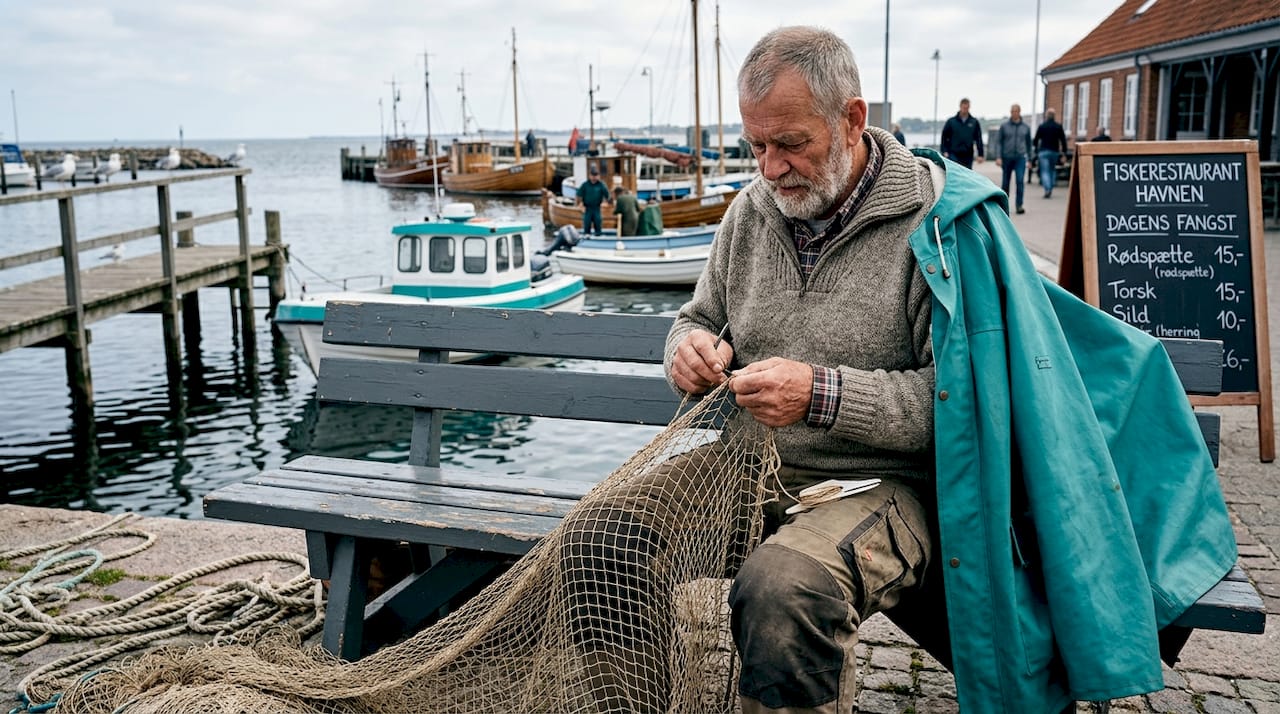
The special thing about Dragør is that The bags are hidden on architectural details you don't even see from the harbor promenade. Stay away from the touristy places and find the narrow paths behind the skipper's houses. Here you discover what sets Dragør apart from any other Danish coastal town.
The harbor is active all year round with small boats and fish restaurants. In summer, there are markets and historical events. In winter, the city is almost empty, and it's actually here that it is the most beautiful.
2. Ebeltoft: Half-timbered houses and Mediterranean atmosphere
Ebeltoft on Djursland is a town that takes you back to another time. The half-timbered houses along the narrow streets are preserved in a condition that makes it hard to believe you are in the 21st century. century The city is especially known for the frigate Jylland, the world's best-preserved wooden screw frigate, which is docked in the harbor.
In addition to the frigate, Ebeltoft has an active glass museum and a local art community that keeps the galleries open year-round. The historic backstreets of Ebeltoft hide details and atmosphere that you can only find if you take the time to step away from the main street.
Professional tip: Combine a visit to Ebeltoft with a trip to Mols Bjerge National Park, which is just outside the town. Nature and the historic city complement each other perfectly.
3. Sæby: Art, coast, and local life
Sæby in North Jutland is perhaps the most underrated town on this list. Many know it as a place you pass through on the way to Skagen, but it is a mistake to overlook it. The city has a strong and active art community combined with a beautiful harbor and access to peaceful nature walks.
Sæby recommends visitors Focus on craftsmanship, local fish restaurants, and nature walks rather than just looking at old buildings. It is advice that comes from the local population itself, and it says a lot about the character of the city.
When it comes to food, Sæby is surprisingly strong. Local restaurants range from classic fish restaurants to wine bars with modern cuisine. It is rare to find that combination in a city of this size.
There is also a strong interaction between local associations and the business community in Sæby, which creates a lively urban environment with cultural offerings that remain strong throughout the year.
4. Tunø: Denmark's most authentic island
Tunø is not for everyone. It is an island with only 75 permanent residentsStrict building regulations and no car traffic from tourists. The island is 3.5 km² and offers tranquility in a form rarely experienced in modern Denmark.
That's exactly what makes Tunø one of the unique towns in Denmark that you really must experience at least once. No alarms, no queues, no tourist traps. Pure nature, local life, and time to think.
Practically, Tunø is different from other destinations. Trust boxes are common at local sales sites, and you should always have cash or MobilePay ready, as payment machines are not standard. It is not a mistake. It is part of Tunø's authenticity.
The ferry to Tunø departs from Hou and takes about an hour. There are limited accommodation options, so book early, especially in summer.
5. Ærøskøbing: Maritime city with style
Ærøskøbing is the type of town photographers dream of. Colorful houses in yellow, blue, and red along narrow streets, a beautiful harbor, and a clear maritime history hidden in every corner. The city is part of the nationally designated cultural environments, and it is easy to understand why.
Ærø as an island is almost car-free at its heart, and it offers a calmness and slowness that are hard to find elsewhere. Cycling is the best way to get around. Rent a bike at the ferry harbor and drive yourself out to the surrounding villages and beaches.
The city has a vibrant cultural life with local galleries, Ærø Museum, and a harbor bath in the summer. The Bottle Post Museum is a curiosity that is actually surprisingly fascinating for all age groups.
6. Ribe: Denmark's oldest town
Ribe is not just old. It is the oldest city in Denmark, founded in the 700s, and it bears its age with pride and dignity. The cathedral dominates the cityscape, and the medieval streets around it are preserved in a condition that makes Ribe an experience unparalleled in Danish context.
In winter, Ribe changes character and hosts traditional Christmas events that attract visitors from all over the country. But it is actually in spring and early autumn that Ribe is at its best. There are few tourists, the weather is pleasant, and you can walk around the streets with space to think.
Ribes nightlife is unique in its own way. The night watchman walks the streets in the evening and tells stories from the city's past. It sounds like a tourist attraction, but in reality, it is a living tradition that keeps the city's identity alive.
7. Stages: The Gate to Møn
The stage is often just a stop on the way to Møns Klint, but it deserves much more attention. The town is one of the best-preserved medieval trading towns in Denmark, with one of the country's few preserved city gates, Mølleporten, which still marks the entrance to the old town center.
The stage has an active café and shop environment that has grown significantly in recent years. Craftsmen, artists, and foodie communities have chosen Stege as their base, which has given the town a new energy without destroying its historical atmosphere.
Professional tip: Have breakfast in Stege and then drive out to Møns Klint. The combination offers a perfect day with both urban culture and spectacular nature without you needing to stress.
Comparison of the 7 cities
Here is an overview of the cities presented in this guide. The table helps you match your travel style with the right destination.
| By | Best for | Best visiting time | Availability | Distinctive feature |
|---|---|---|---|---|
| Dragør | History enthusiasts and photographers | All year round | Near Copenhagen, by car or bus | Dutch skipper environment |
| Ebeltoft | Culture fans and families | Summer and autumn | Car recommended, Djursland | Frigate Jylland and Glass Museum |
| Sæby | Food and art lovers | October to April | Tog from Frederikshavn | Seafood restaurants and art environment |
| Tunø | Natural lovers and peace seekers | Early summer and autumn | Ferry from Hou | Only 75 permanent residents, car-free |
| Ærøskøbing | For art and culture enthusiasts | Summer and early autumn | Ferry from Svendborg | Colorful maritime houses and cycling |
| Ribe | History enthusiasts | Spring and Autumn | Took off from Esbjerg | Denmark's oldest town, night watchman |
| Stage | Mixed interests and foodie communities | Spring to autumn | Car from Copenhagen, 1.5 hours | Medieval city and gate to Møns Klint |
Places like Sæby and Ærøskøbing are best outside the high season. Authentic experiences in these cultural cities mainly occur from October to April, when the pace is calmer and the service more personalized.
Practical advice for your visit to small towns
Planning a visit to a small Danish town requires a little more than just booking a hotel room. This is what actually makes the difference:
- Avoid July if you can. The summer season fills the cities with tourists and drains them of authenticity. Come instead in April, May, September, or October and experience the same cities in the low season, where the locals are still present.
- Support local business. Choose the family-run restaurant over the chain. Buy craftsmanship directly from the artist. It is better for the cities and for your travel experience.
- Arrange transportation separately to the islands. Tunø and Ærøskøbing require ferries, and the departures are limited. Check the schedules at least a week in advance, and book accommodation as soon as you know the date.
- Bring cash for the boat trip. Especially on Tunø, cash and MobilePay are necessary, as payment machines are not available everywhere.
- Go behind the main street. The real experiences are in alleys, side streets, and backyards, not on the pedestrian street. Set aside two hours for pure exploration without a goal.
- Book accommodation early in popular cities. Ærøskøbing and Ribe have limited accommodation options. See a selection of accommodation options in Denmark, before you decide on the destination and date.
Professional tip: Ask your host or the local tourist office about a place that no tourists know about. The simple question almost always gives an answer that ends up as the best experience of the journey.
My honest opinion about Denmark's small towns
I have spent many years traveling around Denmark, and what repeatedly surprises me is how many Danes have never visited these cities. Aarhus and Copenhagen are obvious choices, but that's also where everyone else is.
What I have learned is that the best travel experiences rarely occur in well-known tourist magnets. They emerge in a fishing port in Sæby, where the restaurant owner sits down and talks about the local ingredients. Or in one of Dragør's alleys, where no other tourists have found their way that day.
I often hear that people wait to visit small towns because they are worried that there is "not enough to see." That is the wrong question. The question is, what are you willing to experience. The towns on this list are, as the local councils themselves emphasize, living communities and not museums. You should not just look at them. You need to spend time in them.
My best advice is to book at least two nights in the city you choose. One day is enough to see the sights. Two days are enough to experience the place.
— Tommy
Find your next experience with Rejsidanmark
Rejsidanmark helps you plan visits throughout Denmark, whether you're looking for cultural history, nature, or local food. Have you never visited the Danes cultural activities in Denmark, find plenty of inspiration for what awaits in the cities on this list.
Get started on your trip by reading The guide to Denmark for first-time visitors, who gathers all the practical things in one place. If you need help planning a day trip, Rejsidanmark also has one. Checklist for day trips, that ensures you don't forget the important thing before you leave. Rejsidanmark covers the entire country with specific recommendations, filters for season and age group, and updated information on prices and access.
FAQ
Which small towns in Denmark are nationally recognized cultural environments?
16 Danish towns have been designated as national cultural environments, including Ribe, Ebeltoft, Sæby, Dragør, and Ærøskøbing. The designation ensures that their historic urban environments are preserved and protected.
When is the best time to visit cozy Danish villages?
The most authentic experiences occur from October to April, when tourist pressure is low and the service is more personal. Sæby and Ærøskøbing are especially good to visit outside the summer season.
What should I remember when visiting the island of Tunø?
Pay with cash or MobilePay, as payment machines are not available everywhere on the island. Tunø has only 75 residents and is one of Denmark's most authentic and car-free destinations.
Can I combine several small towns in one trip?
Yes, and it is recommended. Dragør and Ærøskøbing complement each other well as maritime towns, just as Stege and Møns Klint are a natural pair with the town center and spectacular nature on the same day.
Is it difficult to get around in the small towns without a car?
Most cities are accessible by train and bus, but the islands of Tunø and Ærøskøbing require a ferry. Check the schedules early and book accommodation well in advance, especially during the summer season.
Recommendation
- 7 Day Trip Ideas in Denmark Worth Experiencing – Travel in Denmark
- Examples of Danish castles: discover 7 historical gems – Travel in Denmark
- Explore natural gems in Denmark: Your guide to hidden treasures – Travel in Denmark
- 7 tips for experiences all year round in Denmark for everyone – Travel in Denmark