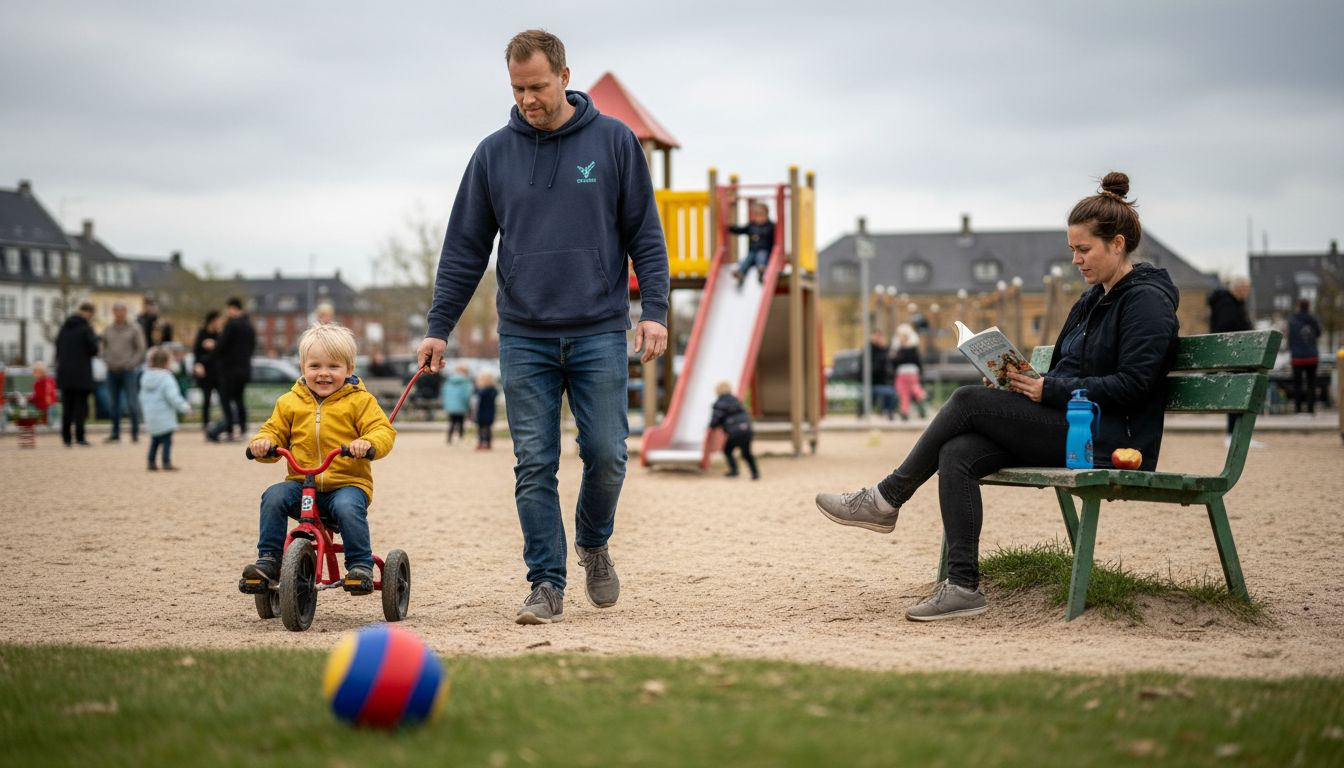
Every time you look for new experiences for the holiday with children between three and twelve years old, you may encounter confusion about what really makes an activity child-friendly. Many think it's just about entertainment, but Child-friendly activities are based on development, safety, and fun within frameworks where both safety and children's rights are considered.When you understand what true child-friendliness entails, it becomes easier to create good memories and avoid the classic mistakes.
Child-friendly activities and widespread misunderstandings
Child-friendly activities are about much more than just having fun. Many parents believe that child-friendliness simply means entertainment without challenges, but that is far from the whole story.
UNICEF Denmark works on children's rights and well-being and emphasizes that true child-friendliness must fully integrate protection, development, and inclusive frameworks. Here are some of the biggest misunderstandings that many families encounter.
Misunderstanding 1: Child-friendliness means no effort
A completely common idea is that child-friendly activities should be easy and stress-free. That is wrong. Children learn and develop through challenges.
Activities such as tree climbing, obstacle courses, or simple crafts require effort, but that is precisely what makes them valuable. Children need physical and mental challenges to grow.
- Physical challenges strengthen motor skills and self-confidence
- Mental challenges develop problem-solving skills
- Small failures teach them perseverance
Misunderstanding 2: All activities must be exclusively for children
Many parents seek activities where children are completely alone without adults present. Child-friendly does not mean "without adults." It rather means that the environment is safe, accessible, and stimulating for children.
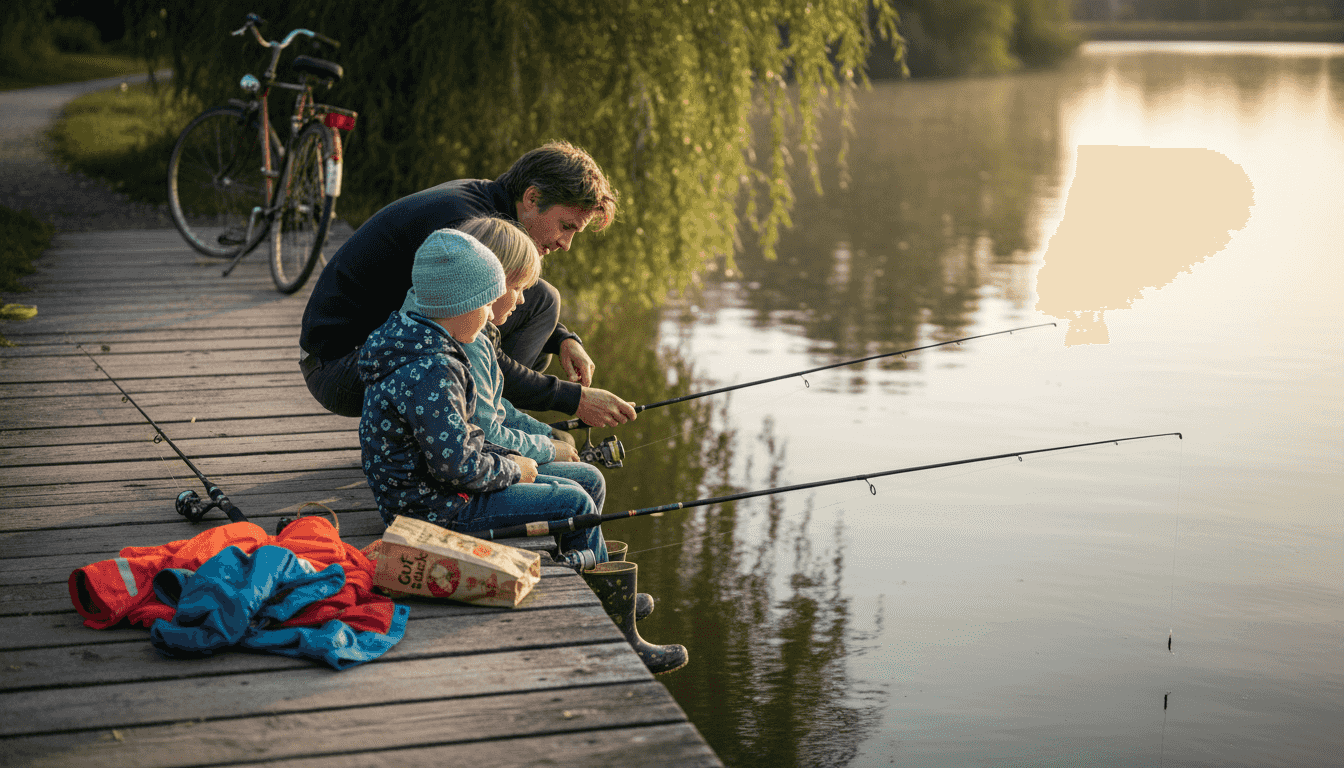
The best experiences often happen when parents participate actively. A joint bike ride, fishing trip, or museum visit provides both quality time and learning.
Misunderstanding 3: Child-friendly activities are very expensive
Another common misconception is that genuine child-friendly experiences require expensive tickets and large events. That's not right.
Denmark has countless free and inexpensive activities: beach trips, forest fires, nature walks, and local events. Many cities also offer child-friendly attractions with both learning and fun without high prices
- Beaches and parks are completely free
- Local libraries organize free activities
- Nature centers often have reasonable entrance fees
- Seasonal events are often cheap
Misunderstanding 4: Child-friendliness is the same at all ages
A three-year-old and a ten-year-old have completely different needs. Child-friendly does not mean "one size fits all."
Genuine child-friendliness adapts to children's age, interests, and developmental level. An activity like fishing can be child-friendly for both 5-year-olds and 11-year-olds, but in completely different ways.
Misunderstanding 5: Safety and fun cannot coexist
As a parent, it can feel like a choice between safety and freedom. Children should both have the opportunity for adventure and be protected. It's about setting reasonable boundaries.
A child-friendly activity is both safe and challenging. Children should be able to run around, climb, and explore without constant supervision, but within reasonable limits.
Child-friendly does not mean eliminating all risks – it means balancing safety with development and learning.
User tip: Start by asking your children what they want to do instead of choosing activities based on what you think is child-friendly. Your interests are often the best starting point.
Here are typical misunderstandings compared to the actual realities for parents:
| Misunderstanding | Reality |
|---|---|
| Activities are just for fun | Challenges develop the child |
| Everything should be without adults | Adult gatherings strengthen the experience |
| It requires large expenses | Many options are free |
| Suitable for all ages | Adaptation is necessary |
| Safety excludes fun | Both can be balanced |
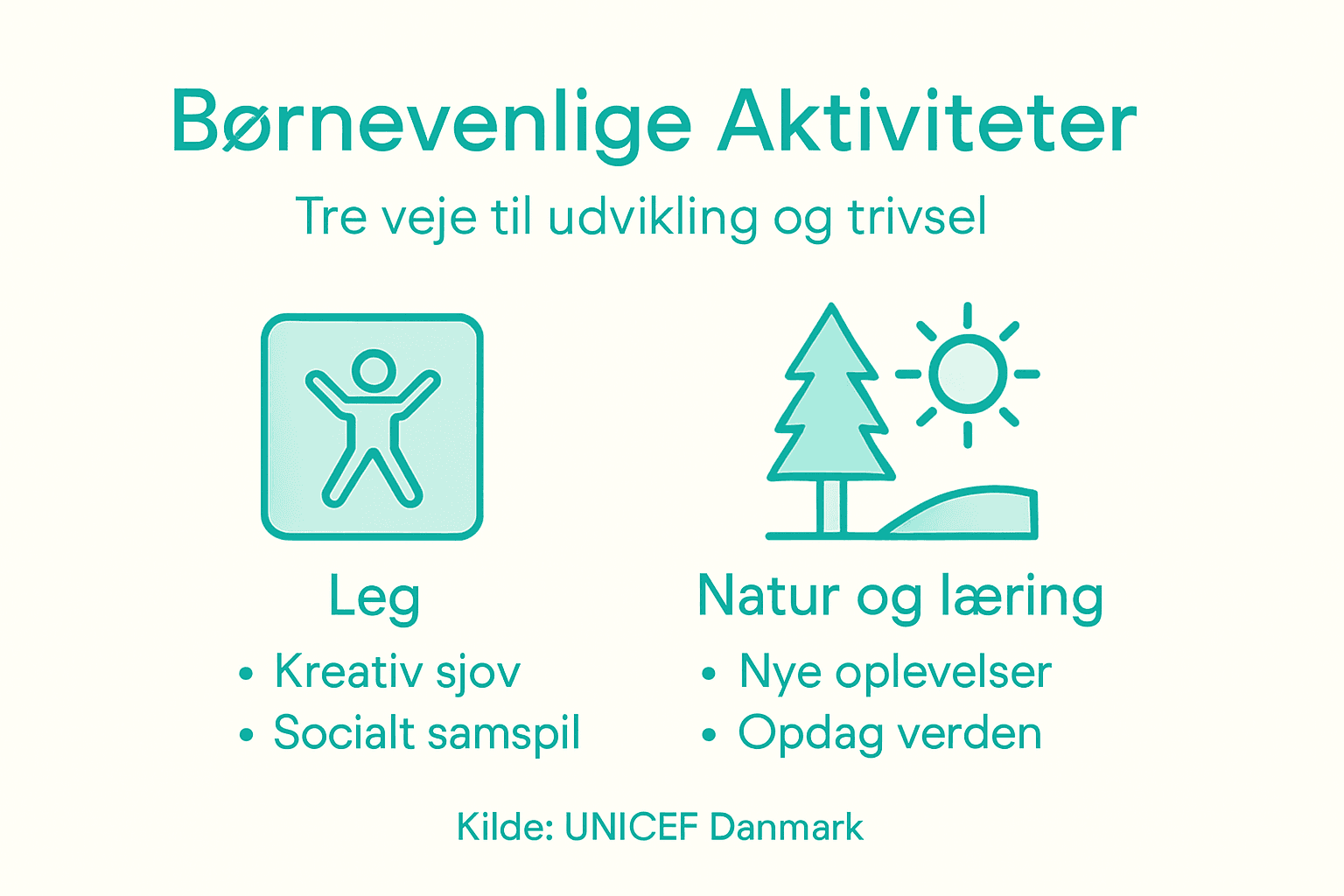
Three main categories: Play, nature, and learning
Child-friendly activities in Denmark can be divided into three main categories, which work together to support children's development and well-being. These three elements – play, nature, and learning – are not separate, but work best when they are combined.
Here is an overview of the typical advantages of the three main categories of child-friendly activities:
| Category | Contribution to the child's development | Good examples in Denmark |
|---|---|---|
| ساق | Enhances imagination and social skills | Playgrounds, role-playing, building blocks |
| Nature | Improves well-being and health | Nature center, forest trips, beach activities |
| Learning | Increases curiosity and understanding | Children's museums, knowledge centers, science parks |
Leg: Grundlaget for udvikling
ساق It's not just fun. It is children's most important work and tool to understand the world. Through play, children develop social skills, problem-solving, and creativity.
Leg can be structured or unstructured. The important thing is that children have the freedom to explore, experiment, and make mistakes without pressure about results.
- Free play without rules develops imagination and independence
- Structured play like role-playing builds social skills
- Physical play strengthens motor skills and self-confidence
- Constructive play (building blocks, Lego) develops spatial thinking
Natur: Læring gennem oplevelser
Danish children have access to one of the world's best natural treasures. Activities of Danish children in nature and green areas shows that nature exploration significantly strengthens both physical and mental health.
The value of nature lies in unpredictability. A forest is never exactly the same twice. Children learn by messing around, building shelves, finding insects, and experiencing the weather.
- Nature research reduces stress and anxiety
- Outdoor activities strengthen the immune system
- Direct contact with nature develops environmental awareness
- Free natural play builds self-confidence and a sense of adventure
Learning: Structured and fun
Learning does not have to take place in a classroom. Child-friendly museums, nature centers, and interactive exhibitions allow children to learn through play and discovery.
The best thing about this form of learning is that the children do not feel that they are learning. They are just having fun and asking questions because they are curious.
- Hand on learning through eyes, ears, and the whole body
- Interactive activities keep children engaged
- Group-based learning develops social skills
- Practical experience creates a deeper understanding than theory alone
How the three work together
The three categories work best when they are mixed. A nature walk can combine free play in the forest (play), nature observation (nature), and collecting leaves for a project at home (learning).
A museum visit can be play when children explore the exhibits, learning when they read and ask questions, and if the museum is located by a lake or park, you also get contact with nature.
The best child-friendly activity combines elements from all three categories without feeling like teaching.
User tip: Let the children lead the activity – if they are interested in birds, turn a nature walk into a bird hunt; if they love art, find an art museum with interactive sections where they can create themselves.
Security requirements and legal frameworks in 2026
When planning child-friendly activities in Denmark, you should be aware of the legal requirements and safety standards that apply. These frames exist to protect children and ensure they can play and learn safely.
What does legal child-friendliness mean?
Child-friendliness is not just about fun. It's about fully protecting children's rights. Child-friendly municipalities must comply with legal frameworks that ensures safe and inclusive environments.
It concretely means that activities must be safe, accessible, and non-discriminatory. Children should have the opportunity to participate regardless of gender, ethnicity, or abilities.
Safety requirements for activities
Or activities or attractions must meet certain safety standards. It applies to everything from playgrounds to museums and nature centers.
The most important safety requirements include:
- Structures and equipment must be well-maintained and free of sharp edges.
- There must be adequate supervision by responsible adults.
- Emergency exits and first aid must be easily accessible
- Sanitary conditions must meet hygiene standards
- Risks should be minimized through design and practice
Infrastructure and accessibility
Denmark is working towards 2026 to ensure that all child-friendly spaces are physically accessible. It means ramps, toilets, and facilities suitable for children of all ages.
Accessibility is also about inclusion. An activity should be able to be offered to children with different needs and abilities without extra costs or barriers.
Responsibility and insurance
When booking an activity or playground, the organizer must have proper supervision and liability insurance. This means that if an accident occurs, there is financial coverage for damages.
For private gatherings at home or in the garden, you must ensure a safe environment yourself. Remove dangerous objects, secure trampolines properly, and supervise the children carefully.
New standards towards 2026
Safety requirements for child-friendly environments Will be intensified and systematized over the next years. Municipalities and private organizers are working to implement higher standards.
This includes, among other things, better lighting, handrails on stairs, and clear marking of potential hazards. Municipalities must also ensure that children have influence on the design of their local community.
Safety and freedom are not about choosing one over the other – it's about combining them wisely.
User tip: Before booking an activity, ask the organizer directly about their safety standards, supervision conditions, and what insurance they have. A good answer shows that they take children's safety seriously.
Costs, availability, and practical errors
Child-friendly activities should be accessible to all children, regardless of their economy or background. But the reality is that many families face barriers when trying to plan activities. Today we go through the biggest challenges and how to avoid them.
Costs as a barrier
Economy is often the biggest obstacle to children's participation in activities. Expensive tickets for attractions, transportation, and equipment can quickly become costly for families with lower incomes.
Costs for nature and green areas show that financial barriers significantly limit children's active participation in leisure activities.
The good news: many activities are free or very cheap. Beaches, parks, forest walks, and municipal facilities often cost nothing or very little.
Accessibility issues
Physical accessibility It is not only for children with disabilities. It's about ensuring that all children can participate in the activities.
Common barriers include:
- Transport – especially if you don't have your own car
- Opening hours that do not suit working parents
- Facilities such as toilets, changing rooms, and kitchens
- Lack of information in Danish or other languages
- Activities designed only for children without disabilities
Practical mistakes during planning
Many parents make mistakes that make activities stressful or fail completely. The most important are:
- Not planning enough time Children move more slowly than adults
- Ignore the weather Rain without rain gear ruins the day
- Overestimate the children's patience Long journey without breaks fails
- Do not check opening hours Arrival at closed attractions is frustrating
- Forget snacks and drinking water Hungry children become irritable
Inadequate implementation
Child-friendly initiatives require proper funding and involvement from children themselves. When municipalities do not invest sufficiently or ignore children's wishes, the projects often fail.
This means that many planned activities or facilities are never realized or become poorly maintained.
How to avoid the most common mistakes
Your planning starts with being realistic. Choose activities that suit your children's age and interests – not what you think they "should" love.
Always check practical details before departure: opening hours, parking, toilets, and what costs. A single phone call can save you hours of stress.
The best activities are often the free or cheap ones – they just require good planning and flexibility.
User tip: Create a simple checklist before each activity: weather, snacks, bathroom breaks, and an exit plan if the children become unruly. Preparing in 5 minutes saves you from bad experiences.
Find child-friendly activities that match both play, learning, and well-being
Creating the perfect child-friendly experiences that balance safety, challenges, and joy can be a great challenge for many parents. The article emphasizes the importance of adapting activities according to age and interests while ensuring safe environments and reasonable costs. Hos Travel in Denmark If we understand these needs and offer a user-friendly platform where you can easily find unique activities that combine play, nature, and learning across the country.
Whether you're looking for free nature experiences, exciting museums for children, or social activities, our site provides you with access to detailed descriptions and practical information including price levels and availability. Make planning easier and give your child the opportunity to experience Denmark in a way that supports their development on all levels. Visit Travel in Denmark now and find inspiration for your next family-friendly trip, so you can create unforgettable moments with a good balance of play, learning, and safety.
Frequently Asked Questions
What are child-friendly activities?
Child-friendly activities are activities designed to support children's development and well-being, including play, learning, and nature exploration.
How can I find available child-friendly activities?
Many municipalities and organizations offer free or inexpensive child-friendly activities. You can check local libraries, cultural centers, and nature centers to find opportunities.
How can play enhance my child's development?
Leg fremmer sociale færdigheder, problemløsning og kreativitet. It gives children the opportunity to experiment and learn through play without pressure about results.
What safety standards should I be aware of for child-friendly activities?
Activities shall ensure that structures and equipment are well-maintained, there is adequate supervision, and emergency exits and first aid are available.
Recommendation
- The role of child-friendly experiences – The value and development of holidays – Travel in Denmark
- Why Experience Children's Denmark – Memorable Family Time – Travel in Denmark
- 7 examples of child-friendly attractions for families – Travel in Denmark
- Tips for cheap activities for families in Denmark – Travel in Denmark
- 7 Mattress Selection Tips 2025 for Caring Parents | Afrokoptiki