
TL;DR:
- Many only skim the surface without delving into the deeper history.
- Preparation with themes, digital research, and practical planning enhances the experience.
- Authentic and interactive experiences create more personal and lasting learning moments.
Many visit Denmark's impressive castles, Viking ship museums, and medieval city centers without truly delving beneath the surface. They take a few pictures, read a single information board, and move on. It's a pity, because Danish history includes the dramatic royal murder, the Vikings' worldwide expeditions, and a democratic development that shaped an entire continent. This guide provides you with concrete methods to experience history with all your senses, whether you are traveling alone, with children, or in a group. Combine physical visits with digital resources, and you will discover that the past suddenly feels alive and personal.
Main Points
| Point | Details |
|---|---|
| Combine digital and physical experiences | You get the most out of Danish history by preparing digitally and engaging physically on site. |
| Prioritize authentic places | UNESCO sites and living museums create the deepest and most sensory historical experience. |
| Evaluate and learn further | After your visit, you can strengthen the learning with TV, books, and conversations about the experience. |
| Guided tours increase understanding | Expert stories and guided routes provide special insights that you rarely get alone. |
Forberedelse: Hvad du bør vide og planlægge
God preparation is the difference between an experience you'll remember for years and one you'll forget before you get home. Start by choosing a theme or a historical period that really interests you. It could be the Viking Age, the Reformation, the Occupation during World War II, or the Danish kings' court life. A clear focus gives the visit direction and depth.
Use digital resources actively before departure. Digital reading on Danish history.lex gives you a solid overview of periods, people, and events, and 100 Denmark stories recommend combining physical visits with digital resources for deeper context. That means you arrive with questions instead of blank pages.
Also plan the practical side thoroughly. Check opening hours, prices, and whether a reservation is required. Many popular places such as the National Museum in Copenhagen and Den Gamle By in Aarhus have busy periods, during which guided tours are quickly fully booked.
Practical preparation points:
- Choose one to three historical themes as the framework for the trip
- Learn the basics about the period from home via digital portals
- Check if the place requires advance booking, especially for guided tours
- Check availability for children, the elderly, or people with disabilities
- Download relevant apps or audio guides before the visit
- Plan transportation, as many historical sites are located outside the city center.
For Tips for museums Can you find concrete advice on how to navigate the Danish museums optimally, from ticket purchase to the hidden gems in the collections.
| Preparation type | Time consumption | Dividend |
|---|---|---|
| Digital background reading | 1-2 hours | Context and key concepts |
| Booking of guided tours | 15-30 minutes | Guaranteed space and expert mediation |
| Download the app | 10 minutes | Flexible information on site |
| Mapping of transportation | 20-30 minutes | Stress-free arrival |
Professional tip: Write down three questions you would like to have answered during the visit. It activates your curiosity and gives you something concrete to pursue when talking to guides or reading exhibition texts.
First step: Find the best historical experiences
Once you have an overview of the preparations, you can begin selecting your experiences. Denmark's historical offerings are wide-ranging, and it can be difficult to know where to start.

There are basically three types of historical experiences to choose from. Living Museums At The Old Town and Lejre Experimental Center, you can experience history with all your senses. You can watch craftsmen work, smell traditional food, and touch authentic objects. Classic museums as the National Museum offers deep collections and professional dissemination. Historical districts As Ribe, Denmark's oldest town, gives a sense of time and place that no exhibition can replace.
For authentic experiences, it is recommended to prioritize UNESCO sites and living museums, as they combine professional credibility with sensory experience. The Jelling Monuments, Kronborg Castle, and Stevns Klint are all UNESCO sites that offer layers of history.
How to prioritize your choices:
- Match the place with your chosen theme, Viking site for Viking theme, etc.
- Consider your travel group, living museums work particularly well with children
- Check if the place offers guided tours in Danish or your preferred language
- Check if there are special exhibitions or seasonal events during your visit
- Read reviews from other history enthusiasts, not just tourists in general
For Inspiration for family-friendly attractions Find selected places that combine historical depth with activities that keep children's attention. And if you are particularly interested in the Viking Age, give Viking museums in Denmark A thorough overview of the best museums and excavation sites.
| Experience type | Best for | Historical depth | Interactivity |
|---|---|---|---|
| Living Museum | Familiar, all ages | High | Very tall |
| Classic Museum | Adults, students | Very tall | Middle |
| Historical district | All | Middle | Make it medium |
| Guided tour | All | High | High |
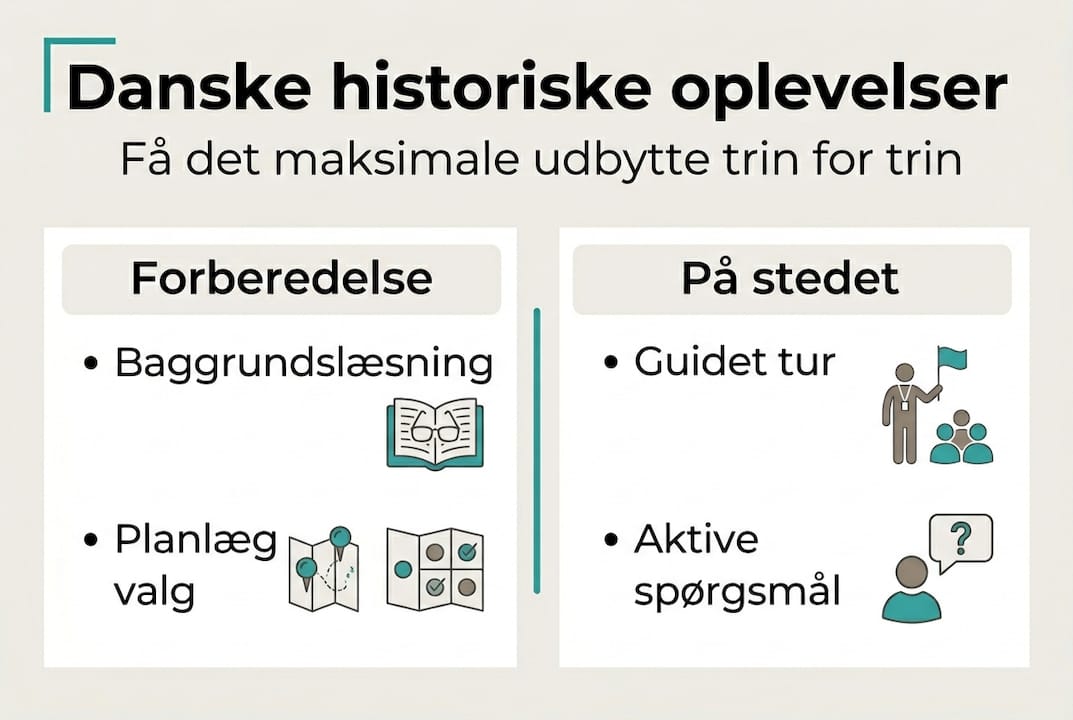
Guided tours are especially valuable because a skilled guide not only tells facts. They tell the stories that are not on the information boards, the personal dramas and the surprising details that make the story human.
Complete your visit: How to experience Danish history on site
When you have chosen destinations, it is time to maximize your actual visit. It's not about seeing as much as possible, but about experiencing it truly.
Always ask the guides about the stories that are not part of the standard tour. What is the strangest thing they have ever found? Which person from this period would they have liked to meet? Such questions open up the living stories that are stuck in memory. Expert dissemination and interactive experiences are documented as crucial for genuine historical understanding, not just superficial knowledge.
Make your visit active and sensory:
- Participate in workshops such as bread baking, blacksmithing, or medieval dance
- Use the city's audio guide or app to listen to moods and quotes
- Make notes or sketch what surprises you.
- Photograph details, not just whole objects; a door handle or a tool tells its own story.
- Talk with other visitors about their experience and interpretation
Provides for families with children child-friendly museums concrete recommendations for places that have considered children's experiences from the beginning. And if you want to understand why visiting museums is worth prioritizing at all, give Advantages of visiting museums A good answer.
History is not something that happened. It is something that happens again and again, every time we choose to remember it.
DR's history storytelling can complement your physical visits. DR's interactive storytelling show examples of how digital formats can provide perspectives that even the best museums find difficult to convey.
Professional tip: Set the phone to silent during the tour, but use it actively to scan QR codes and note questions. Full presence combined with strategic digital use provides the best return.
Confirm and elaborate on your journey: Evaluate the experience and learn further
Once the visit itself is over, it's about making the learning continue to live on. Most people forget 80 percent of what they have experienced within 48 hours unless they actively process it.
Evaluate your experience with these five steps:
- Write down three things that surprised you the most
- Note a question you still have and would like to investigate
- Share a specific story from the visit with a friend or family member
- Make a list of places or periods you want to explore next time
- Evaluate what worked well and what you would do differently.
Digital post-processing is just as important as the visit itself. DR and series like 100 Denmark Stories expand the history digitally and give you the opportunity to dive into the topics that caught your interest. Digital resources from DR are particularly strong in putting human faces to historical events.
Good ways to continue learning:
- A documentary series about the period you visited
- Listen to historical podcasts in Danish, many are excellent
- Read a novel set in that particular time and place.
- Follow the museum's social media for ongoing historical stories
- Plan a follow-up visit to a related place
For Unforgettable experiences in Denmark Do you find inspiration for your next destination that can build on what you have already experienced and learned.
Therefore, true Danish history is about more than just facts
We have traveled around many of Denmark's historical sites, and we have reached an insight that is not always popular: the best historical experience is rarely about what you learn. It is about what you brands.
The day you stand in Jelling and look at the runestone Harald Bluetooth erected over his parents, and suddenly realize that this is a person's love and desire for power cast in stone, this is not information. It's a feeling that resides in the body.
History presented as pure facts slips away again. But an experience shared with your daughter, your father, or a stranger on a guided tour creates dialogue and personal meaning. Families that experience historical sites together pass these stories down through generations.
That is exactly why we on Rejs i Danmark recommends Danish museums Not only for knowledge, but for the conversations and feelings they trigger. You can Google the facts. You cannot experience.
Get help planning your next historical experience
Are you ready for the next step? Here are concrete resources to bring the journey into life. Travel in Denmark gathers everything you need to plan a historic trip that truly leaves an impression. From Planning Denmark trip for practical advice on local transport to historical experiences, you will find step-by-step help for the entire process. Whether you travel alone, with children, or in a group, our Guides to unique experiences Create the best conditions for a memorable journey through Denmark's rich history.
Frequently Asked Questions
How can I engage my children in Danish history during the trip?
Choose museums with activities, games, and role-playing, and use digital visit apps to make learning come alive. Living museums and digital tools are particularly effective in engaging families with children of all ages.
Is it necessary to book guided tours to understand the history?
Guided tours are recommended for expert storytelling and deeper context, but you can also achieve a lot with digital guides and audio tours on-site.
How can I dive deeper into Danish history from home?
Watch historical TV programs on DR, read 100 Danish history stories, or visit relevant digital portals that elaborate on the history with images, texts, and interactive elements.
Are there any special historical experiences for people with disabilities?
Several museums offer accessibility for everyone, including ramps, guided tours, and interactive installations. Living museums are increasingly focusing on making experiences accessible to all visitors.
Recommendation
- How to choose attractions in Denmark: Step by step – Travel in Denmark
- Guide to Denmark: Everything First-Time Visitors Need to Know – Travel in Denmark
- Practical checklist for a day trip in Denmark: Plan for success – Travel in Denmark
- Historical Landmarks: Inspiration for Family Experiences – Travel in Denmark