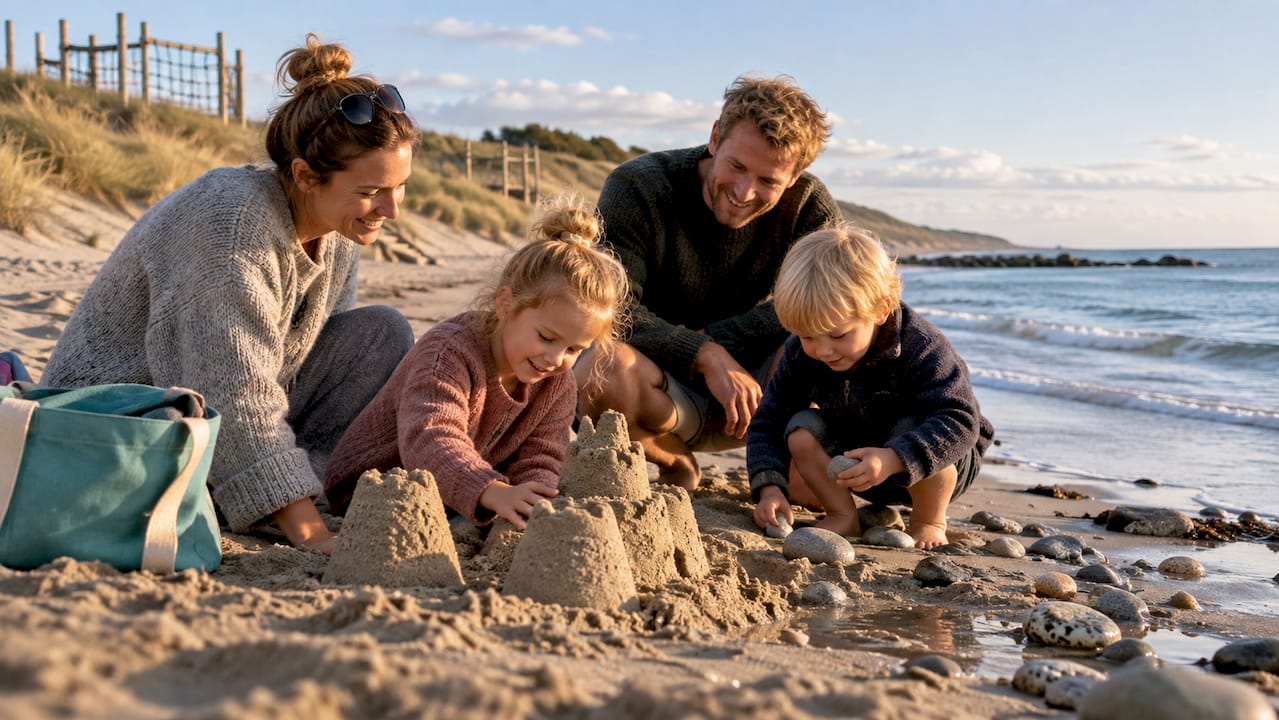
A family-friendly beach has four things that must be in order: shallow and calm water without sudden depth changes, a Blue Flag or another visible quality mark, a toilet with changing facilities nearby, and access to lifeguards during the high season. Check the municipality's bathing water warning on the same morning, and pack basic safety equipment before you drive. Most of the work is done.
Kriterier: hvad I skal tjekke før I vælger stranden
Most bad beach experiences don't start at the water. It starts in the car when the family realizes there is no toilet, or that the parking lot is 800 meters from the sand with a sleeping two-year-old in their arms.
Review these points on your mobile before you get in the car:
- Water depth and bottom typeAvoid beaches with known deep areas or strong currents near the shore, and ask locals or look for signs about reefs and holes.
- LabelingCheck if the beach has a Blue Flag, is registered as a bathing site, or if the municipality has itself raised a bathing flag, as the requirements behind the three schemes are not the same.
- Toilet and caregiving relationshipLook for a toilet building with changing table, access to freshwater shower, and clear waste sorting.
- RescuersCheck whether the beach is staffed with lifeguard stations during the schools' summer holidays, and when the guard starts and ends for the day.
- Access conditionsCheck if there is nearby fixed parking, as well as boardwalks or ramps that make the way to the water easy with a stroller or wheelchair.
The Blue Flag marking typically covers a couple of hundred meters on each side of the flagpole and serves as an indicator for both water quality and facilitiesOutside the zone, conditions can look completely different, even on the same beach. It's worth remembering if you plan to move along the coast once you've arrived.
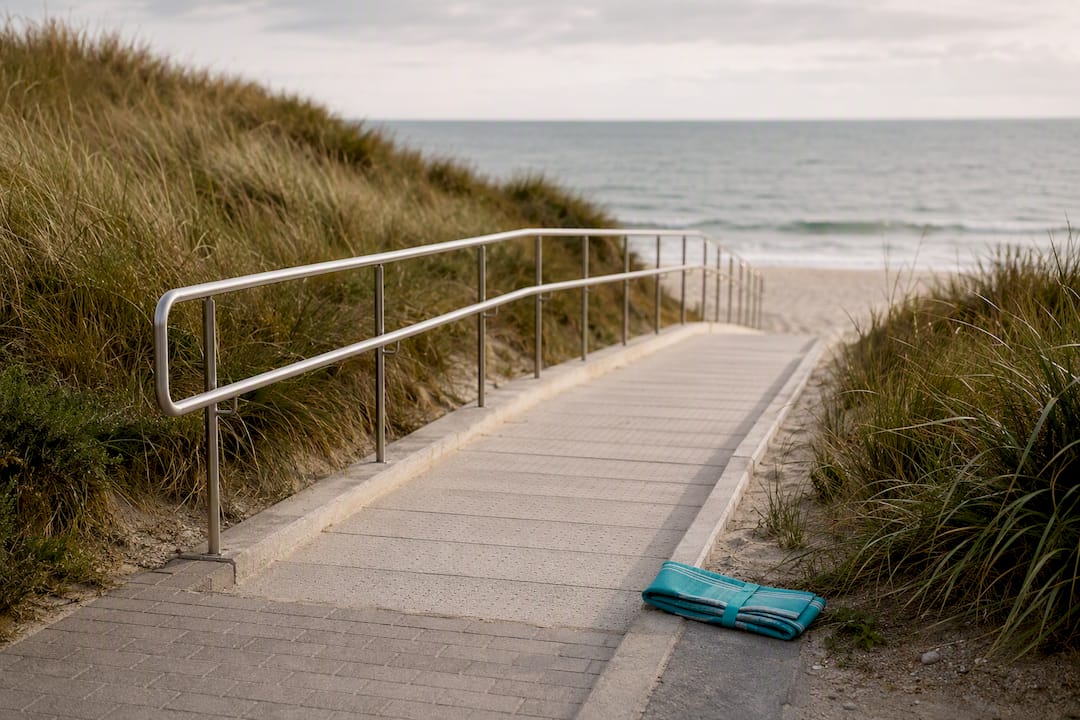
Boardwalks, fixed ramps, and concrete paths are often what truly determine whether a beach is usable for familiar with strollers or reduced mobilityA nice Blue Flag doesn't help much if the way from the parking lot goes through 300 meters of loose dune sand.
Safety and bathing water quality: how to read alerts and classifications
The Environmental Agency classifies bathing water into four categories: excellent, good, satisfactory, and poor. The classifications are based on the last four years' control measurements, and the municipalities are responsible for both sampling and notification throughout the entire bathing season from the 1st. June to the 15th. September
Over 90% Among the Danish bathing sites, it achieves the best category in the official reports, making Denmark one of the safer places to plan a beach holiday based on water quality. This is the latest report from the Environmental Protection Agency on beaches with excellent bathing water.
However, the numbers do not cover sudden events. Heavy rainfall can cause sewer overflows or polluted surface runoff, and because official measurements are taken periodically, there may be a short-term pollution risk. go unnoticed for several daysTherefore, more municipalities and actors like NIRAS are working with risk-based warning systems that use local rain gauges and online dashboards to provide faster alerts than routine measurements.
Always check the municipality's website or the local bathing water warning system on the same day you are going, especially after rain. And stick to the eight basic bathing tips from The Outdoor Council and badesikkerhed.dkNever swim alone, know your own limits, keep an eye on the children at all times, and never go into the water after drinking alcohol.
Packing list and daily plan: this is how to make the beach day stress-free
A good beach day is less about what you do at the water and more about what you made clear from home. Follow these steps:
- First, protect the headSunscreen, hat, and UV clothing for the little ones, preferably packed in the bag the night before.
- Take a small first aid kit with youPlaster, brand ointment for sunburn, and possibly medication for allergies.
- Bring shadeBeach tent or parasol, as most Danish beaches have limited natural shade.
- Drink plenty of watersnacks that do not melt, and at least one liter of water per person in hot weather.
- Check parking before departureCheck if app payment is required, and find out where the accessible parking spaces are located.
Come early, preferably before 10 o'clock, if you want to secure a good spot in the shade and close to the facilities. Plan a break every hour and a half with shade and some food. It keeps the children happy longer than you think.
Professional tip: Always choose a beach that is sheltered from the day's wind direction. A beach that seems perfect on paper can become uncomfortable with offshore wind, which blows sand onto the resting area and can alter the wave conditions closer to the coast.
Choose a beach based on the child's age and your needs
The right beach for a family with a one-year-old is rarely the right beach for a family with two teenagers. Match the facilities with your specific situation:
- Infants (0 to 3 years)Prioritize low and flat water without sudden transitions, short walking distance to the toilet and changing area, and shaded areas close to the resting place.
- Medium children (4 to 10 years old)Looking for beaches with activity areas, dunes to explore, and plenty of space for ball games and sandcastles.
- TeenagersLook for beaches with opportunities for SUP or surfing, or larger open areas for beach volleyball and similar activities.
- Baby stroller or wheelchairChoose beaches with concrete ramps or boardwalks and parking close to the entrance, not at the other end of the parking area.
Wood and logistics are often connected more than one might think. A beach with a long walk from the parking lot can work well for teenagers, but is unrealistic with a stroller in loose sand.
Concrete examples of family-friendly beaches
Some beaches have become classics for Danish families precisely because they meet several criteria at once:
- Marielyst It has a wide sandy beach and a solid range of facilities, making it a natural choice for families who want everything in one place.
- Amager Beach offers a long promenade and lifeguards in season, well suited for families living in or visiting Copenhagen.
- Hasmark Beach It has ramps and shallow water, making it suitable for both strollers and the smallest bathers.
- Blokhus He is known for his wide beach and a wide range of activities nearby, suitable for families with both small and large children.
Check at each location whether there is a Blue Flag, if the parking is nearby, and if changing facilities are available before settling on a destination. If you find more local alternatives, you can Journey in Denmark's interactive map Help you filter by season and childhood age.
Playgrounds, sandboxes, and beach games
Facilities for playing often do more for a beach day than the swimming itself. Many popular family beaches have maintained playgrounds right behind the dunes, so children can switch between water and swings without long walks.
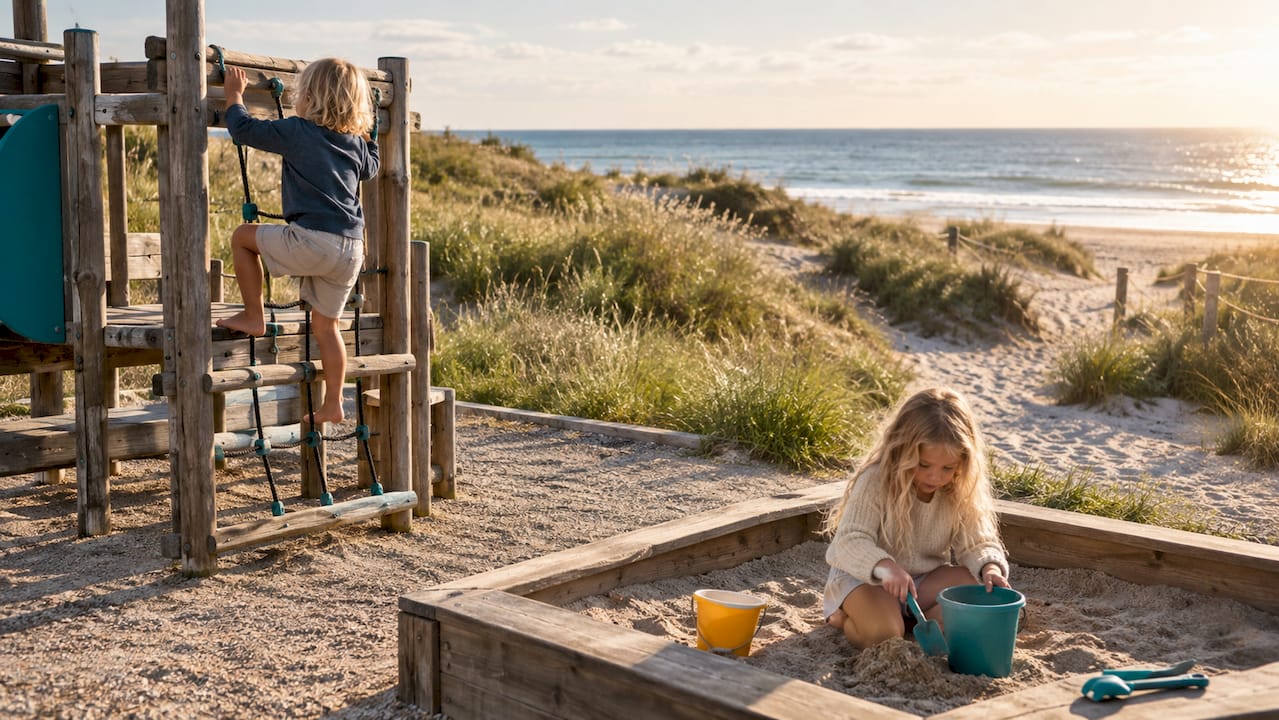
Look for designated sandbox areas where young children can build and dig without getting too close to the water's edge. Some beaches have permanent beach volleyball courts or designated areas for ball games, making it easier to keep track of older children while the youngest stay at the lounging area.
Beachcombing for driftwood, sandcastles, and hunting for amber and stones requires no equipment, but a bucket and a spade from a local kiosk often work wonders. Several beaches also have trampolines or climbing frames in the dune areas, typically operated by the local campground or the municipality.
Check in advance whether the playground is separated from the parking area and traffic, especially if you have children under four years old who run at their own pace. A playground located between the parking lot and the beach is convenient but requires extra supervision when the family arrives with luggage in their hands.
Food and drinks near the beach
The best family beaches usually have a kiosk or café within walking distance, saving you from carrying a full cooler bag through hot sand. Soda and simple snacks are standard, but several popular beaches also have cafes with a proper meal if the day extends.
Picnic areas with tables and benches in the shade are an overlooked detail that makes a big difference with small children. Led to dune areas with grassy lawns or fixed picnic tables where you can eat without sand in your lunchbox.
If there is no café on the beach, it is a good idea to pack extra water and food from home, especially during hot periods when children dehydrate faster than adults. Avoid food that melts or spoils in the sun, and keep snacks in an insulated bag with a cooling element.
Many of the most visited beaches have limited options during the peak season because the queue at the kiosk can become long around noon. Arrive early for lunch, or bring your own food as a backup if you want to avoid waiting with impatient children.
Safety advice specifically for families with young children
Markings and lifeguards are a supplement to parental supervision, never a replacement for it. Even on a beach with a fixed lifeguard, an adult must maintain eye contact with the youngest children at all times, because drowning accidents often happen silently and in seconds.
Always bring swimming aids or a life vest for children who cannot swim on their own, and stay within the area where you can touch the bottom. Agree on a fixed meeting place if the family spreads out on the beach, and get to know the children again by a recognizable color if there are many people.
Sunburn is the most common injury on a Danish beach day, not drowning. Apply sunscreen every two hours and use UV clothing for the little ones instead of just cream. Make sure to seek shade at midday, when the sun is at its highest, typically between 12 and 3 PM.
Always check the bathing water alert on the same morning, especially after rain, and respect a red flag or a closed beach, regardless of how tempting the water looks. The eight bathing rules from the Outdoor Council apply just as much to parents as to the children themselves.
Accommodation near family-friendly beaches
Most popular bathing towns have a wide range of accommodation options aimed at families, from holiday homes within walking distance to the beach to campsites with playgrounds and swimming pools. Vacation homes are often the most practical choice with small children because you can cook yourself and avoid fixed meal times.
Campsites near the coast typically have their own facilities for children, such as mini-golf, bouncy castles, or a pool, which can save a day with bad weather. Holiday parks are an alternative if the family wants a swimming pool and indoor activities as a backup to the beach.
Book a stay with a short distance to the beach, not just close to the city. A five-minute walk with beach gear and tired children can feel like an hour when the sun is high. Also check if the place has facilities for washing sandy swimwear and towels if you stay for several days.
Packing list for the family-friendly beach trip
In addition to what has already been mentioned for the actual schedule, there are a number of things that are often forgotten but make a big difference:
- Extra set of clothes for the children, both for bathing and for the journey home, in case it gets cold or wet.
- Beach mats or sleeping pads that dry quickly and are easy to carry over long distances in sand.
- A small bucket, spade, and ball that can keep children entertained for hours with very little weight in the bag.
- Wet wipes and a trash bag so you can clean up after yourselves, regardless of whether the beach has trash cans nearby.
- Power bank for the mobile phone, if you need to use it to check the bathing water alert or find your way home later.
Pack the evening before, so the morning isn't spent looking for sunscreen and swimming rings while the children are already ready to go.
Three things I always check before the family sets off
After many beach days with my own children, there are always the same three things I look for: the water depth right at the entrance to the water, the distance to the nearest toilet and changing area, and whether there is shade or easy parking nearby. The rest, such as ice and activities, will resolve themselves when the three basic things are in order.
That is also the reason why Rejs i Danmarks map and filters have become my preferred tool when we plan a new beach. You can filter by age and season instead of guessing from general lists.
— Tommy
Find and plan your next beach trip with Rejs i Danmark
A digital guide platform with an interactive map and filters allows you to sort experiences by season, price, and children's age, so you can quickly compare beaches and nearby activities instead of guessing.
The guide gathers both well-known destinations and more overlooked alternatives, with price estimates and practical planning information all in one place. It makes it easy to build an entire day or a whole holiday around the beach, not just find the bathing spot itself.
If you want more specific advice for the trip there and back, you can read. The practical travel tips from Travel in Denmark and start planning the next beach trip today.
Sources
Check the Environmental Agency's bathing water data, the municipality's alert system, and the Outdoor Council's criteria for Blue Flag and bathing points.
- Bathing water quality – Environmental Protection Agency
- Risk-based bathing water alert
- What do the beach flags on the beach actually mean? Read here
- Which Danish beaches are most child-friendly? Complete guide to beach holidays
Frequently Asked Questions
What makes a beach family-friendly?
A family-friendly beach has shallow and calm water, a toilet with a changing table, and lifeguards during the high season. Blue Flag or another marking is a quick indication that the place meets these requirements.
How do I check the bathing water quality before departure?
Check the municipality's website or the local bathing water warning system on the same day, especially after rain. The Environmental Agency continuously updates the official classifications throughout the bathing season.
What is the difference between Blue Flag and Bathing Spot?
Blue Flag is an international environmental certification that guarantees bathing water quality and facilities such as toilets and lifeguards. Badepunkt is a Nordic marking with similar, but not identical, requirements, while municipal flags can have a completely different level of control.
When are there lifeguards on Danish beaches?
Lifeguards are typically present at selected beaches during the schools' summer holidays, not throughout the entire swimming season. Check the individual beach's own information, as staffing varies greatly from municipality to municipality.
How do I find more family-friendly beaches in my area?
Bridge Travel uses Denmark's interactive map to filter beaches and experiences by season, price, and children's age. It provides a quicker overview than searching strand by strand on your own.