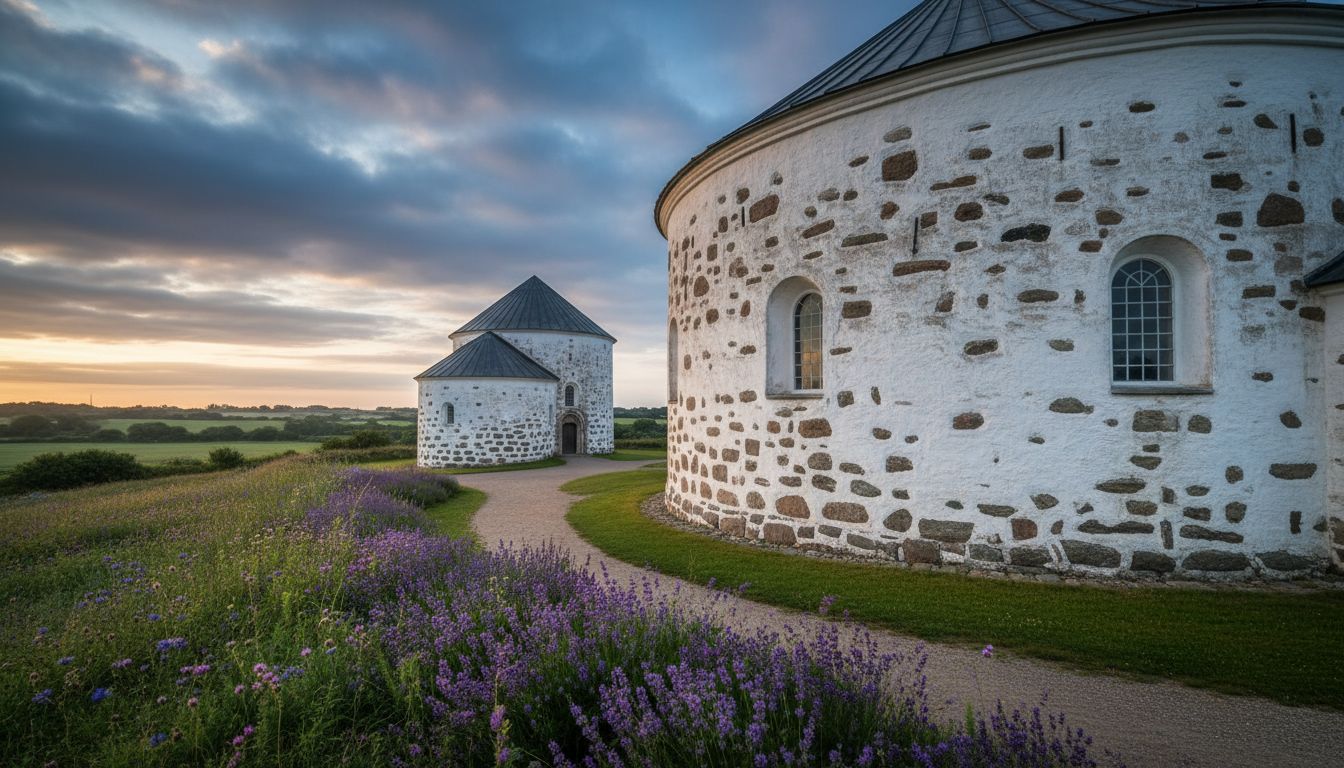
Did you know that only six round churches still stand in Denmark, even though there were once 19? Round churches fascinate with their remarkable round shape and thick stone walls, which were meant to both protect and bring the community together. These buildings not only contain exciting architectural details but also reflect a dramatic period in history when the church was both a sanctuary and a fortress for the local population.
What characterizes a round church?
Round churches are a fascinating and historically significant type of architecture that stand out markedly from other church buildings through their unique circular design. These special churches, primarily found in Denmark and Bornholm, have a distinctive round floor plan that makes them a remarkable element of Danish cultural heritage.
The central features of a round church include:
- A perfect circular floor plan with solid stone walls
- A central column that supports the church's roof and interior structure
- Typically placed in strategic locations, often for defense purposes
- Often built in Romanesque style from the Middle Ages
- Constructed with thick stone walls that could withstand attacks
The architecture itself reflects a practical and strategic way of thinking from the Middle Ages. Round churches were not only used for religious purposes but also served as local defense structures where the population could seek protection during attacks. The thick stone wall and the circular shape provided a unique protection that rectangular buildings could not offer. This dual function, serving both religious and defensive purposes, makes round churches a fascinating example of medieval architectural and social complexity.
The history of round churches in Denmark
Round churches constitute a unique chapter in Danish architectural history, extending far beyond their immediate religious function. Medieval Danish round churches Represents a complex system of architectural and strategic design that reflects a time characterized by uncertainty and constant threats. According to historical records from Bornholm's Historical Archive There once existed 19 round churches in Denmark, of which nine were located on Zealand.
This church's unique circular design was not accidental. The thick stone wall and centralized construction had a dual function:
- Ensure a safe refuge during enemy attacks
- Serve as a religious gathering point for the local population
- Demonstrate the church's power and protection
- Be resistant to attacks from maritime enemies
Today, the landscape has changed dramatically. Of the original 19 round churches, only six have been preserved: one in Jutland, one on Funen, one on Zealand, and four on Bornholm.
Here is an overview of the preserved Danish round churches:
| Church | Location | Region | Special characteristics |
|---|---|---|---|
| Østerlars Round Church | Bornholm | Bornholm | Largest round church Unique interior decoration |
| Olsker Round Church | Bornholm | Bornholm | Highly placed Square tower |
| Nylars Round Church | Bornholm | Bornholm | Original frescoes Strong pillar |
| Nyker Round Church | Bornholm | Bornholm | Small and simple Thick walls |
| Saint Olaf's Church | Zealand | Zealand | Highly placed Strategic location |
| Horne Round Church | Fine | Fine | Round apse Large armory |
| Thorsager Church | Jutland | Jutland | Oldest round church Clear Romance influence |
| These surviving monuments tell a fascinating story about Danish medieval culture, where architecture was not only about building a religious space but also about creating a safety network in a turbulent historical period. They represent a time when the church was much more than a spiritual institution – it was the very foundation of the local community's survival and protection. |
Special architectural features and functions
Round churches are an exceptional example of medieval Danish architecture, whose design encompasses much more than just aesthetic value. The circular construction it is the very core of these impressive buildings, with a well-thought-out structure that combines functionality, defense, and spirituality in an extraordinary way.
The central architectural elements include:
- A massive central pillar that supports the entire interior structure of the church
- Extremely thick stone walls (often up to 2-3 meters thick)
- Limited window openings placed strategically
- A keg-shaped or ceramic roof structure
- Inner space designed for multifunctional purposes
The structure of the building itself was revolutionary for its time. The central column served not only as an architectural element but also as a structural foundation supporting a complex roof construction system. The thick stone walls were not accidental, but carefully planned to withstand attacks and protect the local population. The limited window openings ensured maximum protection, while the conical roof structure created a unique interior space with exceptional acoustics.
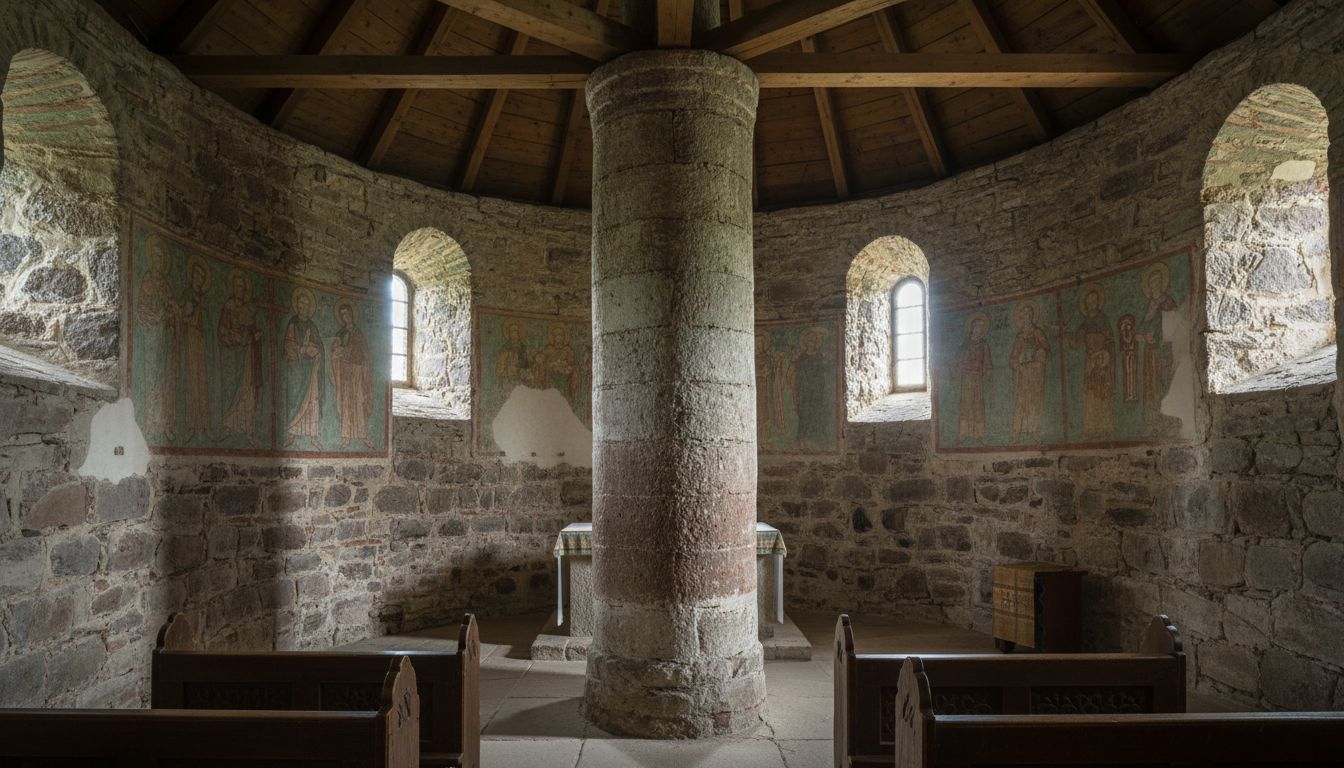
Interestingly, these churches were designed with remarkable flexibility. The room could quickly be transformed from a religious place of worship into a defensive structure, highlighting the practical mindset behind medieval architecture. Therefore, it has a similar complex architectural heritage, demonstrating how functionality and aesthetics could be combined in an impressive way.
Importance for Danish cultural heritage and tourism
Round churches constitute an invaluable part of Denmark's cultural identity, extending far beyond their immediate architectural significance. The cultural heritage Associated with these extraordinary structures is a living open-air museum that tells historical stories about medieval Danish society, its challenges, and survival strategies.
The special characteristics that make round churches tourist magnets include:
- A unique architectural structure that distinguishes itself from other European churches
- Historical significance as a defense facility and religious center
- Authentically preserved medieval construction technique
- Exotic and mysterious appearance that attracts international visitors
- Location in beautiful scenic surroundings
According to research from www.rundtidanmark.dk Does Bornholm have a special status within the cultural heritage of round churches, as the island is home to all four of Denmark's seven existing round churches? This makes Bornholm an absolute must-visit for those interested in cultural history and tourists who want to explore these unique historical monuments. The round churches not only contribute to the local tourism economy but also serve as living historical documents that tell stories about Denmark's complex medieval social and religious structures. Understanding of cultural experiences in Denmark It just shows how such historical sites create deep connections between the present and the past.
Practical tips for visiting round churches
When planning a visit to Denmark's historic round churches, there are some important practical considerations that can significantly enhance your experience. Preparation the key to getting the maximum benefit from your trip, whether you are a history enthusiast, architecture interested, or simply curious to explore Danish cultural heritage.
The following preparations are recommended before your trip:
- Check opening hours in advance, as they may vary seasonally.
- Consider booking a guided tour for deeper historical insight
- Bring comfortable footwear, as round churches often have uneven floors.
- Bring a camera, but be aware of any photography rules.
- Check if there are special access conditions for children and disabled persons
According to research from www.rundtidanmark.dk The four round churches of Bornholm are particularly recommended for visitors. It is important to plan your trip carefully here and be aware of local conditions. To ensure an optimal travel experience, you can consult Checklist for Denmark trip, which provides additional practical travel tips.
By preparing yourself thoroughly and respecting these historical sites, you can create a memorable experience that provides you with a unique insight into Danish medieval history and architecture. Remember that round churches are not just monuments, but living historical testimonies that tell stories from a bygone era.
Discover the Round Churches and More in Denmark
The round churches are not only architectural wonders but also windows into Denmark's rich history and cultural heritage. For those who dream of understanding the unique combination of medieval defensive art and religious architecture, planning your trip can quickly become challenging. Many seek authentic experiences, practical information about opening hours, and tips for the most beautiful surroundings where the round churches stand as monuments to the passage of time.
Hos Travel in Denmark You find the solution. Our platform helps you explore not only the round churches but also a wide range of experiences that bring Denmark's culture and history to life. Use our user-friendly search function to find activities suitable for all ages and interests, and discover how to best experience both Bornholm's unique round churches and other historical sights.
Start your journey today and gain easy access to detailed descriptions, clear pricing, and suggestions for both adventure and peace for the soul. Find more than just round churches on https://rejsidanmark.dk and experience Denmark like never before.
Frequently Asked Questions
What are round churches?
Round churches are characteristic churches with a circular floor plan, typically dating from the Middle Ages. They are known for their unique architecture and dual function as both religious gathering places and defense structures.
What are the characteristics of round churches?
Round churches are characterized by massive stone walls, a central pillar, limited window openings, and often a conical or ceramic roof structure. Your design is both practical and symbolic.
How many round churches are there in Denmark today?
Today, there are only six preserved round churches in Denmark, four of which are located on Bornholm, while the others are situated in Zealand, Funen, and Jutland.
How can one visit round churches in Denmark?
When planning a visit to round churches, it is recommended to check opening hours in advance, consider guided tours, and bring comfortable footwear. It is also important to respect any photography rules.