Many believe that the Danish weather limits what one can experience on a trip in Denmark. It is a misunderstanding. In fact, it is precisely the changing of the seasons that gives Denmark its special character as a travel destination. From the blooming beech forests of spring to winter ice swimming and sauna culture, there is always something new to discover. In this article, we explain what seasonal experiences are, how they work in practice, what you gain and risk by choosing your travel time consciously, and how you specifically plan your next trip according to the season.
Main Points
| Point | Details |
|---|---|
| Plan according to the season | You get the best and most authentic experiences by choosing activities based on the season. |
| The advantages of the low season | The low season provides peace, lower prices, and closer contact with the local area. |
| Be flexible | Remember to pack layered clothing and always have backup plans for changing weather. |
| Check event calendars | Find special events and highlights for each season via official tourist calendars. |
What does seasonal experiences mean?
Seasonal experiences refer to Activities and events in Denmark that are tailored to specific seasons to optimally utilize nature's, weather's, and cultural peak periods. It's not just about when something is open. It's about how the experience itself is unique precisely because it takes place at the right moment.
Think of it this way: a walk in Rold Forest is beautiful all year round, but it's a completely different experience to walk there in October, when the leaves are red and golden, than in June, when the forest floor is green and full of life. Timing is part of the experience.
Here are some classic examples of seasonal experiences In Denmark:
- Spring: Cherry blossom in North Zealand, lambing season on Bornholm, first bike rides along the fjords
- Summer: Roskilde Festival, swimming life along the Danish coasts, kayaking on the rivers
- Autumn: Mushroom picking in the forests, oyster season by the Limfjord, stargazing on dark nights
- Winter: Swimming in the sea, Christmas market at Tivoli, sauna and wellness by the sea
Seasonal experiences benefit from the changing weather, nature, and cultural life. The experience becomes unique precisely because of the timing.
The smart thing about thinking seasonally is that you automatically avoid the trap that many travelers fall into: trying to see everything at once without truly feeling the place. You can also find experiences all year roundthat fits exactly your travel time, no matter when you travel.
How seasonal experiences work for travel in Denmark
The backstage areas are seasonally divided experiences resulting from thorough planning by the experience providers. The mechanics involve planning Based on historical visitor data, dynamic pricing according to season, and staffing adjustments. That means that as a traveler, you will encounter a very different experience depending on when you visit.
In practice, it looks like this:
| Season | Staffing | Prices | Experience quality |
|---|---|---|---|
| Peak season (summer) | Maximum | Highest | Many events, but crowded |
| Shoulder season (spring/autumn) | Moderate | Middle | God balance |
| Low season (winter) | Minimal | Lowest | Ro, authenticity |
Dynamic pricing is a central concept here. It means that the price of an activity increases as we get closer to a popular period and decreases during quiet periods. Many attractions actively use this to distribute visitors more evenly throughout the year.
For you as a traveler, it provides concrete opportunities. If you book a summer vacation In good time, you secure your spot for the most sought-after events. Alternatively, if you choose to explore sights in summer A little outside the busiest weeks, you can save significantly. And are you considering a Winter holiday in Denmark, you will discover that many places offer special winter events that are not available at other times.
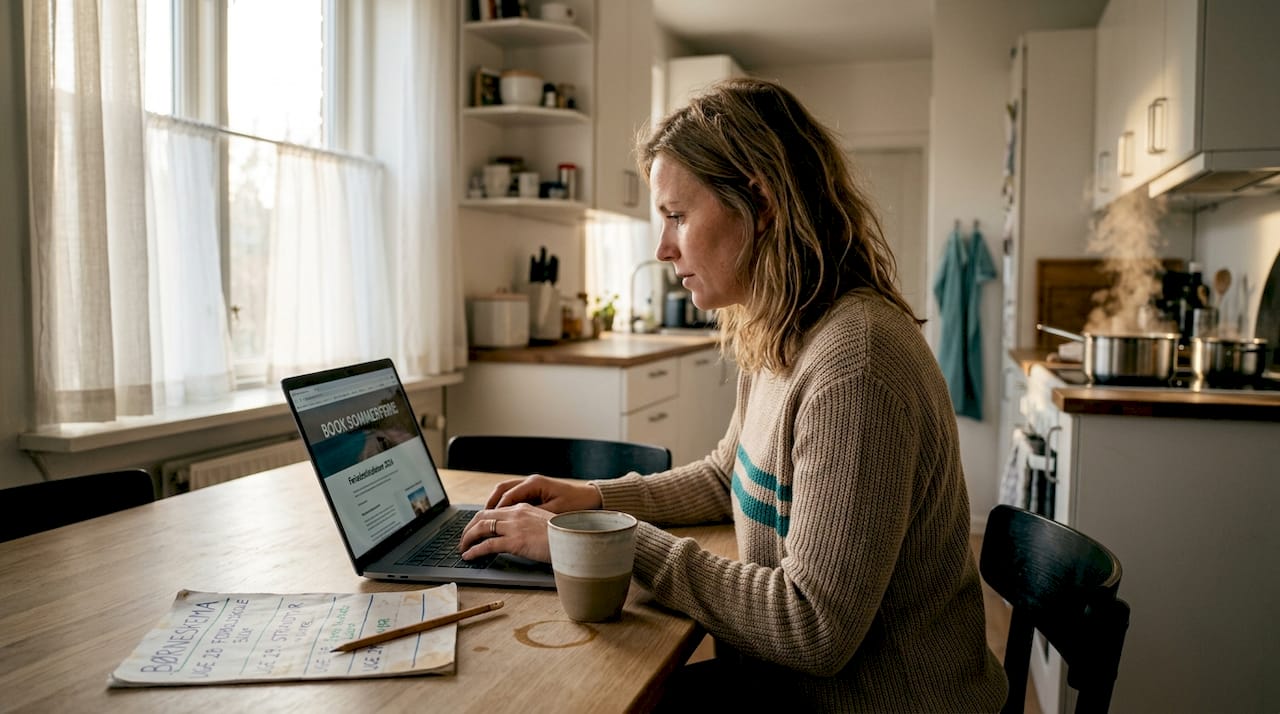
Professional tip: Book popular summer events at least two months in advance. During the mating season, you can often get by with just a week's notice and still secure the best spots.
Advantages and disadvantages of traveling off-season
When you understand how seasonal experiences work, it is important to understand what you specifically gain and risk by choosing your travel time.
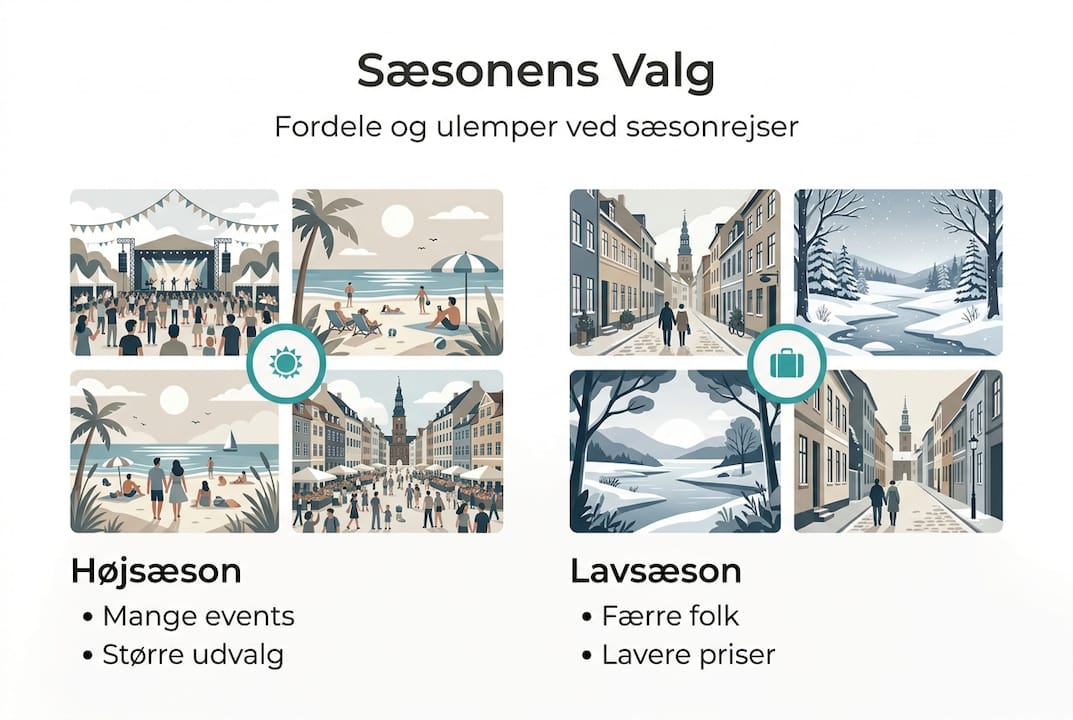
Peak season offers maximum experience breadth but leads to congestion and higher prices. The low season offers fewer people and lower prices, but the weather demands flexibility.
| Peak season | Lambing season | |
|---|---|---|
| Price | High | Lav |
| Congestion | Big | Minimal |
| Events | Eat | Fewer, but unique |
| Authenticity | Less | Only |
| Weather risk | Lav | Higher |
Here are the most important advantages and disadvantages summarized:
- Peak season advantages: Most open attractions, best weather, largest selection of events and activities
- Peak season disadvantages: Long queues, more expensive accommodation, noisier environment
- Advantages of the low season: Cheaper prices, peace and space, closer contact with the local population
- Disadvantages of the low season: Shorter opening hours, some attractions closed, the weather can surprise
Indoor alternatives are obvious for rainy days and make it possible to enjoy Denmark all year round, regardless of the weather. Museums, galleries, spas, and culinary experiences are available in all seasons.
You can find plenty of inspiration for tips for experiences all year round and to Nature experiences in Denmark, that works in all weather conditions.
Eksempler: Unikke danske oplevelser året rundt
Now that you know the differences between high season and low season, it's time for concrete inspiration. Denmark has a signature experience for each season, and many of them can only be enjoyed at the right time.
- Spring: Visit Spring in Fjordlandet and experience blooming meadows, lambing season, and the first green beech forests. Perfect for bike rides and hikes along the fjords.
- Summer: Roskilde Festival, swimming by the West Coast, and kayaking in the Danish rivers. Find the best types of summer activities for the whole family
- Autumn: Mushroom picking in Gribskov, stargazing on Møn, and the oyster season that Starter in October by Limfjorden. Autumn is Denmark's most underrated season.
- Winter: Winter days with ice swimming and sauna It is an experience that is growing in popularity. The Christmas markets in Tivoli and Ribe are classics that attract thousands of visitors every year.
Many of these experiences are free or inexpensive. Check out our overview of free experiences In Denmark to find activities that don't cost a fortune.
Did you know? The oyster season at Limfjorden is a perfect example of an experience that is literally only possible in certain months. Fresh oysters straight from the water are a local delicacy that you cannot buy outside the season.
How to plan seasonal experiences
Now that you know the examples, it's time for the best advice on the actual planning. It's about combining flexibility with preparation.
Professional tip: Bridge What is in season some inspiration to match your journey with local ingredients and the rhythm of nature. It provides a deeper and more authentic experience.
Here is a concrete checklist for your planning:
- Find events: Visit official VisitDenmark and regional sites such as VisitNordsjælland and VisitFyn to find season-specific activities
- Book in good time Popular summer events and Christmas market overnight stays are quickly sold out.
- Really correct: Weather changes require flexibility, and layered clothing is your best friend in Danish weather
- Make a backup plan: Identify indoor alternatives nearby so that a rainy day doesn't ruin the trip.
- Take advantage of off-season discounts Many attractions offer up to 30 percent discount outside the high season
- Be flexible with dates: Changing the trip by just one week can result in significantly lower prices and fewer people.
You can find more inspiration for year-round seasonal travel or concrete practical travel tips Until your next trip to Denmark.
What most people overlook about traveling off-season
There is a widespread belief that the best holiday in Denmark is a summer holiday with sun and warmth. But we have seen again and again that the most unforgettable experiences often occur outside the busy high season.
The off-season offers something that the high season rarely can: peace, authenticity, and genuine contact with the locals. When the tourists have gone home, the Danes open up more. You get better conversations at restaurants, more space on the beach, and guides who actually have time to tell stories.
Many fear bad weather as a holiday fate. But it is precisely on the gray, windy days that the most memorable moments occur. A sauna by the sea in January, a hot cup of coffee in a cozy book café during the rain, or an empty museum where you can stand alone in front of a painting for ten minutes.
An open and flexible mindset more often leads to unforgettable memories than a carefully planned peak season trip. Find more inspiration for experiences all year round and let the seasons guide you.
Ready for your seasonal experience?
Now you have both the understanding and the practical tools to plan a trip in Denmark that truly takes advantage of the opportunities of the seasons. The next step is to turn the inspiration into concrete action. On a trip in Denmark, you will find everything you need: from a complete Guide to Denmark for those visiting the country for the first time, in detail Checklist for Denmark trip, that ensures you don't forget anything important. And if you need to get a good start, our practical travel tips give you a solid foundation for any trip.
Frequently Asked Questions
How do I find events and experiences that only take place in a specific season?
You can check official calendars on VisitDenmark and the regions' tourist websites as well as local festival overviews, which are continuously updated with season-specific events.
Is it cheaper to go on vacation in the low season?
Yes, the prices are often lower and you avoid crowds, but be aware that many places have reduced opening hours or are closed during the winter period.
What equipment and preparations are required for outdoor experiences in winter or autumn?
Layered clothing and a backup plan for indoor activities are important, as weather changes require flexibility and unpredictable weather can quickly alter the conditions for an outdoor trip.
Can I have local and authentic experiences outside the high season?
Yes, outside the high season there are better prices, fewer queues, and a much greater chance of genuine encounters with the locals and unique, location-specific events.
Recommendation
- What are seasonal experiences in Denmark? Guide 2026 – Travel in Denmark
- What is seasonal travel? A guide to experiences all year round – Travel in Denmark
- How to make the most of your vacation in Denmark 2026 – Travel in Denmark
- 7 tips for experiences all year round in Denmark for everyone – Travel in Denmark